You need a reliable, long-term water solution for off-grid areas.
But you worry about the durability of solar technology.
Will your investment last, or will it fail prematurely?
A high-quality solar water pump system is built to last over a decade.
The solar panels often have a 25-year warranty, while the core components like a brushless DC motor and a well-chosen pump end can provide reliable, maintenance-free service for many years, ensuring long-term value.
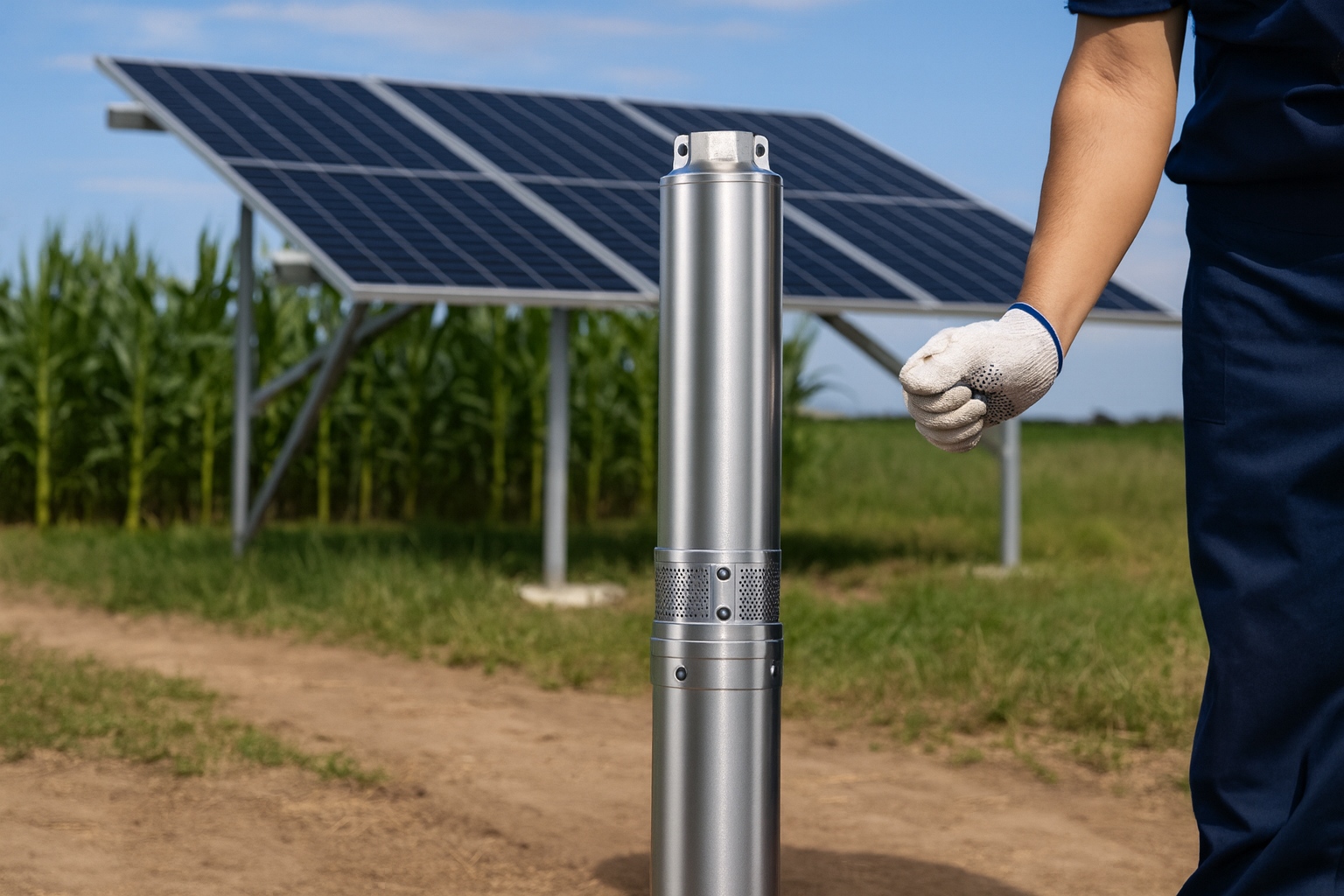
The lifespan of a solar pump isn't just a single number; it's the sum of its parts.
The real secret to longevity lies in understanding the durability of each core component and how they work together.
Let's break down what truly makes a solar pump system a long-term investment.
What Components Determine a Solar Pump's Lifespan?
You know a system is only as strong as its weakest link.
Choosing a solar pump feels risky.
You worry one failing part will render the entire expensive system useless.
A solar pump's longevity depends on three key elements: a durable pump end designed for the specific water condition, a high-efficiency brushless motor that reduces wear, and an intelligent controller that protects the system.
Together, they create a long-lasting, reliable water solution.
Thinking about a solar pump's lifespan requires a system approach.
You are not just buying a pump; you are investing in a long-term water delivery solution.
The durability of this solution is not determined by a single feature but by the synergy between its core parts.
When these components are of high quality and perfectly matched to the job, they create a system that runs efficiently and reliably for years.
This approach is crucial for distributors who need to build a reputation for quality and for end-users who depend on a consistent water supply.
The Three Pillars of Longevity
A truly durable solar pump system stands on three pillars: the pump end, the motor, and the controller.
- The Pump End: This is the part that does the physical work of moving water. Its lifespan depends entirely on being matched to the water source. A pump designed for clean water will quickly fail in a sandy well.
- The Motor: This is the heart of the system. An efficient, brushless motor runs cooler and with less friction, significantly reducing wear and tear. This is the key to years of maintenance-free operation.
- The Controller: This is the brain. An intelligent controller protects the motor from electrical damage, optimizes power from the solar panels, and prevents the pump from running dry, all of which extend the life of the entire system.
Matching the Pump to the Water for Maximum Life
The most common cause of premature pump failure is a mismatch between the pump type and the application.
Forcing a pump to operate outside of its designed purpose puts immense strain on its components, leading to early breakdown.
A smart product portfolio includes different pump types to meet diverse water needs, ensuring every customer gets a solution built to last.
This strategic approach prevents failures and builds customer trust.
Here is how different pump types are engineered for longevity in specific conditions.
| Pump Type | Best For | How It Maximizes Lifespan |
|---|---|---|
| Solar Screw Pump | Deep wells, sandy water | Its design handles grit and high pressure without damage. |
| Solar Plastic Impeller Pump | High-volume irrigation, fine sand | Engineered plastic resists abrasion from fine particles. |
| Solar Stainless Steel Pump | Corrosive or alkaline water | SS304 material prevents rust and chemical degradation. |
Do Different Pump Types Have Different Lifespans?
You're considering stocking solar pumps, but they aren't one-size-fits-all.
Choosing the wrong type for your customers means frequent failures, a damaged reputation, and lost business.
Yes, the lifespan of a pump end is directly tied to its design and materials.
A stainless steel screw pump is built for deep, sandy wells, while a stainless steel impeller pump is designed for longevity in corrosive water.
Choosing correctly is key to a long service life.
The longevity of a solar water pump is not a universal guarantee; it is a direct result of engineering and application.
Different pump types are constructed from different materials and use different mechanisms to move water.
These design choices make them highly durable in one environment but fragile in another.
As a distributor, understanding these distinctions allows you to guide your customers to the right product, ensuring their satisfaction and reinforcing your reputation as a knowledgeable supplier.
Offering a portfolio of pump types is not just about having more products; it is about providing targeted solutions that are built to last in your customers' specific environments.
The Solar Screw Pump: Built for Depth and Grit
The solar screw pump is a prime example of specialized design for longevity.
It is engineered for the challenging conditions of very deep wells, often found in the remote regions of Africa and Latin America.
- Mechanism: It uses a positive displacement method. A hardened stainless steel screw (rotor) rotates within a durable rubber housing (stator). This design is inherently resistant to the abrasive effects of sand and silt that would quickly destroy other pumps.
- Lifespan Advantage: By handling high pressure and gritty water without damage, the screw pump provides a long and reliable service life in conditions that are punishing for other pump types. Its main limitation is a lower flow rate.
The Solar Plastic Impeller Pump: The High-Volume Workhorse
This pump is designed for environments where moving a large amount of water is the priority, such as farm irrigation.
- Mechanism: It is a multi-stage centrifugal pump. It uses a series of spinning impellers to accelerate water. The key to its durability is the material: the impellers are made from a high-strength, wear-resistant engineered plastic.
- Lifespan Advantage: This material choice makes it exceptionally good at handling fine sand without wearing down, a common issue in many agricultural wells. It is also lightweight and cost-effective, offering a great balance of performance and durability for high-flow applications with low to medium head.
The Solar Stainless Steel Impeller Pump: The Premium Durability Choice
When water quality is harsh, this pump is the only long-term solution.
- Mechanism: It functions identically to the plastic impeller pump but is constructed entirely from corrosion-resistant SS304 stainless steel. Every part that touches water, from the pump body to the impellers and outlet, is made of this premium material.
- Lifespan Advantage: This pump is engineered to survive in acidic or alkaline water that would corrode other metals and degrade plastics over time. For high-end homes or agricultural areas with challenging soil chemistry, like in parts of Australia and the Americas, this pump's resistance to corrosion guarantees the longest possible service life.
Why is the Motor the Most Critical Part for Longevity?
You see a pump rated for 10 years, but you are skeptical.
You have seen motors burn out from overheating and overuse.
How can a solar pump motor truly last that long with no maintenance?
The heart of a modern solar pump's longevity is its high-efficiency Brushless DC (BLDC) motor.
This advanced technology eliminates brushes—the most common point of failure—and runs cooler, ensuring a maintenance-free service life that can exceed a decade of continuous, reliable operation.**
While the pump end must be matched to the water, the motor is the engine that drives the entire system, day in and day out.
Its design and efficiency are the single most important factors determining the overall lifespan and reliability of a solar water pump.
A cheap, inefficient motor will waste precious solar energy as heat, which not only delivers less water but also leads to overheating and premature failure.
This is why investing in a system with a superior motor is critical.
A high-quality motor is the foundation of a product that you can sell with confidence, knowing it will perform for your customers year after year.
The Technical Superiority of BLDC Motors
For solar applications, the Brushless DC (BLDC) permanent magnet motor is the undisputed champion of longevity and efficiency.
Unlike older brushed motors that rely on physical contact points that wear down, BLDC motors are electronically controlled.
This "brushless" design has several key advantages that translate directly to a longer life.
- No Wearable Parts: The elimination of carbon brushes removes the primary component that wears out and requires service. This is the main reason BLDC motors can offer a true maintenance-free lifespan.
- Higher Efficiency: BLDC motors achieve efficiencies over 90%. This means very little energy is wasted as heat. A cooler-running motor is a longer-lasting motor because high temperatures degrade internal components over time.
- Powerful and Compact: These motors use powerful rare-earth magnets, like 40SH neodymium iron boron. This allows them to be much smaller and lighter (often 47% smaller and 39% lighter) than traditional motors of the same power, while still providing high torque to start easily under load.
The Market Value of a Long-Life Motor
For a distributor, the motor's quality is a key selling point.
A system with a top-tier BLDC motor offers tangible benefits that justify the investment.
The motor's high efficiency means the system requires fewer solar panels to pump the same amount of water.
This reduces the total system cost for the end-user.
Furthermore, its maintenance-free design and long service life translate to lower operating costs and greater peace of mind.
Ultimately, the motor's quality determines the overall competitiveness of the water pump system, establishing your brand as a provider of efficient, durable, and cost-effective solutions.
Can a Solar Pump System Outlast Bad Weather?
You love the idea of a maintenance-free solar pump.
But you have a critical worry: what happens on cloudy days or at night?
A long lifespan is useless if the water stops when you need it most.
Yes, a modern solar pump provides water 24/7, regardless of the weather.
An intelligent AC/DC hybrid controller automatically switches to grid power or a generator when sunlight is insufficient, guaranteeing an uninterrupted water supply and ultimate reliability for the user.
The ultimate measure of a water pump's longevity and reliability is its ability to deliver water whenever it is needed.
A common concern with solar power is its dependence on the sun.
For applications where a constant water supply is non-negotiable—like domestic use or critical livestock operations—this can be a point of hesitation.
Early solar pump systems did not have an elegant solution.
You either had to build a massive water storage tank or accept that you would have no water during extended periods of bad weather.
Modern technology has completely eliminated this problem, transforming the solar pump from a daytime-only device into a true 24/7 water solution.
How the AC/DC Hybrid Controller Ensures 100% Uptime
The innovation that makes this possible is the AC/DC hybrid controller.
This intelligent device serves as the system's power manager, equipped with inputs for both DC power from the solar panels and AC power from the grid or a backup generator.
It is programmed to always prioritize free solar energy, making it highly cost-effective while providing complete peace of mind.
The Smart Switching Process
The controller's operation is seamless and fully automatic.
The user does not need to do anything to ensure a constant water supply.
- During Sunny Conditions: The controller uses 100% of the DC power generated by the solar panels to run the pump. The AC connection remains on standby, and no grid electricity is used.
- During Low Light: If heavy clouds reduce solar power, the controller's hybrid function activates. It intelligently blends the available solar power with just enough AC power to keep the pump running at full capacity, maximizing the use of free energy.
- During Night or Storms: When there is no solar input, the controller automatically switches over completely to the AC power source. The pump continues to run without interruption.
This technology makes a solar water pump system as reliable as a traditional grid-powered pump, but with the massive benefit of using free solar energy most of the time.
It ensures the system's "effective lifespan" is infinite because it never fails to deliver water.
Conclusion
A solar pump’s long life comes from durable components matched to the job, powered by an efficient BLDC motor.
With a hybrid controller, it becomes a truly reliable, 24/7 water solution.
FAQs
What is the lifespan of a solar water pump?
A quality solar pump system can last for over a decade. The solar panels often have a 25-year warranty, while the brushless motor and pump provide years of maintenance-free service.
Do solar pumps require a lot of maintenance?
No, they are very low-maintenance. The primary tasks are occasionally cleaning the solar panels and checking plumbing connections, as the brushless motor itself requires no service.
How much can a solar water pump lift water?
This depends on the pump type. Solar screw pumps are designed for high head and can lift water from wells that are hundreds of meters deep, making them ideal for deep well applications.
Can solar pumps work on cloudy days?
Yes, modern systems can still operate in low light, though at a reduced flow. For continuous pumping, an AC/DC hybrid controller automatically supplements power with the grid or a generator.
Is it necessary to use batteries with a solar water pump?
Batteries are generally not needed. Most systems are designed to pump water into a storage tank during the day, providing a more reliable and cost-effective water supply for use at any time.
Can a solar pump handle dirty or sandy water?
Yes, specific pumps are designed for this. A solar screw pump is highly resistant to sand and grit, making it a durable choice for wells that are not perfectly clean.
What size solar pump do I need?
The right size depends on your daily water needs and the total vertical distance (head) you need to lift the water. Consulting with a supplier will ensure a properly sized system for optimal performance.
Is the initial cost of a solar pump worth it?
While the upfront investment is higher, the long-term savings are significant. With no electricity bills or fuel costs and minimal maintenance, a solar pump offers a very low total cost of ownership.