You rely on your submersible pump every single day.
A sudden failure means no water and costly, urgent repairs.
You need to know how long you can truly depend on it.
A submersible pump's lifespan varies widely, from 2-7 years for basic models to over 15 years for high-quality units.
The biggest factors determining its longevity are motor technology, the quality of construction materials, and the specific water conditions it operates in.
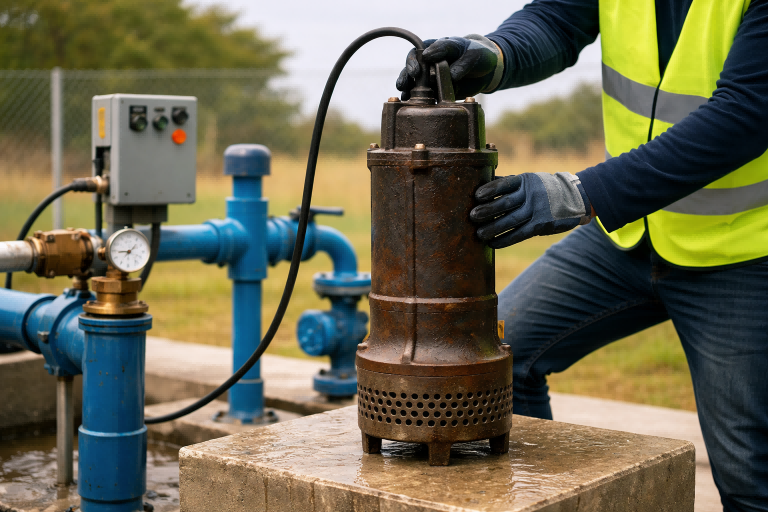
This wide range in lifespan isn't an accident.
It's a direct result of engineering choices and material quality.
A cheap pump might seem like a good deal initially.
But if it fails in three years, was it really cost-effective?
Conversely, a more expensive pump that runs reliably for over a decade provides a much better return on investment.
It also provides invaluable peace of mind.
Understanding the "why" behind pump longevity is crucial for any distributor or end-user.
It's not about a single brand or model.
It's about understanding the core components that dictate whether a pump is built for a short service life or engineered to last a generation.
Let's dive into the three critical factors that truly determine how many years your submersible pump will last.
The Motor: The Heart of the Pump's Lifespan
You install a new pump, expecting years of service.
But just a few years later, it fails.
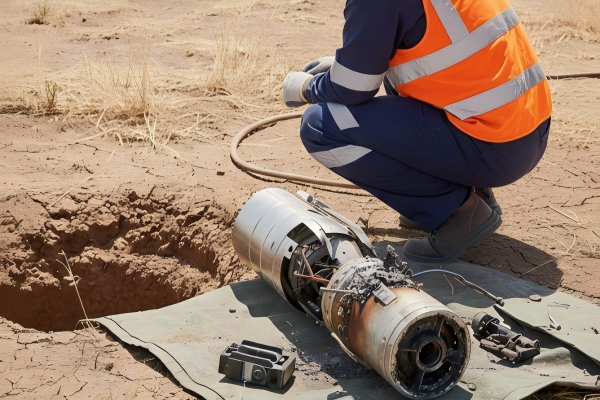
The cause is often a worn-out motor, leading to unexpected costs and downtime.
The motor is the single most critical factor in a pump's lifespan.
A modern Brushless DC (BLDC) motor can operate for over 10-15 years, whereas a traditional brushed DC motor often fails in 2-5 years due to physical wear and tear.
The motor is the engine of your water system.
It runs for thousands of hours, often under heavy load.
The design of this single component has a greater impact on the pump's service life than anything else.
Historically, many DC pumps used brushed motors.
This technology is simple and inexpensive to manufacture.
However, it has a fatal flaw from a longevity perspective: physical contact.
Carbon brushes are pressed against a spinning commutator to deliver power.
This constant friction generates heat and slowly wears down both the brushes and the commutator.
This wear and tear is the primary reason for motor failure.
It's not a matter of "if" it will fail, but "when."
For a distributor like Andrew in Australia, selling a product that is guaranteed to wear out in a few years is bad for business.
It leads to unhappy customers and damages brand reputation.
The technological leap to brushless motors fundamentally changed the lifespan equation for submersible pumps.
The BLDC Motor Advantage: Engineered for Longevity
A Brushless DC (BLDC) permanent magnet motor is designed from the ground up for a long service life.
It eliminates the single biggest point of failure: the brushes.
Instead of physical contact, it uses an electronic controller and powerful permanent magnets to create a rotating magnetic field.
The rotor spins without any friction.
This revolutionary design has several profound impacts on longevity.
- No Wearable Parts: With no brushes or commutator to wear down, the primary cause of motor failure is completely eliminated.
- Reduced Heat: Friction generates heat, which is the enemy of all electronic and mechanical components. BLDC motors operate at much lower temperatures, which preserves the motor windings, bearings, and seals for a longer life. An efficiency of over 90% means less than 10% of energy is wasted as heat, compared to 30-40% in older motors.
- Maintenance-Free Operation: A brushed motor requires periodic brush replacement. A BLDC motor is a sealed, solid-state unit that requires zero maintenance for its entire life.
- Greater Durability: The use of high-strength materials like 40SH neodymium iron boron for the permanent magnets ensures the motor maintains its power and efficiency for many years.
Comparing Motor Lifespan
| Feature | Brushed DC Motor | Brushless DC (BLDC) Motor | Impact on Lifespan |
|---|---|---|---|
| Typical Lifespan | 2-5 Years | 10-15+ Years | BLDC motors last 3-5 times longer. |
| Primary Failure Point | Carbon brush wear | Electronics (rare) | BLDC design eliminates mechanical wear. |
| Operating Efficiency | 60-75% | > 90% | Higher efficiency means less heat and stress. |
| Maintenance | Requires brush replacement | Maintenance-Free | Reduces long-term service costs and downtime. |
For anyone evaluating a submersible pump, asking about the motor technology is the first and most important step.
A pump built with a BLDC motor is not just a purchase; it's a long-term investment in reliability.
Water Quality: The Pump's Toughest Enemy
Your water looks crystal clear from the tap.
But unseen sand or corrosive minerals are silently destroying your pump.
This hidden aggression leads to premature failure that could have been avoided.
Beyond the motor, water quality is the next biggest factor.
Abrasive sand can wear out a pump in months, while corrosive water can degrade materials in 1-2 years. Matching the pump's construction to the water chemistry is essential for a long life.
A submersible pump lives its entire life in a challenging environment.
The water it moves directly affects its internal components.
Even the most advanced motor will fail if the pump's "wet end" is destroyed by the water it's pumping.
Two primary water quality issues dramatically shorten a pump's life: abrasion and corrosion.
Ignoring these factors is a recipe for disaster.
A distributor must be able to guide their customers to the right pump type based on a water analysis.
Selling a standard pump for a high-sand or high-acidity application is a guarantee of a customer complaint down the line.
The solution lies in offering a portfolio of pumps where each model is specifically engineered to handle a particular type of aggressive water.
The Abrasive Threat: Sand and Silt
Sand, silt, and grit act like liquid sandpaper inside a pump.
In a standard centrifugal pump, this abrasive mixture scours the smooth surfaces of the impellers.
This erosion reduces the pump's efficiency and, eventually, wears through the material, causing total failure.
- The Engineered Solution: For sandy wells, a solar screw pump offers vastly superior longevity. It doesn't use delicate impellers. Instead, it employs a robust stainless steel screw rotating within a durable rubber stator. This design can handle a significantly higher concentration of sand and grit without sustaining rapid damage. It is a purpose-built solution for a harsh problem.
The Silent Killer: Corrosion
The pH level and mineral content of water can make it chemically aggressive.
Acidic water (low pH) or highly alkaline water (high pH) will eat away at standard cast iron or even low-grade stainless steel components.
This chemical reaction, or corrosion, weakens the pump's housing, impellers, and seals, leading to leaks and eventual failure.
- The Engineered Solution: For corrosive water environments, a solar stainless steel impeller pump is the only reliable long-term choice. Using high-grade SS304 stainless steel for all wetted parts—the impellers, pump body, inlet, and outlet—provides maximum resistance. This material is specifically chosen for its ability to withstand acidic and alkaline conditions, ensuring the pump's structural integrity for many years.
| Water Challenge | Standard Pump Lifespan | Engineered Solution | Expected Lifespan with Solution |
|---|---|---|---|
| High Sand/Silt | 6 months - 2 years | Solar Screw Pump | 8-12+ Years |
| High Corrosion (Acid/Alkaline) | 1-3 years | Solar SS304 Pump | 10-15+ Years |
| Fine Sand/Normal Water | 5-8 years | Solar Plastic Impeller Pump | 7-10+ Years |
By correctly diagnosing the water quality and selecting a pump with the appropriate materials and design, you can transform a pump's potential lifespan from a couple of years into more than a decade.
System Design and Operation: The Final Piece of the Puzzle
You have a top-quality pump made from the best materials.
But if it's installed incorrectly or runs dry, even the best pump will fail.
Proper system design is crucial to protect your investment.
Even the best pump can fail prematurely due to poor system design.
Factors like dry-run operation, improper sizing, and voltage fluctuations can destroy a motor or pump end. An intelligent controller with protective features is key to ensuring a long service life.
A submersible pump doesn't work in isolation.
It is part of a larger system.
The way that system is designed and operated has a direct and significant impact on the pump's longevity.
You could have a pump with a 15-year motor and perfect materials, but if it frequently runs without water, it will burn out in a matter of months.
The seals and bearings rely on the water for cooling and lubrication.
Running "dry" causes them to overheat and fail catastrophically.
Similarly, an improperly sized pump that is constantly switching on and off (cycling) puts immense stress on the motor, wiring, and pressure tank.
Each startup causes a power surge and mechanical jolt, accelerating wear.
These operational issues are often overlooked but are a common cause of premature pump failure.
Modern pump systems address these risks not with better hardware, but with smarter software.
The Role of the Intelligent Controller
The controller is the brain of a modern solar water pump system.
Its primary job is to manage the power from the solar panels, but its secondary—and equally important—role is to protect the pump from damaging operating conditions.
A high-quality intelligent controller extends the pump's life through several key features.
- Dry-Run Protection: This is the most critical protective feature. The controller continuously monitors the motor's power draw. When the well runs out of water, the load on the motor drops instantly. The controller detects this signature and immediately shuts the pump off to prevent it from overheating. It will then wait for a programmed period (e.g., 30 minutes) before attempting to restart, allowing the well to recover.
- Soft Start Functionality: Instead of slamming the motor with full power on startup, the controller gently ramps up the voltage. This "soft start" reduces the mechanical shock on the pump and the electrical stress on the motor windings, significantly reducing wear and tear over thousands of startup cycles.
- MPPT (Maximum Power Point Tracking): This function ensures the solar panels are always operating at their peak efficiency. By providing the motor with a smooth, optimized, and stable voltage, it prevents the damaging effects of voltage surges and sags that can occur with changing cloud cover.
Smart Features for a Longer Life
| Operational Risk | Consequence | Intelligent Controller Solution |
|---|---|---|
| Well Runs Out of Water | Overheating, motor burnout, seal failure | Automatic Dry-Run Protection |
| Hard Starts / Power Surges | Mechanical shock, electrical stress | Soft Start Functionality |
| Fluctuating Solar Power | Motor stuttering, inefficient operation | MPPT Voltage Optimization |
Ultimately, the lifespan of a submersible pump is not just about its physical construction.
It is also about the intelligence that controls and protects it.
A system that combines a BLDC motor, the right construction materials, and a smart protective controller is a system designed for maximum longevity.
Conclusion
A pump's lifespan is not a guess.
It is an outcome of superior motor technology, correct material selection for the water conditions, and intelligent system protection.
Frequently Asked Questions
How do I know if my submersible pump is going bad?
Signs of failure include reduced water pressure, a noisy pump, cloudy or sandy water, or your circuit breaker tripping frequently. A sudden spike in electricity bills can also be a warning sign.
Can you repair a submersible well pump?
Yes, some components like capacitors or seals can be replaced. However, if the motor has failed, it is often more cost-effective to replace the entire pump unit.
Does running a well pump dry ruin it?
Absolutely. Running a pump dry is one of the fastest ways to destroy it. The water is needed for cooling and lubrication; without it, the motor and seals will overheat and fail quickly.
What is the most common reason for well pump failure?
The most common reason is motor failure due to age and wear, especially in older brushed motors. Other major causes include dry-run operation, damage from sand, and corrosion from water chemistry.
How often should a well pump be serviced?
Modern submersible pumps with brushless motors are virtually maintenance-free. Older systems should be inspected every 1-3 years to check for pressure changes, amperage draw, and overall performance.
Does pump depth affect lifespan?
Indirectly, yes. Deeper wells require the pump to work harder, which can increase wear over time. More importantly, deeper wells are harder to access, making the choice of a long-lasting, reliable pump even more critical.
Can a pump be too powerful for a well?
Yes. An oversized pump can draw water out of the well faster than it can be replenished, causing the pump to run dry or cycle frequently, which drastically shortens its lifespan.