High electricity bills from your pool are frustrating.
This constant cost spoils the enjoyment of owning a pool.
You wish for a cheaper, more sustainable alternative.
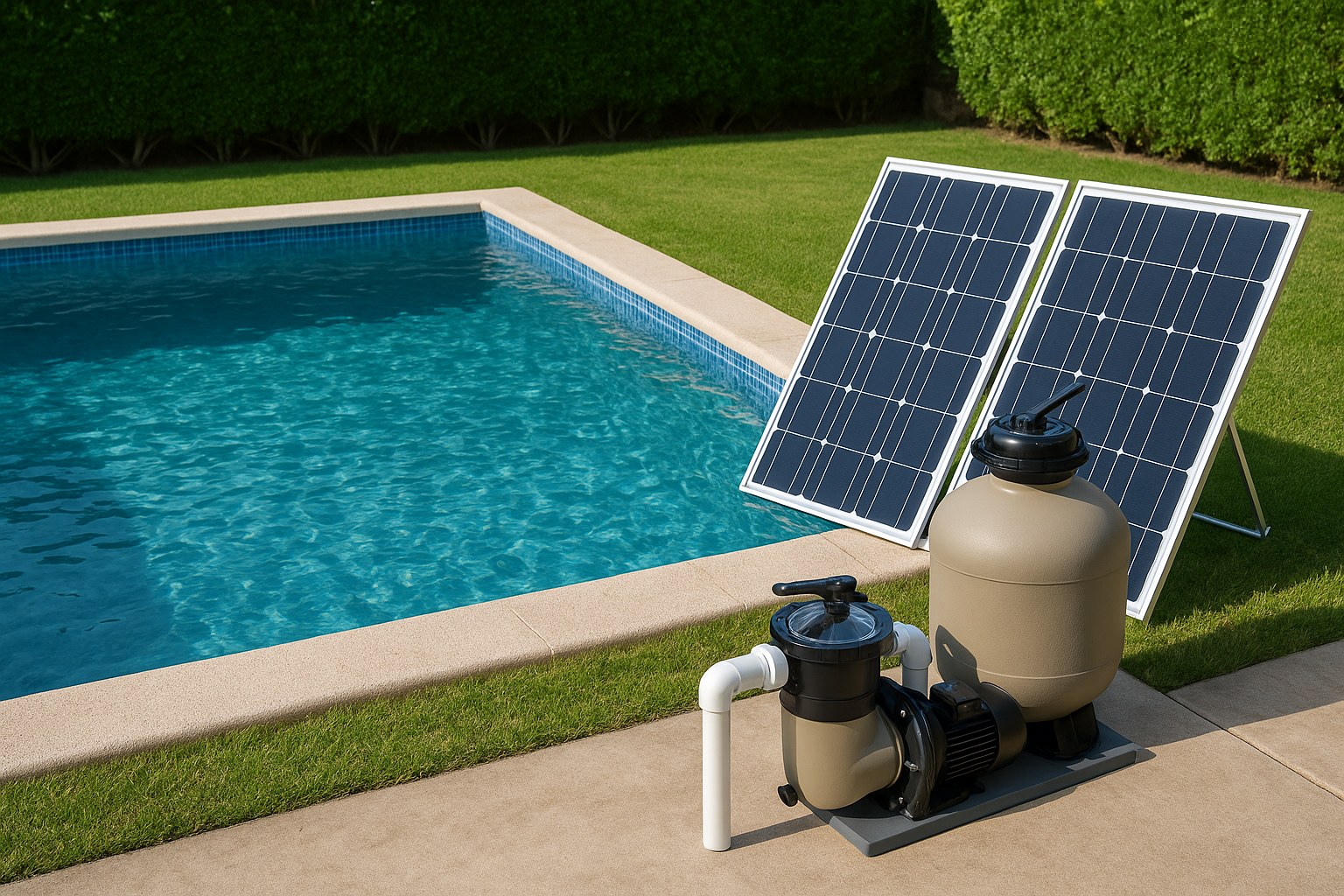
A complete solar pool pump system typically costs between $900 and $2,500.
The final price depends on the pump's size, the number of solar panels required, and the complexity of the installation.
It's a one-time investment that offers significant long-term savings.
Understanding what goes into this price reveals the true value.
The cost isn't just for a pump.
It is for an entire energy-saving system.
Let's break down the key components that determine the final price and performance.
This will help you make a smart investment for your pool.
The Economical Workhorse: Plastic Impeller Pump Kits
You need an affordable pump that circulates your pool water effectively.
But you worry about upfront costs and long-term durability.
Finding the right balance is key to a smart purchase.
This is the most popular and budget-friendly option, typically costing $900 to $1,500.
It offers excellent water flow and good durability for standard pool conditions.
This provides the best value for most residential pool owners, balancing performance and price perfectly.
The plastic impeller pump is the workhorse of the solar pool pump world.
It is a multi-stage centrifugal pump designed for one primary mission.
That mission is to move a high volume of water efficiently.
This makes it the perfect match for the daily circulation and filtration needs of a residential swimming pool.
Its design strikes an ideal balance between performance, durability, and most importantly, cost.
This is why it's the go-to choice for homeowners seeking to eliminate their pool's electricity bill without a massive upfront investment.
Cost Breakdown for a Standard System
The final price tag for a plastic impeller pump kit depends on your pool's specific needs.
The main factors are the size of your pool and how quickly you want to filter all the water.
A larger pool requires a more powerful pump and, consequently, more solar panels to run it.
Most kits are sold with everything you need.
This includes the pump, the motor, the solar panels, and the controller.
This all-in-one approach simplifies the purchase and installation process.
| Pool Size | Pump Power (Approx.) | Panel Wattage | Estimated Kit Cost |
|---|---|---|---|
| Small (Up to 15,000 gal) | 0.5 - 0.75 HP | 400 - 600 W | $900 - $1,100 |
| Medium (15,000 - 30,000 gal) | 1.0 - 1.5 HP | 700 - 1200 W | $1,100 - $1,500 |
| Large (Over 30,000 gal) | 2.0+ HP | 1300 - 1800 W | $1,500+ |
Why Plastic Impellers Are a Smart Choice for Pools
The impellers in these pumps are not made from ordinary plastic.
They are crafted from high-strength, wear-resistant engineered polymers.
This material is surprisingly durable.
It can easily handle the small amounts of debris and fine particles typically found in a pool environment.
This resistance to wear prevents the gradual decline in performance that can affect other pump types.
Furthermore, the lightweight nature of plastic components simplifies installation.
It also reduces shipping costs, contributing to the system's overall affordability.
It is a practical and reliable choice for the vast majority of pool applications.
The Premium Option: Stainless Steel Pump Kits
Your pool has a saltwater system.
Or you live in an area with chemically aggressive water.
A standard pump might corrode quickly, leading to costly replacements.
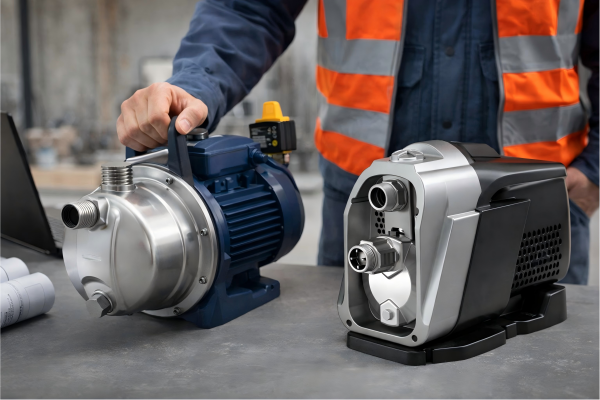
For saltwater pools or harsh water conditions, a stainless steel pump system is the premium choice.
It usually costs from $1,600 to $2,500+.
Its superior corrosion resistance ensures a much longer lifespan, justifying the higher initial investment.
When long-term durability in challenging conditions is your top priority, the stainless steel pump is unmatched.
This system takes the high-flow design of a centrifugal pump and builds it with premium materials.
It's engineered to withstand environments that would destroy lesser pumps.
This makes it the ideal solution for saltwater pools, which are becoming increasingly popular.
The salt, while great for swimmers, is highly corrosive to standard metals.
Investing in a stainless steel pump is like buying insurance for your pool's circulation system.
It provides peace of mind and saves you from the headache of frequent replacements.
Is a Stainless Steel Pump Worth the Extra Cost?
The initial price of a stainless steel kit is noticeably higher.
This is due to the cost of the SS304 stainless steel and the more intensive manufacturing process.
However, the value proposition becomes clear when you consider the total cost of ownership.
In a saltwater or otherwise corrosive environment, a standard pump might last only a few years.
A stainless steel pump can easily last over a decade in the same conditions.
This durability means you avoid the recurring cost of replacement pumps, installation labor, and the downtime of your pool's filtration system.
For the right application, the higher upfront cost is a smart financial decision that pays for itself over time.
Key Factors Driving the Price
The main price driver is the material itself.
SS304 stainless steel is used for the pump body, impellers, and all other parts that touch the water.
This ensures complete protection against corrosion.
These pumps are also built to a higher overall quality standard, contributing to their longevity and reliability.
They often deliver high flow rates combined with good pressure.
This makes them suitable for more complex pool setups with additional features like in-floor cleaning systems or water features.
- Longevity: Designed to last 10+ years in corrosive environments.
- Performance: Maintains strong flow and pressure for demanding applications.
- Peace of Mind: Eliminates worries about pump failure due to salt or water chemistry.
If your pool has a saltwater generator, the stainless steel option moves from a luxury to a necessity.
It ensures your entire solar investment is protected for the long haul.
How Screw Pumps Show System Reliability
You need water from a very deep well.
A typical pump can't generate enough pressure to lift the water hundreds of feet.
This leaves you with an unreliable water source.
A solar screw pump excels at creating high pressure to lift water from extreme depths.
Though not used for pools, its tough, sand-resistant design is a testament to the robust engineering found across the entire family of solar water pumps.
You won't find a screw pump in a solar pool pump kit.
So why is it relevant to the cost and value of your system?
The answer lies in understanding the engineering heritage behind your pump.
The technology for solar pumps was first proven in some of the world's toughest environments.
Screw pumps were designed to provide life-sustaining water from deep wells in off-grid areas of Africa and Latin America.
They had to be incredibly durable, efficient, and resistant to sand.
This same commitment to robust engineering is the foundation upon which all modern solar pumps, including your pool pump, are built.
The reliability you are paying for was forged in these demanding applications.
Understanding High-Head Engineering
A screw pump works through positive displacement.
It uses a single-helix metal rotor (the screw) that spins inside a double-helix rubber stator.
This action creates sealed pockets of water.
As the rotor turns, it pushes these pockets of water upward with immense force.
This design is perfect for creating very high pressure, or "head."
It can push a low flow of water from hundreds of feet deep.
This focus on pressure over volume is the opposite of what a pool pump needs.
A pool pump requires high volume at low pressure.
However, the precision engineering required to make a screw pump work reliably informs the quality of all pump designs from a top-tier manufacturer.
The Value of Sand Resistance
One of the greatest enemies of any water pump is sand and silt.
Abrasive particles can quickly wear down impellers and seals, causing the pump to fail.
The screw pump's rubber stator is remarkably flexible and resilient.
It can handle sandy water that would destroy a standard centrifugal pump in a short time.
This focus on durability and handling imperfect conditions translates to the pool pump you buy.
While your pool water should be clean, your pump has been designed with the toughness to handle unexpected debris without failing.
You are paying for a piece of equipment that is over-engineered for its task, which is a good thing for longevity.
The robust design philosophy ensures your investment is safe.
The BLDC Motor: The Secret to Lower Costs
An inefficient motor wastes precious solar energy.
This means you need to buy a bigger, more expensive solar panel array.
This added cost can make the whole project seem unaffordable.
Every modern solar pump uses a high-efficiency Brushless DC (BLDC) motor.
With an efficiency over 90%, it uses far less power.
This means you need fewer solar panels, significantly cutting the system's total cost and making solar power for your pool a reality.
The single most important component influencing a solar pool pump's cost and performance is the motor.
The pump head—whether it has plastic or steel impellers—is only half of the equation.
The motor is the heart of the system, turning solar electricity into water movement.
The biggest breakthrough in solar pumping has been the universal adoption of the Brushless DC (BLDC) motor.
This advanced technology is what makes a small, affordable solar array powerful enough to run your pool pump all day for free.
Its incredible efficiency is the key that unlocks the financial savings of going solar.
Understanding the motor's value is critical to understanding the total system cost.
Why High Efficiency Slashes Your Price
A BLDC motor is a model of efficiency.
It converts over 90% of the electrical energy it receives into mechanical power.
Older motor types, like brushed DC or standard AC motors, waste significantly more energy as heat.
This efficiency comes from a smart design using a permanent magnet rotor made of powerful rare-earth materials.
Crucially, there are no brushes that wear out and create friction.
This has a direct impact on your wallet.
Because the motor requires less power, it can run on a smaller solar panel array.
Solar panels are a major part of the system's cost.
By reducing the number of panels needed, a high-efficiency BLDC motor can cut the total price of a solar pool pump kit by hundreds of dollars.
| Motor Technology | Typical Efficiency | Impact on System Cost |
|---|---|---|
| BLDC Motor | > 90% | Lowest cost (Needs fewest panels) |
| AC Motor (with inverter) | 70-85% | Higher cost (Needs more panels) |
| Brushed DC Motor | 60-75% | Highest cost (Needs most panels) |
Smart Systems for 24/7 Operation
The BLDC motor is part of a larger, intelligent system.
It is managed by a sophisticated MPPT (Maximum Power Point Tracking) controller.
This controller acts as the brain of the operation.
It constantly analyzes the output from the solar panels and adjusts the electrical load to squeeze out every available watt of power, from dawn until dusk.
For those who need guaranteed 24/7 filtration, advanced hybrid controllers are available.
These devices can connect to both solar panels and your home's AC grid power.
The controller will prioritize free solar power whenever it's available.
Then, at night or on very dark, cloudy days, it will automatically switch to AC power.
This ensures your pool stays perfectly clean around the clock without any manual intervention.
Conclusion
The cost of a solar pool pump is an investment in freedom from high electricity bills.
With efficient technology, it pays for itself through years of free, reliable pool circulation.
Frequently Asked Questions
How much does it cost to run a solar pool pump?
Once installed, a solar pool pump costs virtually nothing to run.
It gets all its energy for free from the sun, eliminating the pump's portion of your electricity bill.
What size solar system do I need for a pool pump?
The system size depends on your pump's horsepower.
A 1.5 HP pump typically requires about 1,000 to 1,200 watts of solar panels to run effectively during peak sun hours.
Can you get a tax credit for a solar pool pump?
Yes, in the United States, solar pool pumps often qualify for the federal Residential Clean Energy Credit.
This can significantly reduce the net cost of your installation.
Do solar pool pumps work in the winter?
Yes, solar pumps work year-round as long as there is daylight.
Their performance will be reduced on shorter, cloudier winter days, but they will still circulate water.
Is it cheaper to run a pool pump at night or during the day?
For a standard pump, it's cheaper at night if your utility has lower off-peak rates.
A solar pump makes it free to run during the day, which is better for algae prevention.
How many years do solar pool pumps last?
A quality solar pump system is very durable.
The brushless motor can last over 10 years, and the solar panels are typically warrantied for 25 years of performance.
Do I need batteries for a solar pool pump?
No, batteries are not necessary.
The system is designed to use solar energy in real-time to circulate water when the sun is out, which is when pools need it most.