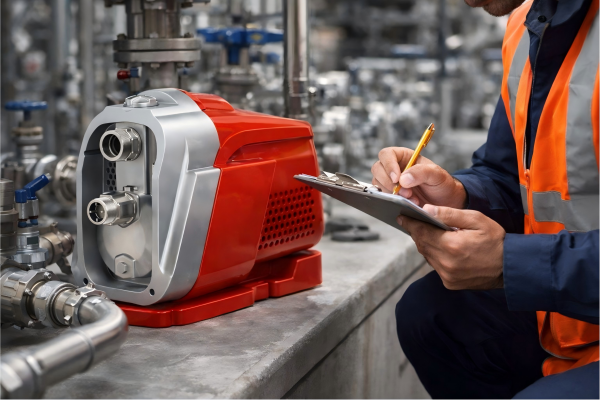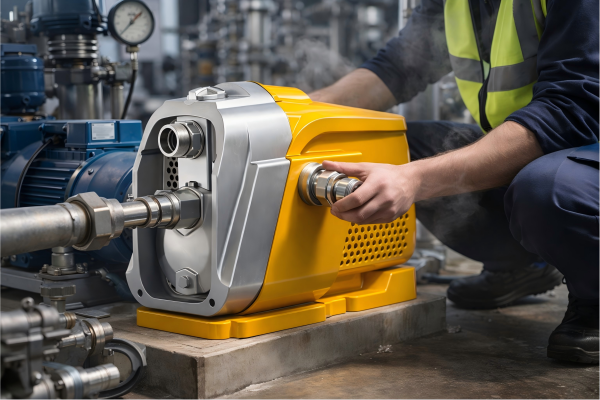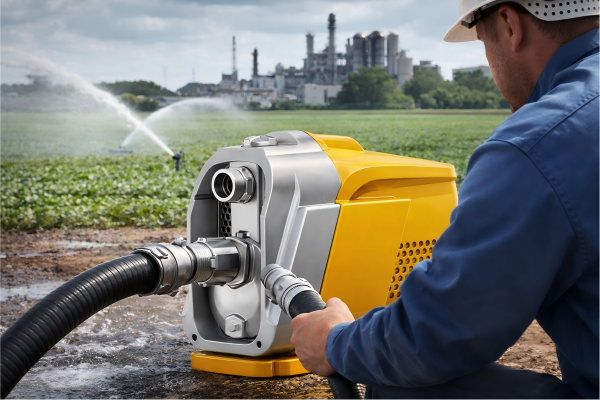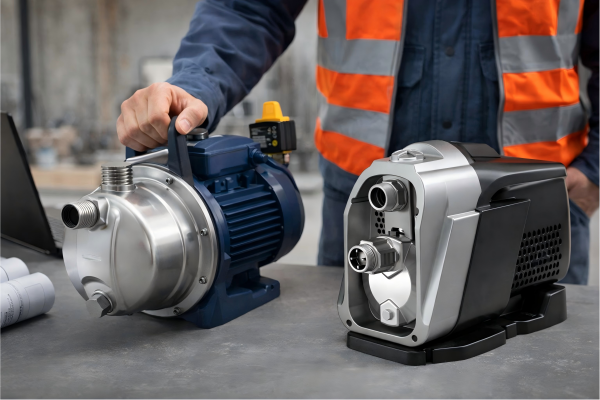
Your water trickles from the faucet, and your irrigation sprinklers barely mist the crops.
You blame your submersible pump, but the solution might be more complex than just a weak pump.
Ignoring the real cause wastes water, energy, and money.
To increase water pressure, first check your system for clogs, leaks, and undersized pipes.
If the system is clear, you may need to install an appropriately sized booster pump or replace your submersible pump with a high-head model designed to produce greater pressure.
Low water pressure is a common and frustrating problem.
It can turn a simple task like washing dishes into a lengthy chore.
It can also render an expensive irrigation system ineffective.
Many people immediately assume their submersible pump has failed or is just not powerful enough.
While this can be true, the pump is often just one part of a larger system.
The pressure you experience at the tap is the result of the pump's power minus all the pressure losses that occur along the way.
These losses can come from many sources.
Friction inside the pipes, leaks in the fittings, and clogs in filters all work against your pump.
Before you can effectively increase your water pressure, you need to understand where it is being lost.
It is a process of investigation.
You must look at the entire water delivery system, from the pump at the bottom of the well to the final outlet.
Only by identifying the root cause can you apply the right solution.
This could be a simple cleaning, a plumbing adjustment, or a strategic equipment upgrade.
We will explore each of these solutions in detail.
Part 1 | Checking Your System for Hidden Pressure Killers
You have a powerful pump, but your water pressure is weak.
You are about to spend a fortune on a new pump.
The real problem could be a simple clog or a leaky fitting that is stealing all your pressure.
Before upgrading your pump, diagnose your plumbing system.
Pressure is often lost to friction from undersized or long pipes, partial clogs in filters and foot valves, or hidden leaks.
Fixing these issues can restore pressure without replacing the pump.
Your submersible pump does not operate in a vacuum.
It is the heart of a complex network of pipes, valves, and fittings.
Every component in this network can either help or hinder water pressure.
Pressure loss is a natural phenomenon in any plumbing system.
It is caused by friction as water moves through pipes and the turbulence created as it passes through fittings and bends.
However, excessive pressure loss points to a problem in the system's design or maintenance.
A submersible pump might be generating 60 PSI at the wellhead, but if the system loses 40 PSI to friction and leaks, you will only have 20 PSI at the faucet.
This is a significant drop.
A properly designed and maintained system might only lose 5-10 PSI over the same distance.
Therefore, the first and most cost-effective step to increasing pressure is to conduct a thorough audit of your entire water system.
You are looking for anything that chokes the flow of water and robs you of pressure.
This investigation can often reveal simple fixes that restore your water pressure to its full potential, saving you the significant cost and effort of replacing the pump itself.
The Impact of Pipe Sizing and Friction
Pipe diameter is the most critical factor in pressure loss.
Forcing a high volume of water through a narrow pipe dramatically increases its velocity.
This higher velocity creates exponentially more friction against the pipe walls.
- Friction Loss: This resistance to flow directly translates to a drop in pressure. Doubling the flow rate through a pipe can increase friction loss by nearly four times.
- Best Practice: The suction and discharge pipes should always be at least the same diameter as the pump's outlet port, and often one size larger is recommended for long pipe runs. For example, upgrading from a 1-inch pipe to a 1.25-inch pipe can reduce friction loss by over 50%.
| Pipe Diameter | Flow Rate (GPM) | Friction Loss (PSI per 100 ft) |
|---|---|---|
| 1" | 10 | 3.2 |
| 1.25" | 10 | 1.0 |
| 1" | 20 | 11.5 |
| 1.25" | 20 | 3.5 |
Hunting Down Clogs and Leaks
Even with correctly sized pipes, blockages and leaks can cripple your pressure.
- Clogs: Sediment, rust scale, or mineral buildup can accumulate inside pipes over time, effectively reducing their internal diameter. Check foot valves, filters, and aerators, as these are common collection points for debris. A partially clogged filter can easily cause a 10-20 PSI pressure drop.
- Leaks: Even a small, pinhole leak in your plumbing line can cause a noticeable drop in pressure. Inspect all visible pipes and fittings for signs of moisture. A less obvious method is to turn off all water outlets and observe your pressure tank's gauge or the pump controller. If the pump cycles on and off intermittently, you likely have a leak somewhere in the system.
Part 2 | Choosing a Pump Designed for High Pressure
You have cleared your pipes, but your water pressure is still too low for your needs.
You need more force, but choosing the wrong pump is a costly mistake.
You could end up with a pump that uses more energy without delivering the pressure you require.
If system fixes are not enough, select a pump specifically built for high pressure.
A screw pump provides very high head for deep wells, while a multi-stage centrifugal pump with more impellers generates greater pressure for high-flow applications.
Once you have optimized your plumbing system, the pump itself becomes the focus.
Not all submersible pumps are created equal.
They are engineered for specific combinations of flow (the volume of water) and head (the vertical height or pressure they can generate).
If your pressure needs are high, you need a pump from the "high-head" category.
The ability of a pump to generate pressure is directly related to its design.
For centrifugal pumps, this is determined by the number and design of its impellers.
For screw pumps, it is determined by the length and precision of the rotor and stator.
Trying to force a low-head pump to perform in a high-pressure application is inefficient and will likely lead to its premature failure.
It is like using a small car to tow a heavy trailer; it might move, but the engine will be strained, and it will not perform well.
The correct approach is to match the pump's capabilities to the system's demands.
This involves understanding your total dynamic head and selecting a pump that can comfortably exceed it.
Understanding Head and Pressure
Head is the most important specification when choosing a pump for pressure.
- What is Head? Head is the maximum vertical height in feet or meters that a pump can lift water. It is a direct measurement of the pressure the pump can create. Every 2.31 feet of head is equivalent to 1 PSI of pressure (or 10 meters of head equals approximately 1 bar).
- Total Dynamic Head (TDH): This is the total pressure your pump must overcome. It is calculated by adding the vertical lift (from the water level in the well to the highest outlet), all friction losses in the pipes, and the desired final operating pressure at the faucet (e.g., 40 PSI). A correctly sized pump must have a maximum head rating that is significantly higher than your calculated TDH.
Pump Types and Their Pressure Capabilities
Different pump designs are optimized for different pressure outputs.
- Solar Screw Pumps: These are positive displacement pumps. They use a helical steel rotor spinning inside a rubber stator. This design traps and pushes "cavities" of water, creating very high pressure (high head) but with a lower flow rate. They are ideal for very deep wells in regions like Africa or Latin America where you need to lift water from hundreds of meters down.
- Multi-Stage Centrifugal Pumps (Plastic or Stainless Steel Impellers): These pumps use a series of impellers stacked on top of each other. Each impeller and diffuser combination is a "stage." Each stage adds a certain amount of pressure to the water. A pump with 10 stages will generate roughly twice the pressure of a similar pump with 5 stages. This design allows for a combination of high flow and high pressure, making them versatile for farm irrigation and community water supply. For corrosive water common in parts of Australia or the Americas, models with SS304 stainless steel impellers offer superior durability and maintain performance over time.
Part 3 | Boosting Pressure After the Pump
Your new high-head pump is installed, but you need even more pressure for a specific application.
You think you are out of options.
A simple, secondary pump can give you the targeted pressure boost you need right where you need it.
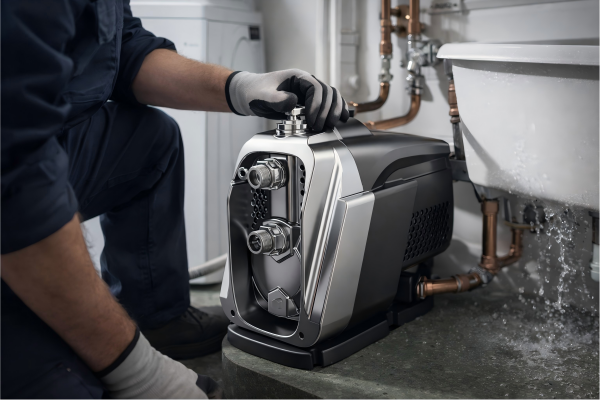
To increase pressure for a specific part of your system, install a booster pump.
This secondary pump is placed after the main submersible pump and pressure tank, taking the existing pressure and increasing it for high-demand uses like irrigation or multi-story buildings.
Sometimes, even a correctly sized submersible pump cannot meet all the pressure demands of a complex water system.
You might have sufficient pressure for your home but need much higher pressure for an agricultural irrigation line or a tall building.
In these situations, increasing the pressure of the entire system by installing an even larger submersible pump would be wasteful and inefficient.
A more targeted and energy-efficient solution is to use a booster pump.
A booster pump is a type of surface pump that is not self-priming.
It is designed to take water that is already flowing under some pressure and "boost" it to a higher pressure.
It works in series with your main submersible pump.
The submersible pump does the heavy lifting of getting the water out of the ground and into a pressure tank.
The booster pump then takes over for specific high-pressure tasks.
This approach provides flexibility and efficiency.
You are only using the extra energy to create high pressure when and where it is needed, rather than running a massive primary pump all the time.
How a Booster Pump System Works
A typical booster pump installation follows a clear sequence.
- Submersible Pump: Lifts water from the well to a pressure tank on the surface.
- Pressure Tank: Stores a reserve of pressurized water. This prevents the submersible pump from cycling on and off too frequently and provides a steady inlet pressure for the booster pump.
- Booster Pump: Installed on the plumbing line after the pressure tank. It draws from the tank and increases the pressure for a specific branch of the plumbing system.
- Pressure Switch/Controller: The booster pump has its own pressure switch or, in advanced systems, a variable frequency drive (VFD). This allows it to turn on automatically only when it detects a drop in pressure on its outlet side (i.e., when a high-pressure tap is opened).
Common Applications for Booster Pumps
Booster pumps are ideal for solving specific pressure problems.
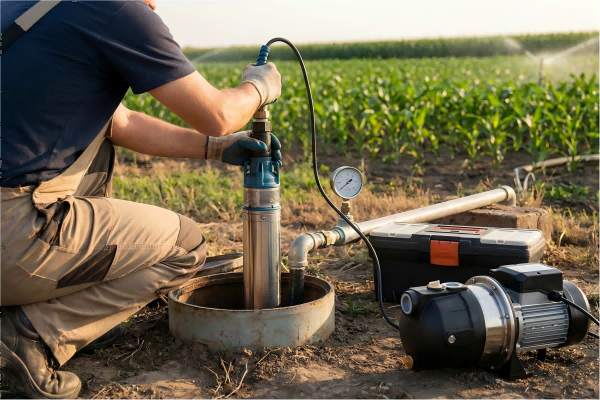
- Farm Irrigation: Many drip or sprinkler irrigation systems require a minimum of 40-60 PSI to operate correctly. A booster pump can ensure the sprinklers at the far end of a field have the same pressure as those near the pump.
- Multi-Story Homes or Buildings: Water pressure naturally drops by about 0.43 PSI for every foot of vertical elevation. A booster pump can ensure strong showers and faucet flow on the top floors.
- Water Treatment Systems: Some systems, like reverse osmosis (RO), require high inlet pressure to function efficiently. A small booster pump can be dedicated to just the RO unit.
- Long-Distance Water Transfer: When moving water over long, flat distances, friction loss can kill pressure. A booster pump can be installed midway through the pipeline to restore pressure. Advanced solar systems can even use a solar booster pump for this task, operating completely off-grid.
Part 4 | The Role of Modern Motor and Control Technology
You are focused on the pump, but you are overlooking the brain and muscle behind it.
You think pressure is all about impellers.
Modern motors and controllers can unlock higher performance and efficiency, directly impacting the pressure your pump can deliver.
To maximize pressure, leverage advanced technology.
A high-efficiency BLDC motor provides the necessary torque to drive a high-head pump, while an intelligent MPPT controller optimizes power from solar panels, allowing the pump to consistently run at its best performance speed.
Increasing water pressure is not just a matter of mechanics; it is also a matter of power and intelligence.
The pump's "wet end"—the impellers or screw—can only perform as well as the motor driving it and the controller managing it.
In modern solar pumping systems, the motor and controller technology are just as important as the pump type for achieving and maintaining high pressure.
These components are the core drivers of performance and efficiency.
A high-head pump requires a motor that can deliver high torque consistently, especially during startup and under heavy load conditions.
It also needs a smart controller that can extract every available watt from the solar panels to keep that motor running at the optimal speed for pressure generation, even as sunlight conditions change throughout the day.
Investing in a system with a superior motor and controller is a direct investment in reliable pressure.
It ensures that the mechanical potential of your high-head pump is fully realized.
The Power of the BLDC Motor
The motor is the engine of your pump system. The shift to Brushless DC (BLDC) permanent magnet motors has been a game-changer for submersible pumps.
- High Efficiency: BLDC motors can achieve efficiencies of over 90%, compared to 60-75% for traditional AC or brushed DC motors. This means more of the solar power is converted into rotational force, directly contributing to water pressure.
- High Torque: These motors, often using powerful neodymium magnets, produce high torque even at low speeds. This is critical for starting a high-head pump against a tall column of water and for handling difficult conditions without stalling.
- Compact and Reliable: The brushless design means there are no brushes to wear out, leading to a maintenance-free and longer service life. Their higher power density also means they are smaller and lighter (up to 39% lighter) than older motors of the same power rating, simplifying installation.
The Intelligence of the MPPT Controller
The solar controller is the brain of the system.
A Maximum Power Point Tracking (MPPT) controller is essential for getting the most out of your solar array.
- Maximizing Power Harvest: An MPPT controller constantly adjusts the electrical load on the solar panels to keep them operating at their peak power output voltage. This can increase the total energy harvested by up to 30% over a day compared to simpler controllers.
- Stabilizing Pump Performance: More harvested power means the controller can supply more consistent voltage and current to the motor. This allows the pump to maintain a higher average RPM throughout the day, which directly translates to more consistent and higher average water pressure.
- Hybrid Functionality: Advanced controllers also offer AC/DC hybrid capability. They can automatically switch to or blend in power from the grid or a generator when solar energy is insufficient. This ensures you can have high-pressure water 24/7, regardless of the weather, a crucial feature for households and critical agricultural operations.
Conclusion
Increasing pump pressure involves system checks, pump selection, and booster pumps.
Modern motors and controllers are key to maximizing performance.
A holistic approach ensures reliable, high-pressure water.
Frequently Asked Questions
Can a bigger pressure tank increase water pressure?
No, a pressure tank does not create pressure; it only stores it.
A larger tank can reduce pump cycling but will not increase the maximum system pressure.
Does a variable frequency drive (VFD) increase pressure?
A VFD can increase pressure by allowing you to run the pump motor at a higher speed (frequency) than its standard rating, but this can overload the motor.
How much pressure do I lose per foot of pipe?
This depends on the pipe diameter and flow rate.
It is not a fixed number and must be calculated using a friction loss chart for your specific conditions.
Can I put two submersible pumps in the same well?
This is generally not recommended.
The operation of one pump can interfere with the intake of the other, causing starvation and damage.
A single, correctly sized pump is better.
What is the fastest way to increase water pressure?
The fastest way is often to install a booster pump after your pressure tank.
This boosts pressure without needing to pull the submersible pump from the well.
How do I know if my pump is the right size?
You need to calculate your Total Dynamic Head (TDH) and required flow rate.
Then, check if this operating point falls within the efficient range on the pump's performance curve.
What is the difference between a booster pump and a submersible pump?
A submersible pump is placed down in the well and lifts water to the surface.
A booster pump is a surface pump that takes that water and increases its pressure further.