Struggling with a falling well water level?
You're losing pressure and constantly worrying about running dry.
It’s a frustrating problem that disrupts your entire water supply system.
To raise the water level in a well, you should first reduce water usage to let the aquifer recover.
Then, inspect your pump system for correct sizing and placement.
For lasting results, implement rainwater harvesting to recharge the groundwater, or consider professional methods like upgrading to an intelligent, energy-efficient pump.
Solving a low water level in your well can feel like a constant battle.
You might face intermittent water supply, sputtering faucets, and the looming risk of your pump running dry and burning out.
These issues disrupt daily life and can lead to expensive repairs.
However, modern solutions exist that not only address the immediate problem but also create a more resilient, efficient, and intelligent water system for the future.
This guide will walk you through both immediate fixes and advanced, long-term strategies.
We will explore how to manage your existing setup and how upgrading your core components, particularly the pump, can fundamentally transform your well's performance and reliability.
By understanding these methods, you can move from reactive problem-solving to proactive system optimization, ensuring a stable and powerful water supply for years to come.
Short-term solutions
Worried your well is about to run dry?
You're facing weak water pressure and fear that your pump might burn out.
This uncertainty can be stressful and disruptive.
A short-term solution involves immediately stopping water use to let the well recover.
Simultaneously, check that your pump is positioned correctly and that system components like filters and aerators are clean.
These simple steps can provide temporary relief and help diagnose the underlying issue.
When your well's water level drops, the immediate priority is to prevent system damage and restore supply as quickly as possible.
These initial steps are diagnostic tools as much as they are fixes.
They help you determine if the problem is a temporary overdraw, a simple maintenance issue, or a sign of a more serious problem with your aquifer or equipment.
While these actions might not solve a chronic low-yield issue, they are a crucial first line of defense.
Moving beyond these basic checks, we will explore how the right technology can automate protection against these common problems.
For instance, an intelligent pump system can sense a drop in water levels and automatically adjust its operation to protect itself, transforming a potential crisis into a managed event.
Checking and Optimizing Your Pump
An incorrectly configured pump is a primary cause of well problems.
A pump that is oversized for the well's yield rate will draw water faster than the aquifer can replenish it, creating an artificial water shortage and risking damage from dry running.
Conversely, a pump positioned too high in the well casing may lose access to water as the level drops, even if there is sufficient water deeper down.
Finally, a pump placed too low can draw in silt and sediment, which clogs the system and wears down components prematurely.
The key is to match the pump's performance to the well's specific characteristics.
This involves understanding not just the depth of the well, but its recovery rate—the speed at which water flows back in after being pumped out.
Modern pump technology offers sophisticated solutions to this challenge.
The Role of an Intelligent VFD Pump
A Variable Frequency Drive (VFD) booster pump represents a significant leap forward from traditional fixed-speed pumps.
Instead of running at full power every time it turns on, a VFD pump adjusts its motor speed in real-time to meet the exact water demand.
This intelligent operation provides several key advantages for wells with fluctuating water levels.
- Dry Run Protection: This is the most critical feature for a low-yield well. Advanced pumps use a multi-stage algorithm. Upon detecting a lack of water, the pump will stop to prevent overheating and attempt a self-priming cycle. If water is still not present, it enters a "sleep" mode, periodically re-checking for water at increasing intervals. This automated process protects the motor from burnout without requiring manual intervention.
- Soft Start and Soft Stop: Traditional pumps start and stop abruptly, causing a power surge and a physical jolt known as a water hammer. VFD pumps gradually ramp the motor speed up and down. This reduces mechanical stress on the entire system, from the motor bearings to the pipes, significantly extending a pump's operational life.
- Constant Pressure: Regardless of how many taps are open, a VFD pump maintains perfectly stable water pressure. It does this by precisely increasing or decreasing motor speed (RPM) to match the flow rate, eliminating the frustrating pressure fluctuations common with older systems.
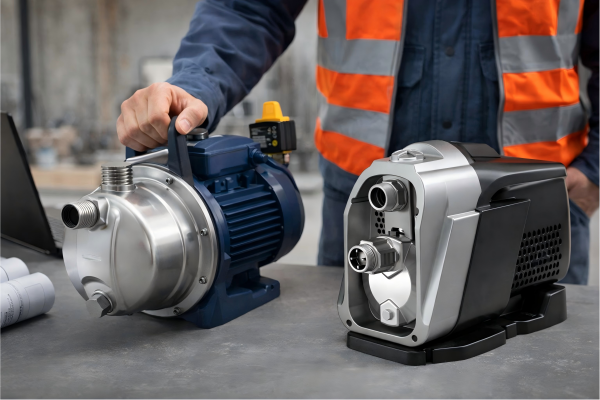
Below is a comparison of how a traditional pump and a VFD pump handle a low water situation.
| Feature | Traditional Fixed-Speed Pump | Intelligent VFD Pump |
|---|---|---|
| Low Water Event | Runs until it overheats or a simple float switch cuts power. Prone to burnout. | Engages multi-stage dry-run protection. Stops, waits, and retries automatically. |
| Pressure Control | Pressure fluctuates between high and low switch settings. | Maintains precise, constant pressure by adjusting motor speed. |
| Energy Use | Always runs at 100% power, consuming maximum electricity. | Varies motor speed, reducing energy consumption by up to 50% or more. |
| System Stress | Abrupt start/stop causes water hammer and high mechanical wear. | Soft start/stop eliminates water hammer and reduces wear on components. |
Upgrading to a VFD booster pump isn't just about getting water out of the well.
It's about managing your entire water system with intelligence, efficiency, and superior protection.
Long-term solutions
Tired of temporary fixes for your well's water level?
Band-aid solutions don't address the root cause, leading to recurring stress and potential system failure.
It's a frustrating, expensive cycle.
For a permanent solution, focus on recharging the aquifer with rainwater harvesting systems.
Also, upgrading to an energy-efficient VFD pump reduces overall demand and system stress, creating a more sustainable and reliable water supply for the future.
This two-pronged approach ensures long-term water security.
Achieving a truly stable water supply requires shifting from a reactive to a proactive mindset.
Instead of just dealing with the symptoms of a low water table, long-term solutions aim to solve the fundamental problem.
This involves two key strategies: increasing the amount of water available to your well and decreasing the overall strain on your water system.
Implementing groundwater recharge techniques helps replenish the aquifer your well depends on.
At the same time, optimizing your pumping equipment ensures that you are using this precious resource as efficiently as possible.
An advanced VFD pump is central to this strategy, as its energy efficiency and intelligent operation directly contribute to the sustainability of your well.
The Power of Groundwater Recharge
Groundwater recharge is the process of actively helping rainwater and surface water seep into the ground to replenish the aquifer.
In natural environments, this happens automatically.
However, in developed areas, surfaces like roofs, driveways, and compacted lawns increase runoff, preventing water from soaking in.
By implementing simple systems, you can capture this runoff and direct it back into the ground where it can benefit your well.
- Rooftop Collection: Gutter and downspout systems can be directed to infiltration trenches or dry wells—essentially pits filled with gravel—that allow large volumes of water to percolate slowly into the soil.
- Check Dams and Ponds: On larger properties, small dams (check dams) can be built in seasonal water channels to slow the flow of water and give it time to seep into the ground. A strategically placed pond can also act as a large reservoir that continuously recharges the groundwater beneath it.
- Native Vegetation: Planting native grasses, shrubs, and trees with deep root systems helps to break up compacted soil. This improves soil structure, enhances water retention, and reduces surface runoff, allowing more rainfall to reach the aquifer.
Efficiency as a Core Long-Term Strategy
While recharging the aquifer increases supply, reducing demand is equally important.
This is where equipment selection becomes critical.
A modern intelligent pump is designed from the ground up for maximum efficiency, which translates into less stress on your well and lower operational costs.
Excellence in Mechanical and Material Engineering
The longevity and reliability of a pump are determined by the quality of its components.
Cheaply made pumps wear out quickly, operate inefficiently, and are prone to failure, especially in challenging well conditions.
A premium VFD pump is built with superior materials designed for a long service life.
- Premium Motor Components: High-grade silicon steel in the stator and a high-temperature ferrite magnet in the rotor enhance motor efficiency and thermal management. This combination allows the motor to run cooler, directly contributing to a longer operational lifespan.
- Superior Bearings: The use of high-precision bearings from leading manufacturers results in quieter operation and significantly extends the lifespan of the motor's most critical moving parts.
- Corrosion-Resistant Hydraulics: Key components like the impeller are often made from AISI304 stainless steel. This material is highly resistant to corrosion and abrasion from minerals or sediment in the water, ensuring consistent hydraulic performance over many years.
A breakdown of material benefits is shown below:
| Component | Standard Material | Premium Material (e.g., AISI304) | Benefit |
|---|---|---|---|
| Impeller | Plastic or low-grade metal | AISI304 Stainless Steel | Resists corrosion and wear, maintains efficiency. |
| Motor Stator | Standard steel | 600-Grade Silicon Steel | Reduces energy loss, improves motor efficiency. |
| Bearings | Generic bearings | NSK/C&U Precision Bearings | Quieter operation, 11% longer lifespan. |
Investing in a pump with high-quality components is a direct investment in the long-term sustainability of your water system.
It ensures efficiency is maintained over the pump's entire life, reducing cumulative stress on the well and saving significant energy costs.
Professional methods
Are basic fixes not solving your well water problem?
You've tried everything, but the water level remains critically low, threatening your supply and equipment.
This level of failure requires expert intervention.
Professional methods involve a well specialist who can perform procedures like hydrofracking to open new water fissures or high-pressure jetting to clean the well screen.
Most importantly, they can assess and install a correctly sized, high-efficiency VFD booster pump, providing a robust, permanent solution.
When short-term and long-term DIY solutions are not enough, it's time to call in a professional well contractor.
These experts have the diagnostic tools and heavy equipment necessary to analyze and modify the well structure itself.
Their methods are designed to increase the flow of water from the aquifer into the well bore.
However, the most impactful professional solution often involves a comprehensive upgrade of the pumping system itself.
An experienced technician can evaluate your well's unique yield and depth to specify a pump that is not only powerful enough but also intelligent enough to manage the water supply efficiently.
This holistic approach, combining well remediation with a technology upgrade, offers the most reliable path to a permanent solution.
Advanced Well Rehabilitation Techniques
When a well's performance degrades, it can be due to clogging of the well screen or the surrounding rock fissures.
Professionals have several methods to address this.
- High-Pressure Jetting: A specialized tool is lowered into the well, blasting the screen and casing with high-pressure water jets. This action dislodges mineral buildup, sediment, and biological growth (biofouling) that can block water from entering the well.
- Hydrofracking: This process, also known as hydrofracturing, involves sealing off a section of the well and injecting water at extremely high pressure. This pressure is strong enough to fracture the surrounding bedrock, opening new channels for groundwater to flow into the well. It is a highly effective method for increasing the yield of wells drilled into solid rock.
- Lowering the Pump: If a well inspection reveals that the static water level is still high but the pump is set too shallow, a professional can simply lower the pump intake deeper into the well. This allows it to access a larger volume of water in the water column.
The Ultimate Professional Upgrade: The Intelligent Pumping System
While rehabilitation can improve inflow, the pump is the heart of the system.
A professional installation of a modern VFD pump is the single most significant upgrade you can make.
An expert will not just install the pump; they will engineer a complete system.
Uncompromising Electronic Reliability
The control electronics are the brain of a VFD pump, and they are also the most vulnerable component.
Moisture, dust, and vibration can cause premature failure.
Top-tier pumps address this with a critical design feature: a fully potted PCB.
- UltraShield PCB Potting: The main controller board is completely sealed in a solid block of potting compound. This creates an impenetrable, 100% waterproof, and dustproof barrier, achieving an IP67 protection rating for the electronics. This single feature can prevent over 95% of moisture-related failures and extend the controller's lifespan by 3 to 5 years.
A Comprehensive Suite of Protections
An intelligent pump is defined by its ability to protect itself and the system.
A professional-grade VFD pump includes a suite of up to 14 distinct protection functions that actively monitor the system.
| Protection Category | Specific Safeguards |
|---|---|
| Electrical & Thermal | Input Over/Under Voltage, Overcurrent, Phase Loss, Stall, and Overheating Protection. |
| System & Sensor | Dry Run (Water Shortage) Protection, Antifreeze Protection, and Pipeline Leak Warning. |
| Self-Diagnostics | Automatic failure warnings for internal temperature and pressure sensors. |
These protections work together to create a system that is almost entirely self-sufficient.
It can handle voltage fluctuations from an unstable grid, prevent damage from freezing, and alert the user to a leak in their plumbing, all while safeguarding its own motor and electronics from harm.
Engaging a professional to install such a system ensures it is perfectly matched to your well’s capacity, delivering a reliable, efficient, and permanent solution to your water supply challenges.
Conclusion
To solve low well water levels, combine aquifer recharge with technology.
Upgrading to an intelligent VFD pump provides constant pressure, energy savings, and crucial system protection for long-term water security.
FAQs
How can I make my well water last longer?
Reduce overall water consumption and fix any leaks in your plumbing.
Upgrading to an energy-efficient VFD pump also helps by drawing water more efficiently and reducing system waste.
What is the fastest way to get water back in a well?
The fastest way is to stop all water usage immediately.
This allows the aquifer to naturally seep back into the well bore, which can take anywhere from a few hours to a day.
Can a well be filled with water?
No, you should never fill a well from an external source like a hose.
This can contaminate the aquifer with surface bacteria and does not solve the underlying issue of poor inflow.
Why is my well pump not pumping water but it is running?
This often means the pump has lost its prime or the water level has dropped below the pump's intake.
An intelligent pump with dry-run protection will automatically shut off to prevent damage.
How do I increase water pressure from my well?
A VFD booster pump is the best solution.
It uses a variable speed motor to maintain a constant, strong pressure throughout your home, regardless of how many taps are open.
Does a bigger pressure tank increase water pressure?
No, a pressure tank does not create pressure; it only stores it.
A larger tank can reduce pump cycling but will not solve low pressure caused by the pump or well itself.
How do you fix a slow recovering well?
Professional methods like hydrofracking can increase the flow rate into the well.
Additionally, installing a VFD pump with a storage tank system helps manage demand for a slow-recovering well.
Can a well pump be too strong for a well?
Yes, an oversized pump can draw water faster than the well replenishes, a condition called over-pumping.
This can damage the pump and even the well itself over time.