You need a reliable water source, but you're off-grid.
Or perhaps your grid power is just too expensive.
Generators are noisy, costly to fuel, and require constant maintenance.
To run a water pump with solar, you connect solar panels to an intelligent controller, which then powers a highly efficient DC water pump.This system converts sunlight directly into water-pumping energy, providing a clean, quiet, and cost-effective solution.
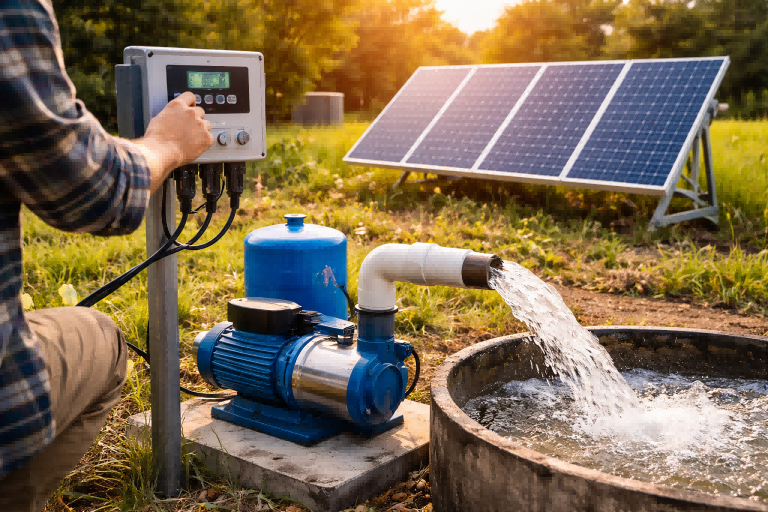
Harnessing the sun to move water is a transformative solution for agriculture, livestock, and domestic water needs worldwide.
However, a successful solar pumping system is more than just a standard pump hooked up to a few solar panels.
The real magic lies in a purpose-built system where every component is designed to work in perfect harmony.
It's an ecosystem of advanced technology, from the motor that drives the pump to the controller that manages the energy.
Understanding how these parts work together is key to unlocking a truly independent and sustainable water supply.
Let's explore the essential components that make this technology so powerful.
What is the core technology behind a solar pump?
You've seen "solar ready" pumps, but wonder if they are truly efficient.
Are they just regular pumps with a solar sticker?
You suspect there's a big difference between a patch-job and a dedicated system.
**The heart of a true solar pump is its high-efficiency Brushless DC (BLDC) permanent magnet motor.
This motor converts over 90% of solar energy into pumping power, dramatically outperforming standard AC motors and reducing the number of solar panels needed.
**
The single greatest factor determining a solar pump's performance and value is its motor.
This is where true innovation separates a professional-grade system from a hobbyist setup.
For decades, most water pumps have used AC induction motors.
While reliable on grid power, they are notoriously inefficient, often converting as little as 50% of the energy they consume into useful work.
The rest is lost as heat and noise.
This level of waste is unacceptable when your fuel source—sunlight—is limited.
Modern solar pumps solve this problem by using a fundamentally superior motor technology designed from the ground up for DC power from solar panels.
The BLDC Motor: Maximum Power from Every Sunbeam
A Brushless DC (BLDC) motor is the engine that drives a modern, high-performance solar pump.
Its design gives it a massive advantage, ensuring no watt of precious solar energy is wasted.
-
Extreme Efficiency: BLDC motors achieve electrical efficiency ratings of over 90%.
This means they do more work with less power.
This efficiency is so high that it can reduce the required number of solar panels by up to 25% compared to less efficient motor types, directly lowering your initial investment. -
Smart Power Management: These motors are controlled digitally by a sophisticated controller (often with Maximum Power Point Tracking or MPPT).
This allows the pump to adjust its speed in real-time based on the sun's intensity, starting earlier in the morning and running later in the evening. -
Built to Last: As the name implies, there are no brushes to wear out.
This eliminates the most common point of failure in traditional DC motors, resulting in a maintenance-free design with a significantly longer service life. -
Compact and Powerful: Using powerful rare-earth magnets like 40SH neodymium iron boron, BLDC motors generate incredible torque in a small package.
They can be up to 47% smaller and 39% lighter than an AC motor of equivalent power, which simplifies shipping, handling, and installation, especially in remote locations.
The table below clearly shows why BLDC motors are the only real choice for a serious solar pumping system.
| Feature | BLDC Permanent Magnet Motor | Standard AC Induction Motor |
|---|---|---|
| Energy Efficiency | > 90% | ~50% - 70% |
| Power Source | Native DC (Direct from solar panels) | AC (Requires power-wasting inverter) |
| Speed Control | Fully variable for optimal sun tracking | Fixed speed, inefficient at low power |
| Maintenance | Virtually maintenance-free | Brushes/components require service |
| Working Lifespan | Very long | Moderate |
Choosing a pump with a BLDC motor isn't just an upgrade; it is the foundation of an effective, reliable, and cost-efficient solar water system.
How do I choose the right solar pump for my water needs?
You need to move water, but every situation is different.
A deep well requires different power than a shallow pond.
Sandy water will destroy the wrong pump, wasting your money and time.
**Choose your pump based on its intended application.
Use a screw pump for low flow and high head (deep wells), a plastic impeller pump for high flow and wear resistance (irrigation), or a stainless steel pump for corrosive water.
**
Once you have a highly efficient motor, the next step is to pair it with the right "wet end"—the pump mechanism itself.
There is no one-size-fits-all solution.
The ideal pump for you depends entirely on your specific water source and how you plan to use the water.
Key factors include the depth of your well (which determines the "head," or vertical distance the water must be lifted), the required volume of water (the "flow rate"), and the quality of the water itself (such as the presence of sand or corrosive minerals).
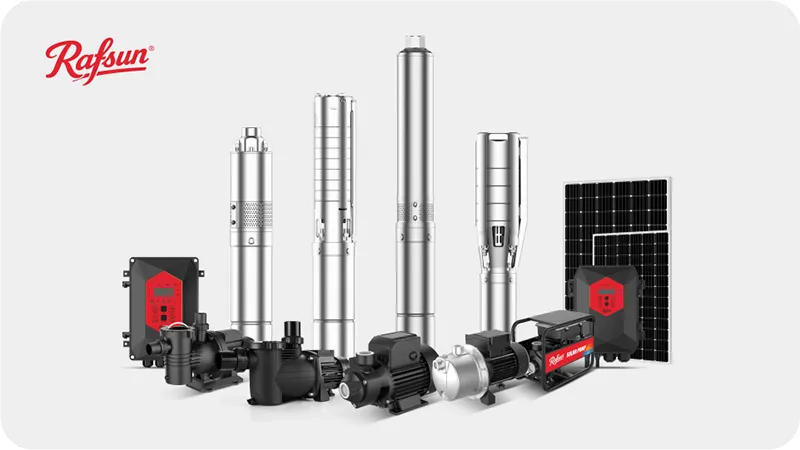
Leading manufacturers offer a portfolio of pump types, each engineered to excel in a different scenario.
Matching the right pump type to your job is crucial for long-term reliability and performance.
Solar Screw Pump: The Deep Well Specialist
A solar screw pump, also known as a progressing cavity pump, is your go-to solution for deep wells.
- How it Works: It uses a single helical stainless steel screw (rotor) that turns inside a rubber stator.
As the screw rotates, it forms a series of sealed cavities that push "screws" of water upwards with immense pressure. - Best Application: This design generates extremely high head but with a lower flow rate.
It's ideal for lifting water from very deep boreholes for domestic water supply, filling tanks for livestock, or small-scale drip irrigation. - Key Advantages: Its strong point is its exceptional resistance to sand and grit, which would quickly wear out other pump types.
It can operate reliably even in harsh water conditions found in many parts of Africa and Latin America.
Solar Plastic Impeller Pump: The High-Volume Workhorse
When you need to move a lot of water for farming, a multi-stage centrifugal pump with plastic impellers is the top choice.
- How it Works: This pump uses a stack of rotating impellers.
Each impeller adds pressure, pushing a high volume of water at a medium head. - Best Application: Ideal for farm irrigation, moving water to pastures for livestock, and large-scale garden watering where high flow is more important than extreme depth.
- Key Advantages: These pumps deliver the highest water output for the energy consumed.
The durable plastic impellers offer excellent resistance to fine sand, and the pump is lightweight and the most economical option, making it popular in the Americas and for agricultural projects globally.
Solar Stainless Steel Impeller Pump: The Durability Champion
For the most demanding environments, a premium pump with stainless steel components is essential.
- How it Works: This operates on the same centrifugal principle as the plastic impeller pump, but the impellers, pump body, and shaft are all made from SS304 stainless steel.
- Best Application: Specifically designed for water that is acidic, alkaline, or has high mineral content.
It's perfect for regions with corrosive water, such as the alkaline soils in parts of Australia, or for high-end homes and ranches where maximum longevity and reliability are demanded. - Key Advantages: It offers superior corrosion resistance and a very long service life.
While it has a higher initial cost, it is the most durable and reliable option for challenging water conditions.
| Pump Type | Primary Use Case | Key Strength | Flow/Head Profile |
|---|---|---|---|
| Solar Screw Pump | Deep Well Water Supply | High Sand Resistance | Low Flow / High Head |
| Plastic Impeller Pump | Farm & Pasture Irrigation | High Flow & Economical | High Flow / Medium Head |
| Stainless Steel Impeller Pump | Corrosive Water Environments | Corrosion Resistance | High Flow / Medium-High Head |
Can a solar pump provide water 24/7?
Solar power is fantastic, but the sun doesn't shine at night.
You worry a solar-only system will leave you without water on cloudy days.
This reliance on perfect weather feels like a major risk.
**Yes, you can get 24/7 water with a hybrid AC/DC solar pump system.
An intelligent controller automatically uses free solar power when available, and seamlessly switches to grid or generator power when it's dark or cloudy.
**
The single biggest hesitation for potential buyers of solar water pumps is the question of reliability.
What happens when you need water, but the sun isn't cooperating?
Early solar pump systems were DC-only, which meant no sun, no water.
This forced users to invest in massive, expensive, and high-maintenance battery banks to store energy for nighttime or cloudy day use.
Today, this problem is solved with a far more elegant and cost-effective solution: the AC/DC hybrid controller.
This smart device makes solar pumping a practical, worry-free solution for anyone with access to a secondary power source.
How the AC/DC Hybrid Controller Delivers Uninterrupted Water
A hybrid controller is a sophisticated power management system designed with two inputs: a DC input for your solar panels and an AC input for your home's grid power or a backup generator.
It operates on a simple, cost-saving priority system.
-
Solar Power is the Priority: The controller's primary goal is to run the pump using 100% free solar energy.
As long as the sun provides enough wattage to meet the pump's needs, the controller will not draw any power from the AC source.
This maximizes your savings. -
Intelligent Blending for Cloudy Conditions: During periods of intermittent cloud cover, the power from solar panels can dip.
Instead of shutting down, the controller will use all available solar energy and then "blend" in just enough AC power to maintain consistent pump operation.
It maximizes the use of free energy while ensuring performance never drops. -
Automatic Switchover for Night and Bad Weather: When the sun sets or cloud cover becomes too dense, the DC input falls below a usable threshold.
The controller detects this instantly and automatically switches over to the AC input, running the pump at full capacity from your grid or generator.
When the sun returns, it seamlessly switches back to solar priority.
This technology provides the best of all worlds: the economic benefit of solar with the 24/7 reliability of the grid.
You get water whenever you need it without the enormous cost and complexity of a battery-based off-grid system.
It's the ultimate solution for worry-free water security.
Conclusion
Running a water pump with solar is simple and highly effective with the right technology.
A BLDC motor, the correct pump type, and a hybrid controller provide a reliable, cost-free water supply.
Frequently Asked Questions
Can a solar pump run an AC pump?
No, a standard solar setup is designed for efficient DC pumps.
Running an AC pump requires an inverter, which adds cost and results in significant energy loss, making it inefficient.
What size solar panel do I need to run a water pump?
This depends on the pump's wattage.
As a rule of thumb, the total wattage of your solar panels should be at least 1.5 times the pump motor's wattage to ensure good performance.
How deep can a solar water pump work?
This depends on the pump type.
Solar screw pumps are designed for high head and can work in wells several hundred feet deep, while centrifugal pumps are better for shallower applications.
Do solar water pumps need batteries?
Not necessarily.
A hybrid AC/DC system can use the grid as a backup, which is much more cost-effective and maintenance-free than a battery bank for 24/7 operation.
How long do solar water pumps last?
A quality system with a brushless motor can last over 10 years.
The solar panels themselves typically have a performance warranty of 25 years, ensuring long-term energy production.
Can I use a solar water pump for my house?
Yes, absolutely.
When sized correctly and paired with a pressure tank, a solar pump system can provide all the water pressure and flow needed for a modern household.
What maintenance does a solar water pump require?
The pump and motor are virtually maintenance-free.
The only required maintenance is periodically cleaning the surface of the solar panels to ensure they are free of dust and debris.