Struggling with fluctuating water pressure and soaring electricity bills?
This inefficiency strains your plumbing and hurts your budget.
A variable speed drive (VSD) pump offers a powerful, modern solution.
Yes, a VSD pump is an excellent investment.
It delivers substantial long-term energy savings, quieter operation, and a longer equipment lifespan.
While the initial purchase price is higher, the savings on electricity bills often cover this cost within a few years, making it a financially sound choice.
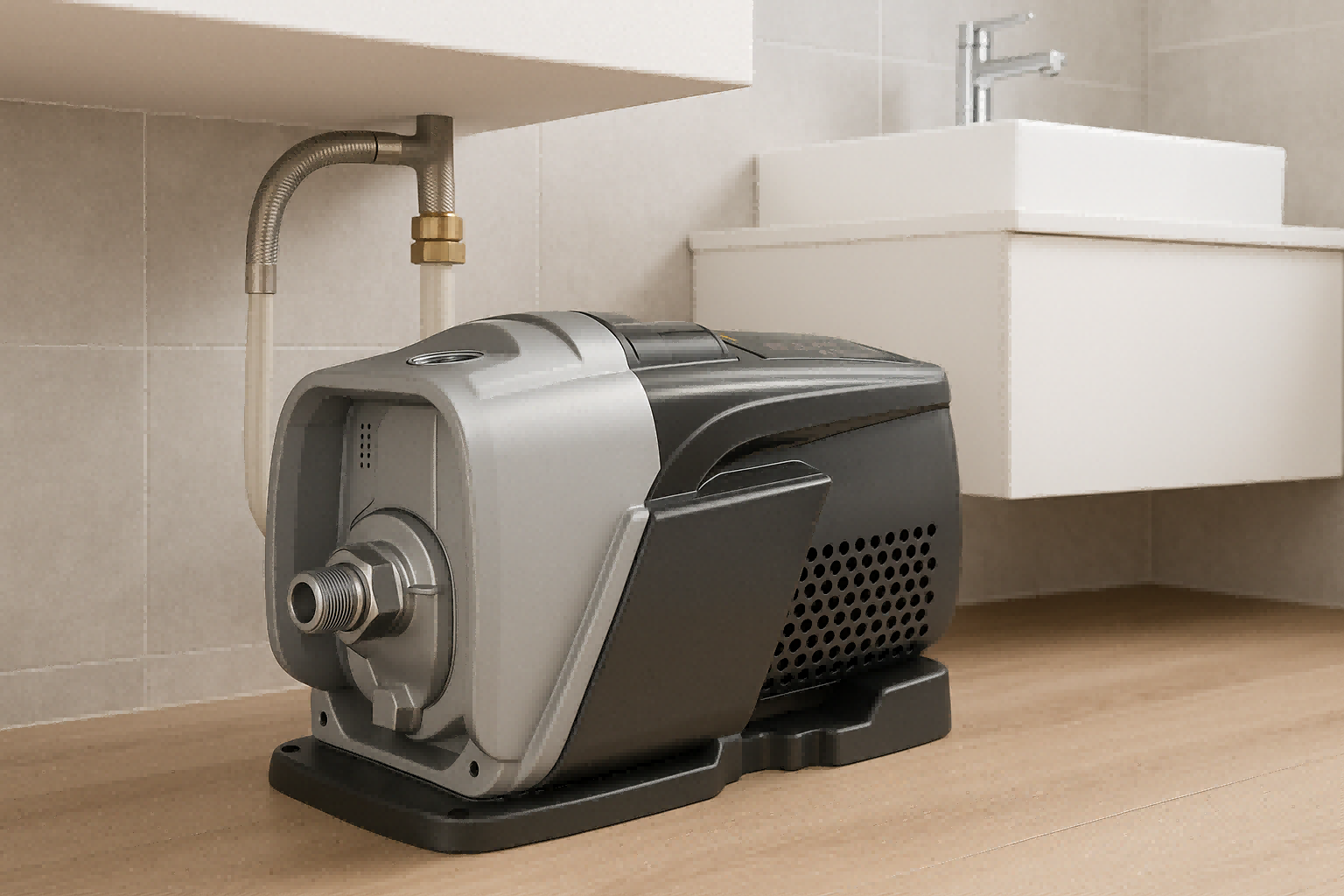
This technology might seem complex at first glance.
However, understanding its core advantages is straightforward.
A VSD pump is not just about saving energy.
It represents a complete upgrade in how your water system performs, protects itself, and interacts with users.
Let's explore the key technical pillars that make this technology a superior choice for nearly any residential, commercial, or industrial application.
We will break down exactly why this investment pays dividends far beyond the initial cost.
Superior Performance & Energy Efficiency
Are you tired of pumps that deliver inconsistent flow and consume excessive power?
This leads to poor user experience and unnecessarily high operational costs, eating into your profits.
A VSD pump solves this by perfectly matching motor speed to water demand.
Yes, VSD pumps are exceptionally energy-efficient.
By running at lower speeds for most tasks, such as simple filtration or low-demand circulation, they can reduce energy consumption by up to 80-90% compared to traditional single-speed pumps, leading to dramatic cost savings.
The performance of a VSD pump goes far beyond simple on-off functionality.
Its design philosophy centers on delivering precisely what is needed, when it is needed, without waste.
This is achieved through a sophisticated combination of advanced motor technology and intelligent electronic control.
Core Drive Technology
The heart of the system is a high-efficiency Permanent Magnet Synchronous Motor (PMSM).
This motor works in perfect harmony with a Variable Frequency Drive (VFD) controller.
The VFD adjusts the electrical frequency supplied to the motor, which in turn precisely controls the motor's speed (RPM).
This synergy ensures the pump provides a stable, constant water pressure regardless of how many taps are open.
It eliminates the frustrating pressure drops and surges common with older pump systems.
This core technology provides several distinct advantages.
One of the most user-friendly benefits is the implementation of soft-start and soft-stop functions.
Instead of jolting to full power instantly, the motor gradually ramps up to its target speed.
This process significantly reduces mechanical stress on the motor, bearings, and couplings.
It also prevents the hydraulic shock, or "water hammer," that can damage pipes and fittings over time.
Unlocking Massive Energy Savings
The primary financial benefit of a VSD pump is its incredible energy efficiency.
A traditional single-speed pump always runs at 100% power, even when only a small amount of water is needed.
This is like driving your car with the accelerator pushed to the floor at all times.
In contrast, a VSD pump intelligently reduces its speed to match demand.
This follows a fundamental principle known as the Pump Affinity Laws.
These laws state that pump power consumption is related to the cube of its flow rate.
This means even a small reduction in speed leads to a massive reduction in energy use.
| Speed Reduction | Flow Rate Reduction | Power Consumption Reduction |
|---|---|---|
| 10% | 10% | ~27% |
| 20% | 20% | ~49% |
| 50% | 50% | ~88% |
As the table shows, reducing the pump speed by just 20% can cut energy consumption nearly in half.
For tasks like pool filtration or maintaining pressure in a system with low usage, the pump might run at 30-40% speed, resulting in energy savings of 80% or more.
Over the course of a year, these savings accumulate quickly, directly contributing to a lower total cost of ownership.
User-Centric Performance Features
Modern VSD pumps are designed with the end-user and installer in mind.
They offer a wide range of customizable settings to suit any application.
Users can typically adjust the target constant pressure from 20% to 95% of the pump's maximum capability.
This flexibility makes a single pump model suitable for a vast array of scenarios, from a small home to a multi-story commercial building.
Furthermore, many units are engineered to handle wide voltage fluctuations, often operating perfectly in a range from 165V to 260V.
This makes them incredibly reliable even in areas with unstable power grids.
The ultra-quiet operation, with noise levels often below 50dB, is another significant performance benefit.
This is quieter than a typical library or a soft conversation, making the pumps ideal for installation near living or working spaces.
Unmatched Durability & Reliability
Worried about pumps failing prematurely due to harsh conditions or electrical problems?
Unexpected breakdowns lead to costly downtime, emergency repairs, and damage to your professional reputation.
Modern VSD pumps are built with multiple layers of protection to ensure a long, reliable service life.
Yes, a major benefit of a VSD pump is its enhanced durability.
By operating at lower average speeds, there is significantly less heat, vibration, and stress on the motor, bearings, and seals.
This reduced mechanical wear translates directly into a longer operational lifespan and fewer maintenance requirements.
A pump's reliability is not determined by a single component.
It is the result of a holistic engineering approach that considers mechanical strength, electronic resilience, and intelligent self-protection.
From the materials used in its construction to the software that guards its operation, every aspect is designed to withstand demanding environments and unpredictable events.
A truly durable VSD pump is a fortress, engineered to protect itself from both internal and external threats, ensuring it continues to operate dependably for years.
Excellence in Mechanical Engineering
The foundation of a durable pump lies in the quality of its physical components.
Top-tier VSD pumps utilize premium materials selected specifically for longevity and performance.
- Impellers and Pump Body: The hydraulic core often features impellers made from AISI304 stainless steel or high-grade brass. This material offers exceptional resistance to corrosion and abrasion, ensuring the pump's hydraulic efficiency does not degrade over time. The pump housing is frequently made from UV-resistant ABS plastic to prevent degradation from sun exposure in outdoor installations.
- Motor Construction: The stator, a critical motor component, is built with high-grade silicon steel to improve efficiency and reduce heat buildup. It uses Class F insulation wire, which can withstand high temperatures, providing a crucial safety margin under heavy loads.
- Premium Bearings: The use of high-quality, precision-engineered bearings is a non-negotiable feature in a durable pump. These components reduce friction and operational noise, but more importantly, they last significantly longer than standard alternatives, preventing premature motor failure.
- Enhanced Cooling: Longevity is directly linked to effective thermal management. Advanced designs incorporate superior airflow channels and heat dissipation systems. These features can improve heat dissipation efficiency by over 80%, keeping the motor cool and dramatically extending its operational life.
The Ultimate in Electronic Protection
Perhaps the most critical innovation for long-term reliability in harsh environments is advanced PCB potting.
The main electronic controller board, the "brain" of the pump, is its most sensitive component.
In this protective process, the entire circuit board is fully encapsulated in a solid, waterproof, non-conductive potting compound.
This creates an impenetrable barrier against environmental threats.
| Threat Factor | Without Potting | With Potting (IP67 Rating) |
|---|---|---|
| Moisture | High risk | No risk (100% waterproof) |
| Dust/Debris | High risk | No risk (fully sealed) |
| Condensation | High risk | No risk (impervious) |
| Pests | Moderate risk | No risk (impenetrable) |
This complete sealing achieves an IP67 protection rating, meaning the electronics are totally protected from dust and can be submerged in water.
This technology single-handedly prevents the vast majority of failures related to moisture, corrosion, and condensation, which are common causes of pump failure.
By isolating the electronics, potting can extend the controller's lifespan by an estimated 3 to 5 years.
A Comprehensive Suite of Intelligent Safeguards
Beyond physical robustness, smart VSD pumps employ a sophisticated array of software-based protections.
These systems actively monitor operating conditions in real-time and take preventative action to avoid damage.
A comprehensive protection suite often includes over a dozen unique safeguards.
Key protections include:
- Dry Run Protection: This is one of the most vital safeguards. If the pump detects a lack of water, it stops automatically to prevent catastrophic overheating. It will then enter a smart recovery mode, periodically attempting to re-prime itself at set intervals until water returns.
- Electrical Protection: This includes shielding against input voltage that is too high or too low, overcurrent situations, motor stalls, and electrical phase loss.
- Thermal Protection: The system constantly monitors the temperature of the driver board, the motor, and the water itself. If any temperature exceeds safe limits, the pump will shut down to cool off.
- System Protection: Many pumps include warnings for pipeline leaks and automatic antifreeze functions, where the pump circulates water briefly to prevent freezing in cold climates.
Smart Design & Advanced Features
Do you need a pump that does more than just move water?
Basic pumps lack the flexibility for modern systems, such as dual-pump setups, hot water applications, or remote management.
Smart VSD pumps offer advanced, programmable features that provide enhanced control and system longevity.
Yes, VSD pumps offer incredible flexibility.
You can program different speeds for various tasks, such as low speed for quiet overnight filtration and high speed for running a spa or water features.
Many models also support remote control and intelligent linking for even greater functionality.
The "smarts" in a smart VSD pump refer to its ability to adapt, communicate, and optimize the entire water system, not just its own motor.
These advanced features move the pump from a simple component to the central control hub of the water network.
This intelligence provides tangible benefits, from reducing mechanical wear across the whole system to enabling complex, automated operations that would be impossible with traditional pumps.
Exploring these features reveals a new level of efficiency and convenience.
Intelligent System Integration
Modern VSD pumps are designed to be team players.
They can integrate with other equipment to create a more efficient and resilient system.
- Twin Pump Link Mode: This is a powerful feature for applications requiring high reliability or variable peak demand. Two pumps are linked electronically. Under normal load, one pump may operate. As demand increases, the second pump automatically activates to assist. The system intelligently alternates which pump is the lead to ensure even wear and tear on both units. Crucially, if one pump fails, the other automatically takes over, providing a built-in backup system that guarantees uninterrupted water supply.
- Hot Water Capability: Specially designed VSD pumps can handle hot water up to 75°C (167°F) or higher. This makes them ideal for hot water circulation systems, solar heating applications, and industrial processes that require the movement of heated fluids.
- System Longevity Features: The inclusion of a small pressure tank is a simple yet highly effective feature. A pressure tank (1.5L - 5L) acts as a buffer, absorbing small pressure fluctuations and supplying water for minor uses (like a dripping faucet) without needing to start the pump. This can reduce the number of times the pump starts and stops by over 70%. Fewer cycles mean less wear on the motor, starter, and electrical components, significantly extending the pump's life.
Intuitive User Interface and Diagnostics
Despite their internal complexity, smart pumps are remarkably easy to operate and monitor.
They typically feature a clear user interface with a few buttons and a series of LED indicators.
Simple Controls for Complex Operations
A user can easily perform key functions without needing an engineering degree.
- On/Off: Simple press of a power button.
- Pressure Adjustment: Dedicated UP and DOWN buttons allow for precise setting of the desired constant pressure.
- System Reset: A long press of a button can restore the unit to factory settings.
Deep, Real-Time Monitoring
For advanced users and technicians, the pump offers a wealth of real-time data.
A long press of a display button often cycles through critical operating parameters, providing deep insight into the system's health and performance.
| Display Code (Example) | Parameter Displayed |
|---|---|
A.xx |
Real-time water temperature |
P.xxx |
Real-time power draw (Watts) |
xxxx |
Current motor speed (RPM) |
U.xxx |
Live input voltage |
t.xx |
PCB controller board temperature |
This diagnostic capability allows for easy troubleshooting and system optimization.
At-a-glance LED indicators provide immediate visual feedback on the pump's status, instantly showing if it's in constant pressure mode, if a leak is detected, if there's a voltage fault, or if the system is in a water shortage state.
This combination of simple control and deep diagnostics makes the pump both user-friendly for daily operation and transparent for technical assessment.
Conclusion
For most applications, a VSD pump is a superior investment.
The significant energy savings, extended equipment life, and quieter, more reliable performance easily justify the higher initial cost over time.
FAQs
What is the payback period for a VSD pump?
The payback period is typically 1-3 years.
This depends on your electricity costs and how many hours the pump runs daily.
High-use applications see a much faster return.
Can a VSD pump replace a single-speed pump?
Yes, a VSD pump can directly replace a single-speed pump.
It often uses the same plumbing connections, making the physical installation straightforward for a qualified professional.
Are VSD pumps difficult to program?
No, most modern VSD pumps have simple, intuitive interfaces.
Basic setup usually involves setting the desired pressure, while pre-programmed modes handle common tasks like filtration automatically.
Do VSD pumps require special maintenance?
VSD pumps generally require less maintenance than single-speed pumps.
The reduced mechanical stress means components like seals and bearings last longer, leading to fewer service calls.
Can a VSD pump work with my existing pool controller?
Many VSD pumps can integrate with existing automation systems.
However, it's essential to check for compatibility between the pump model and your specific controller before purchasing.
How does a VSD pump improve water quality?
VSD pumps improve water quality by running longer at slow speeds.
This allows for more thorough filtration and better circulation, ensuring chemicals are distributed more evenly throughout the water.
What size VSD pump do I need?
Pump sizing depends on factors like pool volume, plumbing size, and required flow for features.
Consulting a professional is the best way to ensure you select the correctly sized pump.
Is a VSD pump noisy?
No, VSD pumps are significantly quieter than single-speed pumps.
When running at lower speeds for filtration, they are often whisper-quiet, making them barely noticeable.