Worried your pool pump's nonstop operation is inflating your energy bill?
You're not alone.
Many pool owners face this silent but significant expense, unsure how to balance clean water with costs.
Running a traditional single-speed pool pump 24/7 can be very expensive, potentially adding $100 to $200 or more to your monthly electricity bill.
However, modern variable-speed pumps (VSPs) running at lower speeds can operate longer for a fraction of the cost, often saving up to 90% on energy.
It's a common dilemma: you want a sparkling clean pool, but you don't want to break the bank paying for electricity.
The myth that a pump must run 24/7 for optimal cleanliness is a costly one.
The key isn't just about how long the pump runs, but how smart it runs.
Understanding the factors that influence cost and the technology available can empower you to find that perfect balance.
Let's dive into how you can achieve a pristine pool without the financial sting.
Understanding Your Pump's True Role and Responsibilities
Struggling to justify the high cost of your pool pump's constant operation?
It's a common pain point.
The belief that 24/7 is a must-have for a clean pool is financially draining.
Your pump's primary responsibility is water circulation, not constant operation.
The goal is to turn over the entire volume of your pool water at least once daily.
For most residential pools, this can be achieved in about 8-10 hours with a correctly sized pump.
The core function of a pool pump is to act as the heart of your pool's circulatory system.
It pulls water from the pool through skimmers and main drains, pushes it through a filter to remove debris, and then sends it through heaters or chlorinators before returning it, clean and treated, to the pool.
This process, known as "turnover," is essential for maintaining water clarity and hygiene.
The misconception is that this process needs to be continuous.
This is rarely the case.
The Turnover Rate: The Most Critical Metric
The "turnover rate" is the time it takes for your pump and filter system to circulate a volume of water equal to the entire volume of your pool.
The industry standard for residential pools is to achieve at least one full turnover per day.
To calculate your required run time, you first need to know two things: your pool's volume and your pump's flow rate.
- Pool Volume (Gallons): Length x Width x Average Depth x 7.5 (for rectangular pools)
- Pump Flow Rate (Gallons Per Minute - GPM): This is specified by the manufacturer.
Once you have these figures, you can calculate the ideal run time.
| Pool Volume (Gallons) | Pump Flow Rate (GPM) | Gallons per Hour (GPH) | Required Run Time for One Turnover |
|---|---|---|---|
| 15,000 | 35 | 2,100 | ~7.1 hours |
| 20,000 | 40 | 2,400 | ~8.3 hours |
| 30,000 | 50 | 3,000 | 10 hours |
As the table shows, a 24-hour cycle is often more than double what's necessary, leading to significant wasted energy and money.
Why 24/7 is Sometimes Recommended
So why do some people still run their pumps 24/7?
There are a few scenarios where extended run times might be needed, but they are typically temporary:
- After a Shock Treatment: To ensure the chemicals are fully distributed.
- During an Algae Outbreak: To filter out dead algae spores quickly.
- Heavy Pool Use: After a large pool party, for example.
In these specific instances, a temporary 24-hour run is a corrective measure, not a daily routine.
For normal day-to-day operation, targeting one or two turnovers is the most efficient and cost-effective strategy.
Calculating the 'Payment': The True Cost of 24/7 Operation
Shocked by your last electricity bill after running the pool pump nonstop?
This financial drain is a direct result of energy consumption.
It's time to understand the numbers behind the expense.
The cost is calculated by multiplying the pump's kilowatt-hours (kWh) by your local electricity rate.
A typical 1.5 HP single-speed pump can use over 2 kWh, costing $0.30-$0.50 per hour.
Running 24/7, this adds up to $7.20-$12.00 per day, or $216-$360 per month.
The "payment" for running your pool pump 24/7 shows up directly on your utility bill.
It's not a fixed fee; it's a variable cost based on a clear formula.
Understanding this formula is the first step to taking control of your expenses.
The two key variables are your pump's power consumption and your electricity provider's rates.
These factors combine to create a daily, monthly, and yearly cost that might surprise you.
Breaking Down the Cost Formula
To accurately calculate your pump's operating cost, you need to follow these steps.
It's simpler than it sounds.
-
Find Your Pump's Wattage: Check the pump's label for Amps (A) and Volts (V).
The formula is: Watts = Amps x Volts.
For example, a pump running at 10 amps on a 240-volt circuit uses 2,400 watts. -
Convert Watts to Kilowatts (kW): Since electricity is billed in kilowatt-hours (kWh), divide the watts by 1,000.
In our example: 2,400 Watts / 1,000 = 2.4 kW. -
Calculate Daily Energy Use (kWh): Multiply the kW by the number of hours you run the pump.
For 24-hour operation: 2.4 kW x 24 hours = 57.6 kWh per day. -
Determine Your Electricity Rate: Look at your utility bill for the price per kWh.
Let's assume a rate of $0.20 per kWh. -
Calculate the Final Cost: Multiply the daily kWh by your electricity rate.
57.6 kWh x $0.20/kWh = $11.52 per day.
This amounts to over $345 per month.
Comparing Pump Technologies: The Financial Impact
The type of pump you own has the single biggest impact on your energy bill.
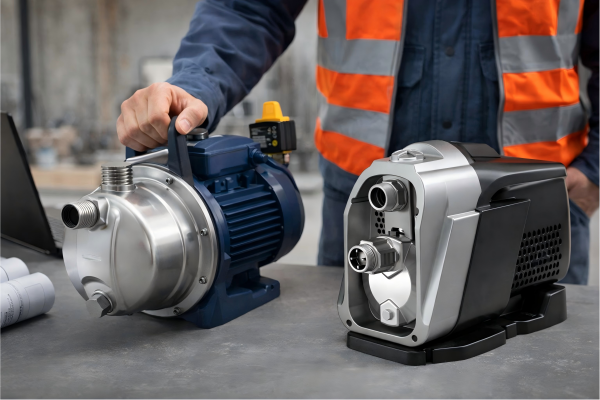
The difference between older single-speed pumps and modern variable-speed pumps is dramatic.
| Pump Type | Average Power Usage (kW) | Daily Cost (24/7) @ $0.20/kWh | Monthly Cost (24/7) @ $0.20/kWh |
|---|---|---|---|
| Single-Speed Pump | 1.5 - 2.5 kW | $7.20 - $12.00 | $216 - $360 |
| Two-Speed Pump (on low) | 0.3 - 0.5 kW | $1.44 - $2.40 | $43 - $72 |
| Variable-Speed Pump (VSP) | 0.1 - 0.3 kW (low speed) | $0.48 - $1.44 | $14 - $43 |
As the data shows, a variable-speed pump (VSP) running at a low speed 24/7 can cost less than a single-speed pump running for just a few hours.
This is because VSPs are up to 90% more efficient.
They can run at the precise low speed needed for filtration for most of the day, only ramping up to higher speeds for short periods when needed (e.g., for vacuuming or running a heater).
This technology offers the best of both worlds: superior filtration from longer run times and massive energy savings.
Optimizing Your Pump's Schedule and Lifespan
Feeling like your pump is overworked and on a path to early failure?
Constant 24/7 operation puts immense strain on a pump's motor and components, shortening its lifespan significantly.
An optimized schedule based on turnover needs, typically 8-10 hours, is the best strategy.
This reduces wear and tear, extending the pump's lifespan from 3-5 years (for 24/7 use) to 8-10 years or more, saving you money on both energy and premature replacement.
The idea that more is always better simply doesn't apply to pool pump operation.
Running a pump continuously is not only a waste of electricity but also a surefire way to accelerate its demise.
Every mechanical device has a finite operational lifespan.
By strategically scheduling its operation, you not only slash energy costs but also preserve the health of your equipment, delaying the costly expense of a full replacement.
This is about working smarter, not harder.
The Impact of Continuous Operation on Equipment
A pool pump is a motor-driven machine with moving parts like bearings and impellers.
Just like a car engine, these components wear out over time with use.
Running a pump 24/7 means it accumulates three times the operational hours of a pump running for 8 hours a day.
- Motor Overheating: Continuous operation generates constant heat, which is the primary enemy of electric motors.
Over time, this heat can break down the winding insulation, leading to motor failure.
Even with built-in cooling fans, 24/7 use in hot climates puts extreme thermal stress on the unit. - Bearing Wear: The motor's bearings are under constant rotational stress.
Non-stop use accelerates wear, leading to noisy operation and eventual seizure.
Replacing bearings is a complex repair that often leads homeowners to replace the entire pump. - Seal Degradation: The pump shaft seal prevents water from entering the motor.
Constant heat and friction from 24/7 operation cause this seal to degrade faster, resulting in leaks that can damage the motor beyond repair.
Crafting the Ideal Pumping Schedule
Creating an efficient schedule is a matter of balancing filtration needs with energy conservation.
**1.
Run a Shorter Cycle**
As established, most pools only need 8-10 hours to achieve one full turnover.
If your water stays clean on this schedule, there is no benefit to running it longer.
**2.
Utilize a Timer**
A simple mechanical or digital timer is an essential investment.
It automates your schedule, ensuring the pump runs for the exact duration needed without any manual intervention.
This is the single most effective tool for controlling run time.
**3.
Consider Off-Peak Hours**
Many utility companies offer lower electricity rates during "off-peak" hours, typically overnight.
Check with your provider.
Scheduling your 8-hour cycle to run during these times can reduce your costs by an additional 20-40% without changing a single thing about your pool's maintenance.
| Time of Day | Electricity Rate Type | Potential Benefit |
|---|---|---|
| Peak (e.g., 2-7 PM) | High | Most expensive time to run your pump. |
| Avoid if possible. | ||
| Mid-Peak | Standard | Moderate cost. |
| Acceptable if off-peak is not an option. | ||
| Off-Peak (e.g., 10 PM - 6 AM) | Low | Cheapest time. |
| Ideal for significant cost savings. |
By combining a shorter run time with an off-peak schedule, you attack the problem from two directions, maximizing both energy savings and the lifespan of your valuable pool equipment.
The Owner's Obligations: Proper Pump Maintenance
Running your pump efficiently is great, but are you neglecting basic maintenance?
A poorly maintained pump has to work harder, using more energy and risking a shorter lifespan, negating your savings.
Proper maintenance is your obligation as a pool owner.
This includes regularly cleaning the skimmer and pump baskets, ensuring proper water levels, and checking for leaks.
These simple tasks can improve efficiency by 10-25% and prevent costly failures.
Your pool pump can't perform at its best without your help.
Think of it as a partnership.
You provide the right operating schedule, and in return, you must ensure the equipment is in optimal condition to execute that schedule efficiently.
Neglecting these simple but crucial maintenance tasks is like driving a car with underinflated tires; you'll get where you're going, but you'll burn a lot more fuel and cause unnecessary wear along the way.
Taking a few minutes each week for maintenance is a non-negotiable part of smart, cost-effective pool ownership.
Essential Maintenance Checklist
These are not suggestions; they are obligations for any pool owner who wants to save money and extend the life of their equipment.
Integrate this checklist into your weekly routine.
**1.
Empty Skimmer and Pump Baskets**
- What they do: These baskets are the first line of defense, catching large debris like leaves, twigs, and insects before they can clog the pump's impeller or the filter.
- Why it's important: A clogged basket restricts water flow.
When flow is restricted, the pump is forced to work much harder to pull water through the system, a condition known as "running dry" or "cavitation." This dramatically increases energy consumption and can quickly overheat and destroy the motor. - Frequency: Check and empty at least once or twice a week, more often after storms or if you have many trees.
**2.
Maintain Proper Water Level**
- What it is: The water level in your pool should always be about halfway up the skimmer opening.
- Why it's important: If the water level drops too low, the pump will start to suck in air along with water.
This air can cause the pump to lose its prime (its ability to pull water), leading to the motor running without moving any water.
This is extremely damaging and can burn out a motor in minutes. - Frequency: Visually check the water level daily.
**3.
Check and Lubricate O-Rings**
- What they are: Rubber O-rings create watertight seals, most notably on the pump lid.
- Why it's important: A dry or cracked O-ring will allow air to be sucked into the system, reducing efficiency and putting strain on the motor.
A small amount of pool-grade lubricant keeps the rubber supple and ensures a tight seal. - Frequency: Inspect every time you open the pump lid and lubricate 2-3 times per year.
| Maintenance Task | Frequency | Impact of Neglect |
|---|---|---|
| Empty Baskets | 1-2 times per week | Reduced flow, motor strain, increased energy use |
| Check Water Level | Daily | Pump can lose prime, risk of motor burnout |
| Inspect Lid O-Ring | Weekly | Air leaks, reduced efficiency, loss of prime |
| Backwash Filter | When pressure is 8-10 PSI above normal | Restricted flow, poor filtration, pump strain |
These tasks are simple, take very little time, and are the most effective way to ensure your pump operates at peak efficiency for years to come.
Conclusion
Running a pool pump 24/7 is not only unnecessary but also very expensive.
By optimizing run times and using modern, efficient pumps, you can save hundreds of dollars annually.
FAQs
How many hours a day should I run my pool pump?
Most pools need 8-10 hours per day to "turn over" the water, which is enough to keep it clean.
Run it longer after heavy use or a storm.
Is it better to run a pool pump at night?
Yes, running your pump overnight during off-peak hours can save you money if your utility company offers lower rates.
It also helps distribute chemicals added in the evening.
How much does a variable-speed pool pump save?
A variable-speed pump can save up to 90% in energy costs compared to a single-speed model.
The savings often pay for the pump in under two years.
Can I run my pool pump 4 hours a day?
Running it for only 4 hours is likely not enough to properly circulate and filter the water in an average-sized pool, which could lead to algae and clarity issues.
Does a dirty filter make the pump run longer?
A dirty filter restricts water flow, forcing the pump to work harder and less efficiently.
It doesn't necessarily change run time, but it increases energy use and strain.
What is the best time of day to run a pool pump in the summer?
Ideally, run it for a few hours during the day to circulate chemicals when the sun is strongest, with the majority of the cycle during cheaper off-peak hours at night.