Struggling with low water pressure or high energy bills from your pumps?
Traditional pumps often fail to deliver high pressure efficiently.
This costs you money and leads to unreliable performance.
Multi-stage pumps use several impellers working in series.
This design achieves much higher pressures with greater energy efficiency than single-stage pumps.
They provide smoother flow and reduced vibration.
They are ideal for demanding applications from high-rise buildings to industrial processes.
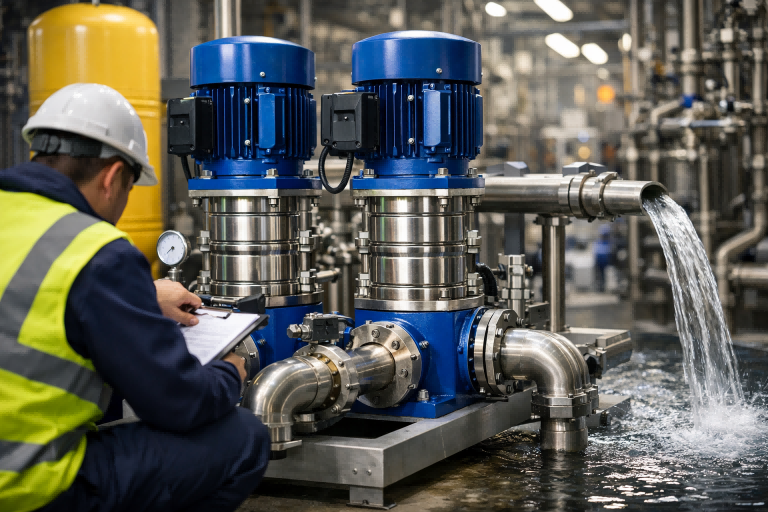
These pumps are the workhorses in countless modern water systems.
You might find them in skyscrapers, on farms, or inside complex factory setups.
But what exactly makes them the superior choice for so many demanding jobs?
Let's break down the core advantages of this powerful technology.
Understanding these benefits will help you make smarter, more profitable decisions for your business and clients.
High Pressure Generation
Are your projects struggling with insufficient water pressure?
A single-impeller pump might not provide the force needed for demanding tasks.
This can bring your operations to a standstill.
Multi-stage pumps excel at generating significant pressure.
They use multiple impellers arranged in a series.
Each impeller boosts the water pressure further.
This creates a very high total head.
This is perfect for high-pressure cleaning, boiler feeds, or supplying water to tall buildings.
Multi-stage pumps are engineered specifically to overcome high resistance.
Their design principle is simple yet remarkably effective.
Instead of relying on one large, powerful impeller, the work is divided.
Water enters the first chamber and is pressurized by the first impeller.
It then immediately flows into the next chamber.
The second impeller takes this already-pressurized water and adds more pressure.
This process continues through every stage of the pump.
How Pressure Compounds in a Multi-Stage System
The total pressure, or head, generated is cumulative.
It is the sum of the pressure added by each individual stage.
This allows designers to achieve exceptionally high output pressures.
They do this without needing a single, massive, and inefficient impeller.
A pump with five stages, each adding 2 bar of pressure, will output a total of 10 bar.
| Feature | Single-Stage Pump | Multi-Stage Pump |
|---|---|---|
| Pressure Source | One single impeller | Multiple impellers in series |
| Max Pressure | Limited by impeller size/speed | Very high, scalable by adding stages |
| Ideal Use Case | Low-pressure, high-flow transfer | High-pressure, moderate-flow boosting |
| Example | Circulating water in a pool | Pumping water to the top of a skyscraper |
Modern Control for Precise Pressure
Modern multi-stage pumping systems take this a step further.
They often integrate advanced motor control technology.
A high-efficiency motor paired with a variable frequency drive (VFD) offers precise control.
This combination allows the user to adjust the output pressure with incredible accuracy.
For example, you can set the system to deliver pressure anywhere from 20% to 95% of its maximum capability.
This ensures the pump only delivers the exact pressure required.
It avoids wasted energy and unnecessary mechanical stress.
Energy Efficiency
Are rising electricity costs cutting into your profits?
Traditional fixed-speed pumps often run at full power, even when it's not needed.
This leads to significant energy waste over time.
A multi-stage design is inherently more energy-efficient for high-pressure tasks.
By dividing the work across several smaller impellers, each stage operates closer to its Best Efficiency Point (BEP).
This reduces overall power consumption and lowers operating costs significantly.
Efficiency in a pump is about more than just motor power.
It's about how effectively that power is converted into fluid movement and pressure.
In a single-stage pump pushed to create high pressure, the impeller operates far from its ideal design point.
This causes hydraulic losses, turbulence, and wasted energy.
A multi-stage pump avoids this problem entirely.
Operating at the Best Efficiency Point (BEP)
Every impeller has a BEP.
This is the flow and pressure point where it operates most efficiently.
In a multi-stage pump, each smaller impeller is designed to run at or near its BEP.
The total load is distributed evenly across all stages.
This means the entire pump assembly maintains high efficiency even while producing very high final pressures.
It is a much smarter way to handle the workload.
The Role of Advanced Motor Technology
The pump's mechanical efficiency is only part of the equation.
Modern systems pair multi-stage pumps with Permanent Magnet Synchronous Motors (PMSMs).
These motors offer superior efficiency compared to traditional asynchronous motors.
When a PMSM is controlled by a Variable Frequency Drive (VFD), the energy savings become even greater.
Here’s how this advanced combination saves energy:
- Constant Pressure, Variable Speed: The VFD constantly adjusts the motor's speed to match the real-time water demand. If only one faucet is open, the pump runs slowly. If many are open, it speeds up. It never uses more power than necessary.
- Soft Start & Soft Stop: Instead of jolting to full power, the VFD gradually ramps the motor up and down. This electrical soft start reduces the massive inrush current typical of fixed-speed motors, saving energy on every cycle.
- Eliminating Throttling Waste: Old systems often used oversized pumps and throttling valves to control pressure. This is like driving your car with the accelerator pushed to the floor while using the brake to control your speed. It's incredibly wasteful. A VFD system eliminates this waste completely.
This intelligent approach can reduce electricity consumption by up to 50% or more in many applications.
Space Savings
Is equipment room space a constant challenge on your projects?
Large, bulky pumps can be difficult to fit into tight mechanical rooms or existing infrastructure.
This can complicate installations and increase costs.
Vertical multi-stage pumps offer a remarkably small footprint.
Their design stacks the impellers vertically instead of horizontally.
This makes them an ideal choice for tight spaces, such as in high-rise buildings or compact industrial facilities.
They deliver high performance without demanding a large area.
The clever design of a vertical multi-stage pump is a game-changer for engineers and installers.
The motor is mounted directly on top of the pump housing.
The pump stages are stacked neatly below it.
The inlet and outlet connections are typically on the same level (in-line design).
This makes piping simple and straightforward.
The entire unit occupies a small square of floor space, freeing up valuable room for other equipment.
Horizontal vs. Vertical Configurations
Multi-stage pumps come in both horizontal and vertical orientations.
Each has its preferred applications.
- Vertical Multi-Stage Pumps: These are the champions of space-saving. They are the standard choice for building services, HVAC systems, and many water treatment applications where floor space is at a premium. Their in-line connections also simplify pipe layouts.
- Horizontal Multi-Stage Pumps: These pumps are longer and lower. They are often preferred in industrial settings where overhead clearance is limited. They can also be easier to service in some situations, as components are more spread out.
The choice between them often comes down to the specific constraints of the installation site.
However, for pressure boosting in commercial and residential buildings, the vertical configuration is almost always the superior option due to its compact nature.
The Impact on Installation and Maintenance
The small footprint of vertical pumps also simplifies project logistics.
They are easier to transport and position within a building.
Retrofitting them into an existing system is often less disruptive.
While maintenance might seem more complex, many modern designs feature cartridge-style mechanical seals.
This allows for quick and easy replacement without having to dismantle the entire pump.
This thoughtful engineering ensures that the pump's compact size does not come at the cost of serviceability.
Stable & Smooth Operation
Are you dealing with complaints about noise, vibration, or fluctuating water pressure?
Pumps working too hard can cause these issues.
This leads to user dissatisfaction and can damage the plumbing system over time.
The multi-stage design provides a smoother, more consistent fluid delivery.
The flow is less pulsed compared to a single large impeller doing all the work.
This results in lower vibration, reduced noise, and less risk of cavitation.
The result is a stable and reliable water supply.
The stability of a multi-stage pump comes from its balanced design.
The pressure is built up gradually in small increments.
This smooth progression avoids the intense hydraulic forces and turbulence that can occur in a single-stage pump trying to achieve the same pressure.
This operational grace has several important benefits for the entire water system.
Reduced Vibration and Noise
Because the work is distributed, each impeller operates more smoothly.
There are no sudden, large pressure changes within the pump casing.
This directly translates to less structural vibration.
Lower vibration means quieter operation.
A well-engineered multi-stage pump can operate at noise levels under 50dB.
That is quieter than a typical library environment.
This is a critical feature for residential buildings, hotels, and hospitals where noise is a major concern.
Mitigating Water Hammer
The smooth operation is further enhanced by features like soft start and soft stop.
A VFD controller ensures the pump never starts or stops abruptly.
This gradual acceleration and deceleration prevents hydraulic shock, also known as water hammer.
Water hammer is a destructive pressure wave that can damage pipes, joints, and valves.
By eliminating it, the pump protects the entire plumbing infrastructure and extends its lifespan.
Enhanced System Longevity with Pressure Tanks
To further improve stability and reduce pump cycling, many systems incorporate a small pressure tank.
This tank holds a reserve of pressurized water.
For small uses of water, like washing hands, the tank supplies the water without the pump needing to start.
This simple addition can reduce pump start/stop cycles by over 70%.
Fewer cycles mean less wear on the motor, bearings, and seals.
The tank also acts as a buffer, absorbing any minor pressure fluctuations and ensuring a perfectly smooth supply to the user.
Durability & Reliability
Do pump failures cause costly downtime and emergency repairs for your clients?
A pump is only as good as its weakest component.
Pumps built with inferior materials in harsh environments are destined for a short service life.
High-quality multi-stage pumps are built for durability.
Manufacturers use robust materials like stainless steel for key components.
Advanced features, such as fully waterproofed electronics and comprehensive protection systems, ensure they withstand demanding environments and provide a long, reliable service life.
Reliability is not an accident; it is the result of deliberate engineering choices.
In a multi-stage pump, this starts with the materials used for the parts that handle water.
Excellence in Materials and Mechanics
- AISI 304 Stainless Steel: The impellers, diffusers, and pump shaft are often constructed from high-grade stainless steel. This material offers excellent resistance to corrosion and abrasion, ensuring the pump's hydraulic performance does not degrade over time, even with challenging water quality.
- Premium Bearings: The motor relies on bearings for smooth rotation. Using high-quality bearings from reputable manufacturers is a critical detail. These precision components offer quieter operation, handle loads better, and have a significantly longer lifespan compared to standard alternatives.
- Enhanced Cooling: A motor's life is directly related to how well it manages heat. Top-tier designs incorporate superior cooling systems. This can include aerodynamically designed fan cowls and heat sinks that improve airflow and heat dissipation. A cooler-running motor is a longer-lasting motor.
Uncompromising Electronic Protection
Perhaps the most significant modern advancement in pump reliability is the protection of its electronic brain.
The printed circuit board (PCB) that controls the VFD and motor is extremely sensitive.
To protect it, leading manufacturers use a process called PCB Potting.
The entire controller board is encapsulated in a solid block of waterproof, dustproof, and shock-resistant resin.
This creates an "UltraShield" for the electronics, offering several benefits:
- IP67 Waterproofing: The sealed core is completely impervious to moisture, condensation, and dust. This is projected to prevent over 95% of failures caused by environmental factors.
- Extended Lifespan: By isolating the sensitive electronics from the harsh, humid environment typical for pumps, this feature can extend the controller's life by 3 to 5 years.
A Comprehensive Suite of Safety Functions
Intelligent pumps also feature a built-in "guardian angel" system.
This is a suite of software and sensor-based protections that actively monitor the pump's health.
This system can include over a dozen individual safeguards.
| Protection Category | Specific Safeguards |
|---|---|
| Electrical & Thermal | Over/Under Voltage, Overcurrent, Phase Loss, Motor Stall, Overheating |
| System & Hydraulic | Dry Run (Water Shortage), Antifreeze, Pipeline Leak Warning, Water Hammer |
| Sensor Safety | Self-diagnostics for temperature and pressure sensor failures |
This multi-layered approach to reliability ensures the pump not only performs well but continues to do so safely for many years.
Versatility
Do you need a single pump solution that can adapt to different applications?
Stocking many different pump models can be complex and costly.
A flexible and adaptable product range is more efficient for business.
Multi-stage pumps are exceptionally versatile.
Their modular design allows for easy adaptation by adding or removing stages.
This makes them suitable for a diverse range of applications, from simple water transfer to complex processes like reverse osmosis and boiler feeding.
The adaptability of multi-stage pumps is one of their greatest strengths.
This versatility stems from both their mechanical design and their integration with modern smart controls.
Modular Mechanical Design
The "stackable" nature of a multi-stage pump's impellers is the key to its modularity.
A manufacturer can use the same core motor and housing components to create a wide range of pumps.
By simply varying the number of impellers (stages), they can offer a family of products that covers a huge spectrum of pressure and flow requirements.
A 3-stage pump might be perfect for a small house.
An 8-stage pump using many of the same parts could supply a multi-story office building.
This simplifies manufacturing and inventory for both the producer and the distributor.
Adaptable for a Wide Range of Applications
This inherent flexibility makes them suitable for an impressive list of tasks:
- Building Water Supply: The most common use, providing constant pressure to residential and commercial high-rises.
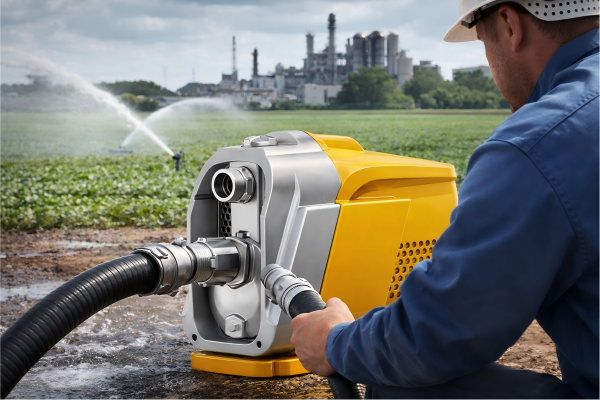
- Irrigation: Pumping water over long distances or up steep hills for agricultural use.
- Reverse Osmosis (RO): Creating the high pressures needed to force water through fine membranes in water purification systems.
- Boiler Feed: Injecting feed water into high-pressure steam boilers in industrial plants.
- High-Pressure Cleaning: Supplying water for industrial cleaning systems.
- Firefighting Systems: As booster pumps in sprinkler and hydrant systems.
- Hot Water Circulation: Some models are built to handle hot water up to 75°C, making them ideal for solar heating and hot water recirculation loops.
Intelligent System Features
Modern smart controls add another layer of versatility.
Features like Twin Pump Link Mode allow two pumps to work together intelligently.
The system can run one pump for low demand, both pumps for high demand, or alternate between them to equalize wear.
It also provides an automatic backup if one pump fails.
The ability to connect to a building management system or even a smartphone via an optional WiFi module allows for remote monitoring and control.
This remote access transforms the pump from a simple mechanical device into part of a smart, interconnected water management system.
Conclusion
Multi-stage pumps offer unmatched high-pressure performance, energy efficiency, and operational stability.
Their compact design and robust construction make them a durable and versatile choice for demanding applications everywhere.
FAQs
What is the main difference between a single-stage and a multi-stage pump?
A single-stage pump has one impeller.
A multi-stage pump has two or more impellers in series to generate progressively higher pressures.
Are multi-stage pumps more efficient?
Yes, for high-pressure applications, they are more energy-efficient.
Each impeller operates closer to its best efficiency point, reducing overall power consumption.
Can a multi-stage pump be used for a well?
Yes, multi-stage designs are commonly used in submersible deep well pumps.
Multiple impellers are needed to lift water from great depths.
Why are vertical multi-stage pumps so common?
Their vertical design has a very small footprint.
This makes them ideal for installation in tight mechanical rooms, especially in tall buildings.
How does a multi-stage pump handle hot water?
Specially designed models use materials and seals that can withstand high temperatures.
This makes them suitable for boiler feed or hot water circulation systems.
What causes a multi-stage pump to lose pressure?
Common causes include worn impellers or seals, internal leaks between stages, or a clog in the system.
Regular maintenance prevents these issues.
Are multi-stage pumps noisy?
No, they are generally quieter than single-stage pumps producing the same pressure.
The distributed workload leads to smoother flow and less vibration.
What is priming a multi-stage pump?
Priming is the process of filling the pump casing with water before starting it.
Many modern pumps are self-priming or have features to assist this.