Assembling a water pump system feels complicated.
Getting it wrong means a system that fails when you need it most.
Knowing the three main components makes it simple to build a reliable, cost-effective water solution.
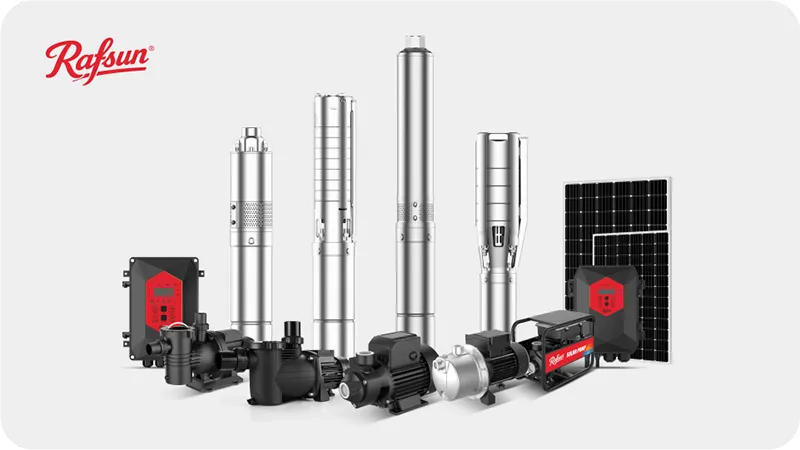
A complete solar water pump system consists of three core components. These are the solar panels that generate power, a smart controller that manages the energy, and the solar water pump unit itself, which includes the motor and the pump end.
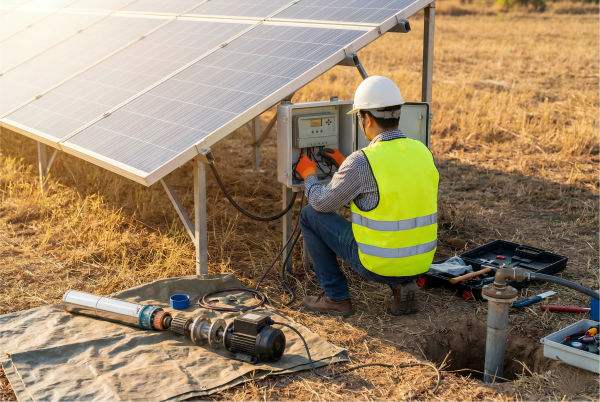
A solar water pump is more than just a pump.
It is a complete, integrated system.
Each component is chosen to work in perfect harmony with the others.
Understanding the role of each part is the key to selecting a system that is efficient, reliable, and perfectly suited to your needs.
Let's break down each of the main components.
We will see what they do and why they are so important.
Solar Panels | The Power Generators
You have no grid power, but you have brilliant sunshine.
Without a way to capture it, that energy is wasted.
Solar panels convert free sunlight into the electricity your pump needs.
Solar panels, or photovoltaic (PV) modules, are the system's power source.
They capture energy from the sun and convert it directly into DC electricity, providing the clean, cost-free power needed to run the entire water pumping system from anywhere.
The journey of water from your well begins with sunlight.
Solar panels are the first and most visible component of the system.
They are the silent, emission-free power plants that make off-grid water pumping possible.
These panels are made of many interconnected solar cells, which are typically made from silicon.
When photons from sunlight strike the surface of a solar cell, their energy excites electrons within the silicon.
This process, known as the photovoltaic effect, creates a flow of electrons.
This flow is a direct current (DC) of electricity.
This DC electricity is then captured by wires and sent to the next component in the system: the controller.
The power of your entire system is defined by the capacity of your solar panel array.
Sizing Your Solar Array
Choosing the right amount of solar panels is a critical calculation.
Too few panels, and your pump will underperform or fail to start.
Too many panels, and you have wasted money on generating power you cannot use.
The ideal size of your solar array depends on the pump's power rating (in watts) and the amount of peak sun hours your location receives per day.
A common industry practice is to oversize the solar array by 20-30% of the pump's rated power.
This surplus ensures the pump receives adequate power to run efficiently even on slightly overcast days or during early morning and late afternoon hours.
It also compensates for the gradual, natural degradation of panel performance over their multi-decade lifespan.
Monocrystalline vs. Polycrystalline Panels
When selecting panels, you will encounter two main types.
While both work well, they have different characteristics that may suit different budgets and environments.
| Feature | Monocrystalline Panels | Polycrystalline Panels |
|---|---|---|
| Efficiency | Higher (18-23%) | Good (15-18%) |
| Heat Performance | Performs better in high temperatures | Slightly less efficient in extreme heat |
| Footprint | Requires less space for the same power output | Requires more space |
| Cost | Higher initial cost | More economical |
| Appearance | Uniform black color | Blue, marbled pattern |
For most solar pumping applications where installation space is abundant, polycrystalline panels offer an excellent balance of performance and affordability.
However, in the extremely hot climates of Australia, Africa, or the Middle East, the superior high-temperature performance of monocrystalline panels can provide a tangible advantage in daily water output.
The Solar Controller | The Brain of the System
Raw power from solar panels is unstable and inefficient.
Connecting it directly to a motor is a recipe for poor performance.
The controller optimizes this power for maximum water output.
The solar pump controller is the intelligent hub of the system.
It takes the fluctuating DC power from the panels and uses Maximum Power Point Tracking (MPPT) to deliver a stable, optimized voltage and current to the pump motor, increasing daily water output by up to 30%.
If the solar panels are the power plant, the controller is the an intelligent engineer.
This small box is arguably the most important component for the system's overall efficiency and longevity.
The electricity produced by solar panels is not constant.
It varies throughout the day with the sun's intensity.
The controller's primary job is to manage this variable power input.
It ensures the motor receives exactly the right kind of power it needs to run smoothly and efficiently.
The most critical technology inside a modern controller is Maximum Power Point Tracking, or MPPT.
It constantly scans the power output of the solar panels and adjusts the electrical load.
This finds the perfect balance of voltage and current where the panels are producing the absolute maximum amount of watts.
This smart management ensures no solar energy is wasted.
Essential Protective Functions
Beyond just optimizing power, the controller acts as a dedicated bodyguard for your pump and motor.
It is packed with protective features that prevent damage and extend the life of your investment.
- Soft Start: The controller gradually ramps up the motor speed instead of hitting it with full power at once. This reduces mechanical shock and electrical stress, significantly increasing the lifespan of the pump.
- Dry Run Protection: If your well runs out of water, the controller will detect the change in motor load and automatically shut the pump off. This is a critical feature that prevents the pump from running dry and destroying itself from overheating.
- Over-Voltage and Under-Voltage Protection: It shields the motor from damaging power spikes or drops that can occur.
- Over-Current Protection: It prevents the motor from drawing too much electricity, which could cause it to burn out.
The AC/DC Hybrid Option for 24/7 Water Needs
What happens when you need water at night or on very cloudy days?
For critical applications, a hybrid controller is the solution.
These advanced controllers are designed with two power inputs: a DC input for solar panels and an AC input for a grid connection or a backup generator.
The system's logic is designed to prioritize free solar energy.
When the sun is shining, the pump runs 100% on solar power.
If clouds roll in, the controller intelligently blends in just enough AC power to supplement the solar input and maintain water flow.
When the sun goes down, it automatically switches over to the AC source.
This guarantees you have a worry-free water supply 24 hours a day while still maximizing your use of renewable energy.
The Solar Pump Unit | The Heart and Hands
You have clean, managed power.
Now you need to turn it into work.
The wrong pump will waste this energy or fail quickly.
The pump unit converts electricity into water flow.
A solar pump unit is actually two components combined: the high-efficiency BLDC motor that creates motion, and the pump end that uses this motion to physically move water.
This combination is the workhorse of your entire system.
The final major component is the pump unit itself, which is submerged in the water source.
This unit is a combination of two distinct but inseparable parts: the motor and the pump end.
The motor is the heart of the operation, converting electrical energy into rotational force.
The pump end is the hands, using that rotation to lift water to the surface.
The design and quality of these two parts determine the pump's performance, durability, and suitability for your specific water needs.
The High-Efficiency BLDC Motor
Modern solar pumps are powered by advanced Brushless DC (BLDC) permanent magnet motors.
These are radically more efficient than older motor designs.
They have no physical brushes that create friction, wear out, and waste energy.
Instead, they use an electronic controller and powerful permanent magnets (often high-grade Neodymium iron boron) to create rotation.
This design achieves efficiencies over 90%.
This high efficiency means that more of the precious electricity from your solar panels is converted into useful work.
A more efficient motor can pump more water using the same number of solar panels.
These motors are also significantly smaller (up to 47%) and lighter (up to 39%) than traditional motors, simplifying shipping and installation.
With no brushes to replace, they are virtually maintenance-free.
The Pump End: Choosing Your Workhorse
The pump end attaches to the motor and contains the mechanism that actually moves the water.
The design of this part is tailored to specific conditions.
| Pump End Type | Mechanism | Best For |
|---|---|---|
| Solar Screw Pump | A helical steel screw rotates inside a rubber stator, pushing sealed cavities of water upwards. | High Head, Low Flow: Perfect for very deep wells, domestic water supply, and livestock troughs. It is also highly resistant to sandy water. |
| Solar Plastic Impeller Pump | A stack of centrifugal impellers made of durable, engineered plastic spin to throw water upwards stage by stage. | High Flow, Medium Head: The all-around choice for farm irrigation and filling large tanks from wells of moderate depth. It is lightweight and economical. |
| Solar Stainless Steel Impeller Pump | The same centrifugal design, but with impellers and housing made from corrosion-resistant SS304 stainless steel. | High Flow, Corrosive Water: The premium option for water that is acidic or alkaline, or for high-end applications where longevity is the top priority. |
Choosing the right pump end is not about which is "best," but about matching the component to your well depth, your water quality, and the volume of water you need each day.
Conclusion
A solar water pump is a system of three key parts: solar panels for power, a controller for management, and a pump unit for moving water.
Their synergy provides reliable, free water.
Frequently Asked Questions
What are the main parts of a solar water pumping system?
The three main parts are the solar panel array to produce power, the pump controller to manage the power, and the submersible pump unit (motor and pump end) to move water.
Do I need a battery for my solar water pump?
No, most modern systems are designed to pump water into a storage tank during the day.
This a "water battery," which is much cheaper and requires less maintenance than electrical batteries.
What is an MPPT in a solar pump?
MPPT stands for Maximum Power Point Tracking.
It is a feature in the controller that increases the efficiency of the solar panels, resulting in up to 30% more water pumped per day.
How long will a solar water pump last?
A quality system has a long lifespan.
Solar panels are often warrantied for 25 years, and a brushless motor and well-made pump end can last for over 10 years with minimal maintenance.
What is the disadvantage of a solar water pump?
The main disadvantage is the initial investment cost.
Also, standard systems only pump water when the sun is out, though this is solved by using a storage tank or a hybrid controller.
Can a solar pump run an AC pump?
Yes, but it requires a solar inverter to convert the DC power from the panels into AC power.
It is often more efficient and cost-effective to use a complete DC pump system.