Solar pumps seem like the perfect solution.
But you hesitate, worried about hidden drawbacks and costs that aren't immediately obvious.
The main disadvantages of a solar water pump are the high initial investment cost and its dependence on sunlight.
Additionally, you might need a water storage system, and performance can vary with weather conditions, affecting water availability.
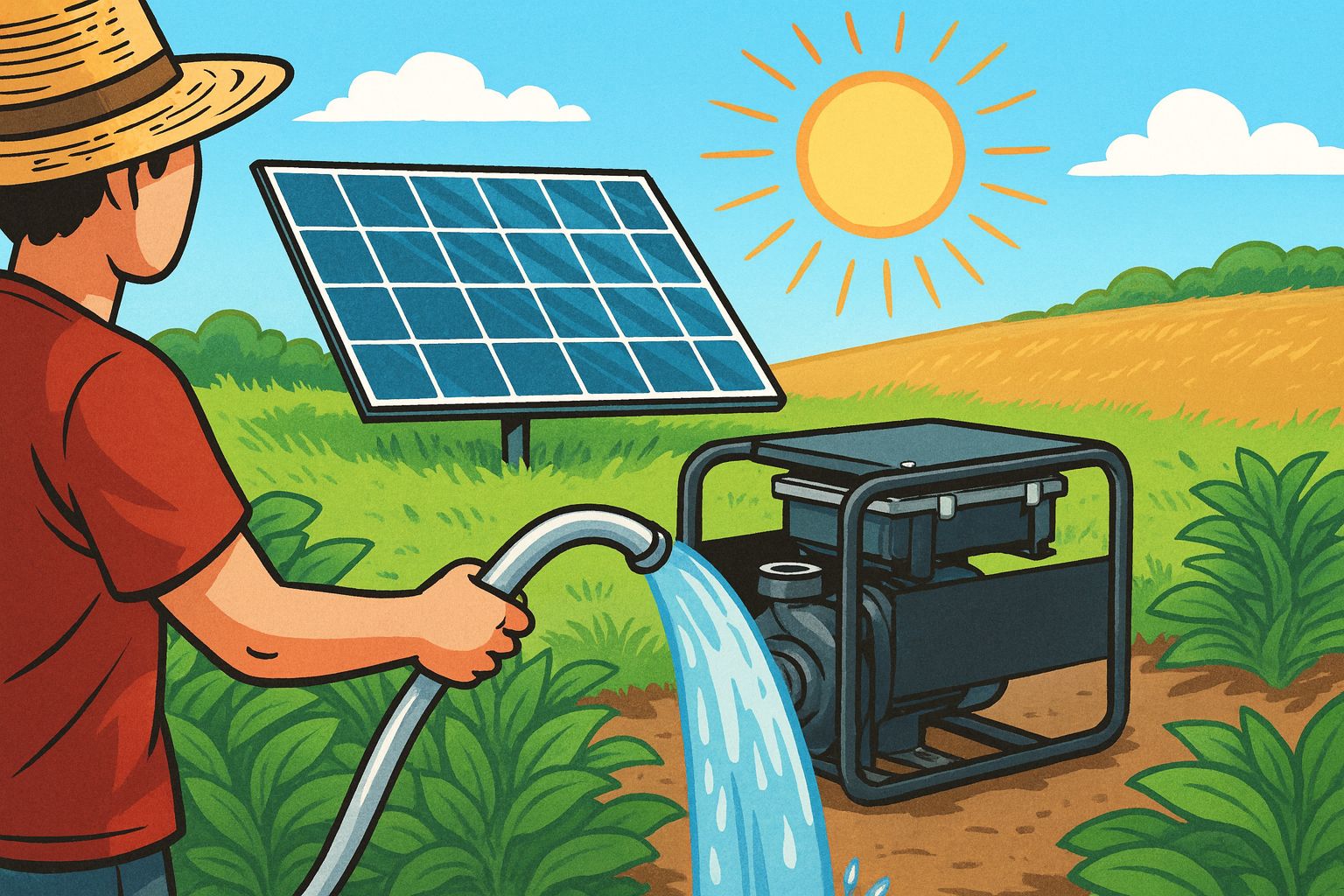
Solar water pumps offer incredible benefits.
They provide water in remote areas without electricity costs.
They are environmentally friendly and have low running expenses.
However, no technology is perfect.
Understanding the potential downsides is critical for making a smart investment.
These challenges are not deal-breakers.
Instead, they are factors to be managed through proper planning and system design.
Let's look at each disadvantage in detail to see how it might affect you and what can be done about it.
Is the Upfront Cost a Major Barrier?
The high price tag of a complete solar pump system can be intimidating.
You worry the investment is too large and the payback period too long, making you question the financial sense of it.
Yes, the initial cost is often the biggest hurdle for potential buyers.
A full system requires purchasing panels, the pump, a controller, and wiring all at once.
However, these costs must be weighed against zero fuel expenses and minimal long-term maintenance.
The initial cash outlay for a solar water pump system is significant.
Unlike a conventional AC pump that plugs into an existing power grid, a solar system requires you to buy your own personal power plant.
This includes all the components needed to capture solar energy, control it, and use it to drive the pump.
This comprehensive list of parts is what drives the initial price up.
However, it is this very completeness that leads to long-term savings.
Once installed, the energy source—the sun—is free.
Breaking Down the Initial Investment
To understand the cost, you need to see where the money goes.
It's not just the pump itself.
The total price is a sum of several critical components.
- Solar Panels: This is often the most expensive part of the system. The number and size of panels depend on the pump's power needs and your location's sunlight levels.
- The Pump & Motor: The pump itself has a cost, which varies by type. A high-flow stainless steel impeller pump for corrosive water will cost more than a standard plastic impeller pump. The high-efficiency BLDC motor is also a key component.
- The Controller: An intelligent MPPT (Maximum Power Point Tracking) controller is essential. It optimizes the power from the panels and protects the motor, adding to the cost but also to the system's lifespan and efficiency.
- Mounting & Wiring: Racks to hold the panels, UV-resistant cables, and other hardware are necessary and contribute to the total.
- Installation: Professional installation ensures the system is set up correctly and safely, but this labor comes at a price.
Long-Term Value vs. Short-Term Cost
The key is to think beyond the initial purchase price.
A true cost analysis compares the total cost of ownership over many years with other water pumping methods.
A diesel pump, for example, has a lower initial cost but requires a constant budget for fuel, oil, and frequent maintenance.
| Cost Factor | Solar Pump System | Diesel Pump System |
|---|---|---|
| Initial Cost | High | Medium |
| Fuel Costs | None | High and Ongoing |
| Maintenance | Very Low (panel cleaning) | High (oil, filters, repairs) |
| Lifespan | Long (15-20+ years) | Medium (5-10 years) |
| Environmental Impact | None | High (noise, fumes) |
When you project these costs over 10 or 20 years, the financial picture changes dramatically.
The solar pump's high upfront cost is often recovered through savings in a few years.
After the payback period, the water is virtually free.
This makes it a wise long-term financial decision, not just an environmental one.
How Does Weather Dependency Impact Water Supply?
You need a reliable water source every day.
The idea that your water supply could stop on a cloudy day or in bad weather is a major concern, making you doubt the technology's practicality.
A standard solar pump's output is directly tied to the intensity of the sun.
On cloudy days, its flow rate will decrease significantly.
It will not pump water at night.
This dependency is a real limitation that requires careful planning to manage.
A solar pump works by converting sunlight into electricity.
If there is less sunlight, the pump receives less power and moves less water.
This direct relationship is the system's greatest strength and its most fundamental weakness.
On a bright, sunny day, the pump will operate at its peak performance.
As clouds pass over, the power output will drop, and the pump will slow down.
During extended periods of heavy overcast or rain, the pump may only produce a trickle of water, or it may stop altogether.
And, of course, with no sun at night, a standard DC-only system provides no water at all.
This variability is a critical factor to consider, especially if you need a constant, uninterrupted water supply for a household or critical livestock operation.
Solution 1: Pumping to a Storage Tank
The most common and effective solution is not to pump water on demand.
Instead, you pump water into a storage tank whenever the sun is shining.
This simple strategy decouples your water use from water pumping.
- How it works: You install a large water tank on a stand or high ground. The solar pump fills this tank during the sunny hours of the day. A float switch inside the tank automatically turns the pump off when the tank is full, preventing overflow and protecting the pump.
- Benefits: You have a reserve of water available 24/7, regardless of the weather. Gravity then delivers this water to your house or troughs, providing consistent pressure without needing another pump.
- Sizing is key: The tank needs to be large enough to hold several days' worth of water. This creates a buffer that can carry you through a series of cloudy days. A typical recommendation is a tank that holds 3 to 5 days of your average water usage.
Solution 2: The Hybrid AC/DC System
For applications where a large tank is impractical or a higher level of reliability is needed, a hybrid system is the answer.
This is a more advanced solution that provides ultimate flexibility.
- Dual Power Inputs: A special hybrid controller can accept power from both the DC solar panels and an AC source. This AC source can be the mains power grid or a backup generator.
- Automatic Switching: The controller is intelligent. It prioritizes using free solar power whenever it is available. If the solar energy is not enough to run the pump (like on a very cloudy day or at night), it automatically switches to or blends in the AC power source.
- Uninterrupted Water: This ensures your pump can run 24 hours a day, 365 days a year, if needed. You get the economic benefit of solar power without ever compromising on the reliability of your water supply.
By choosing one of these solutions, the disadvantage of weather dependency can be completely managed.
Is Sizing and Installation Complicated?
You're not a pump expert.
You worry about choosing the wrong size pump or installing it incorrectly, leading to poor performance or a system that fails prematurely.
Yes, correctly sizing a solar pump system is more complex than a standard pump.
It requires calculating your water needs, well depth, and solar irradiance.
A professional is often needed to ensure the components are perfectly matched for optimal, long-lasting performance.
Installing a simple AC submersible pump often involves just choosing a horsepower rating and plugging it in.
Sizing a solar water pump system is a more detailed engineering task.
It’s a balancing act between your water demand, the physics of your well, and the solar energy available at your specific location.
Getting this balance wrong can lead to a system that is either too weak to meet your needs or oversized and unnecessarily expensive.
An undersized system will fail to deliver enough water, especially on less sunny days.
An oversized system means you paid too much for panels and a pump you don't fully utilize.
Key Factors in System Sizing
A proper system design requires a detailed analysis of several variables.
This process ensures the pump will perform as expected year-round.
- Total Dynamic Head (TDH): This is the most critical factor. It's not just the depth of your well. It is the total vertical distance the water must be lifted from its level in the well to the final destination (like a tank), plus any pressure required, plus friction loss from the pipes.
- Required Flow Rate: How much water do you need per day? This is measured in gallons per day, liters per day, or cubic meters per day. You must account for the peak needs of your household, livestock, or crops.
- Solar Irradiance: This is a measure of how much solar energy your location receives. It varies by geography and time of year. Sizing should be based on the months with the least sunlight to ensure year-round reliability.
The Importance of Pump Selection
Once the head and flow are known, you must choose the right type of pump.
A pump that is efficient for one application might be a poor choice for another.
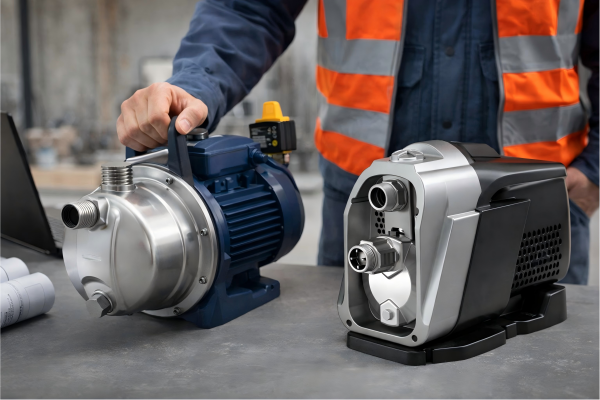
| Pump Type | Best For | Why |
|---|---|---|
| Solar Screw Pump | Deep wells, low flow demand | Excellent at creating high pressure (high head) but moves a lower volume of water. Very tolerant of sandy water. |
| Plastic Impeller Pump | Shallow/medium wells, high flow | Great for farm irrigation where high volume is needed, but not suitable for very deep wells or corrosive water. |
| Stainless Steel Impeller Pump | Corrosive water, high-end applications | The most durable choice for acidic or alkaline water. It offers high reliability and long life, justifying its higher cost. |
Because of these complexities, it is highly recommended to work with a reputable supplier or installer.
They have the software and experience to perform these calculations accurately.
They can help you select the ideal combination of panels, a controller, and the right pump type for your specific well and water needs.
This professional guidance helps you avoid costly mistakes and ensures you get a system that works perfectly from day one.
Conclusion
While solar pumps have high upfront costs and depend on the weather, these disadvantages are manageable.
Proper planning, storage tanks, or hybrid systems turn these challenges into smart, reliable, long-term investments.
FAQs
What are the two main disadvantages of solar energy?
The two main disadvantages are its high initial cost to set up and its intermittency, as it only generates power when the sun is shining.
Can a solar pump work without batteries?
Yes, most solar pump systems do not use batteries. They pump water during the day into a storage tank, which provides water 24/7. This is more cost-effective.
Is solar water pump worth it?
For off-grid locations, a solar water pump is definitely worth it. The long-term savings on fuel and maintenance quickly outweigh the high initial cost.
How long does a solar pump last?
A quality solar pump system can last 15-20 years or more. The solar panels are warrantied for 25 years, while the pump and brushless motor often last over 10 years.
Does a solar pump work on cloudy days?
Yes, but with reduced output. The pump will run slower and move less water on a cloudy day compared to a bright, sunny day.
Can a solar pump lift water from 300 feet?
Absolutely. Many solar deep well pumps, especially screw pumps, are specifically designed to handle high head and can easily lift water from 300 feet or more.
What size solar pump do I need?
The size depends on your daily water needs and the total dynamic head (well depth plus elevation). It is best to consult a professional for accurate sizing.