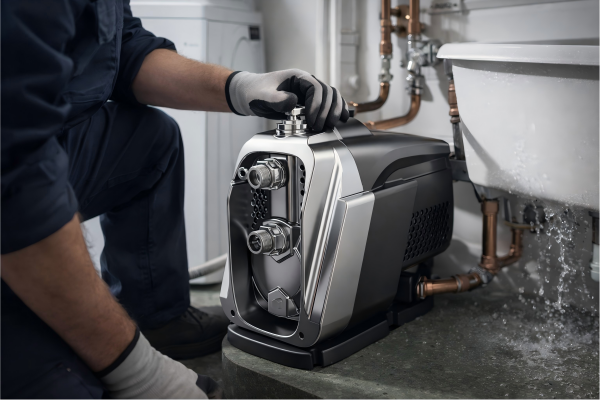
Your shower pressure is weak, and your sprinklers are sputtering.
You ignore these subtle hints, hoping the problem disappears.
But these are early warnings before a total, costly breakdown occurs.
The first signs of water pump failure are not a complete stoppage, but subtle changes.
These include a noticeable drop in water pressure, strange new noises like grinding or humming, and water that appears dirty or discolored.
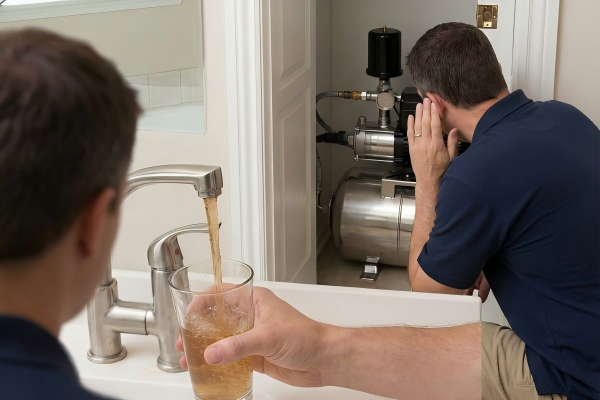
A water pump rarely fails without warning.
It sends out signals that it is under stress long before it gives up completely.
Recognizing these early signs is the key to preventing a catastrophic failure.
A sudden breakdown can leave you without water and facing an emergency repair bill.
Most users only notice a problem when the water stops flowing entirely.
By then, the damage is severe and the solution is expensive.
However, if you can spot the initial symptoms, you can often diagnose the underlying issue.
This allows you to take corrective action before the pump destroys itself.
This guide will walk you through the most common early warning signs of pump failure.
We will explain what each sign means.
We will also show how these signs point to a specific problem, like abrasive sand, corrosive water, or motor strain.
Learning to read these signs will empower you to maintain a reliable and long-lasting water system.
Part 1 | Reduced Water Pressure and Flow
Your pump runs, but the water flow is just a trickle.
This drop in performance is a clear sign that something is wrong inside the pump.
Catching it early can prevent a complete failure and costly replacement.
A gradual loss of water pressure is the most common early sign of pump failure.
It often indicates internal wear, most frequently caused by abrasive sand and silt in the water grinding away the pump's impellers or screw.
This is one of the most classic symptoms of a dying pump.
You notice that it takes longer to fill a bucket.
Or your irrigation system no longer reaches the far corners of your field.
The pump motor may sound like it is running normally, but the output is clearly diminished.
This loss of performance is almost always due to wear on the pump's core components.
In many water sources, especially deep wells in Africa or agricultural areas in the Americas, the water contains fine sand or silt.
Over time, these abrasive particles act like sandpaper on the pump's internal parts.
In a standard centrifugal pump, the impellers spin at high speed.
Sand in the water erodes the sharp edges of the impeller vanes.
This increases the gap between the spinning impeller and the stationary pump housing.
As this gap widens, water leaks backward within the pump instead of being pushed forward.
This internal leakage, known as recirculation, directly causes the drop in pressure and flow you experience.
The pump is losing its efficiency, literally wearing itself out from the inside.
The Diagnosis: Abrasive Wear
When you see a drop in performance, abrasive wear should be your first suspect.
The damage is mechanical and gets progressively worse over time.
Understanding how different pumps handle abrasives is key to solving the problem permanently.
How Abrasives Destroy Performance
- Centrifugal Pumps: In a typical multi-stage pump, sand particles erode the impellers and diffusers. This increases internal clearances, causing a performance loss of up to 50% or more before total failure. The pump has to run much longer to produce the same amount of water, wasting energy.
- Screw Pumps: A screw pump is also susceptible if not designed correctly. The fit between the stainless steel screw and the rubber stator is critical. Abrasives can wear down the rubber, causing a similar loss of compression and a drop in pressure.
The Solution: Matching the Pump to the Water
The only long-term solution is to use a pump designed for your water conditions.
If you have sandy water, choosing the right pump technology is not an upgrade; it is a necessity.
| Pump Type | Resistance to Sand | How it Works | Primary Symptom of Wear |
|---|---|---|---|
| Solar Plastic Impeller Pump | Good | Uses impellers made of durable, engineered polymers that can flex slightly and better resist erosion from fine sand. | Gradual loss of high flow. |
| Solar Screw Pump | Excellent | Uses a slow-rotating screw mechanism that pushes water. This design is far less susceptible to wear from sand particles. | Gradual loss of high head. |
A Solar Plastic Impeller Pump is a great choice for farm irrigation where high flow is essential and fine sand is present.
Its wear-resistant impellers provide a much longer life than standard metal ones in these conditions.
For deep wells with significant sand content, the Solar Screw Pump is the superior solution.
Its progressing cavity design is fundamentally more resistant to abrasives, ensuring it can maintain high pressure for domestic or livestock use for years.
Ignoring a drop in pressure allows the pump to destroy itself.
Identifying it as a sign of abrasive wear allows you to select the right pump for a lasting solution.
Part 2 | Discolored or Dirty Water
You turn on the tap and the water comes out brown or reddish.
This discolored water is a major red flag about the health of your pump.
It is a sign that your pump is dissolving from the inside out.
Discolored water is a strong indicator that the pump itself is corroding.
Rust particles from the pump's cast iron or steel components are flaking off and mixing with your water, signaling a severe internal problem.
Clear, clean water is the goal of any water system.
When the water suddenly takes on a rusty, brown, or even bluish tint, it is alarming.
This discoloration is not just an aesthetic problem.
It is often a direct symptom of pump corrosion.
This problem is common in regions with naturally aggressive water.
This includes areas with acidic water (low pH) or highly alkaline soil, such as parts of Australia and the Americas.
In these environments, the water chemically attacks the metal components of the pump.
A pump made from standard cast iron or low-grade steel is particularly vulnerable.
The corrosion process eats away at the pump's housing and impellers.
Small flakes of rust and metal oxide break off and are carried away with the water flow.
This is what you see as discoloration at the tap.
At first, you might only notice it in the morning after the water has been sitting in the pipes overnight.
But as the corrosion worsens, the water will be consistently dirty.
This is a clear signal that the structural integrity of your pump is compromised.
Eventually, the corrosion can create holes in the pump casing, leading to leaks and total failure.
The Diagnosis: Chemical Corrosion
Discolored water points directly to a chemical mismatch between your pump's materials and your water's chemistry.
This is not a mechanical wear problem; it is a chemical attack.
The Corrosive Process
- Acidic Water (Low pH): Aggressively dissolves iron, steel, and even some brass or bronze components. It leads to reddish-brown rust (iron oxide) in the water.
- Alkaline Water (High pH): Can cause scale buildup and also specific types of corrosion, especially on aluminum or other sensitive metals.
- High Salinity: Saltwater or brackish water is extremely corrosive to most common metals due to the chloride ions. It acceleratesrusting dramatically.
Using a standard pump in these conditions is like putting a steel boat in the ocean without protective paint.
It is guaranteed to rust away.
The Solution: Premium, Corrosion-Resistant Materials
To defeat corrosion, you must use a material that is immune to your water's chemistry.
For a wide range of aggressive water sources, stainless steel is the gold standard.
The Solar Stainless Steel Impeller Pump is engineered specifically for this challenge.
- Superior Material: The pump body, impellers, and shaft are all constructed from SS304 stainless steel.
- How it Works: SS304 contains a high percentage of chromium. The chromium reacts with oxygen to form a thin, invisible, and extremely durable passive layer of chromium oxide on the surface of the steel.
- Self-Healing Protection: This passive layer is the key to corrosion resistance. If it gets scratched, the exposed chromium underneath instantly reacts with oxygen in the water to reform the protective layer.
- Long-Term Reliability: This makes the pump highly resistant to both acidic and alkaline water. It ensures a very long service life and prevents the pump from leaching rust into the water supply.
While a stainless steel pump has a higher upfront cost, it is the only viable long-term solution for corrosive water.
It solves the problem permanently, providing clean water and eliminating the cycle of replacing cheaper, failing pumps.
Part 3 | Strange Noises or Motor Overheating
You hear a new grinding, rattling, or humming sound coming from your well or pump house.
These noises are the pump's way of crying for help.
Ignoring them can lead to a sudden and complete motor burnout.
Unusual noises often signal mechanical friction or motor strain, while an overly hot motor indicates inefficiency or overload.
Both are critical signs that the motor is working too hard and is on the verge of burning out.
A healthy pump runs with a smooth, consistent sound.
When that sound changes, you need to pay attention.
New noises are almost always a sign of a developing problem.
A grinding or rattling noise often means that sand, grit, or a broken internal part is bouncing around inside the pump.
This can happen when a pump not designed for abrasives is used in a sandy well.
The sand is not only wearing down the impellers but may have also damaged the bearings.
A loud humming or buzzing sound, especially if the pump struggles to start, often points to an electrical issue or a failing motor.
The motor is straining to turn, drawing excessive current and generating a massive amount of heat.
You might even notice that the pump's outer casing is unusually hot to the touch.
This overheating is the final stage before a burnout.
An inefficient motor can waste 30-40% of its energy as heat.
This constant high temperature degrades the insulation on the motor's copper windings.
Eventually, the insulation fails, causing an electrical short.
The motor is then permanently destroyed.
The Diagnosis: Motor Strain and Inefficiency
Unusual noise and heat are signs that the motor, the heart of the pump, is in distress.
The cause is either a mechanical problem causing friction or an electrical problem rooted in the motor's own design.
Pathways to Motor Burnout
- Mechanical Friction: Sand or debris caught in the impellers forces the motor to work harder to spin the pump shaft, causing it to overheat.
- Bearing Failure: Worn-out bearings lose their lubrication, creating metal-on-metal friction. This generates noise, and the increased resistance overloads the motor.
- Inefficient Motor Design: Older motor types, like AC induction motors or brushed DC motors, are inherently less efficient. They naturally run hotter and are more prone to overheating, especially when paired with a demanding solar power source. An efficiency of only 70% means 30% of your solar energy is wasted as destructive heat.
The Solution: A High-Efficiency, Protected Motor System
Modern pump systems tackle this problem from two angles: a hyper-efficient motor that creates less heat, and an intelligent controller that protects the motor from dangerous conditions.
The core of this solution is the BLDC Permanent Magnet Motor.
- Extreme Efficiency: With an efficiency rating exceeding 90%, this motor converts almost all incoming electrical energy into rotational force. Less than 10% is wasted as heat, so the motor runs dramatically cooler and lasts longer.
- Superior Power: It uses high-strength 40SH neodymium iron boron magnets. This design delivers higher torque in a more compact package (47% smaller, 39% lighter), allowing it to handle tough starting conditions without strain.
- Maintenance-Free: The brushless design eliminates parts that wear out, like the brushes in a traditional DC motor, further increasing reliability and eliminating a common source of failure.
This advanced motor is paired with an intelligent MPPT controller that acts as a bodyguard.
- Stall Protection: If the pump jams, the controller detects the current spike and instantly cuts power, saving the motor from burning out.
- Overheat Protection: Many controllers have a temperature sensor and will shut the system down if the motor heat exceeds a safe limit.
This combination of an efficient, cool-running motor and a smart, protective controller virtually eliminates motor burnout as a cause of pump failure.
Part 4 | The Pump Stops or Cycles Unexpectedly
Your pump starts, runs for a few seconds, then stops.
Or it works on a sunny day but is dead on a cloudy one.
This erratic behavior is a system failure, not just a pump problem.
A pump that cycles on and off rapidly or stops working in low light is a sign of a protection system kicking in or an insufficient power supply.
The controller is likely detecting a problem like a dry well, or the solar panels cannot provide enough power.
When a pump starts and stops unpredictably, it can be confusing.
The pump seems to work, but it refuses to run continuously.
This is rarely a sign that the pump itself is broken.
Instead, it is a sign that the pump's intelligent controller is doing its job and protecting the equipment from damage.
One common reason for this is "dry-run" protection.
If your well's water level drops below the pump's intake, the pump will start to pull in air.
Running without water is catastrophic for most submersible pumps, as they rely on the water for cooling and lubrication.
A smart controller monitors the motor's electrical load.
When the pump starts pumping air, the load drops significantly.
The controller recognizes this and shuts the pump off to prevent it from burning out.
After a set time, it may try to restart, which explains the cycling behavior.
Another reason is insufficient power, a major issue for solar-only systems.
On a day with intermittent clouds, solar panel output can fluctuate wildly.
If the power drops below the minimum needed to run the motor, the controller will shut the pump down.
When the sun comes back out, the pump restarts.
This is not a failure, but it is a major reliability problem if you need water on demand, 24/7.
The Diagnosis: System Protection or Power Deficit
Unexpected stopping is a sign from the system's brain—the controller.
You need to determine if it is reporting a dangerous condition or a lack of power.
Interpreting the Controller's Actions
| Controller Action | Likely Cause | What it Means |
|---|---|---|
| Pump cycles on and off | Dry-Run Protection | The water level in your well or tank is too low. The controller is protecting the pump from self-destruction. |
| Pump works in sun, stops in clouds | Insufficient Solar Power | The solar array cannot meet the pump's energy needs in low light. The system is working as designed, but is not reliable enough for 24/7 use. |
| Pump won't start, fault light is on | Stall or Jam | The pump's impeller or screw may be blocked by debris. The controller is protecting the motor from a burnout due to a stall. |
These are not pump failures, but they are system failures.
The system is not delivering water when you need it.
The Solution: A Flexible, Hybrid Power System
For a truly reliable, 24/7 water supply, you need a system that can overcome the limitations of solar-only power.
The ultimate solution is a hybrid power system.
The AC/DC Hybrid Controller is designed to provide this ultimate reliability.
- Dual Power Inputs: It has connections for both DC power (from solar panels) and AC power (from the grid or a generator).
- Smart Power Prioritization: The controller is programmed to use 100% free solar energy whenever it is available. It always prioritizes solar to keep operating costs at zero.
- Hybrid Power Blending: On an overcast day, when solar power is reduced, the controller can blend the available solar energy with AC power. This ensures the pump runs at the speed you need while still using as much free solar energy as possible.
- Automatic AC Takeover: At night, or when solar power is completely unavailable, the controller seamlessly and automatically switches to the AC power source.
This technology transforms a solar pump from a daytime-only appliance into a fully reliable utility.
It completely solves the problem of downtime due to weather, guaranteeing worry-free water access around the clock.
Conclusion
The first signs of water pump failure are critical warnings.
Low pressure, strange noises, and dirty water are symptoms of bigger problems.
Addressing these signs by choosing the right pump technology ensures lasting reliability.
Frequently Asked Questions
What are common causes of pump failure?
Common causes include running dry, abrasive wear from sand, corrosion from water chemistry, and motor overheating from electrical issues or overload.
How do you diagnose a pump failure?
Look for symptoms like no water flow, low pressure, strange noises, or the pump not turning on.
Checking for power and testing the pressure switch are good first steps.
How can I make my pump last longer?
Ensure it is the correct type for your water conditions.
Install it correctly, perform regular maintenance, and use a controller with motor protection features.
Do I need a professional to install a well pump?
While some small pumps can be DIY projects, installing a submersible deep well pump is complex and often best left to a professional to ensure safety and proper operation.
What causes a pump to lose its prime?
A pump can lose prime from a leak in the suction line, a faulty foot valve that allows water to drain back into the well, or from running out of water.
Why is my pump running but not pumping water?
This could be due to a loss of prime, a clog in the intake or lines, a leak in the suction pipe, or severe internal wear causing no pressure generation.
Why does my water pump keep turning on and off?
This is called short cycling.
It is often caused by a faulty pressure switch, a waterlogged pressure tank, or a leak somewhere in your plumbing system.