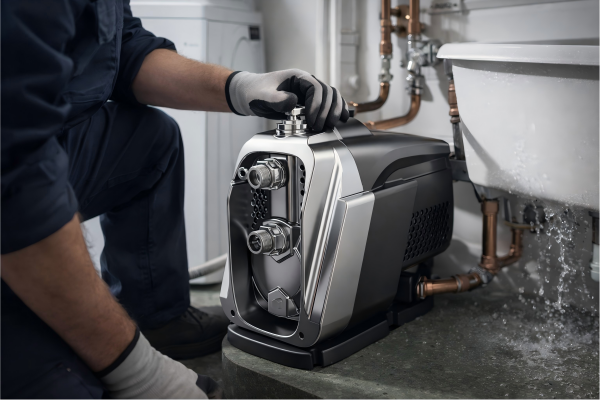
Weak water flow ruining your irrigation system's performance?
This causes dry spots and uneven watering.
A booster pump is the solution for powerful, consistent water pressure.
An irrigation booster pump increases water pressure and flow for your sprinkler system.
It ensures your sprinklers achieve better spray distance and wider coverage.
This leads to more efficient watering, saving you water and improving the health of your lawn or garden.
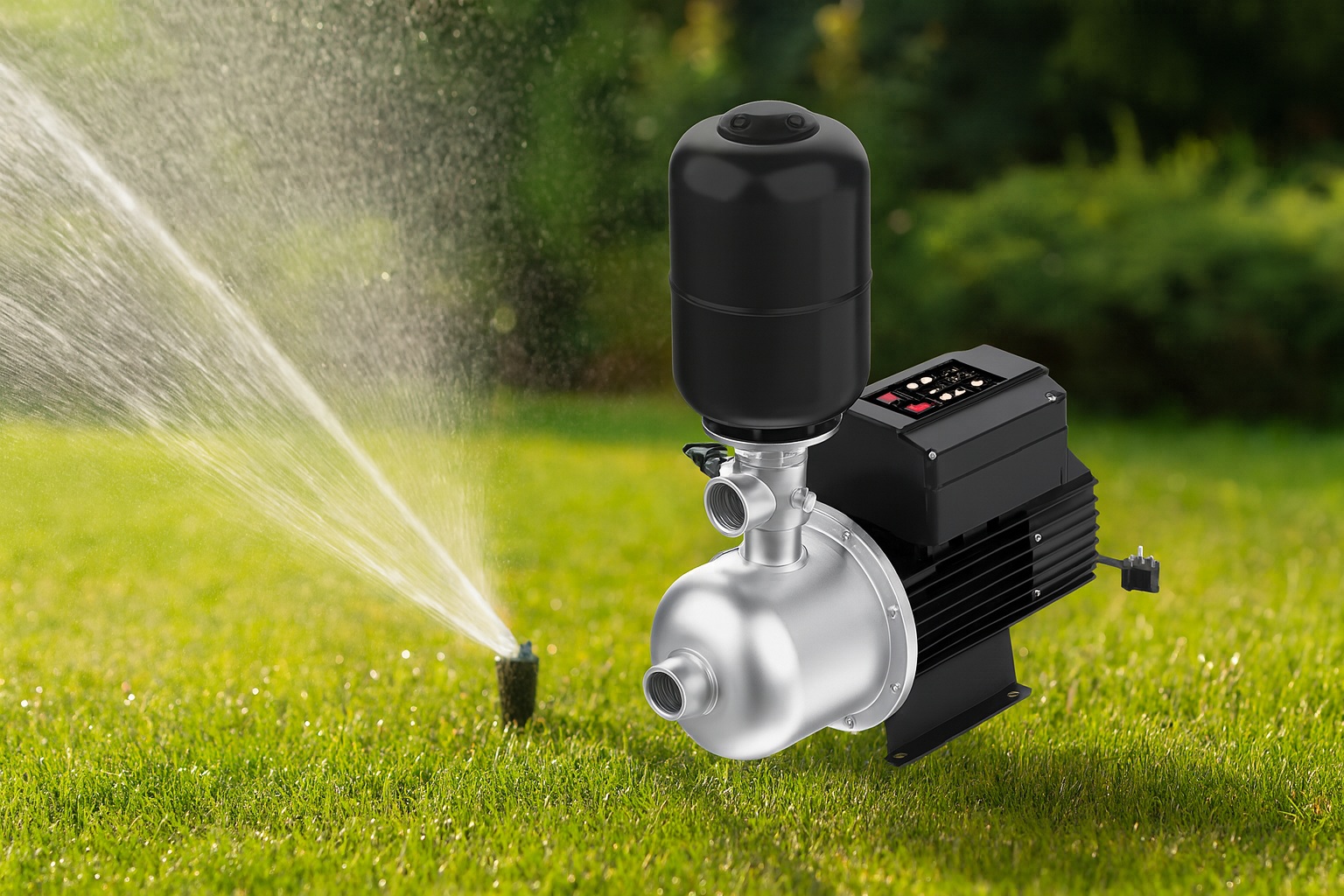
You've likely invested time and money into creating an efficient irrigation system.
But what happens when the water source itself, whether from a city line, a well, or a storage tank, just doesn't have enough muscle?
The result is disappointing performance, with sprinklers that droop, dribble, and fail to cover the intended area.
This is more than just an annoyance.
It's a waste of water, energy, and your investment.
To truly unlock the potential of your irrigation setup and ensure every corner of your landscape receives the water it needs, it's essential to understand the technology designed to solve this exact problem.
Let's explore how these powerful devices work and the transformative benefits they bring.
How It Works: The Core Mechanism of a Booster Pump
Struggling to understand the complex mechanics behind a booster pump?
Technical jargon can be confusing.
You need a clear, simple explanation of the process.
A booster pump is a straightforward device.
It takes in water from a low-pressure source.
An electric motor then spins an internal component called an impeller.
This impeller forces the water outward, rapidly increasing its pressure before sending it to your sprinklers for optimal performance.
At its heart, a booster pump is an elegantly simple solution to a common and frustrating problem.
It acts as a critical intermediary between your water source and your irrigation system.
The entire process can be broken down into a few key stages, each designed for maximum efficiency and reliability.
Understanding these stages helps clarify why this technology is so essential for anyone facing inadequate water pressure.
From receiving the initial flow to delivering pressurized water, every step is optimized.
Inflow and Pressurization
The process begins when the pump draws water from its source.
This source could be a municipal water line with notoriously low pressure, a private well, or a large rainwater collection tank.
The water enters the pump's housing at this low, initial pressure.
Once inside, the magic happens.
An electric motor provides the power.
This motor spins an impeller, a precisely engineered rotating disc with angled blades or vanes.
As the impeller rotates at high speed, it uses centrifugal force to fling the water outward toward the edge of the pump casing.
This action dramatically increases the water's velocity and, consequently, its pressure.
Pressure Management and Distribution
Modern intelligent pumps don't just blindly increase pressure.
They manage it with incredible precision.
Many systems include sophisticated pressure sensors and controllers.
These components constantly monitor the pressure in the pipes.
When you turn on a sprinkler and the pressure drops, the sensor detects this change instantly.
It then signals the pump to turn on or speed up, bringing the pressure back to the preset level.
| Stage | Action | Result |
|---|---|---|
| 1. Water Intake | The pump receives water from a source. | The system is supplied with water at low pressure. |
| 2. Pressurization | A motor spins an impeller at high speed. | Water is forced outward, rapidly increasing its pressure. |
| 3. Pressure Sensing | A sensor monitors the output pressure. | The pump knows when to turn on and off. |
| 4. Distribution | The pump sends pressurized water out. | Sprinklers and outlets receive high-pressure water. |
This intelligent feedback loop is what provides a truly constant pressure supply.
The pump only works as hard as it needs to, turning on, turning off, or adjusting its speed to perfectly match the water demand.
Finally, the now highly pressurized water is sent out of the pump's discharge port and into the irrigation lines.
It travels to the sprinkler heads, which can now operate exactly as they were designed.
They can pop up fully, rotate correctly, and cast water over their maximum intended distance, ensuring your landscape is watered efficiently and completely.
Key Benefits for Your Irrigation System
Are you wondering if a booster pump is worth the investment?
The costs can seem high.
But inefficient watering costs you money every day in wasted water and a dying landscape.
A booster pump delivers significant benefits.
It dramatically improves sprinkler performance for better coverage.
It also increases overall system efficiency, preventing water wastage and ensuring your sprinklers operate as designed.
It provides a consistent flow, even when demand changes.
The primary purpose of installing a booster pump is to solve problems and enhance performance.
The benefits extend far beyond simply making the water come out faster.
These advantages translate directly into a healthier landscape, lower utility bills, and a more reliable and long-lasting irrigation system.
For property owners and distributors alike, understanding these tangible outcomes is key to recognizing the value of high-quality water pressure solutions.
Let's dive deeper into the specific improvements you can expect.
Improved Sprinkler Performance and Coverage
Low water pressure is the main culprit behind underperforming sprinklers.
When pressure is inadequate, spray heads don't pop up all the way.
Rotor heads turn too slowly or not at all.
The spray pattern itself is weak, resulting in a small radius of coverage.
This leads to dry, brown patches in your lawn and thirsty, stressed plants in your garden beds.
A booster pump corrects all of this.
By delivering the optimal pressure specified by the sprinkler manufacturer, it ensures every head functions at its peak.
The result is a powerful, uniform spray pattern that reaches its full intended distance.
This guarantees head-to-head coverage, which is the professional standard for irrigation design.
Every square foot of your landscape receives the precise amount of water it needs, eliminating dry spots and promoting lush, healthy growth.
Increased Efficiency and Water Conservation
Water wastage is a major concern, both for your wallet and the environment.
A system running on low pressure is incredibly inefficient.
When sprinklers fail to create a fine mist, they instead produce heavy droplets that fall in a small area around the head.
This leads to over-watering near the sprinkler and under-watering farther away.
It also causes excessive runoff, as the ground becomes saturated too quickly.
Furthermore, a weak spray is more susceptible to wind, leading to water being blown onto sidewalks and driveways instead of your lawn.
A properly pressurized system solves this.
It atomizes the water into a fine, easily absorbed mist that spreads evenly.
This ensures the water penetrates the soil where it's needed most, minimizing runoff and evaporation.
By helping your system operate as designed, a booster pump can significantly reduce water consumption, leading to lower bills and more responsible water use.
Consistent Flow and System Reliability
In many systems, water pressure can fluctuate.
This happens when multiple irrigation zones are active or when other appliances in the building are using water.
These fluctuations cause inconsistent sprinkler performance.
A modern booster pump, especially one with a variable frequency drive (VFD), eliminates this problem.
It maintains a consistent, steady pressure level regardless of demand.
If another zone kicks on, the pump instantly adjusts to maintain the target pressure.
This reliability is crucial for large or complex properties.
It ensures that the last sprinkler head on the line performs just as well as the first, guaranteeing uniform watering across your entire property day after day.
This consistency is the hallmark of a professional-grade irrigation system.
The Importance of Advanced Drive Technology
Are you using an old, noisy pump that runs at one speed?
These pumps waste a lot of energy.
They also cause jarring water hammer, which damages pipes over time.
Modern VFD pumps offer a smarter solution.
They use advanced motors and drives to deliver constant pressure while running almost silently.
They also use soft-start technology, which protects your plumbing system and extends the pump's lifespan, saving energy and maintenance costs.
The "engine" of a top-tier booster pump is its drive technology.
Simply having a motor and an impeller is no longer enough to meet the demands of modern, efficient systems.
The leading technology today combines a high-efficiency motor with an intelligent controller.
This pairing is what separates a basic pump from a truly advanced water pressure solution.
This core synergy delivers superior performance, customization, and mechanical longevity that older, fixed-speed pumps simply cannot match.
Core Components: VFD and PMSM
The two most important acronyms to know are VFD and PMSM.
-
VFD (Variable Frequency Drive): This is the brains of the operation. Instead of just turning the motor on or off, the VFD adjusts the electrical frequency supplied to the motor. This allows it to precisely control the motor's speed (RPM). By speeding up or slowing down, the pump can add more or less pressure, matching the system's needs in real time.
-
PMSM (Permanent Magnet Synchronous Motor): This is the muscle. These motors are far more efficient and compact than traditional asynchronous motors. They use powerful permanent magnets, which reduces energy loss and allows for quieter operation and higher speeds.
When a VFD is paired with a PMSM, the result is a system that delivers exactly the pressure you set, without the fluctuations common in older pumps.
Advantages of Modern Drive Systems
This advanced technological pairing delivers several critical benefits that business owners and distributors should understand.
-
Ultra-Quiet Operation: The smooth control of the VFD and the efficient design of the PMSM result in incredibly quiet performance. High-quality systems can operate at noise levels under 50dB, which is quieter than a typical library. This is a massive selling point for residential installations where noise is a major concern.
-
Soft Start & Soft Stop: A VFD pump doesn't just slam on and off. It gently ramps the motor's speed up when it starts and ramps it down when it stops. This "soft start" function is crucial. It prevents the sudden hydraulic shock, known as water hammer, that can rattle pipes and damage joints, valves, and sprinkler heads over time. This single feature significantly increases the lifespan of the entire plumbing system.
-
Energy Efficiency: A traditional pump runs at 100% speed every time it's on, even if only a small amount of water is needed. This is like flooring the accelerator in your car just to move a few feet. A VFD pump, in contrast, only uses the exact amount of energy needed to maintain pressure. If demand is low, the motor runs slowly, consuming minimal electricity. This intelligent energy use can lead to savings of up to 50% or more compared to fixed-speed pumps.
Ensuring Durability and Long-Term Reliability
Worried your new pump won't last in harsh conditions?
Moisture, heat, and power surges can destroy electronics.
This leads to premature failure and costly replacements.
Look for pumps built with durability in mind.
Premium models feature fully sealed, waterproof electronics and a suite of automatic safety protections.
This robust design, combined with high-grade materials, guards against common failures and ensures a long, reliable service life.
A booster pump is a significant investment, and it often operates in demanding environments.
It can be exposed to moisture, dust, fluctuating temperatures, and unstable electrical grids.
Therefore, a pump's long-term value is determined not just by its performance, but by its ability to withstand these challenges.
Excellence in mechanical engineering, material selection, and electronic protection is what defines a truly reliable, commercial-grade product.
Discerning buyers should look past the basic performance specs and examine these critical durability features.
Robust Mechanical and Material Engineering
The quality of a pump is literally built from its core components.
Cheap materials may save costs upfront but lead to early failure.
-
Impeller Material: The impeller does the hard work of pressurizing water. While plastic impellers are common in cheaper pumps, they can warp or crack over time, especially with hot water. For superior durability and corrosion resistance, look for impellers made from high-grade materials like AISI304 Stainless Steel or brass.
-
Motor Components: The motor's construction is vital for its lifespan. High-end motors use superior materials to manage heat and improve efficiency. This includes using high-grade silicon steel in the stator, which reduces energy loss, and Class F insulation wire, which can withstand high temperatures without degrading.
-
Bearings: The bearings allow the motor shaft to spin smoothly. Low-quality bearings are noisy and wear out quickly, leading to motor failure. Premium pumps use high-precision bearings from reputable manufacturers, resulting in quieter operation and a significantly longer lifespan.
Uncompromising Electronic Protection
The electronic controller is the pump's most vulnerable component.
Moisture is its greatest enemy.
Even a small amount of condensation can short-circuit the board and cause a catastrophic failure.
The ultimate solution to this is PCB Potting.
This process involves completely encasing the main controller circuit board in a durable, waterproof resin.
| Protection Method | Description | Advantage |
|---|---|---|
| Standard Coating | A thin lacquer is sprayed on the board. | Provides minimal protection from humidity. |
| PCB Potting | The entire board is sealed in a solid block of waterproof resin. | Creates a 100% waterproof (IP67) and dustproof seal, preventing 95% of moisture-related failures. |
This potting creates an impenetrable barrier, achieving a protection rating like IP67.
It makes the electronics impervious to moisture, dust, and vibration.
This single feature is arguably the most important factor in ensuring the electronics survive for the long term, potentially extending the controller's life by 3 to 5 years.
A Complete Suite of Safety Protections
An intelligent pump should also be able to protect itself.
A comprehensive suite of built-in safety functions actively monitors the system and shuts it down before damage can occur.
This is a critical feature for unattended operation.
Key protections include:
- Dry Run Protection: Prevents the pump from destroying itself if the water source runs out.
- Overheating Protection: Monitors both motor and electronics temperature.
- Voltage Protection: Guards against damage from power surges or brownouts.
- Frost Protection: Automatically runs the pump for a few seconds in freezing temperatures to prevent ice from forming and cracking the housing.
These protections work together to make the pump a "set it and forget it" device, giving you peace of mind that your investment is safe.
What Smart Features and Controls to Look For
Are you tired of complex controls and confusing status lights?
Many pumps are difficult to operate and diagnose.
You have no idea what's happening inside the system.
A modern pump should have an intuitive user interface.
It should offer simple button controls for basic adjustments and a clear display for real-time data.
Advanced features like remote control via WiFi and intelligent multi-pump linking provide unmatched convenience and system scalability.
Beyond raw power and durability, the hallmark of a truly modern booster pump is its intelligence and user-friendliness.
The best systems are designed not just for performance, but for ease of use, monitoring, and integration.
These smart features transform a simple piece of hardware into a sophisticated water management solution.
For distributors and installers, these features provide significant value-add, making the product more attractive to end-users and simplifying installation and troubleshooting.
For owners, they offer a level of control and insight that was previously unimaginable.
Intuitive User Interface and Real-Time Data
Despite its internal complexity, operating the pump should be simple.
A well-designed interface allows users to perform key functions without needing an engineering degree.
-
Simple Controls: Look for a clear panel with dedicated buttons for essential tasks like turning the pump on/off and adjusting the target pressure up or down. A one-touch factory reset function is also a useful feature.
-
At-a-Glance Indicators: A series of clear LED lights should provide immediate visual feedback on the pump's status. This can instantly tell you if the pump is in constant pressure mode, if there's a suspected leak, if there's an issue with the voltage, or if the water source has run dry.
-
Live Data Display: This is a feature that separates basic pumps from advanced ones. The ability to cycle through a display showing real-time operating data is invaluable for monitoring and diagnostics. Key parameters to look for include:
- Real-time power consumption (in Watts)
- Motor speed (in RPM)
- Input voltage
- Water and PCB temperature
- Current operating pressure
This live feedback gives you a complete picture of the system's health and performance at any given moment.
Advanced System-Level Features
Top-tier pumps offer features that enhance the entire water system, not just the pump itself.
-
Remote Monitoring (WiFi Control): An optional WiFi module is a game-changing feature. It allows users to connect to their pump via a smartphone app. From anywhere in the world, they can monitor status, adjust pressure settings, and receive alerts for any faults. This offers unparalleled convenience and peace of mind.
-
Twin Pump Link Mode: For larger applications requiring higher flow rates or critical redundancy, a twin pump mode is essential. This allows two pumps to be linked together. They can work in tandem to meet high demand or operate in a primary/backup configuration, where the second pump automatically takes over if the first one fails.
-
Pressure Tank Integration: While the VFD reduces the need for a large pressure tank, a small tank (1.5L - 5L) is still highly beneficial. It acts as a buffer, absorbing small pressure fluctuations and reducing how often the pump needs to cycle on and off for minor water uses (like a dripping tap). This can reduce pump starts by as much as 70%, significantly reducing wear and tear and preventing water hammer.
These smart features are what elevate a pump from a simple component to the intelligent heart of a modern water management system.
Conclusion
An irrigation booster pump solves low pressure issues, ensuring efficient watering, better coverage, and less water waste, making it an essential upgrade for any underperforming system.
Frequently Asked Questions
Do I need a booster pump for my irrigation system?
You need one if your sprinklers have poor spray distance, pop up slowly, or provide uneven coverage.
It's a sign your water pressure is too low.
Does a booster pump increase flow or pressure?
A booster pump primarily increases pressure.
While this allows the system to achieve its designed flow rate, its main job is to boost the pressure (PSI).
Where should a booster pump be placed?
It should be installed on the main irrigation line after the water meter and backflow preventer, but before the zone valves, protecting it from the elements.
Do booster pumps use a lot of electricity?
Modern pumps with Variable Frequency Drives (VFDs) are very energy-efficient.
They only use the power needed to maintain pressure, saving up to 50% on electricity.
How much pressure should an irrigation pump have?
Most residential sprinkler systems are designed to operate between 40 and 60 PSI.
The pump should be set to provide pressure within this optimal range.
What is dry run protection on a pump?
It's a safety feature that automatically shuts off the pump if it detects there is no water.
This prevents the motor from overheating and burning out.
Can a booster pump be used for a well?
Yes, booster pumps are commonly used with well systems.
They are installed after the well's pressure tank to increase pressure for irrigation or household use.
How does a VFD save money on a pump?
A VFD saves money by slowing the pump's motor when water demand is low.
This drastically reduces electricity consumption compared to fixed-speed pumps that always run full-out.