Struggling with low water pressure in a building? This common issue can disrupt daily tasks and indicate an inefficient water system. A powerful, space-saving solution is needed.
A vertical multistage pump is a centrifugal pump with multiple impellers stacked on a single vertical shaft. This design generates high pressure by increasing fluid pressure in stages, making it ideal for applications needing significant head within a compact footprint, like water supply and boosting systems.
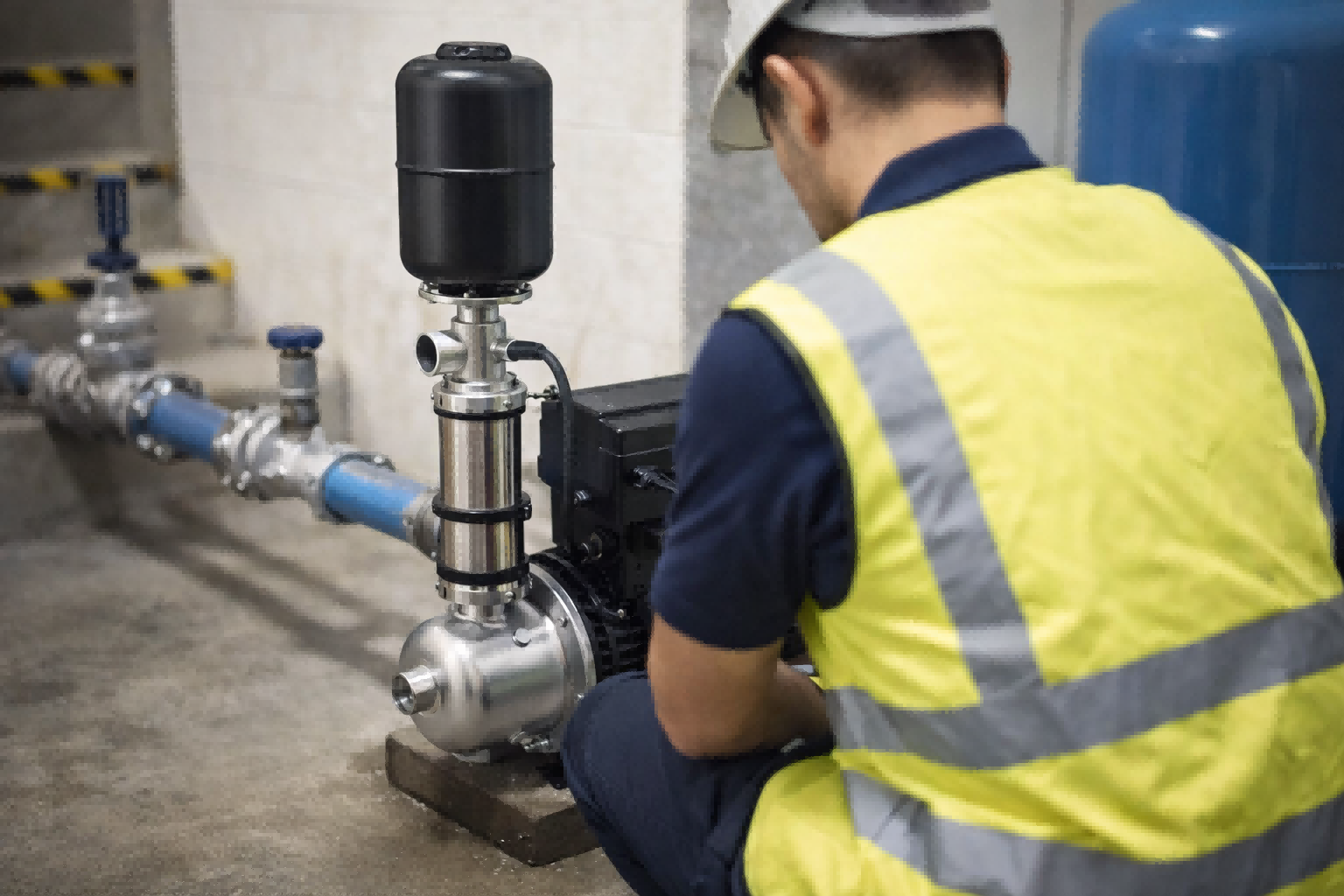
When standard pumps can't deliver the pressure you need, understanding the technology behind high-performance solutions becomes critical. These advanced pumps are not just about raw power; they are about intelligent design, efficiency, and reliability, offering a significant upgrade over traditional systems. Let's explore the fundamental characteristics that define these powerful machines and see how they solve complex pressure-boosting challenges in various environments.
Key Characteristics and Essential Components
Dealing with limited installation space? Traditional horizontal pumps can be bulky and hard to fit. You need a solution that delivers high performance without demanding a large footprint.
The defining characteristic of a vertical multistage pump is its compact, upright orientation, which saves significant floor space. Its core components include a motor, multiple stacked impellers within a diffuser casing, and durable bearings, often made from high-grade stainless steel for longevity and corrosion resistance.
To truly appreciate the engineering behind these pumps, we need to look closer at the materials and design choices that contribute to their durability and efficiency. Modern pumps are built to withstand demanding conditions, combining robust mechanical parts with smart design features that enhance their lifespan and performance. From the choice of metals to the engineering of the housing, every detail is crucial for long-term, reliable operation.
The Vertical Advantage
The most immediate benefit of this pump's design is its vertical orientation.
This feature makes it exceptionally space-efficient.
It is ideal for installation in tight mechanical rooms or crowded industrial spaces where horizontal floor space is at a premium.
This design simplifies piping arrangements, often allowing for "in-line" installation where the suction and discharge ports are at the same level.
Multi-Stage Power
The "multistage" aspect is the key to its high-pressure capabilities.
Here’s how it functions:
- Water Entry: Fluid enters the pump through the suction port, typically located at the base.
- First Impeller: It flows into the first chamber, where the first spinning impeller imparts velocity and pressure.
- Sequential Boosting: The water is then guided by a diffuser to the inlet of the second impeller, which is stacked directly above the first. This process repeats through each subsequent stage.
- Pressure Amplification: With each stage, the pressure is progressively amplified. A pump with four stages will generate roughly four times the pressure of a comparable single-stage pump.
- Final Discharge: After passing through the final stage, the highly pressurized water exits through the discharge port.
Premium Materials and Durability
The materials used in construction are critical for the pump's lifespan and reliability.
High-end models utilize superior components to ensure they can handle continuous operation and harsh conditions.
- Pump Body & Impellers: They are often constructed from AISI 304 stainless steel. This material provides excellent resistance to corrosion and abrasion, ensuring the purity of the water being pumped and extending the pump's life. Some designs may use high-grade brass impellers as well.
- Housing: The external housing is frequently made from materials like UV-resistant ABS plastic. This protects the internal components not only from physical impacts but also from degradation due to sunlight exposure in outdoor installations.
- Enhanced Cooling: Advanced designs incorporate sophisticated cooling systems. A well-engineered airflow path can improve heat dissipation efficiency by over 85%, which keeps the motor running at a lower temperature and significantly extends its operational life.
How Does a Modern Pump Work? The Core Drive Technology
Are your energy bills high due to an old, inefficient pump? Fixed-speed pumps run at full power constantly, wasting electricity. A smarter technology is needed to match output with demand precisely.
Modern pumps utilize a Variable Frequency Drive (VFD) paired with a high-efficiency Permanent Magnet Synchronous Motor (PMSM). This combination allows the pump to adjust its speed in real-time to maintain constant pressure, drastically reducing energy consumption and providing a quiet, stable water supply.
The engine behind any great pump is its motor and control system. Traditional pumps are simple—they turn on and run at a single, fixed speed. However, cutting-edge technology has transformed pump performance, introducing intelligence and efficiency that were previously unattainable. Understanding this core drive technology reveals how modern pumps can deliver superior performance while operating almost silently and adapting to fluctuating system demands.
VFD and Permanent Magnet Motors
The heart of a modern intelligent pump is the synergy between two key technologies: the Variable Frequency Drive (VFD) and the Permanent Magnet Synchronous Motor (PMSM).
A VFD is an electronic controller that adjusts the electrical frequency supplied to the motor.
By changing the frequency, the VFD can control the motor's speed (RPM) with extreme precision.
A PMSM is a type of motor that uses permanent magnets in its rotor, making it more efficient and compact than traditional induction motors.
When paired, the VFD intelligently controls the PMSM to deliver exceptional performance.
Key Performance Benefits
This advanced drive technology translates into several tangible advantages for the user.
- Constant Pressure Supply: The system constantly monitors water pressure. If a tap is opened and pressure drops, the VFD instantly increases the motor speed to compensate, keeping the pressure perfectly stable. This eliminates the frustrating fluctuations common with older systems.
- Ultra-Quiet Operation: The smooth control of the PMSM and the elimination of abrupt on/off cycles result in incredibly quiet performance. Top-tier models operate at noise levels below 50dB, which is quieter than a library, making them suitable for residential installations.
- Soft Start & Soft Stop: Instead of jolting to full power, the VFD gradually ramps the motor speed up and down. This "soft start" function is critical for mechanical longevity. It reduces mechanical stress on an bearings and couplings and prevents hydraulic shock, known as water hammer, which can damage pipes and fittings.
- Wide Voltage Adaptability: Power grids are not always stable. These intelligent pumps are designed to operate flawlessly across a wide voltage range, such as 165V to 260V. This ensures consistent performance even in areas with poor electrical infrastructure.
| Feature | Traditional Fixed-Speed Pump | Modern VFD Pump |
|---|---|---|
| Pressure Control | Fluctuates significantly | Constant and stable |
| Energy Use | High (always runs at 100%) | Low (adjusts to demand) |
| Noise Level | Loud | Ultra-quiet (≤50dB) |
| System Stress | High (water hammer) | Low (soft start/stop) |
| Adaptability | Sensitive to voltage drops | Works across a wide voltage range |
Uncompromising Electronic Reliability and Safety
Concerned about pump failure from moisture or power surges? Electronic components are vulnerable to a pump's wet environment. You need a system with robust, built-in safeguards to ensure long-term reliability.
High-end pumps ensure electronic reliability through fully sealed, waterproof control boards with an IP67 rating. They also feature a comprehensive suite of up to 14 different safety protections that guard against common faults like dry running, overheating, voltage fluctuations, and freezing.
A pump is only as reliable as its weakest component, and in modern systems, the electronic controller is the brain. Protecting this brain from the harsh realities of its operating environment—moisture, dust, heat, and electrical instability—is paramount. The most forward-thinking designs employ multiple layers of protection, creating an electronic fortress that not only defends against immediate failure but actively extends the life of the entire system.
The Waterproof Electronic Core
Perhaps the most crucial innovation for long-term reliability is the practice of potting the main controller board (PCB).
This involves completely sealing the electronics in a durable, non-conductive potting compound.
This creates an impenetrable barrier with several key benefits:
- Total Environmental Sealing: This process achieves a high ingress protection rating, such as IP67. This means the electronics are 100% protected against dust and can be submerged in water without damage. It effectively eliminates failures caused by moisture, condensation, and humidity.
- Extended Lifespan: By isolating sensitive components from the environment, this feature can extend the controller's life by an estimated three to five years. It prevents corrosion and short circuits, which are common points of failure in standard pumps.
- Vibration Dampening: The potting compound also helps to absorb vibrations, protecting delicate solder joints and components from mechanical stress during operation.
A Comprehensive Suite of Protections
Intelligent pumps are equipped with a multi-layered safety system that constantly monitors operating conditions.
This "digital shield" can anticipate and prevent damage from a wide range of potential faults.
Electrical & Thermal Protections
These safeguards protect the motor and electronics from harmful electrical conditions.
- Voltage Protection: Shuts down the pump if input voltage is too high or too low.
- Overcurrent Protection: Prevents damage from excessive current draw.
- Stall Protection: Detects if the rotor is jammed and stops the motor to prevent a burnout.
- Overheating Protection: Monitors the temperature of both the driver board and the motor, shutting down if temperatures exceed safe limits.
System & Operational Protections
These functions protect the pump from hydraulic and environmental issues.
- Dry Run Protection: This is one of the most critical protections. If the pump detects a lack of water, it doesn't just shut off. It engages an intelligent multi-stage recovery algorithm. It will try to self-prime, then enter a sleep mode, and periodically re-check for water. This prevents damage while saving energy until water returns.
- Antifreeze Protection: In cold climates, the pump can automatically run for short periods to circulate water and prevent it from freezing and damaging the pump body.
- Pipeline Leak Warning: The system can detect small, persistent pressure drops indicative of a leak in the plumbing, alerting the user to a potential problem.
Smart Control and the User Experience
Tired of complex controls and guessing your pump's status? Traditional systems offer little feedback or adjustability. You need a user-friendly interface that provides clear information and simple control.
Modern pumps feature intuitive interfaces with simple button controls and clear LED indicators for at-a-glance status checks. Many also offer optional Wi-Fi connectivity, allowing users to monitor performance, adjust pressure, and receive alerts directly on their smartphones for ultimate convenience and control.
Despite their internal complexity, the best modern pumps are designed to be remarkably easy to use. The goal of advanced engineering is to simplify the user experience, not complicate it. A well-designed interface empowers the user with both straightforward control over primary functions and deep insight into real-time operating data. This combination of simplicity and transparency transforms the pump from a passive piece of equipment into an interactive and intelligent part of the water system.
Intuitive Onboard Interface
The primary control is often managed through a clean and simple panel on the pump itself.
This interface typically includes a few buttons and a set of clear LED indicators.
- Simple Controls: Basic operations are made effortless. Functions like turning the pump on or off, adjusting the target pressure up or down, and performing a factory reset are usually accessible with short or long presses of just a few buttons.
- At-a-Glance Indicators: LEDs provide immediate visual feedback on the pump's status. Distinct lights can indicate whether the pump is in constant pressure mode, if a pipeline leak is suspected, if there is a voltage fault, or if the unit is in a water shortage protection state. Other indicators might show the current power output level.
Access to Real-Time Data
For advanced users and technicians, these pumps provide a window into their live performance.
A long press of a button often cycles the display through multiple critical operating parameters, offering deep insight into the system's health and efficiency.
| Data Code | Parameter Displayed | What It Tells You |
|---|---|---|
| A.xx | Water Temperature (°C/°F) | Monitors for high temperatures that could affect performance. |
| P.xxx | Real-Time Power (Watts) | Shows exactly how much energy the pump is consuming. |
| xxxx | Motor Speed (RPM) | Displays how fast the motor is spinning to meet demand. |
| U.xxx | Input Voltage (Volts) | Confirms the stability of the electrical supply. |
| t.xx | PCB Temperature (°C/°F) | Tracks the temperature of the main control board. |
Advanced Connectivity and System Integration
The smartest pumps are ready for the modern connected building.
- Remote Control: Optional Wi-Fi modules allow the pump to connect to a local network. This enables remote monitoring and control via a smartphone application. Users can check status, adjust pressure, and receive fault notifications from anywhere.
- Twin Pump Link Mode: For applications requiring higher flow or redundancy, two pumps can be linked together. The system intelligently manages their operation, running one or both pumps based on demand and automatically switching to the backup pump if one fails. This ensures an uninterrupted water supply for critical applications.
Conclusion
A vertical multistage pump is an efficient, space-saving solution for high-pressure needs. Modern intelligent models further add energy savings, quiet operation, and robust protections for unmatched reliability and control.
FAQs
What is the difference between single-stage and multistage pumps?
A single-stage pump has one impeller and is suitable for low-pressure applications. A multistage pump uses multiple impellers in series to generate progressively higher pressures.
What is the main advantage of a vertical multistage pump?
Its primary advantage is the ability to produce very high pressure from a compact, space-saving design, making it ideal for installation in tight mechanical rooms.
Where are vertical multistage pumps used?
They are widely used in water supply for tall buildings, HVAC systems, boiler feeding, irrigation systems, industrial cleaning, and fire suppression systems requiring high pressure.
How do VFD pumps save energy?
Variable Frequency Drive (VFD) pumps save energy by adjusting the motor's speed to match the real-time water demand, rather than running at full speed constantly.
Can vertical multistage pumps run dry?
Running dry can damage any pump. However, modern intelligent models feature advanced dry-run protection that safely shuts the pump down and periodically re-checks for water.
What is head in a pump?
Head is the height to which a pump can raise water. It is a measure of the pump's pressure capability, often expressed in meters or feet.
How does a multistage pump increase pressure?
Pressure is increased sequentially. Water passes through the first impeller, gaining pressure, and is then guided to the next impeller, which adds more pressure, and so on.