Struggling to describe that device you need for better water pressure?
The different names can be confusing.
This leaves you unsure what to ask for.
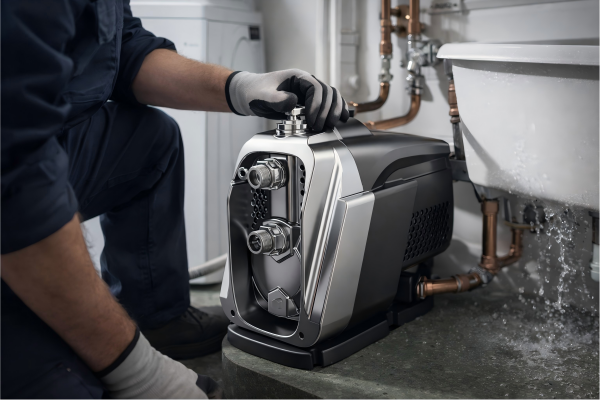
A booster pump is most often called a "water pressure booster" or simply a "pressure booster."These names are used interchangeably for a pump that increases the force of water flowing through plumbing pipes.
While "pressure booster" is the most direct and common alternative name, the term used can often change.
The specific name sometimes depends on the pump's exact job or where it is installed.
For example, a pump used in a commercial heating system might have a different name than one used for a whole house.
The name also changes dramatically when you're not boosting pressure from a city water line.
If your water comes from a private well, the device that creates your pressure is a completely different type of machine.
Understanding these different "names" and the technologies they represent is key.
It helps you choose the right solution for your specific water pressure problem.
Let's explore these various names and what they mean for your water supply.
What Are Application-Specific Names?
Is your pump for your home, your well, or your garden?
The name often changes based on its specific task and location.
This can be confusing for buyers.
**Depending on its use, a booster pump might be called a domestic booster system, an in-line pump, or a circulation pump.
For a deep well, the "booster" function is actually performed by a submersible pump.**
The name of a pump often gives clues about its intended job.
A "booster pump" is a general term, but more specific names pinpoint its function.
Let's break down some common application-specific names.
Domestic Booster System
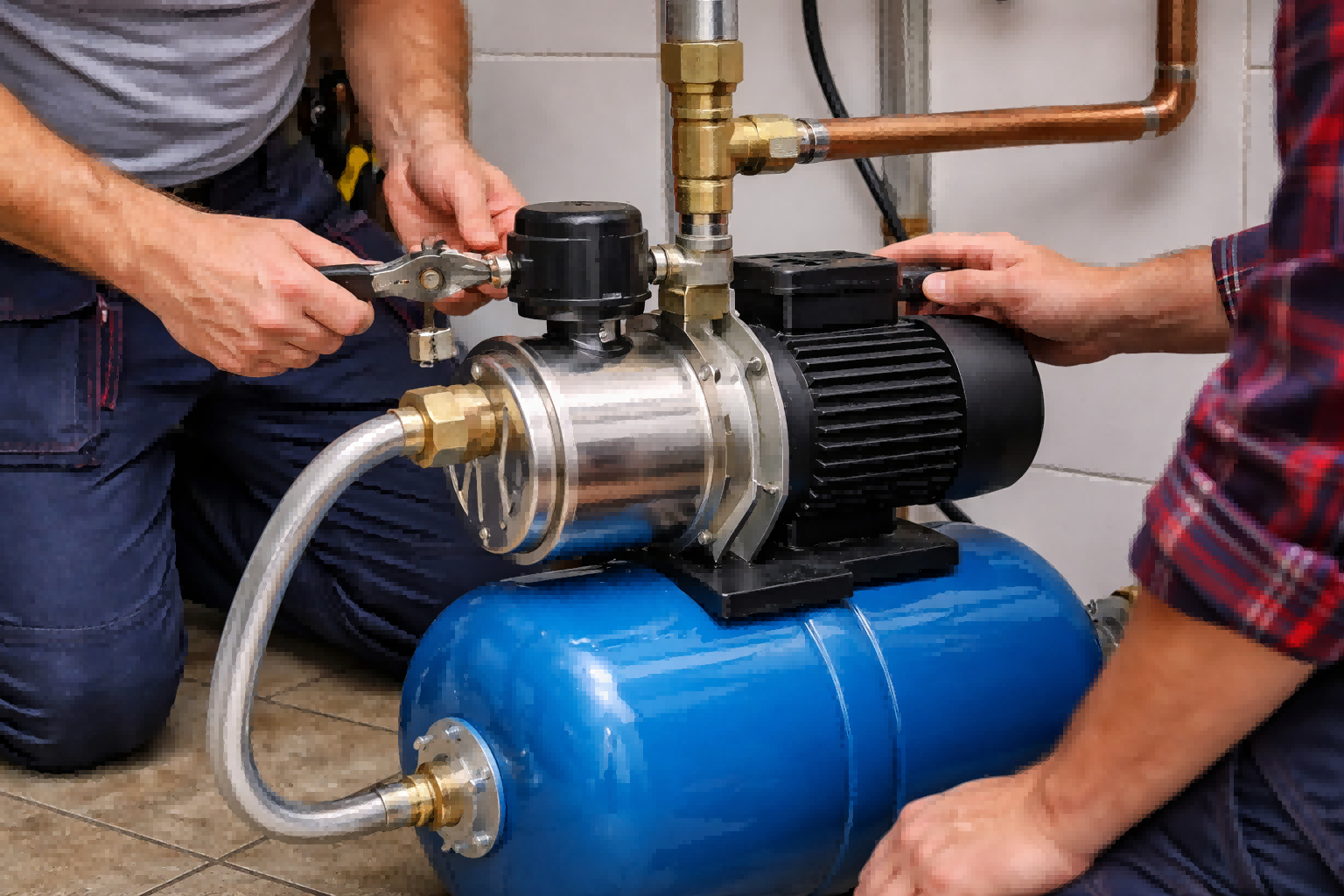
This term refers to a pre-packaged unit designed to increase water pressure for an entire house.
It usually includes the pump, a motor, and a pressure tank and switch.
The goal is to provide consistent, strong pressure to every tap, shower, and appliance.
These are the most common solutions for low municipal water pressure.
In-Line Pump
This name describes how the pump is installed.
An in-line pump is installed directly "in the line" of a pipe to boost the pressure of the fluid moving through it.
Most domestic booster pumps are a type of in-line pump.
The term is also used in industrial and commercial settings for various fluid transfer tasks.
The Submersible "Booster"
Here, the concept changes significantly.
A standard booster pump pulls water and boosts it.
This only works for shallow depths, typically less than 25 feet.
For a deep well, you cannot pull water from the surface.
You must push it from the bottom.
This job is done by a submersible pump.
It is a long, sealed pump that sits deep inside the well.
It acts as the primary pressure creator, not a secondary booster.
It is a multi-stage pump that powerfully pushes the entire column of water up to the surface.
In this context, the submersible pump itself is the engine of your water pressure.
It's not "boosting" existing pressure; it's creating it from the source.
So, for a deep well system, another name for your "booster" is simply a "submersible well pump."
What If Your Pump Is for a Deep Well?
Is your water source hundreds of feet underground?
A standard booster pump on the surface is useless.
You need a pump that does the heavy lifting from the source itself.
**For a deep well, you need a submersible pump.
This specialized pump is placed deep inside the well to push water up to the surface.
It is a multi-stage pressure booster designed for creating high head.**
A submersible pump is the only viable solution for extracting water from a deep well.
Its design is fundamentally different from a surface booster.
Instead of one large impeller, it uses a series of smaller impellers stacked on top of each other.
Each impeller and its matching diffuser is called a "stage."
Water enters the first stage at the bottom, and its pressure is increased slightly.
It then moves to the next stage, where the pressure is increased again.
This process repeats through all the stages.
By the time the water leaves the top of the pump, it has enough pressure to travel hundreds of feet to the surface and pressurize your home or farm.
The choice of submersible pump depends on the well's depth (head requirement) and the amount of water you need (flow rate).
Different applications demand different pump designs.
The Deep Well Specialist: Solar Screw Pump
This pump is a master of high-pressure, low-flow situations.
It doesn't use impellers.
Instead, it uses a single rotating stainless steel screw inside a rubber stator.
This design acts like an Archimedes screw, forcing water upwards with immense pressure.
- Key Feature: Low Flow, High Head.
- Best For: Extremely deep wells, domestic water supply, and livestock watering in arid regions.
- Advantage: It is highly resistant to sand and silt, which can quickly destroy impeller pumps.
The High-Volume Workhorse: Solar Plastic Impeller Pump
This is a more traditional multi-stage centrifugal pump.
It is designed to move a large volume of water.
It uses durable, wear-resistant plastic impellers.
This makes it an economical and lightweight choice.
- Key Feature: High Flow, Medium Head.
- Best For: Farm irrigation, pasture water supply, and filling reservoirs.
- Advantage: Its excellent resistance to fine sand and high water output make it a popular choice in Africa and the Americas for agriculture.
The Premium Durability Option: Solar Stainless Steel Impeller Pump
This pump is built for maximum longevity in harsh conditions.
All components that touch water, including the impellers and pump body, are made from SS304 stainless steel.
It offers high flow rates and excellent durability.
- Key Feature: High Flow, Corrosion Resistance.
- Best For: Water with high acidity or alkalinity, or salty soil regions like those in Australia.
- Advantage: Its superior corrosion resistance provides a very long service life and high reliability, ideal for high-end applications.
| Pump Type | Primary Strength | Ideal Application | Key Advantage |
|---|---|---|---|
| Solar Screw Pump | High Head | Deep domestic wells, livestock | Excellent sand resistance |
| Solar Plastic Impeller Pump | High Flow | Farm irrigation, pastures | Lightweight and economical |
| Solar Stainless Steel Impeller Pump | Corrosion Resistance | Corrosive water, premium homes | Maximum durability, long life |
What Is a Power-Source-Based Name?
Living off the grid presents a unique challenge for water pressure.
You need a powerful pump but lack a stable power source.
This makes achieving reliable water pressure seem impossible.
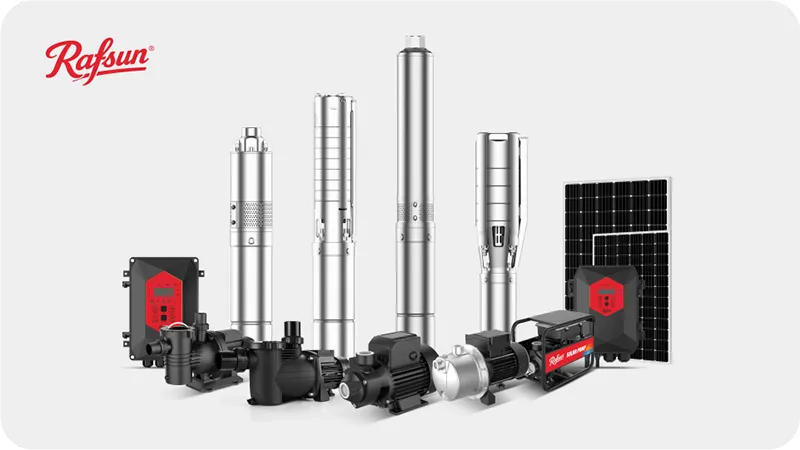
**When a pump is powered by the sun, it's often called a "solar water pump" or a "solar powered booster system."
This name highlights its independent energy source, a critical feature for off-grid applications.**
The name of a pump can also come from its power source.
This is especially true for systems designed to operate away from the electrical grid.
A "solar water pump" is a complete system, not just a pump.
It includes solar panels, a controller, and the pump itself.
This system is a self-sufficient solution for providing water pressure anywhere the sun shines.
The technology that makes these systems so effective is found in the motor and the controller.
These two components work together to maximize the use of solar energy.
The Engine of Efficiency: The BLDC Motor
The heart of a modern solar pump is its motor.
High-efficiency solar pumps use a Brushless DC (BLDC) permanent magnet motor.
This is a major leap forward from older motor technologies.
- Extreme Efficiency: BLDC motors convert over 90% of electrical energy into mechanical power.
This means less energy is wasted as heat, and more water is pumped per watt of solar power. - Compact Power: They use powerful rare-earth magnets.
This makes the motors up to 47% smaller and 39% lighter than traditional motors with the same power output.
Installation is easier, and shipping costs are lower. - Long, Maintenance-Free Life: As the name suggests, there are no brushes to wear out.
This results in a much longer service life with virtually zero maintenance, a huge benefit for remote installations.
The Brains of the System: The Smart Controller
The controller manages the power from the solar panels.
It ensures the pump runs efficiently and reliably, even as sunlight conditions change.
- Maximum Power Point Tracking (MPPT): This technology constantly adjusts the electrical load to extract the absolute maximum power from the solar panels.
It can increase total water output by as much as 30%. - Hybrid AC/DC Capability: Advanced controllers can accept power from two sources simultaneously: DC from solar panels and AC from a generator or grid.
The controller's logic will always prioritize using free solar energy.
It only blends in AC power when sunlight is insufficient.
At night, it can switch entirely to AC power, ensuring you have water pressure 24/7.
This intelligent system provides a powerful and reliable water source completely independent of the grid.
Conclusion
A booster pump is also known as a pressure booster.
But its name can change based on its job, location, or power source, including submersible pumps or solar water pumps.
Frequently Asked Questions
What is the difference between a water pump and a booster pump?
A water pump moves water from one place to another.
A booster pump specifically increases the pressure of water that is already flowing in a pipe.
Is a pressure pump the same as a booster pump?
Yes, the terms "pressure pump" and "booster pump" are generally used to describe the same device, which is designed to increase water pressure.
What are the two types of booster pumps?
The two main types are single-stage pumps for small boosts and multi-stage pumps for significantly higher pressure increases, like those used in tall buildings or well systems.
Can a booster pump be used with a water tank?
Yes, booster pumps are often used with water storage tanks to pressurize the water distribution system for a house or irrigation network.
How do I know if I need a booster pump?
If you have low water pressure throughout your house, causing weak showers and slow-filling appliances, you likely need a booster pump.
Do booster pumps use a lot of electricity?
Modern, efficient booster pumps use a moderate amount of electricity and only run when water is being used, minimizing their energy consumption.
What is another name for a submersible pump?
A submersible pump is sometimes called a "submersible well pump" or simply a "well pump," as this is its most common application.