Struggling to get water from a lake reliably?
An incorrect pump choice can lead to weak flow, high energy bills, or even complete system failure.
Understanding the right pump type is the key to an efficient and dependable water supply.
The best pump for pulling water from a lake depends on your specific needs, but centrifugal pumps and submersible pumps are the most common and effective choices. Centrifugal pumps are great for shallow applications, while submersible pumps are ideal for deeper water or when you need a silent, hidden installation.
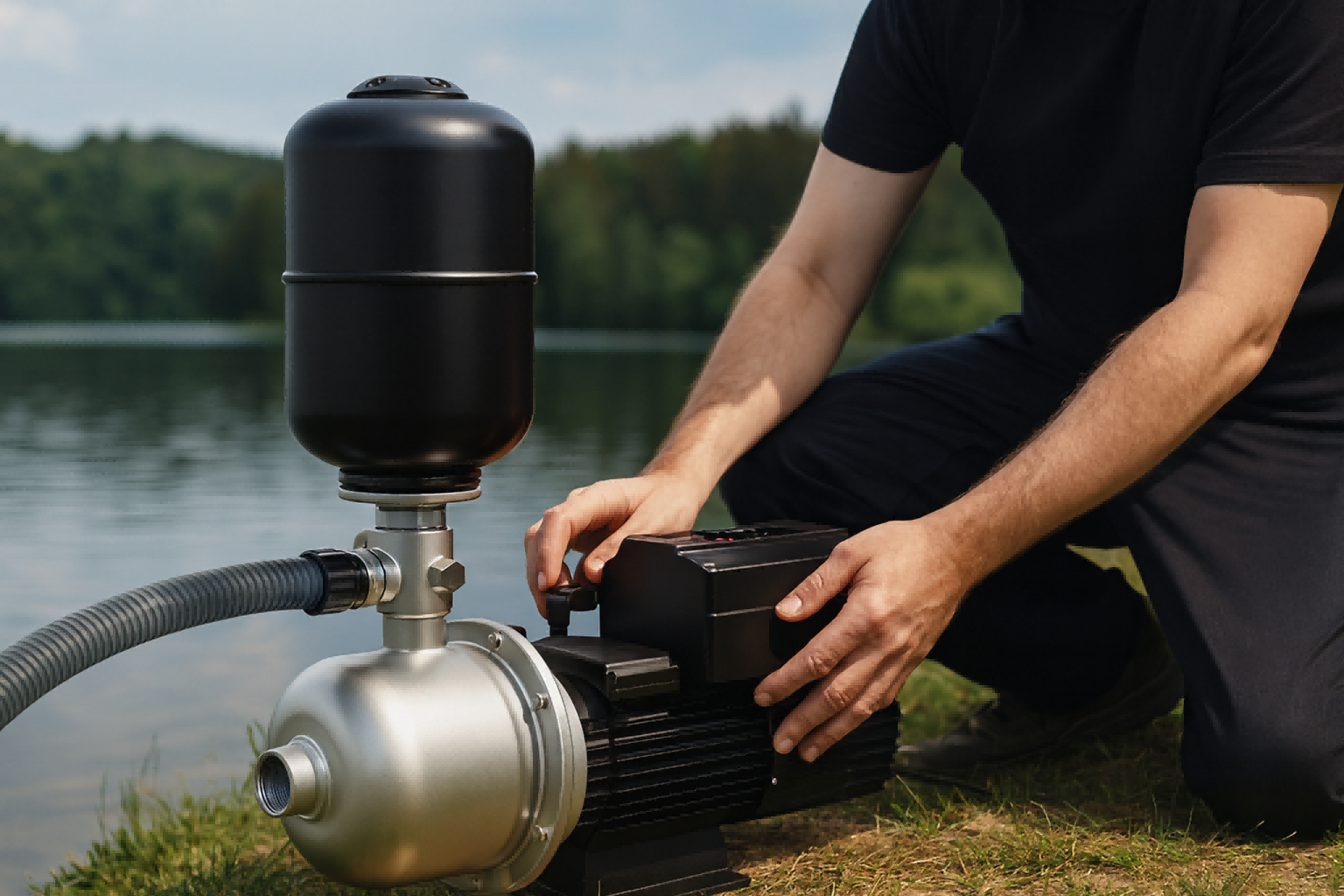
Choosing the right pump might seem complicated at first.
You have to think about how far the water is, how high you need to lift it, and what you'll use it for.
Don't worry, we can break it down into simple steps.
This guide will walk you through everything you need to know.
We'll look at the different types of pumps and the key factors to consider.
By the end, you'll be able to confidently select the perfect pump for your lake water system, ensuring you get a solution that is both effective and efficient.
Let's dive into the details to make sure you get it right the first time.
Understanding the Key Factors for Lake Pump Selection
Picking a pump without knowing your needs is a guaranteed problem.
You might end up with a pump that can't do the job or one that wastes a lot of energy.
Let's make sure that doesn't happen by looking at the important details first.
To choose the right lake pump, you must first determine the Total Dynamic Head (TDH), your required flow rate, and the water quality. These core metrics will guide you to a pump that performs efficiently and reliably for your specific irrigation or water supply needs.
To truly master pump selection, we need to go deeper into these core concepts.
It's not just about picking a model off a shelf.
It's about engineering a solution that works perfectly for your unique situation.
A successful system comes from understanding the physics of moving water from point A to point B.
Let's break down the technical terms into simple, actionable information.
What is Total Dynamic Head (TDH)?
Total Dynamic Head, or TDH, is the most critical factor in pump selection.
It represents the total work your pump needs to do.
TDH is a combination of three main components: static lift, static height, and friction loss.
- Static Lift: This is the vertical distance from the water level in the lake to the pump's inlet.
- Static Height: This is the vertical distance from the pump to the final destination point, like a sprinkler head or a storage tank.
- Friction Loss: As water moves through pipes and fittings, it encounters resistance, which causes a loss of pressure. This is friction loss.
You calculate TDH by adding these three values together.
A pump must be powerful enough to overcome the total TDH to deliver water effectively.
For instance, if your pump is 10 feet above the lake (static lift) and pushes water 30 feet uphill to a garden (static height), your total static head is 40 feet.
We then add the friction loss from the pipes to get the final TDH.
| Component | Description | Example |
|---|---|---|
| Static Lift | Vertical distance from the water surface to the pump. | 5 feet |
| Static Height | Vertical distance from the pump to the discharge point. | 25 feet |
| Friction Loss | Pressure lost due to pipe length, diameter, and fittings. | 10 feet (estimated) |
| Total Dynamic Head | Static Lift + Static Height + Friction Loss | 40 feet |
How to Determine Your Flow Rate Needs
Flow rate is the volume of water you need the pump to move in a given time.
It's typically measured in gallons per minute (GPM) or liters per minute (LPM).
Your required flow rate depends entirely on your application.
Are you watering a small garden, or are you supplying an entire irrigation system for a commercial farm?
For home use, like running a couple of sprinklers, you might need 10-20 GPM.
For larger agricultural needs, you could require hundreds of GPM.
To determine your needs, list all the fixtures or outlets that will run at the same time.
Add up their individual flow rate requirements to find your peak demand.
It's always a good idea to choose a pump that can slightly exceed your peak demand.
This ensures you have enough pressure even when the system is running at full capacity.
Assessing Water Quality and Debris
Lake water is not city water.
It often contains sand, silt, weeds, and other debris.
The type and amount of solids in your water will heavily influence your pump choice.
A standard clean-water pump can be quickly damaged by sucking in sand or small pebbles.
The internal parts, like the impeller, are not designed to handle solids and will wear out or jam.
If your lake has a sandy or muddy bottom, you have two main options.
First, you can use a pump specifically designed for handling solids, often called a "trash pump" or "semi-trash pump."
These have specially designed impellers that can pass solids without clogging.
Second, you can use a fine-mesh intake screen or foot valve filter on your suction line.
This prevents debris from entering the pump in the first place.
Regularly cleaning this screen is crucial to maintain water flow and protect your pump.
Understanding these three factors—TDH, flow rate, and water quality—is the foundation of a successful lake pump system design.
Getting them right will save you time, money, and a lot of frustration.
Centrifugal Pumps: The Go-To for Shoreline Setups
Is your pump location close to the lake and not too high above the water?
Using the wrong pump type in this scenario can be an expensive, noisy, and inefficient mistake.
A centrifugal pump is often the perfect, cost-effective solution for these shoreline applications.
For shoreline installations where the vertical distance from the water is less than 25 feet (about 7.5 meters), a self-priming centrifugal pump is an excellent choice. It's reliable, easy to maintain, and provides strong performance for irrigation and water transfer.
Centrifugal pumps are the workhorses of the water moving world.
Their simple design and operational principles make them a popular choice for countless applications.
They are particularly well-suited for pulling water from a lake when set up correctly.
But to get the most out of one, you need to understand how they work and where they excel.
Let's look at the mechanics, the critical limitations, and how to optimize their performance for your lake.
How Centrifugal Pumps Work
A centrifugal pump uses a simple but powerful principle.
Water enters the pump through the suction inlet and flows into the center of a spinning component called an impeller.
The impeller has curved vanes that rotate at high speed.
As the impeller spins, it flings the water outward using centrifugal force.
This action increases the water's velocity and pressure.
The high-pressure water is then directed out of the pump through the discharge outlet.
It's a continuous process that creates a steady flow of water.
The key to their operation is the initial "priming."
A standard centrifugal pump cannot pump air.
The casing and suction line must be filled with water before you start it.
Without this, the impeller will just spin in the air, unable to create the suction needed to draw water from the lake.
The Importance of Self-Priming Models
This is where self-priming centrifugal pumps come in.
These pumps have a special casing design that includes a water reservoir.
Once you fill the casing for the first time, the pump can automatically purge air from the suction line on subsequent starts.
It circulates the water in the reservoir, creating a vacuum that pulls water up from the source.
This makes them much more convenient for lake applications, as you don't have to manually re-prime the pump every time it runs.
For any shoreline lake installation, a self-priming model is highly recommended.
| Feature | Standard Centrifugal Pump | Self-Priming Centrifugal Pump |
|---|---|---|
| Priming | Must be manually primed before every start. | Primes automatically after the initial fill. |
| Convenience | Less convenient; requires more user intervention. | Very convenient for intermittent use. |
| Best Use Case | Flooded suction or systems that stay primed. | Applications with a suction lift (like a lake). |
The "25-Foot Rule" Limitation
The single biggest limitation of any surface-mounted centrifugal pump is suction lift.
Due to atmospheric pressure, a pump at sea level can theoretically only lift water about 34 feet vertically.
In the real world, with friction and pump inefficiencies, the practical maximum suction lift is closer to 25 feet (7.5 meters).
This vertical distance is measured from the water's surface to the pump's inlet.
If your pump location is more than 25 feet above the lake, a centrifugal pump will not work.
It simply won't be able to create enough vacuum to lift the water that high.
Always measure this distance carefully before deciding on a centrifugal pump.
If it's too high, you'll need to consider a different type of pump, like a submersible.
For shoreline setups within this limit, however, a centrifugal pump offers an excellent balance of performance, cost, and durability.
Submersible Pumps: The Silent and Powerful Choice
What if your shoreline is steep or you need to place a pump far from a power source?
A surface pump might not be able to lift the water high enough, or it might be too noisy.
A submersible pump solves these problems by working directly from inside the lake.
A submersible pump is the best solution for deep water or high-lift applications. By pushing water instead of pulling it, this pump overcomes suction lift limitations, runs silently, and is protected from freezing, making it ideal for demanding or aesthetically sensitive installations.
Submersible pumps offer a completely different approach to moving water.
Instead of sitting on the shore and pulling water up, they are submerged directly in the source.
This design gives them several unique advantages that make them superior in many lake applications.
They eliminate the challenges of suction lift and priming.
They also operate out of sight and with minimal noise.
Let's explore how they work and why they might be the perfect choice for your system.
Pushing vs. Pulling Water
The fundamental advantage of a submersible pump is that it pushes water instead of pulling it.
A surface-mounted centrifugal pump has to work against gravity and atmospheric pressure to suck water up the suction line.
This "pulling" action is what limits it to a practical lift of about 25 feet.
A submersible pump, on the other hand, is already under the water.
Its motor and pump end are housed in a single sealed unit.
The pump's intake is submerged, so water flows into it directly, and the pump uses its power to push the water up the discharge pipe.
Because it's pushing, it's not limited by suction lift.
A submersible pump can push water hundreds of feet vertically.
This makes it the only viable option for homes on high bluffs or for systems requiring very high pressure.
Key Advantages of Submersible Pumps
Choosing a submersible pump brings several key benefits.
Understanding these can help you decide if it's the right fit for your project.
- No Priming Needed: Since the pump is always submerged in water, it is naturally primed and ready to run.
- Silent Operation: The water surrounding the pump dampens most of the motor noise, making it virtually silent from the shore. This is a huge plus for residential areas.
- No Freezing Risk: The pump itself is below the typical frost line in the water, protecting it from freezing and damage during winter. The pipe coming to shore, however, will still need protection.
- Higher Efficiency: Pushing water is more energy-efficient than pulling it. Submersibles often use less energy to move the same amount of water compared to a jet pump in a deep well scenario.
- Out of Sight: The pump is hidden beneath the water's surface, preserving the natural look of your shoreline.
Installation and Maintenance Considerations
While they have many advantages, submersible pumps require a different approach to installation.
The pump is typically suspended just off the lake bottom to avoid sucking up mud and silt.
This can be done using a float system or by placing it on a stand.
The power cable and discharge pipe must be waterproof and protected.
The cable runs from the pump, under the water, and to the power source on shore.
The discharge pipe follows a similar path.
Maintenance can be more involved.
If the pump needs service, you have to pull it out of the water.
This is a key difference from a surface pump, which is easily accessible on land.
However, modern submersible pumps are extremely reliable and can often run for many years without needing any service at all.
Choosing between a submersible and a centrifugal pump comes down to your site's specific geography and your personal preferences for noise and aesthetics.
The VSD Advantage: Why Constant Pressure Matters
Do your sprinklers lose pressure when a tap is turned on inside the house?
This happens with traditional fixed-speed pumps that can't adapt to changing water demand.
A Variable Speed Drive (VSD) pump automatically adjusts its speed to provide constant, reliable pressure everywhere.
A Variable Speed Drive (VSD) or Variable Frequency Drive (VFD) pump is the ultimate solution for a modern lake water system. It intelligently adjusts motor speed to maintain constant water pressure, dramatically cutting energy use by up to 50% or more and extending pump life.
In the world of water pumps, Variable Speed Drive (VSD) technology represents a major leap forward.
It transforms a standard pump into a smart, energy-efficient machine.
For any property owner, especially a business like yours that serves discerning customers, understanding and offering VSD technology is a significant competitive advantage.
It solves common water pressure problems while delivering impressive long-term savings.
It's not just a pump; it's a complete water management system.
Let's examine how this technology works and why it's becoming the new standard.
How VSD Technology Works
A traditional pump operates at a single, fixed speed whenever it's on.
It's either off or running at 100% power, regardless of how much water you actually need.
This is like driving your car with only two options: parked or flooring the gas pedal.
A VSD pump is different.
It includes a controller, or drive, that can change the frequency of the electricity going to the motor.
By changing the frequency, it can change the motor's speed.
A pressure sensor is installed in the water line.
You set a desired water pressure, for example, 50 PSI.
The VSD controller constantly monitors the system pressure.
When you open a tap, the pressure starts to drop.
The controller senses this and instantly increases the pump's speed just enough to maintain the target 50 PSI.
If you open more taps, the pump speeds up more.
When you close the taps, the pump slows down or even turns off.
The Benefits of Constant, Unwavering Pressure
This ability to adapt has huge benefits.
| Feature | Traditional Fixed-Speed Pump | VSD Constant Pressure Pump |
|---|---|---|
| Pressure | Fluctuates widely with demand. | Stays constant regardless of demand. |
| User Experience | Weak showers, pulsing sprinklers. | Strong, consistent flow everywhere. |
| System Stress | High-pressure spikes and water hammer. | Soft starts and stops reduce stress. |
With a VSD system, you no longer have to plan your water usage.
You can run the irrigation system while someone takes a shower without either one experiencing a drop in pressure.
This level of comfort and performance is what modern customers expect.
It elevates a basic water system into a premium utility.
Massive Energy and Cost Savings
The biggest selling point for many customers is the dramatic energy savings.
A pump motor's energy use is exponentially related to its speed.
According to pump affinity laws, reducing a pump's speed by just 20% can reduce its energy consumption by nearly 50%.
Since most households only require the pump's full power for a small fraction of the time, a VSD pump runs at a lower, energy-saving speed most of its duty cycle.
This can lead to electricity savings of 50% or more compared to a fixed-speed pump.
For your customers, this means the higher initial investment in a VSD pump pays for itself over time through lower utility bills.
As a distributor, this is a powerful value proposition.
Extending the Life of Your Equipment
VSD technology also protects the pump and the entire plumbing system.
Traditional pumps slam on at full power, creating a hydraulic shockwave called water hammer.
This stresses pipes, fittings, and the pump itself.
VSD pumps feature a "soft start," gradually ramping up to speed.
This eliminates water hammer and reduces mechanical wear on the motor, bearings, and seals.
The result is a quieter, smoother system with a significantly longer lifespan and fewer service calls.
By offering intelligent VSD pumps, you are providing a technically superior product that delivers better performance, lower operating costs, and greater reliability.
It's the clear choice for any premium lake water installation.
Conclusion
Choosing the best pump for a lake means matching the pump type to your site's specific TDH, flow rate, and water quality for an efficient and long-lasting system.
FAQs
What size pump do I need to pull water from a lake?
The size depends on your Total Dynamic Head (TDH) and required flow rate (GPM/LPM). Calculate these values first to select a pump that meets your specific performance needs.
How do I keep my lake pump from clogging?
Use a high-quality intake screen or foot valve with a fine mesh. Suspending the intake a few feet above the lakebed also helps prevent it from sucking up sand and silt.
Can I use a well pump in a lake?
Yes, a submersible well pump can be used in a lake. You will need to install it with a "pump sleeve" to ensure proper motor cooling, as it's designed for narrow well casings.
How far can you pump water from a lake?
A surface centrifugal pump can pull water from about 25 feet vertically. However, both centrifugal and submersible pumps can push water horizontally for thousands of feet, limited only by friction loss in the pipe.
Do I need a permit to pump water from a lake?
This depends entirely on your local and regional water regulations. Always check with your local authorities or water management district before installing a pump to ensure you are in compliance.
How do I protect my lake pump in the winter?
For surface pumps, you must drain the pump and all pipes to prevent freezing. Submersible pumps are safe below the ice, but the pipe coming to shore must be buried or heat-taped.
What is the most energy-efficient pump for a lake?
A pump equipped with a Variable Speed Drive (VSD) is the most energy-efficient. It adjusts speed to match water demand, significantly reducing electricity consumption compared to a fixed-speed pump.
Should I use a jet pump for a lake?
Jet pumps are an option for shallow applications but are generally less efficient than a self-priming centrifugal pump. For deeper applications over 25 feet, a submersible pump is a much better choice.