Struggling to get water where it needs to go?
Choosing the wrong pump leads to low pressure, high energy bills, and system failure.
Understanding 'head' is the key to selecting the perfect pump.
**The best pump to push water uphill is one that can overcome the total vertical distance (static head) and friction losses in the pipes (friction head).
For most applications, multi-stage centrifugal pumps or submersible pumps are ideal choices due to their ability to generate high pressure efficiently.**
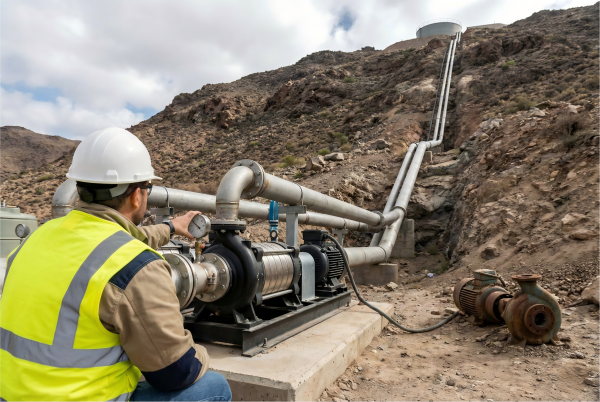
Choosing a water pump can feel complicated.
You know that moving water vertically requires a special kind of power.
But terms like 'head', 'flow rate', and 'pump curve' can be confusing.
This guide breaks down everything you need to know.
We will help you understand the core principles.
You will learn how to select the right pump for any uphill application, ensuring efficiency and reliability for your clients.
Let's dive into the details to make your next project a success.
Understanding Total Dynamic Head (TDH)
Losing pressure on an uphill water system?
This common problem frustrates users and can lead to costly callbacks and reputational damage.
Solve this by accurately calculating Total Dynamic Head (TDH) before selecting a pump.
**Total Dynamic Head (TDH) is the most critical factor for pushing water uphill.
It represents the total work the pump must do.
TDH is the sum of the vertical lift (static head) and the pressure lost to friction in the pipes (friction head).**
To ensure a pump performs correctly, a precise TDH calculation is not optional; it is essential.
Without it, you are simply guessing.
This calculation is the foundation of a reliable and efficient water system.
It prevents under-sizing, which leads to poor performance, and over-sizing, which wastes energy and money.
As a distributor, providing your clients with a system based on accurate TDH calculations demonstrates expertise and builds trust.
Let's break down the components.
Static Head: The Vertical Lift
Static head is the simplest part of the equation.
It is the total vertical distance the water needs to travel.
This is measured from the surface of the water source to the highest point of the discharge outlet.
For example, if a pump takes water from a tank and pushes it 50 meters up a hill to a storage container, the static head is 50 meters.
It is a fixed value that is easy to measure on-site.
Friction Head: The Hidden Resistance
Friction head is more complex.
It is the pressure lost as water moves through pipes and fittings.
Every meter of pipe, every bend (elbow), and every valve creates resistance.
This resistance slows the water down and reduces pressure.
The faster the water flows (higher flow rate) and the smaller the pipe diameter, the greater the friction loss.
For example, pushing 100 liters per minute through a 1-inch pipe will have significantly more friction loss than pushing it through a 2-inch pipe.
Overlooking friction head is a common mistake that leads to underperforming systems, as it can account for over 30% of the Total Dynamic Head in long-distance applications.
Calculating TDH: A Practical Formula
The formula is straightforward.
Total Dynamic Head (TDH) = Static Head + Friction Head
| Component | Description | Example Value |
|---|---|---|
| Static Head | Vertical distance from water source to discharge point. | 50 meters |
| Friction Head | Pressure loss from pipes, valves, and fittings. Can be found using friction loss charts. | 15 meters |
| TDH | The total work the pump must do. | 65 meters |
Once you have the TDH, you can confidently choose a pump.
The pump's performance chart must show that it can deliver your desired flow rate at your calculated TDH.
A pump rated for a 65-meter head will efficiently deliver water for this system.
A pump rated for only 50 meters will fail to deliver adequate pressure or flow.
Centrifugal Pumps: The Versatile Workhorse
Need a reliable pump for a wide range of uphill tasks?
Many pumps can't handle the pressure requirements for significant elevation changes, leading to system failure.
Multi-stage centrifugal pumps are engineered to generate the high pressure needed for these demanding applications.
**A centrifugal pump is an excellent choice for pushing water uphill, especially when high pressure is required.
Single-stage pumps are great for lower head applications, but multi-stage centrifugal pumps are the ideal solution for significant vertical lifts, like hillsides or multi-story buildings.**
Centrifugal pumps are one of the most common types of pumps used globally for water transfer.
Their popularity comes from a simple, robust design that offers reliability and easy maintenance.
However, not all centrifugal pumps are created equal, especially when it comes to generating high pressure.
The key is understanding the difference between single-stage and multi-stage designs.
For your business, offering both types allows you to meet a wider range of customer needs, from simple garden irrigation to complex municipal water supply.
Let's explore how they work and where they excel.
How Centrifugal Pumps Create Pressure
A centrifugal pump uses a spinning impeller to move water.
Water enters the pump at the center of the impeller (the eye).
As the impeller rotates, its vanes throw the water outward at high speed due to centrifugal force.
This high-velocity water is then directed into a casing (volute) that is specially designed to slow the water down.
As the water slows, its kinetic energy (speed) is converted into potential energy (pressure).
This process is highly efficient and allows for a smooth, continuous flow of water.
The amount of pressure a single impeller can generate is directly related to its diameter and rotational speed.
Single-Stage vs. Multi-Stage: What's the Difference?
This is the most important distinction for uphill applications.
-
Single-Stage Pumps: These pumps have only one impeller. They are perfect for high-flow, low-head applications like draining a flooded area, circulating water in a pool, or providing irrigation on relatively flat ground. They are generally less expensive and have a simpler construction.
-
Multi-Stage Pumps: These pumps have two or more impellers in a single casing. Water is discharged from the first impeller and immediately directed into the eye of the second impeller. Each stage "boosts" the pressure from the previous one. This stacking effect allows multi-stage pumps to generate extremely high pressures, making them the superior choice for pushing water up tall buildings, long hillsides, or through extensive piping systems where friction losses are high. Our vertical multi-stage pumps, for instance, are designed to achieve heads exceeding 200 meters.
| Pump Type | Best For | Typical Head Range | Key Advantage |
|---|---|---|---|
| Single-Stage Centrifugal | High flow, low pressure | 5 - 50 meters | Cost-effective, simple design |
| Multi-Stage Centrifugal | High pressure, moderate flow | 40 - 250+ meters | High head capability |
Choosing a multi-stage pump for a high-head application is not just a preference; it's a technical requirement.
A single-stage pump would be forced to operate far outside its best efficiency point (BEP), leading to cavitation, vibration, and a service life reduced by as much as 50-75%.
A multi-stage pump, by contrast, will operate efficiently and reliably for years in the same application.
Submersible Pumps: The Deep Well Solution
Need to lift water from a source deep underground?
Surface pumps struggle with suction lift beyond 7-8 meters, making them useless for deep wells.
Submersible pumps push water instead of pulling it, effortlessly moving water from great depths.
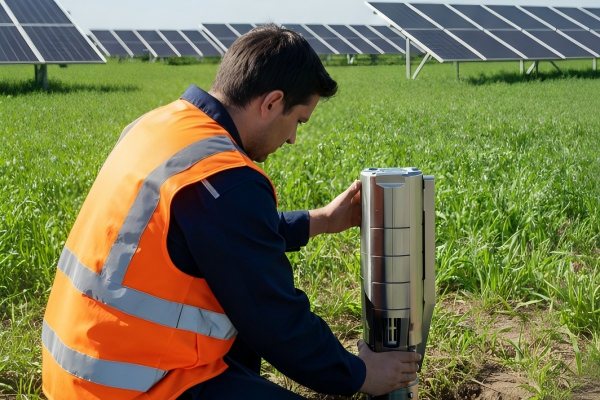
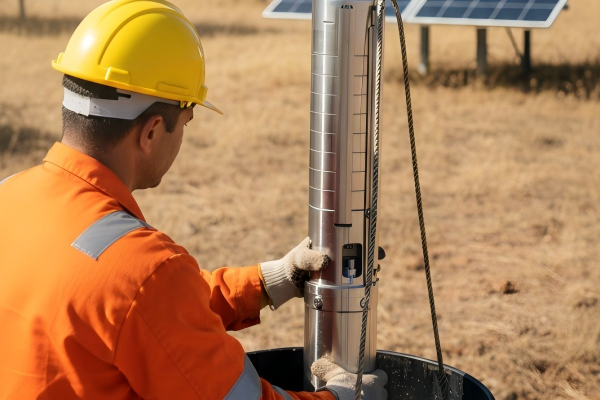
**For pushing water uphill from a source like a deep well or bore, a submersible pump is the best solution.
Because it is submerged in the water, it doesn't have suction lift limitations and uses its power to push water to extreme heights.**
When your water source is far below the ground, your only viable option is a submersible pump.
These pumps are marvels of engineering, designed to operate while fully submerged in water.
Unlike surface pumps that pull water via suction, submersibles push water up from the bottom of the well.
This fundamental difference is what allows them to achieve incredible lift heights.
For distributors whose clients rely on groundwater, boreholes, or deep wells, stocking a range of high-quality submersible pumps is critical.
They are the go-to solution for rural, agricultural, and off-grid properties.
Let's examine why they are so effective.
The Power of Pushing vs. Pulling
A surface pump works by creating a vacuum and relying on atmospheric pressure to push water up the suction pipe.
Atmospheric pressure can only support a column of water about 10 meters high in a perfect vacuum.
In reality, due to friction and pump inefficiencies, most surface pumps have a practical suction lift limit of around 7-8 meters (about 25 feet).
Submersible pumps completely bypass this limitation.
The pump motor and its impellers are located deep within the well, below the water level.
The pump takes in water directly and, using a series of stacked impellers similar to a multi-stage centrifugal pump, pushes the water column up the discharge pipe.
This design means its lifting capability is limited only by the power of the motor and the number of stages, not by atmospheric pressure.
Our deep well pump models, for example, are available in configurations that can pump water from depths of over 300 meters.
Key Components and Materials
Because these pumps live underwater, their construction is critical for longevity.
-
Motor: The motor is housed in a hermetically sealed, oil-or-water-filled compartment to protect it from the surrounding water. High-efficiency motors are crucial for minimizing energy costs over the pump's lifetime.
-
Impellers: Like multi-stage centrifugal pumps, submersibles use a stack of impellers to build pressure. These are often made from engineered polymers or stainless steel for corrosion and abrasion resistance, especially in sandy wells.
-
Pump Housing: The outer casing is typically made from high-grade stainless steel (like 304 or 316) to resist corrosion. This is a non-negotiable feature for ensuring a long service life, as our products demonstrate through over 144 hours of salt spray testing.
When is a Submersible the Right Choice?
A submersible pump is the clear choice in several scenarios.
| Scenario | Why a Submersible is Best | Key Consideration |
|---|---|---|
| Deep Wells/Boreholes | The water level is below the 7-8 meter suction limit of surface pumps. | Match the pump's head rating to the well depth plus any additional uphill elevation. |
| Improving System Efficiency | Pushing is more energy-efficient than pulling water over long distances. | Can result in lower long-term energy consumption compared to a jet pump. |
| Noise Reduction | The pump operates silently at the bottom of the well. | Ideal for residential applications where noise from a surface pump would be a nuisance. |
| Self-Priming | The pump is already submerged in water and requires no priming. | Simplifies installation and automated operation. |
For a distributor like Andrew in Australia, where boreholes are common for agriculture and residential water supply, a robust range of submersible pumps is a cornerstone of the business.
Your clients need pumps that are not only powerful but also built to withstand harsh underwater conditions for more than a decade.
Booster Pumps: Increasing Existing Pressure
Is low water pressure the problem, even if the water is already moving?
A standard pump may not provide the final pressure needed for showers, irrigation, or industrial processes.
A booster pump, especially a VSD model, intelligently adds pressure exactly when and where it's needed.
**A booster pump is used to increase the pressure within an existing water system.
It doesn't lift water from a source but "boosts" it to overcome high-elevation points or long pipe runs.
Intelligent VSD booster pumps are a top-tier choice for providing constant, reliable pressure.**
Sometimes, the primary pump does its job of getting water up a hill, but the pressure at the destination is still too low.
This can happen in tall buildings, in homes at the top of a hilly area, or in large-scale irrigation systems.
Instead of replacing the entire primary pump with a massive, overpowered unit, a more efficient and intelligent solution is to install a booster pump.
These pumps are designed to take existing flow and add pressure.
For your customers, this means solving complex pressure problems with a targeted, energy-efficient solution.
The most advanced and desirable booster pumps today are those equipped with a Variable Speed Drive (VSD).
Let's explore why these are a game-changer.
The Role of a Booster Pump
Imagine a water line running to a house at the top of a hill.
A municipal pump or a well pump gets the water there, but the pressure is only 1 bar (14.5 PSI)—too low for a decent shower or to run appliances.
A booster pump is installed on the water line near the house.
It automatically kicks in when it senses a pressure drop (like a faucet opening) and boosts the pressure to a desirable level, for example, 3-4 bar.
It is a pressure-adding machine.
The VSD Advantage: Intelligence and Efficiency
Traditional booster pumps are fixed-speed.
They are either off or on at 100% power.
This can cause pressure spikes, water hammer (banging pipes), and wasted energy when only a small amount of flow is needed.
Variable Speed Drive (VSD) pumps, also known as variable frequency drive (VFD) pumps, are different.
This is a core area of our company's expertise, backed by over 100 technical patents.
-
Intelligent Control: A VSD pump has a built-in controller and pressure sensor. You set the desired output pressure (e.g., 3.5 bar). The pump constantly monitors the system pressure.
-
Energy Savings: When you open one small faucet, the VSD controller senses the slight pressure drop and runs the motor at a low speed—perhaps only 30% of its capacity—to maintain the set pressure. When multiple taps are opened, it gracefully speeds up to meet the higher demand. This smart power usage can reduce energy consumption by 30-60% compared to a fixed-speed pump.
-
Constant Pressure: The biggest benefit for the end-user is the feeling of constant, unwavering pressure. No more weak showers when someone flushes a toilet. The pump adjusts in real-time to keep the pressure exactly where you want it.
-
Soft Start/Stop: VSD pumps ramp up and down smoothly. This eliminates the sudden "thump" of a traditional pump turning on and drastically reduces mechanical stress on the pump and the entire plumbing system, extending its life.
VSD Pump Applications
| Application | How VSD Booster Pumps Help | RAFSUN Advantage |
|---|---|---|
| Residential Homes | Provides strong, constant pressure throughout the house, regardless of elevation or simultaneous use. | Our compact designs are quiet and easy to install in existing homes. |
| Hotels & Apartments | Ensures every unit, from the ground floor to the top floor, receives the same excellent water pressure. | Our systems can be networked for large, multi-pump installations. |
| Commercial Buildings | Maintains required pressure for industrial processes, sanitation, and HVAC systems. | Built with robust materials and certified to CE and IEC standards for reliability. |
| Irrigation Systems | Adjusts flow and pressure to match the needs of different sprinkler zones, saving water and energy. | UV-resistant construction ensures durability in outdoor installations. |
For a distributor, offering advanced VSD booster pumps positions you as a technology leader.
Your clients (like Andrew) are looking for quality and competitive advantages.
Providing pumps that save their customers money on electricity and provide a superior user experience is a powerful selling proposition.
Solar Pumps: The Off-Grid Uphill Solution
Need to pump water uphill in a remote location without grid power?
Running electrical lines is incredibly expensive, and fuel for generators requires constant cost and maintenance.
Solar water pumps provide a clean, autonomous, and cost-effective solution for off-grid water transfer.
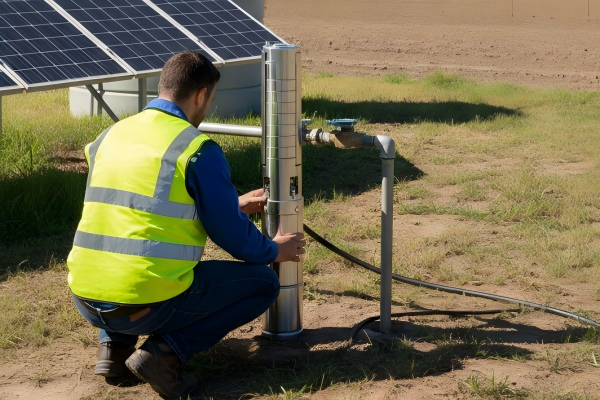
**For pushing water uphill in areas without access to the electrical grid, a solar-powered water pump is the most practical and sustainable choice.
These systems use energy from the sun to power a pump, making them ideal for agriculture and remote homes.**
In many parts of the world, from the Australian outback to the farmlands of Africa and South America, the best water sources are far from any power lines.
For decades, the only solution was a diesel or petrol-powered generator.
However, this approach comes with high fuel costs, frequent maintenance, noise, and pollution.
Today, solar technology has advanced to the point where it is the premier solution for off-grid water pumping.
As an international supplier, we have seen demand for solar pumps grow exponentially, particularly in our export markets in Africa, South America, and Australia.
These systems offer true energy independence to your customers.
Let's discuss how they work and their key benefits.
How Solar Pumping Systems Work
A solar water pumping system is surprisingly simple and consists of three main components.
-
Solar Panels: These capture sunlight and convert it into DC (Direct Current) electricity. The number and size of the panels determine how much power the system can generate.
-
Pump Controller: This is the "brain" of the system. It takes the DC electricity from the panels and manages the pump's operation. A crucial feature of a good controller is Maximum Power Point Tracking (MPPT). MPPT technology optimizes the power output from the panels, allowing the pump to work even in lower light conditions (e.g., morning, evening, or cloudy days). This can increase daily water output by up to 30%.
-
The Pump: The system can use either a submersible or a surface pump, depending on the application. The motor is a highly efficient DC motor designed to run directly off solar power.
The system is most effective during peak sunlight hours.
A common strategy is to pump water uphill to a large storage tank during the day.
Water can then be distributed via gravity 24/7, creating a reliable, off-grid water battery.
Benefits for Remote Applications
The advantages of solar pumps in off-grid settings are undeniable.
-
No Fuel Costs: The sun provides free energy. After the initial investment, the operational cost is nearly zero. This provides a rapid return on investment, often within 1-3 years compared to a diesel pump.
-
Low Maintenance: Solar panels have a lifespan of over 25 years with minimal cleaning. The brushless DC motors in our pumps are designed for long life with no brushes to replace. This is a huge advantage in remote areas where getting service technicians is difficult and expensive.
-
Automation: The system works automatically. When the sun shines, it pumps water. There is no need for someone to manually start or refuel a generator.
-
Environmental Benefits: Solar pumps are clean, quiet, and produce no greenhouse gas emissions.
Choosing the Right Solar Pump
Selecting a solar pump requires the same core calculations as any other pump, with one addition.
| Calculation Step | Description | Importance |
|---|---|---|
| 1. Calculate Daily Water Demand | How many cubic meters (or liters) of water are needed per day? | This determines the overall size of the system. |
| 2. Calculate Total Dynamic Head (TDH) | The vertical lift plus friction loss. | This determines the pressure the pump must generate. |
| 3. Select the Pump | Choose a pump that meets the TDH and flow rate requirements. | The pump's power rating (in Watts) is a key specification. |
| 4. Size the Solar Array | Match the solar panels' power output to the pump's needs, considering local sunlight levels (Peak Sun Hours). | Undersizing the array will lead to poor performance. |
For your business, offering complete solar pumping kits (panels, controller, pump) simplifies the purchasing process for your clients.
It provides them with a proven, integrated solution from a single, reliable source.
Conclusion
The best pump for pushing water uphill depends entirely on your Total Dynamic Head and flow rate.
Multi-stage centrifugal and submersible pumps are top choices for creating high pressure reliably.
FAQs
What size pump do I need to push water uphill?
The pump size depends on the Total Dynamic Head (TDH) and required flow rate.
Calculate TDH by adding the vertical lift to the friction loss in your pipes.
Can a centrifugal pump push water uphill?
Yes, absolutely.
Multi-stage centrifugal pumps are specifically designed to generate the high pressures needed to efficiently push water up hills or tall buildings.
How far uphill can a 1 HP pump push water?
This depends on the pump's design, not just its horsepower.
A high-pressure 1 HP pump might push water 60 meters, while a high-flow 1 HP pump might only manage 20 meters.
Does pipe size affect water pressure uphill?
Yes, significantly.
A smaller pipe creates more friction loss, which reduces the final pressure.
Using a larger diameter pipe is crucial for maintaining pressure over long distances.
What is the maximum height a pump can push water?
This is determined by the pump's maximum head rating.
Some specialized multi-stage or submersible pumps can push water to heights of over 300 meters (nearly 1,000 feet).
How do you increase water pressure going uphill?
You can install a booster pump in the line to increase pressure.
Alternatively, replacing the primary pump with a model that has a higher head rating will also work.
Is it better to push or pull water with a pump?
It is always more efficient to push water.
This is why submersible pumps, which sit in the water and push it up, are ideal for deep wells.
What is the difference between head and pressure?
Head is a measure of the vertical height a pump can lift water (measured in meters or feet).
Pressure is the force exerted by the water (measured in bar or PSI).
10 meters of head is approximately equal to 1 bar of pressure.