Your pool should be a source of joy, not a financial drain.
Yet, every month, a shockingly high electricity bill arrives.
You know the power-hungry pool pump is the primary culprit.
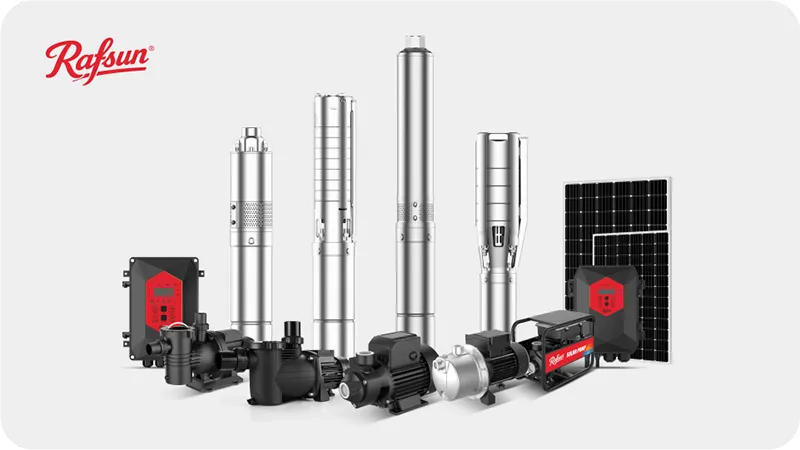
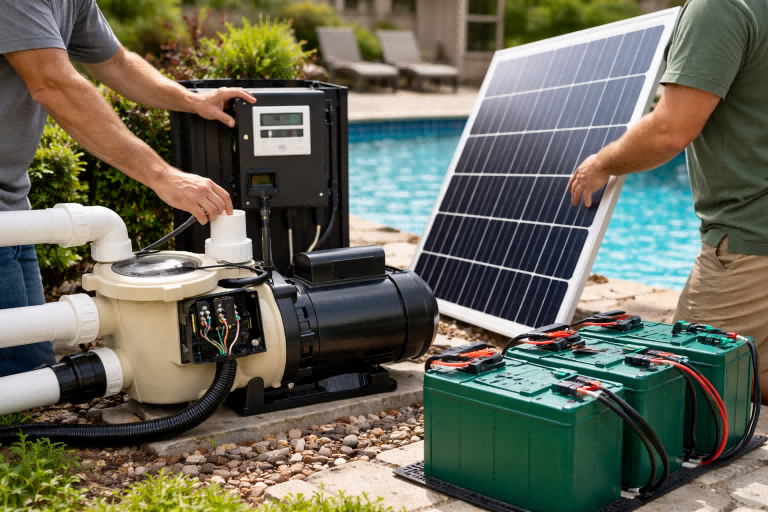
The absolute cheapest way to run a pool pump is to use a solar-powered DC pump.This system harnesses free energy from the sun, virtually eliminating your pump's running costs.For 24/7 operation, a hybrid AC/DC model offers the best of both worlds.
Finding the cheapest method to run your pump isn't about cutting corners on filtration times.
Skimping on run time can lead to cloudy, unsanitary water, creating bigger problems down the line.
The real secret lies in fundamentally changing the technology you use.
Traditional pool pumps are relics of an era when electricity was cheap and efficiency was an afterthought.
They use an astonishing amount of power because of their outdated motor design and "all-or-nothing" operation.
Understanding this core inefficiency is the first step.
Then, you can discover how modern motor and power technology can slash your pool's energy consumption to a fraction of what it is today, making a crystal-clear pool incredibly affordable.
Why is my current pool pump so expensive?
You follow the recommended run times for your pool.
But your energy costs seem to climb higher each year.
You are paying for wasted energy you don't even use.
**Your traditional pool pump is expensive because it likely uses an old AC induction motor.
This type of motor is only 50-70% efficient.
It wastes a massive amount of electricity as heat and operates at a single, energy-guzzling high speed all the time.
**
The extreme expense of a conventional pool pump is a direct result of its core component: the AC (Alternating Current) induction motor.
This technology has been around for over a century and is notoriously inefficient by today's standards.
A significant portion of the electricity it draws from your wall outlet is never converted into the force needed to move water.
Instead, up to 50% of that energy is lost.
This wasted energy doesn't just disappear.
It transforms into heat, which is why the motor casing gets hot to the touch.
It also transforms into noise, creating that constant, loud hum you hear in your backyard.
You are paying a premium for electricity that only serves to warm up the pump and disturb the peace.
The Inefficiency of Single-Speed Design
The problem is made much worse by the pump's single-speed operation.
It's designed to handle the most demanding tasks, such as backwashing the filter or running a pressure-side cleaner.
Crucially, it runs at this maximum, power-hungry speed 100% of the time.
-
One Speed Fits All: For most of its operating hours, the pump's only job is to circulate water through the filter.
This simple task requires far less power than its maximum output. -
Ignoring a Fundamental Law: A key principle in pump physics states that if you halve the speed of the motor, you reduce its power consumption by eight times.
A single-speed pump cannot take advantage of this exponential saving.
It is locked into its most inefficient state. -
Wasted Power: Running at full blast for simple circulation is the energy equivalent of using a race car for a trip to the corner store.
It's massive overkill and incredibly wasteful.
| Feature Comparison | Traditional AC Induction Motor Pump | Impact on Your Bill |
|---|---|---|
| Energy Efficiency | 50% - 70% | You pay for 30-50% more energy than the pump actually uses. |
| Operating Speed | Single High Speed | Always draws maximum wattage, regardless of the task. |
| Energy Savings | Cannot be optimized | You miss out on a potential 87.5% power reduction at lower speeds. |
This combination of an inefficient motor and a brute-force single-speed design is the direct cause of your high electricity bills.
How does a modern motor reduce costs?
You want to slash your energy bill but need a pump that still performs.
The idea of investing in new technology can be daunting if the savings aren't clear and substantial.
**A modern Brushless DC (BLDC) permanent magnet motor is over 90% efficient.
It converts nearly all electricity into pumping power.
This leap in efficiency alone can cut your pump's energy waste by more than half, drastically reducing running costs.
**
The first and most significant technological leap toward a cheaper pool pump is upgrading the motor.
The modern alternative is the Brushless DC (BLDC) permanent magnet motor.
This is not a small, incremental improvement.
It is a complete redesign that eliminates the primary sources of energy waste found in old AC motors.
BLDC motors are fundamentally more efficient.
They utilize powerful permanent magnets on the rotor, which eliminates the need for energy to be wasted creating a magnetic field, a major power drain in AC motors.
Because there are no brushes to create friction and wear, they convert over 90% of the electricity they consume into useful work.
This means you immediately stop paying for energy that was previously lost as heat and noise.
This upgrade alone provides a massive, instant reduction in your pump's power consumption.
The Power of Variable Speed
The efficiency of the BLDC motor is combined with another revolutionary feature: variable speed control.
This allows you to completely break free from the wasteful "all-or-nothing" approach of old pumps.
You can precisely match the pump's speed, and therefore its energy use, to the specific task at hand.
-
Dialing in the Power: You can program the pump to run at a very low, quiet, and energy-sipping speed for the long hours of daily filtration.
You can then schedule it to ramp up to a higher speed for a short period to operate a cleaner or a water feature. -
Exponential Energy Savings: This is where you see the most dramatic cost reduction.
By reducing the motor's speed, you unlock exponential energy savings.
For example, running the pump at half speed uses only 1/8th of the power.
You can filter the same amount of water over a slightly longer period for a tiny fraction of the cost. -
Advanced Technology: These high-efficiency motors often use powerful materials like neodymium iron boron magnets.
They deliver higher torque and power in a package that can be up to 47% smaller and 39% lighter than old AC motors.
| Pump Speed (RPM) | Example Power Usage (Watts) | Relative Cost |
|---|---|---|
| 3450 (High) | 1500W | 100% |
| 2400 (Medium) | 550W | 37% |
| 1725 (Low) | 200W | 13% |
| 1000 (Ultra-Low) | 50W | 3% |
By simply running your pump at a lower speed for most of the day, you can achieve superior filtration while cutting your energy use by 90% or more.
Can I run my pool pump for free?
You've reduced your costs, but you're still tied to the grid and its rising prices.
You dream of true energy independence and eliminating your pool's running costs completely.
**Yes, you can run your pump for free during the day by powering it with solar panels.
A DC solar pump connects directly to solar panels, using the sun's free energy to circulate your water.
This is the absolute cheapest way to run a pump.
**
The ultimate goal for any cost-conscious pool owner is to get the electricity bill for their pump as close to zero as possible.
This is no longer a dream; it is a practical reality with a solar-powered DC pool pump.
The highly efficient BLDC motor is already a DC (Direct Current) device.
This makes it perfectly suited to be powered directly by the DC electricity produced by photovoltaic (PV) solar panels.
This creates an incredibly elegant and efficient system.
There is no need for a bulky, expensive, and inefficient inverter to convert the solar DC power to AC, and then back to DC inside the pump.
The power flows directly from the panels to the pump's intelligent controller, which optimizes the energy to run the motor.
During sunny days, your pool is being filtered using 100% free, clean energy generated right on your property.
This strategy moves beyond simply reducing your bill; it works to completely eliminate it for the majority of your pump's runtime.
The Brains of the Operation: Intelligent Control
A key component that makes this system so effective is the smart controller, which often includes Maximum Power Point Tracking (MPPT) technology.
-
Maximizing Solar Harvest: An MPPT controller constantly analyzes the output from the solar panels and adjusts the electrical load.
This ensures the pump is always drawing the maximum amount of power available from the panels, whether it's bright sun or light clouds.
It can increase the energy harvest by up to 30% compared to simpler controllers. -
Soft Start Functionality: The controller gently ramps up the pump's motor speed each morning as the sun rises.
This prevents the high-current "jolt" of a sudden start, which reduces stress on the motor and all electronic components, significantly extending the life of the entire system. -
System Protection: The controller also acts as a safeguard, protecting the pump from conditions like low water levels (dry running), overheating, or electrical surges.
This combination of a hyper-efficient DC motor and direct solar power, managed by a smart controller, is the absolute cheapest way to run a pool pump during daylight hours.
What if the sun isn't shining?
You love the idea of free solar power.
But you worry about cloudy days or needing to filter the water at night.
You need a solution that is reliable 24/7.
**A hybrid AC/DC controller solves this problem perfectly.
It automatically and seamlessly switches between free solar power and your home's grid power.
This guarantees your pool stays clean around the clock while maximizing your use of free energy.
**
The number one concern for pool owners considering solar is reliability.
What happens on a string of rainy days, or if you have a pool party at night and need the waterfall running?
You cannot sacrifice a clean and safe pool for the sake of saving money.
The answer is the hybrid AC/DC controller.
This brilliant device serves as the central brain for your pump, giving you the best of both solar and grid power without you ever having to think about it.
It is designed with two distinct power inputs: one for the DC electricity from your solar panels and one for the AC electricity from your utility company.
Its internal logic is programmed to make the most cost-effective decision every second of the day.
The Smart-Switching Logic
The beauty of the hybrid controller is its autonomous operation.
It constantly monitors the available power sources and chooses the cheapest option automatically.
-
Priority 1:
Pure Solar Power: Whenever the sun is providing enough energy, the controller will use 100% solar power.
The connection to your AC grid remains idle, and your cost is zero. -
Priority 2:
Hybrid Blending: On overcast days or when clouds pass over, the controller doesn't just give up.
It uses every bit of available solar power and then "blends" in only the small amount of AC grid power needed to maintain the desired pump speed.
This still dramatically reduces your grid energy consumption. -
Priority 3:
Full AC Power: When there is no solar input at all, such as at night or during a heavy storm, the controller will automatically switch over completely to the AC grid power.
Your pump continues to run on its schedule without any interruption.
| Operating Condition | Power Source Used | Your Cost |
|---|---|---|
| Sunny Day | 100% Solar DC | Free |
| Partly Cloudy Day | Solar DC + minimal AC Grid | Very Low |
| Night / Stormy | 100% AC Grid | Standard |
This hybrid system offers the ultimate solution.
You get the maximum possible savings from solar power with the total reliability and peace of mind of a traditional grid-connected pump.
Conclusion
The cheapest way to run a pool pump is to combine a high-efficiency DC motor with free solar power and a smart hybrid controller for 24/7 reliability and near-zero costs.
Frequently Asked Questions
Is it cheaper to run a pool pump at night?
Only if your utility offers significantly lower off-peak rates.
However, running it for free on solar power during the day is always cheaper than paying for any grid electricity.
How many hours a day should a pool pump run?
Most pools need 8-12 hours for one full water turnover.
With a variable-speed pump, you can run it for longer at a much lower, cheaper speed for better filtration.
Does a variable-speed pump really save money?
Yes, absolutely.
By running slower for basic filtration, they can cut a pump's energy use by up to 90%, often paying for themselves in one to two seasons.
How much electricity does a pool pump use?
A traditional single-speed pump is one of the biggest energy users in a home, often consuming 1,500-2,500 watts.
A variable-speed pump on low can use as little as 100-200 watts.
What size pool pump do I need?
It depends on your pool's volume, filter size, and features.
A professional can calculate the required flow rate.
With a variable-speed pump, you can often choose a more powerful model and run it slowly for efficiency.
Can you run a pool pump without electricity?
Yes, a DC solar pool pump system is designed to run directly from solar panels without any connection to the electrical grid, providing free operation during daylight hours.
How long does a solar pool pump last?
A quality system with a BLDC motor is brushless and has fewer wearing parts.
With proper installation, the pump and motor can last for 10 years or more.