Struggling to find the right pump for your inventory?
Choosing the wrong type can lead to unhappy customers and wasted investment, hurting your business's reputation and bottom line.
A water pump is a broad term for any device that moves water. A pressure pump, or booster pump, is a specific type of water pump designed to increase the pressure and flow rate within an existing water system, ensuring consistent water delivery.
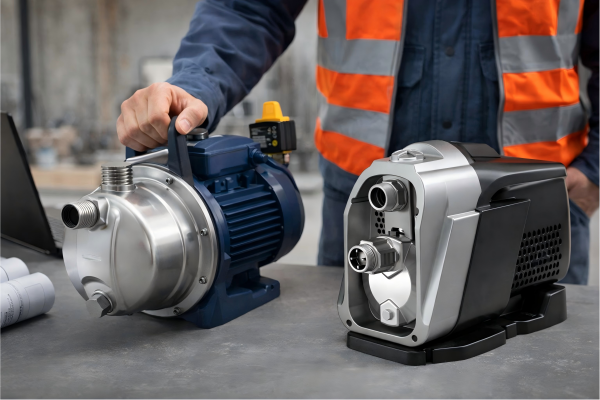
Choosing between a general water pump and a specialized pressure pump can be confusing for even seasoned importers.
This distinction is crucial for stocking the right products that meet your market's specific demands.
A clear understanding ensures you can confidently guide your clients and provide effective solutions.
This guide will break down the fundamental differences, applications, and technical specifications of each.
We will help you make informed purchasing decisions for your distribution business.
Understanding the Core Function: What is a Water Pump?
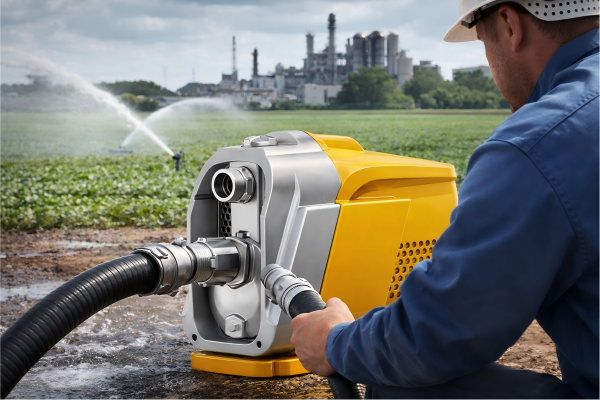
Experiencing issues with basic water transfer for irrigation or drainage?
These simple tasks require a reliable device, but the wrong choice means inefficient operation and potential system failure for your end-users.
A water pump is a mechanical device designed to move water from one location to another. It operates by converting mechanical energy into hydraulic energy, enabling tasks like draining a pool, irrigating a field, or supplying water from a well.
Diving Deeper into Water Pumps
The term "water pump" serves as an umbrella category.
It covers a vast range of devices, each tailored for a specific purpose.
Their primary function is simple: fluid displacement.
This can be for dewatering a flooded basement, circulating water in a pond, or transferring large volumes for agricultural use.
The key performance metric is often flow rate (measured in liters per minute or gallons per minute) rather than pressure.
This means they are excellent at moving a high volume of water at relatively low pressure.
Types of General Water Pumps
To better advise your customers, understanding the main sub-categories is essential.
Each type uses a different mechanism to move water, making it suitable for different applications.
- Centrifugal Pumps: These are the most common type. They use a rotating impeller to draw water in and force it out through centrifugal force. They are ideal for high-flow, low-viscosity fluid applications. Over 60% of pumps sold for residential and light commercial use are centrifugal.
- Submersible Pumps: As the name suggests, these pumps are fully submerged in the fluid they are pumping. This design prevents pump cavitation and requires less energy to move water, making them over 90% efficient for deep well applications.
- Diaphragm Pumps: These are positive displacement pumps. They use a flexible diaphragm that moves back and forth to pump fluid. They are excellent for handling a wide range of fluids, including those with suspended solids.
Application & Selection Criteria
Choosing the right general water pump depends entirely on the intended application.
Consider these factors when building your inventory.
| Factor | Description | Importance for B2B Buyers |
|---|---|---|
| Flow Rate (Q) | The volume of water moved per unit of time (e.g., L/min, GPM). | Critical for applications like irrigation or large-scale water transfer. Mismatching can lead to system inefficiency of up to 40%. |
| Total Head (H) | The total height the pump can lift water, including vertical distance and friction loss. | Essential for well pumps and applications requiring vertical lift. Incorrect calculation is a primary cause of pump failure. |
| Fluid Type | The characteristics of the liquid (e.g., clean water, dirty water, chemicals). | Determines the required materials and pump type (e.g., diaphragm pumps for slurry). Using the wrong pump can cause corrosion and premature wear. |
| Power Source | Electric (AC/DC), gasoline, diesel, or solar. | Varies based on location and infrastructure availability. Solar pumps are a rapidly growing segment, with market growth projected at 5.9% annually. |
A centrifugal pump is perfect for quickly draining a large swimming pool.
A submersible pump is necessary for extracting water from a 100-meter deep well.
A diaphragm pump might be used on a construction site to handle muddy water.
Understanding these nuances allows you, the distributor, to offer a more targeted and effective product line.
The Role of Pressure: What is a Pressure Pump?
Are your clients complaining about weak showers or poor appliance performance?
Low water pressure is a common frustration that standard pumps can't solve, leading to dissatisfied customers and a demand for a better solution.
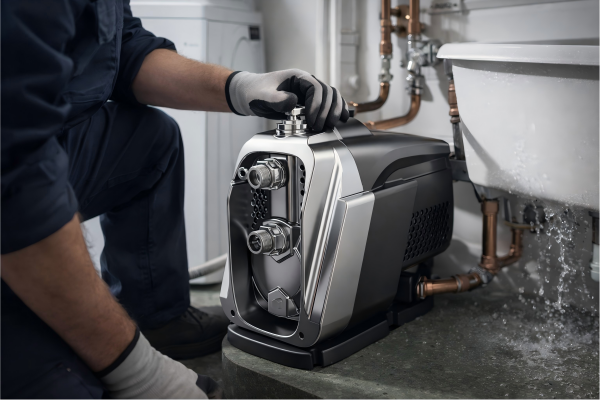
A pressure pump, also called a booster pump, is specifically designed to increase the water pressure in a system. It doesn't just move water; it enhances its force to ensure a strong, consistent flow to all outlets.
Diving Deeper into Pressure Pumps
Pressure pumps are a specialized subset of water pumps.
Their primary goal is not just to move water but to increase its pressure (measured in psi or bar).
This is crucial in many residential and commercial settings.
Think of a home where the water pressure from the municipal supply is insufficient.
A pressure pump is installed on the main water line to "boost" the pressure.
This ensures that running a washing machine doesn't cause the shower to turn into a dribble.
These pumps work automatically.
They use a pressure switch or, in more advanced models, a variable frequency drive (VFD) to detect a drop in system pressure.
When a tap is opened, the pressure drops, and the pump activates.
When the tap is closed, the pressure builds back up, and the pump shuts off.
This automation makes them highly efficient and user-friendly.
The Technology Behind the Boost
Modern pressure pumps, especially VFD models, offer significant advantages.
VFD (Variable Frequency Drive) technology allows the pump to adjust its motor speed in real-time.
- Intelligent Operation: A VFD pump doesn't just turn on and off. It senses the demand and adjusts its speed to maintain a constant, pre-set pressure. This means if one tap is open, it runs at a low speed. If three taps are open, it speeds up.
- Energy Efficiency: By running only as fast as needed, VFD pumps can achieve energy savings of 30-50% compared to traditional on/off booster systems. This is a major selling point for cost-conscious consumers and commercial clients.
- Enhanced Durability: The soft-start and soft-stop nature of VFDs reduces mechanical stress on the pump and the plumbing system. This prevents water hammer and extends the lifespan of all components. Our VFD pumps undergo over 1,000 hours of continuous operation testing to ensure reliability.
Key Applications for Pressure Pumps
Stocking pressure pumps opens up significant market opportunities.
They provide a direct solution to a common problem.
| Application Area | Common Problem | How Pressure Pumps Solve It | Market Potential |
|---|---|---|---|
| Residential Homes | Low municipal pressure, weak showers, poor appliance performance. | Maintains a strong, constant pressure throughout the house, improving comfort and appliance efficiency. | High demand in urban and suburban areas with aging infrastructure. |
| Commercial Buildings | Insufficient pressure on upper floors of hotels, offices, and apartment blocks. | Ensures all floors receive adequate water pressure, a critical factor for guest and tenant satisfaction. | Essential for multi-story construction and hospitality industries. |
| Rainwater Harvesting | Low pressure from rainwater collection tanks for use in homes and gardens. | Boosts the pressure from the tank to a usable level for toilets, laundry, and irrigation. | Growing market driven by sustainability trends and water conservation efforts. |
| Industrial Processes | Specific processes require precise and consistent water pressure. | Provides the necessary pressure control for manufacturing, cleaning, and cooling systems. | Niche but high-value applications in various industries. |
By understanding these applications, you can target specific industries and customer segments.
This positions your business as a problem-solver, not just a product supplier.
Side-by-Side: Water Pump vs. Pressure Pump
Confused about which pump to recommend for a specific job?
Stocking the wrong inventory leads to lost sales and overstock. A clear comparison provides the clarity needed for smart purchasing decisions for your distribution business.
A water pump's main job is transferring volume from A to B. A pressure pump's job is to increase the force of water already in a system. They solve different problems: one moves water, the other enhances its flow.
Diving Deeper into the Key Differences
While a pressure pump is a type of water pump, their operational priorities and design are fundamentally different.
Thinking of it in terms of a business analogy can be helpful.
A general water pump is like a logistics company moving bulk goods (volume).
A pressure pump is like a last-mile delivery service ensuring the goods arrive with speed and precision (pressure).
Let's break down the core distinctions.
Primary Purpose and Metrics
The most significant difference lies in their intended goal.
- General Water Pump: The goal is transfer. Performance is measured primarily by flow rate (Q) and total head (H). Success is moving a large volume of water efficiently.
- Pressure Pump (Booster): The goal is pressurization. The primary performance metric is the amount of pressure increase (psi or bar) it can provide. Success is maintaining a consistent, high pressure at the point of use.
This difference in purpose dictates their design.
A standard pump might have a wide outlet to maximize flow.
A booster pump is integrated into a sealed system, designed to build and hold pressure.
Technical and Operational Comparison
Understanding the technical specifications is vital for an importer making bulk purchasing decisions.
This table provides a direct comparison of the features your technically-minded customers will ask about.
| Feature | General Water Pump (e.g., Submersible) | Pressure Pump (e.g., VFD Booster) | Significance for Distributors |
|---|---|---|---|
| Control System | Simple on/off switch or float switch. | Advanced pressure transducer and Variable Frequency Drive (VFD). | The VFD model offers a significant technology and efficiency advantage, justifying a higher price point and appealing to premium markets. |
| Primary Metric | Flow Rate (e.g., 200 L/min). | Pressure Boost (e.g., +40 psi). | Helps you categorize products for different customer needs: volume transfer vs. pressure enhancement. |
| Installation | Placed at the source (e.g., in a well, pond). | Installed "in-line" on an existing plumbing pipe. | Simpler installation for booster pumps in many retrofit scenarios can be a key selling point. |
| Energy Consumption | Runs at full speed when on. High energy consumption per cycle. | Varies motor speed to match demand, saving 30-50% on energy costs. | Energy efficiency is a powerful marketing tool in regions with high electricity costs. Our VFD pumps hold certifications proving these savings. |
| System Interaction | Acts as the primary source of water movement. | Augments an existing water flow. It works with the system, not just for it. | This defines its role as a "solution" product for an existing problem, creating a different sales conversation. |
In summary, you stock general water pumps to help customers move water.
You stock pressure pumps to help customers improve the quality of their existing water supply.
They serve two distinct, though sometimes overlapping, market needs.
Conclusion
A water pump moves water volume, while a pressure pump increases water force.
Understanding this key difference empowers you to stock the right solutions, better serving your customers' specific needs.
FAQs
What is the main purpose of a pump?
The main purpose of a pump is to move fluids, like water, from one place to another. It converts electrical or mechanical energy into hydraulic energy.
Can any water pump be used as a booster pump?
No, not effectively. While a standard pump generates some pressure, a booster pump is specifically designed with controls to maintain a consistent pressure in a plumbing system.
Do I need a pressure tank with a pressure booster pump?
Modern VFD booster pumps do not require a separate pressure tank. They adjust motor speed to maintain pressure, making the system more compact and efficient.
How do I know if I need a pressure pump?
You likely need a pressure pump if you experience weak water flow from showers and taps, especially when multiple outlets are used simultaneously.
What is the difference between a pressure pump and a circulator pump?
A pressure pump boosts water pressure for delivery. A circulator pump moves water in a closed loop, like in a home heating or cooling system, with minimal pressure change.
How much pressure should a house water pump have?
Ideal house water pressure is between 40 and 60 psi. A booster pump is set to maintain pressure within this range for optimal comfort and appliance performance.
Can a pressure pump pull water from a well?
Some specialized jet pumps or submersible pumps can both pull water from a well and boost pressure. However, often a two-pump system is used for deep wells.
What size pressure booster pump do I need?
The size depends on your home's flow rate requirements and the desired pressure boost. It's best to calculate the total fixture units to determine peak demand.