Struggling with uneven watering in your garden?
Your drip system might have the wrong pressure and flow, leading to thirsty or waterlogged plants and wasted water.
A typical drip irrigation system works best between 20 and 30 PSI.
The right pressure ensures every emitter delivers water correctly.
Flow rate is the total water your system uses, calculated by adding up the flow from all individual emitters.
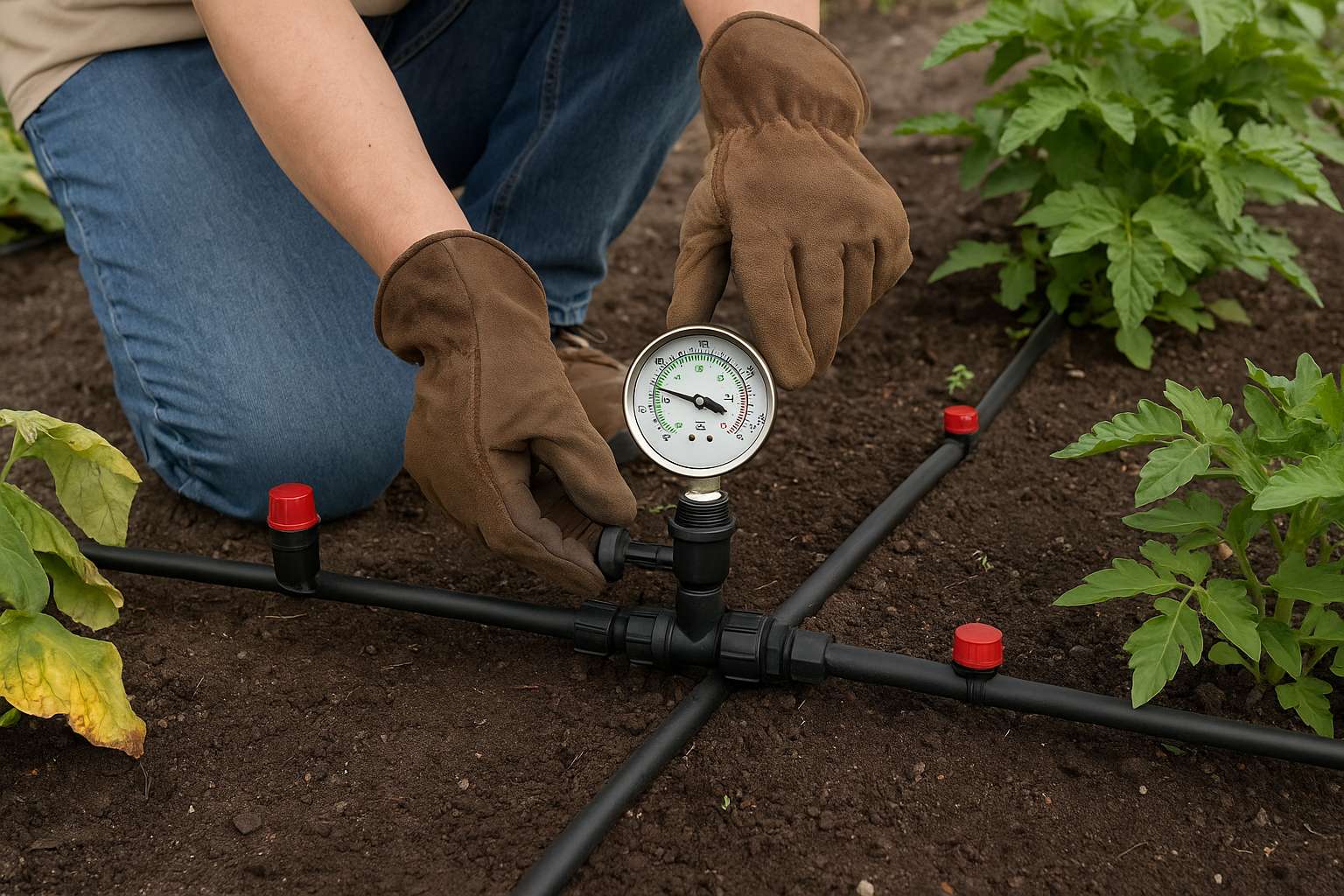
Getting the right pressure and flow is key to a healthy garden and efficient water use.
Many municipal water sources provide pressure that is too high, which can damage your system.
A simple pressure regulator can solve this for small setups.
But what about larger or more complex irrigation demands?
This is where advanced pressure management systems become essential.
They not only regulate but also optimize water delivery.
Understanding the technology behind these systems helps you choose the best solution for reliable, constant pressure.
Let's explore how modern drive technology provides the ultimate control over your water supply.
Why is Core Drive Technology and Performance Important?
Your system suffers from fluctuating water pressure.
This causes inconsistent watering and potential pump damage.
A modern system with a high-efficiency motor and variable frequency drive (VFD) solves this.
It delivers perfectly stable water pressure, operates quietly, and adapts to your exact needs for unmatched performance.
The foundation of a modern water pressure system is its core drive technology.
This is not just about power.
It is about intelligent and efficient power delivery.
The combination of a high-efficiency motor with a Variable Frequency Drive (VFD) changes the game.
It allows the pump to adjust its speed in real-time.
This ensures the water pressure remains constant, regardless of how many taps or emitters are open.
This technology offers several powerful benefits for any water system.
Silent Operation
One of the most noticeable benefits is how quiet these systems are.
The synergy between an advanced motor and a VFD controller keeps noise levels extremely low.
Many high-end systems operate at or below 50 decibels.
This is quieter than a typical library.
This makes them perfect for residential areas or any environment where noise is a concern.
Wide Pressure Customization
Every irrigation system has unique pressure requirements.
Advanced booster systems allow for very precise pressure management.
Users can often adjust the target pressure across a wide range.
For example, you might set it anywhere from 20% to 95% of the pump's maximum head.
This flexibility ensures the pump can be perfectly tailored to the needs of a small drip system or a large-scale commercial operation.
Soft Start and Soft Stop
This feature is critical for the long-term health of your pump and plumbing.
Instead of starting and stopping abruptly, the VFD gradually ramps the motor's speed up and down.
Benefits of Soft Start/Stop:
- Reduces Mechanical Stress: Gradual acceleration puts less strain on the motor, bearings, and impellers.
- Prevents Water Hammer: It stops the hydraulic shock, or "water hammer," that can damage pipes and fittings.
- Increases Lifespan: By minimizing stress, this function significantly extends the life of the entire system.
This intelligent control protects your investment and ensures reliability for years to come.
Understanding these performance aspects shows why the right drive technology is more than a feature; it's the heart of a reliable water pressure solution.
How Does Mechanical and Material Engineering Ensure Excellence?
Are you worried about pumps failing prematurely?
Cheap materials and poor engineering lead to breakdowns and costly replacements.
Pumps built with superior materials and precision engineering offer unmatched durability.
From stainless steel impellers to high-grade bearings, every component is chosen for a long, reliable service life, giving you peace of mind.
The performance of a pump is only as good as the parts it is made from.
Excellence in mechanical and material engineering is what separates a standard pump from a truly reliable one.
This involves a deep focus on every single component.
Manufacturers committed to quality make specific choices to enhance durability, efficiency, and overall lifespan.
These choices are evident in the internal mechanics of the pump, from the motor's core to the bearings it spins on.
Let's break down the key areas where superior engineering makes a difference.
Advanced Stator Design
The stator is a stationary part of the motor that is critical for efficiency and heat management.
A well-designed stator directly contributes to a longer operational life.
Key Stator Features:
| Feature | Benefit |
|---|---|
| 600-Grade Silicon Steel | This material reduces energy losses within the motor core, boosting overall efficiency. |
| Low Temperature Rise | An operating temperature rise of 50K or less means the motor runs cooler, significantly reducing wear and tear. |
| Class F Insulation Wire | This provides high resistance to heat, ensuring the motor windings remain stable and safe even under heavy loads. |
| Dual Insulation | An extra layer of protection enhances safety by preventing electrical faults and shorts. |
Advanced Magnet and Motor Tech
The rotor is the spinning part of the motor.
In high-efficiency motors, this component uses powerful magnets.
A high-performance ferrite magnet can withstand very high temperatures (up to 150°C) without losing its magnetic properties.
This ensures consistent performance over time.
For global a-pplications, some systems offer optional configurations to meet strict electrical standards.
These options help ensure the pump does not interfere with other electronic devices and uses power efficiently.
Premium Bearings
Bearings are a small but critical component.
The use of high-quality bearings from top-tier manufacturers like NSK or C&U is a clear sign of quality.
Compared to standard bearings, these premium parts offer significant advantages.
They provide higher precision, quieter operation, and a longer lifespan.
These small details add up to a much more reliable and pleasant user experience.
AISI304 Stainless Steel Impeller
The impeller is the part that actually moves the water.
It is constantly exposed to hydraulic forces and potential corrosion.
Using an impeller made from AISI304 stainless steel ensures excellent durability.
This material is known for its strong resistance to rust and corrosion.
It guarantees that the hydraulic core of the pump will last for many years, even with constant use.
Why is Uncompromising Electronic Reliability a Priority?
Is your pump's controller exposed to moisture?
Even a small amount of condensation can short-circuit the electronics, causing total system failure.
A fully sealed and potted controller board offers the ultimate solution.
It creates a 100% waterproof barrier, making the electronics immune to moisture, dust, and vibration for dramatically improved long-term reliability.
In any modern pump system, the electronics are the brain of the operation.
However, these sensitive components are often the most vulnerable.
Pumps typically operate in damp, humid, or dusty environments, which are hostile to electronic circuit boards.
Moisture and condensation are the leading causes of electronic failure.
Recognizing this, top-tier engineering places an uncompromising focus on protecting the controller.
The most effective method for this is completely sealing the main printed circuit board (PCB).
This process, known as potting, provides a level of protection that standard enclosures cannot match.
Total Environmental Protection
Potting involves encasing the entire PCB and its components in a durable, non-conductive compound.
This compound then hardens, forming a solid, impenetrable block.
This creates a perfect seal against all environmental threats.
- 100% Waterproof: The seal makes the electronics completely impervious to direct water exposure, humidity, and condensation. This often achieves a high protection rating, such as IP67, meaning the core can be submerged in water without damage.
- Dust and Debris Proof: The solid block prevents dust, dirt, and other small particles from ever reaching the sensitive electronic connections.
- Vibration Resistance: The potting compound also provides excellent support for all components, making them highly resistant to damage from mechanical vibrations during operation.
Extended Lifespan
By completely isolating the electronics from their harsh operating environment, potting dramatically reduces the likelihood of failure.
It is estimated that this single feature can prevent over 95% of failures related to moisture.
As a result, the lifespan of the controller is significantly extended.
While a standard, unsealed board might fail after a few years, a fully potted controller is projected to last much longer, often adding 3 to 5 years to its operational life.
This focus on electronic reliability demonstrates a deep understanding of real-world operating conditions.
It's a proactive design choice that ensures the pump's intelligence is matched by its durability, providing long-term, trouble-free performance.
This commitment transforms the pump from a simple machine into a truly robust and reliable piece of equipment.
What is a Comprehensive Suite of Protection Functions?
Do you worry about hidden problems damaging your pump?
Issues like dry running, voltage spikes, or leaks can cause catastrophic failure before you even notice them.
A system with a full suite of built-in protections actively monitors and prevents damage.
It automatically safeguards against dry running, overheating, freezing, and more, ensuring your system runs safely and reliably.
A truly intelligent pump does more than just move water.
It actively protects itself from a wide range of potential faults and harmful operating conditions.
This self-preservation capability is managed by a comprehensive suite of protection functions, often referred to as a "shield" system.
This system uses a network of sensors and smart logic to monitor the pump's health in real-time.
If it detects a problem, it can take immediate action to prevent damage, alert the user, or safely shut down.
These protections can be grouped into several key categories.
Electrical and Thermal Protections
These functions guard the motor and electronics against harmful electrical events and overheating.
Common Protections:
| Protection Type | What It Does |
|---|---|
| Input Voltage Protection | Shuts the pump down if the incoming voltage is too high or too low, protecting the electronics from damage. |
| Overcurrent Protection | Monitors the electrical current drawn by the motor and stops it if it exceeds safe limits. |
| Phase Loss Protection | For three-phase motors, this ensures all phases are present, preventing motor burnout. |
| Stall Protection | Detects if the motor is stalled (unable to turn) and cuts power to prevent overheating. |
| Overheating Protection | Uses temperature sensors to monitor both the driver board and the motor, shutting down if they get too hot. |
System and Sensor Protections
These functions protect the mechanical parts of the pump and plumbing system.
Water Shortage (Dry Run) Protection
This is one of the most critical protections.
Running a pump without water can destroy it in minutes.
An intelligent dry-run protection system uses a multi-stage approach.
It might first try to self-prime for several minutes.
If it still doesn't find water, it will enter a "sleep" mode and periodically try again.
This smart algorithm prevents damage while automatically recovering once water is available.
Antifreeze Protection
In cold climates, water freezing inside the pump can cause the housing to crack.
Antifreeze protection automatically runs the pump for short periods when the temperature drops near freezing.
This circulation prevents ice from forming and causing permanent damage.
Pipeline Leak Warning
A smart pump can detect signs of a small, continuous leak in your plumbing.
If it notices the pump cycling on and off frequently without any taps being open, it can trigger an alarm.
This alerts you to a potential problem that could otherwise go unnoticed, saving water and preventing water damage.
These comprehensive protection systems are what make a modern booster pump truly "smart."
They provide a safety net that ensures longevity, reliability, and peace of mind.
Why is an Intuitive User Interface and Real-Time Monitoring important?
Is your current pump a black box?
You have no idea what it's doing, how much power it's using, or if it's running correctly.
A modern pump with a clear interface and real-time data display gives you complete control.
It allows for easy pressure adjustments and shows live data like power use and temperature at a glance.
Even the most advanced technology is useless if it is difficult to control and understand.
A system's user interface is the bridge between the user and the complex machinery.
For a modern booster pump, an intuitive interface combined with real-time monitoring is essential for both usability and diagnostics.
It empowers the user to easily set up the system and provides valuable insight into its performance.
A well-designed interface makes sophisticated technology accessible to everyone, not just expert technicians.
Simple Controls
Despite the complex functions happening inside, day-to-day operation should be simple.
A good interface typically uses a few buttons for all primary functions.
- On/Off: A single, clear button to start and stop the pump.
- Pressure Adjustment: Simple "UP" and "DOWN" buttons allow the user to set the desired constant pressure with ease.
- Mode/Reset Functions: A long press of a button might be used to access advanced menus or perform a factory reset, keeping the main interface uncluttered.
This simplicity ensures that anyone can operate the pump correctly without needing to consult a manual for basic tasks.
Live Data Display
One of the most powerful features of a modern pump interface is its ability to show real-time operating data.
This moves the pump from being a "black box" to a transparent piece of equipment.
By pressing a button, the user can cycle through different screens on the digital display to see critical parameters.
Example of Real-Time Data:
| Display Code | Parameter Shown | What It Tells You |
|---|---|---|
A.xx |
Water Temperature | Monitors if dangerously hot or cold water is entering the system. |
P.xxx |
Real-time Power (Watts) | Shows exactly how much energy the pump is consuming at that moment. |
xxxx |
Motor Speed (RPM) | Indicates how hard the motor is working to maintain the set pressure. |
U.xxx |
Input Voltage | Helps diagnose issues related to the power supply. |
t.xx |
PCB Temperature | Provides an internal health check on the electronic controller. |
This access to live data is incredibly useful for troubleshooting.
It allows the user or a technician to quickly diagnose problems without needing external diagnostic tools.
At-a-Glance Indicators
In addition to the digital display, a set of clear LED indicators provides immediate visual feedback on the pump's status.
These lights can instantly tell you if the system is running normally or if there is a fault.
Common LED Indicators:
- Constant Pressure Mode: A light confirms the pump is successfully maintaining the target pressure.
- Fault Alarms: Specific lights might illuminate for issues like water shortage, high/low voltage, or overheating.
- Power Output: A series of lights can act as a simple bar graph, showing the current power level or flow rate.
This combination of simple controls, detailed data, and instant indicators makes the system user-friendly and transparent.
It gives the user confidence and control over their water supply system.
Conclusion
In summary, achieving optimal drip irrigation depends on mastering both pressure and flow.
Modern pumps provide the intelligent control needed for ultimate efficiency, protection, and reliability in any system.
FAQs
What happens if drip irrigation pressure is too high?
Excessive pressure can cause emitters to pop off, spray unevenly, or break.
It also wastes water and stresses the entire system, leading to leaks and failures.
What happens if drip irrigation pressure is too low?
If pressure is too low, water may not reach the end of the lines.
Emitters will not function correctly, leading to inadequate watering for plants farthest from the source.
How do I know my drip irrigation flow rate?
Calculate it by multiplying the number of emitters by their flow rate (in GPH).
For example, 20 emitters at 1 GPH each equals a total flow of 20 GPH.
Can I run drip irrigation from a rain barrel?
Yes, but you will likely need a small booster pump.
A rain barrel provides very low pressure, which is usually not enough to operate a drip system effectively.
How do you increase water pressure for drip irrigation?
Use a booster pump to increase pressure from a low-pressure source like a well or tank.
Always install a pressure regulator after the pump to cap the pressure at a safe level.
Should I use a pressure regulator for drip irrigation?
Yes, always use a pressure regulator.
Most home water sources are at a higher pressure (40-80 PSI) than the 20-30 PSI that drip systems require for safe operation.
How does a variable speed pump save energy?
It saves energy by running the motor only as fast as needed to meet demand.
Instead of running at full power all the time, it adjusts its speed, drastically reducing electricity use.
What is water hammer and how do you stop it?
Water hammer is a hydraulic shockwave caused by valves closing suddenly.
A pump with a soft-start and soft-stop feature prevents this by gradually stopping the water flow.