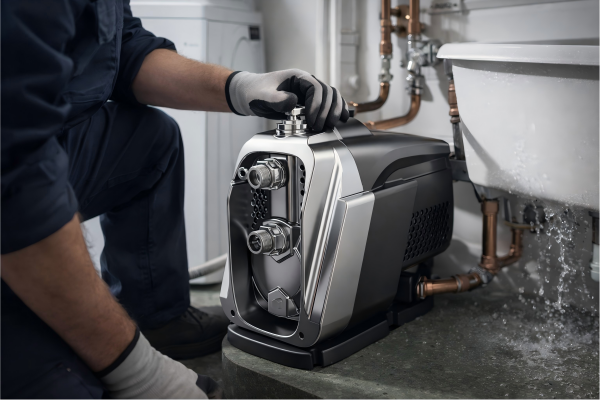
Tired of weak showers and trickling faucets?
Low water pressure can make simple daily tasks frustrating.
A booster pump is the direct solution to this common problem.
The main purpose of a booster pump is to increase the pressure and flow rate of water within a plumbing system.It takes insufficient water pressure and elevates it to a strong, consistent level for better performance at every outlet.
This core purpose remains the same across many applications.
However, the specific "problem" it solves can look very different.
For a home connected to city water, the pump boosts the existing, low pressure from the municipal line.
For a farm or homestead with a deep well, the "booster" is a powerful submersible pump that creates all the pressure from scratch.
Understanding how a pump serves its purpose in these different scenarios is key.
It ensures you choose the right type of pump and technology for your specific needs.
Let's explore the purpose of booster pumps in these distinct environments.
How Does It Work for City Water Systems?
Is your home at the end of the water line or on a hill?
This often causes frustratingly weak pressure from your city supply.
A domestic booster pump is designed specifically for this issue.
**In a residential setting with municipal water, a booster pump's main purpose is to take the low incoming pressure and raise it.
It ensures every faucet, shower, and appliance receives consistently high pressure.**
When your home is connected to a municipal water supply, you already have some pressure.
The problem is that it's just not enough.
This can be due to your home's elevation, distance from the water main, or high demand in your neighborhood.
A domestic booster pump is the targeted solution.
How It Solves the Pressure Problem
This type of pump is installed directly on your main water line after the meter.
It acts like a fan for your water.
As water from the city line flows into the pump, an internal impeller spins rapidly.
This spinning action adds energy to the water, forcing it out the other side at a much higher pressure.
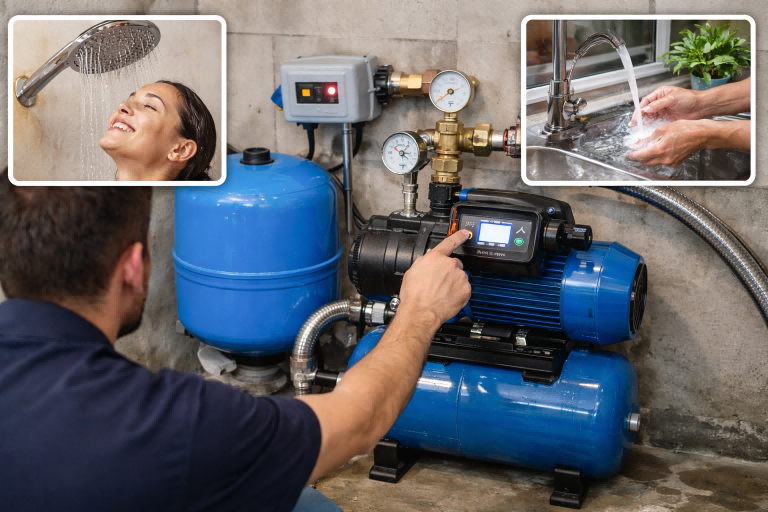
A pressure tank is often included in the system.
This small tank holds a reserve of pressurized water.
It allows you to, for example, wash your hands without the pump needing to turn on.
This reduces the number of times the pump starts and stops, saving energy and extending the pump's life.
Signs You Need a Domestic Booster
You might be a candidate for a domestic booster pump if you experience several of these issues:
- Weak Showers: The water flow is more of a drizzle than a powerful spray.
- Slow-Filling Appliances: Your washing machine or dishwasher takes an unusually long time to fill.
- Trickling Faucets: You can't get a strong stream of water from your kitchen or bathroom sinks.
- Poor Irrigation: Your sprinklers don't cover the area they're supposed to.
- Pressure Drops: When someone flushes a toilet, the shower pressure drops significantly.
A properly sized booster system will fix all these problems.
It provides a steady, reliable, and powerful flow of water to every point of use in your home.
What Is Its Purpose for a Deep Well?
Need water for a property far from any city supply?
A standard booster pump on the surface can't help you there.
You need a pump that creates pressure directly at the source.
**For a deep well, the main purpose is served by a submersible pump.
It's a specialized multi-stage "booster" that sits deep in the well, creating all the pressure needed to push water up to the surface.**
When your water source is a deep private well, the concept of "boosting" changes.
There is no pre-existing pressure to increase.
Instead, you must create all the pressure from a static body of water hundreds of feet below ground.
This is the purpose of a submersible deep well pump.
It is a long, cylindrical pump that is lowered into the well and submerged in the water.
Rather than pulling water, it powerfully pushes it up a pipe to the surface.
This process of generating high pressure from zero is a more fundamental form of boosting.
Different well conditions and water needs require different types of submersible pumps.
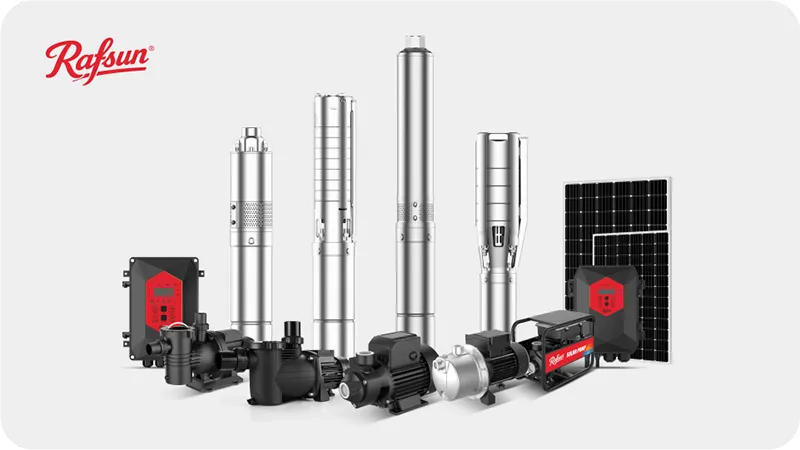
For Extreme Depth: The Screw Pump
This pump is a master of creating very high pressure.
It uses a rotating stainless steel screw inside a rubber housing.
This mechanism efficiently forces water upward, making it perfect for very deep wells.
It's an ideal choice for domestic water and livestock watering in locations where water tables are low.
Its major advantage is its high resistance to sand, which can destroy other pump types.
For High-Volume Needs: The Plastic Impeller Pump
This pump is designed to move a lot of water.
It is a multi-stage centrifugal pump equipped with durable plastic impellers.
It delivers high flow rates at a medium pressure, making it perfect for farm irrigation or filling large tanks.
Its lightweight and economical design has made it a popular choice for agricultural applications around the world.
For Harsh Water Conditions: The Stainless Steel Impeller Pump
This is the premium option for durability and longevity.
The pump body and all impellers are made from SS304 stainless steel.
Its purpose is to provide reliable service for decades, even in corrosive water that is acidic, alkaline, or salty.
This makes it the go-to choice for high-end homes, ranches, and regions with challenging water quality, such as parts of Australia.
| Pump Type | Primary Purpose | Best Application | Key Strength |
|---|---|---|---|
| Screw Pump | Create High Pressure (Head) | Very deep wells, domestic use | Resists sand and grit |
| Plastic Impeller Pump | Move High Volume (Flow) | Farm and pasture irrigation | Economical and wear-resistant |
| Stainless Steel Pump | Endure Harsh Conditions | Corrosive or acidic water | Maximum corrosion resistance |
What Is the Purpose of a Smart Power Source?
You need a powerful pump, but your location has no access to the electrical grid.
This makes running a conventional water pump impossible.
You are left without a reliable water source.
**The purpose of a solar power system for a pump is to provide reliable, cost-free energy for off-grid water pressure.
It uses a smart motor and controller to maximize efficiency, giving you water whenever the sun shines.**
For a pump to fulfill its purpose, it needs a reliable power source.
In many parts of the world, from the Americas to Africa and Asia, the electrical grid is either unavailable or unreliable.
Solar power has emerged as the perfect solution.
A solar-powered pump system isn't just a pump connected to a panel.
It's an intelligent system designed for maximum efficiency.
Two components are critical to its purpose: the motor and the controller.
The Heart of Efficiency: The BLDC Motor
The motor's purpose is to convert electrical energy into the mechanical force that drives the pump.
Modern solar pumps use advanced Brushless DC (BLDC) permanent magnet motors.
These motors are far superior to older designs.
- Ultra-High Efficiency: BLDC motors achieve over 90% efficiency.
This means more of the sun's energy is used to pump water, and less is wasted as heat. - Power in a Small Package: They use powerful neodymium magnets, making them up to 47% smaller and 39% lighter than conventional motors of the same power.
This reduces shipping costs and makes installation much easier. - Built to Last: With no brushes to wear out, these motors have an extremely long service life and require zero maintenance.
This is a critical advantage for pumps installed in remote or hard-to-reach locations.
The Brain of the Operation: The MPPT Controller
The controller's purpose is to manage the flow of power from the solar panels to the motor.
Intelligent controllers use Maximum Power Point Tracking (MPPT) technology.
This system constantly analyzes the output of the solar panels.
It adjusts the electrical load to extract the absolute maximum amount of power available at any given moment.
MPPT can increase the total daily water output by up to 30% compared to a simple controller.
Advanced controllers also offer a hybrid AC/DC function.
They can accept power from both solar panels and a backup AC source, like a generator.
The controller will always prioritize using free solar power.
It will only draw from the AC source if sunlight is insufficient, ensuring you have water pressure 24 hours a day, worry-free.
Conclusion
The main purpose of a booster pump is to increase low water pressure.
This applies to city homes, but also to deep wells, where submersible pumps create pressure from scratch.
Frequently Asked Questions
Can a booster pump be too powerful?
Yes.
An oversized pump can create excessively high pressure, which can damage plumbing, fixtures, and appliances.
It's important to size it correctly.
Where should a booster pump be installed?
A domestic booster pump is typically installed on the main water line just after the water meter and main shutoff valve, before the line branches out.
Do booster pumps run all the time?
No.
They are activated by a flow switch or pressure switch, so they only run when water is being used or when pressure in the system drops.
Can I install a booster pump myself?
While possible for those with advanced plumbing and electrical skills, professional installation is recommended to ensure safety and proper operation.
How much pressure does a booster pump add?
This varies by model.
Most residential booster pumps can add between 20 to 60 PSI to your existing water pressure, depending on the need.
What is the difference between a booster pump and a circulator pump?
A booster pump's primary purpose is to increase pressure.
A circulator pump's purpose is to move water in a closed loop, like in a heating system, without significantly increasing pressure.
Does a booster pump increase water flow?
Yes, by increasing the pressure (the force pushing the water), a booster pump also increases the flow rate (the volume of water moving through the pipe).