Choosing the wrong pump for your well can lead to system failure.
This results in wasted money and a critical lack of water when you need it most.
Understanding a pump's specific limitations is the key to avoiding this negative outcome.
The main negative side of any pump is a mismatch between its design and the specific job it needs to do. Every pump type has inherent limitations—or trade-offs—in its flow rate, pressure capabilities, material durability, and cost, making the wrong choice a costly mistake.
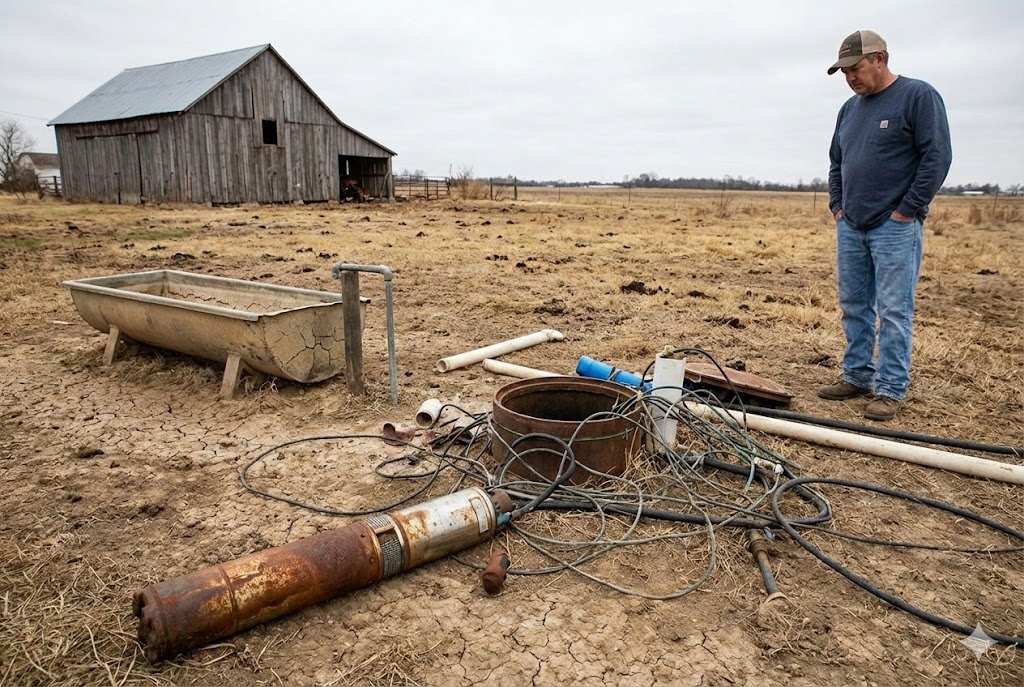
There is no single "best" pump.
Instead, there are pumps that are best suited for specific conditions.
The true "negative side" emerges when a pump is forced to operate outside of its intended design parameters.
A pump designed for high water volume will fail if placed in a very deep well that requires immense pressure.
Similarly, a pump built for clean water will quickly be destroyed by sandy or corrosive conditions.
Thinking about the "negative side" is not about finding flaws in the technology itself.
It is about adopting a strategic mindset.
It requires you to critically assess your water source, your water needs, and your budget.
This process ensures that the pump you select becomes a reliable asset, not a frustrating liability.
By understanding the specific limitations of the most popular solar pump types, you can turn a potential negative into a powerful, positive, and long-lasting water solution.
The Limitation of Low Flow: The Solar Screw Pump
Do you need to lift water from a very deep well?
But you find that many pumps lack the necessary pressure.
This leaves you without a reliable water source.
The primary negative side, or limitation, of a solar screw pump is its relatively low flow rate. While it is a champion at creating high pressure (head) for deep wells, it is not designed for applications that require moving a large volume of water quickly.
The solar screw pump, also known as a progressing cavity pump, has a unique design that is both its greatest strength and its most significant limitation.
It doesn't use impellers to throw water.
Instead, it uses a corkscrew-shaped stainless steel rotor that turns inside a rubber stator.
This action creates sealed cavities of water that are progressively "pushed" up the pipe.
This mechanism is incredibly effective at building pressure, making it the perfect tool for lifting water from hundreds of meters below the ground.
However, the size of these cavities inherently limits the volume of water that can be moved with each rotation.
Understanding the Trade-Off: High Head vs. Low Flow
The core principle of the screw pump is a direct trade-off between pressure (head) and volume (flow).
It is engineered to excel at one by compromising on the other.
This specialization is what makes it so valuable in certain scenarios and completely unsuitable for others.
- High Head Capability: Because it acts like a positive displacement system, the screw pump can generate immense pressure. This makes it the go-to solution for deep wells commonly found in the arid regions of Africa and Latin America.
- Exceptional Sand Resistance: The gentle pushing action and durable rubber stator allow the pump to handle sandy or silty water far better than centrifugal pumps, whose impellers would be quickly eroded. This is a huge advantage in newly drilled or unstable boreholes.
- The Inherent Limitation: The "negative side" is clear when you need high volume. It is perfect for filling a drinking trough for livestock or supplying a single home, but it would struggle to provide the thousands of liters per hour needed for large-scale farm irrigation.
Application Mismatch: Where the "Negative" Appears
The negative consequences arise when a screw pump is sold for a job it cannot do.
Imagine trying to irrigate a 10-hectare farm with one.
The pump would run all day, use energy efficiently, and likely last for years, but it would never deliver enough water.
The crops would fail.
This is not a failure of the pump's quality, but a failure in application matching.
| Feature | Solar Screw Pump | Ideal Application | Mismatched (Negative) Application |
|---|---|---|---|
| Primary Strength | Very High Head (Pressure) | Deep domestic wells (>100m) | Shallow, high-volume irrigation |
| Flow Rate | Low | Livestock drinking water | Filling large reservoirs quickly |
| Sand Handling | Excellent | Wells with sand/silt content | Pumping filtered, clean water |
| Best For | Reliability in tough, deep wells | Homes and smallholdings | Commercial farms or pastures |
Understanding this core limitation is the first step in building a successful and reliable solar water system.
It ensures the pump you choose is a solution, not a problem.
The Limitation of Material Durability: The Solar Plastic Impeller Pump
Do you need high volumes of water for your farm or garden?
But you are worried that an affordable pump will wear out too quickly.
This could lead to costly replacements and downtime.
The main negative side of a solar plastic impeller pump is its reduced durability in highly corrosive water or extremely deep wells. While it is an economical high-flow champion, its plastic components are a limiting factor in harsh chemical environments.
This pump is a multi-stage centrifugal workhorse.
It uses a stack of precisely engineered plastic impellers.
Each impeller spins at high speed, adding energy to the water and increasing its pressure.
By stacking them, the pump can achieve a good balance of high flow and medium head, making it perfect for the vast majority of agricultural irrigation and pasture water supply needs in places like Africa and the Americas.
Its lightweight design and excellent resistance to abrasion from fine sand make it a popular and economical choice.
However, the material itself—even durable, engineering-grade plastic—defines its operational boundaries.
The Critical Role of Water Chemistry
The "negative side" of a plastic impeller pump becomes apparent when the water chemistry is aggressive.
Plastic, while strong, does not have the same resistance to chemical attack as stainless steel.
- Acidic or Alkaline Water: In regions with acidic water (low pH) or highly alkaline water (high pH), the plastic can become brittle or degrade over time. This leads to cracking,reduced performance, and eventual failure.
- High Salinity: High salt content can also accelerate the degradation of certain types of plastic components and seals within the pump.
- Extreme Depth: While designed for medium head, placing these pumps in wells deeper than their rating puts immense stress on the impellers and casings. The continuous high pressure can lead to material fatigue and failure.
Balancing Cost and Lifespan
The choice of a plastic impeller pump is fundamentally about balancing initial cost with expected service life in a specific environment.
For a farm with neutral pH water and a well depth of 60 meters, it is an excellent and cost-effective investment that can provide years of reliable service.
However, placing that exact same pump in a 90-meter well with acidic water in a region with alkaline soil is a recipe for a negative outcome.
The pump would likely fail prematurely, costing more in the long run through replacement and lost productivity.
| Water Condition | Plastic Impeller Pump Suitability | Expected Outcome |
|---|---|---|
| Neutral pH, Low Silt | Excellent | Long service life, cost-effective. |
| Fine Sand/Sediment | Very Good | Excellent wear resistance. |
| High Acidity (Low pH) | Poor (Negative) | Material degradation, short lifespan. |
| High Alkalinity (High pH) | Poor (Negative) | Risk of becoming brittle, premature failure. |
| Corrosive Environments | Poor (Negative) | Not recommended; stainless steel is required. |
This limitation isn't a design flaw.
It is a deliberate engineering choice to provide a high-performance, affordable option for the most common applications.
Recognizing this boundary is essential for making a smart purchase.
The Limitation of High Cost: The Solar Stainless Steel Impeller Pump
Do you need a pump that can survive the most corrosive water conditions?
But the high upfront price of a premium model makes you hesitate.
This can feel like an insurmountable barrier to getting the durability you need.
The most significant negative side of a solar stainless steel impeller pump is its higher initial cost and increased weight. While it offers unmatched durability and corrosion resistance, it represents a larger upfront investment targeted at niche, high-value applications.
This pump is the premium option in the solar deep well portfolio.
It features both a pump body and internal impellers constructed from high-grade SS304 stainless steel.
This material choice makes it virtually immune to the chemical attacks that would destroy a lesser pump.
It is specifically engineered for the most challenging water environments on Earth.
This includes the acidic and alkaline water conditions found in some parts of the Americas, and the challenging alkaline soil regions of Australia.
Its purpose is to provide unwavering reliability and a long service life where other pumps would fail.
This premium engineering, however, comes with a matching price tag and physical heft.
An Investment in Longevity
The "negative side" of this pump is not related to its performance but to its market position and accessibility.
The cost of stainless steel as a raw material and the processes required to manufacture it into complex impeller shapes are significantly higher than for plastic.
This directly translates to a higher purchase price for the end user.
- High Initial Cost: This is the biggest barrier. For a user with clean, neutral water, the additional cost provides no functional benefit, making it an unnecessary expense. The investment only pays off when the harsh water conditions make it a necessity.
- Increased Weight: Stainless steel is much denser than plastic. This makes the pump heavier, which can complicate installation, particularly in remote areas, and may require heavier-duty mounting and piping.
- Niche Market: It is a specialized tool. It is designed for high-end homes, valuable ranches, or specific industrial applications where water quality is poor and pump failure is not an option.
Justifying the "Negative" Cost
The decision to invest in a stainless steel pump comes down to a long-term calculation of total cost of ownership.
In a corrosive well, a plastic impeller pump might fail every two years.
A stainless steel pump in the same well could last for a decade or more.
While the initial cost is higher, it eliminates the repeated costs of replacement pumps, labor for installation, and the economic loss from water downtime.
| Factor | Stainless Steel Impeller Pump | Plastic Impeller Pump |
|---|---|---|
| Initial Cost | High | Low |
| Best Application | Corrosive / High-Value Water | General Purpose / Benign Water |
| Expected Lifespan (Harsh Water) | Very Long (10+ years) | Short (1-3 years) |
| Total Cost of Ownership (Harsh Water) | Lower over time | Higher over time |
| "Negative" Aspect | High upfront investment | Premature failure in wrong environment |
Therefore, the negative aspect of high cost is relative.
For the right customer in the right environment, like a commercial operation in Australia, the higher price is not a negative but a wise investment in operational continuity.
Overcoming the Negative of Inefficiency: The Power of the BLDC Motor
Are you worried that a solar pump will be weak and inefficient?
You might fear that it will waste precious solar energy and require a huge, expensive solar array.
This can make the entire project seem financially impractical.
The main negative of older pump systems was poor energy efficiency. Modern solar pumps completely overcome this limitation with advanced Brushless DC (BLDC) permanent magnet motors, which convert over 90% of electrical energy into pumping power.
Historically, a major "negative side" of any electrical pump system was wasted energy.
Older motor technologies could lose 30-40% of the energy they consumed as waste heat.
In a solar-powered system, this inefficiency is a critical flaw.
It would mean you need 30-40% more solar panels to do the same amount of work, dramatically increasing the system's cost and footprint.
The BLDC permanent magnet motor is the technological solution that makes modern solar pumping so effective and financially viable.
This core component addresses the historical negative of inefficiency head-on.
How BLDC Motors Eliminate Wasted Energy
Unlike older motors that use friction-based carbon brushes to work, BLDC motors use a sophisticated electronic controller and powerful permanent magnets.
The rotor is often made of high-grade neodymium iron boron, a powerful rare-earth magnet.
This design has profound advantages.
- Extreme Efficiency: With efficiencies exceeding 90%, almost every watt of power generated by your solar panels is converted into the mechanical work of moving water. This is a massive leap forward.
- Reduced Solar Panel Requirement: Because the motor is so efficient, it can achieve full performance with a smaller solar array. This directly reduces the largest single cost of a solar pumping system.
- Compact and Powerful Design: Advanced BLDC motors are fundamentally more power-dense. They can be up to 47% smaller and 39% lighter than older motors with the same power output. This simplifies shipping and makes installation far easier.
- Maintenance-Free Operation: The "brushless" design means there are no parts to wear out and replace. This eliminates a common failure point and a recurring maintenance cost, enhancing the pump's long-term reliability.
The BLDC motor isn't just a component; it is the engine that drives the entire system's value proposition.
It is the reason why a well-designed solar pump is not just an environmental choice, but a financially superior one in off-grid areas.
By tackling the negative of inefficiency, it makes the entire system more powerful, more affordable, and more reliable.
Conclusion
The true negative side of a pump is not a defect.
It is choosing the wrong tool for the job.
Understanding each type's limitations ensures you select a reliable, long-lasting solution.
Frequently Asked Questions
What are the most common pump problems?
Common problems include running dry, clogged impellers from debris, motor failure from overheating, and wear from abrasive or corrosive water.
Why do water pumps fail?
Pumps often fail due to improper selection for the water conditions, running without water (dry running), electrical issues like power surges, or simple old age.
How do I know if my pump is bad?
Signs of a bad pump include no water flow, low water pressure, strange noises from the well, or the pump cycling on and off too frequently.
Can a pump be repaired?
Yes, many pumps can be repaired by replacing worn parts like seals, bearings, or impellers. However, a major motor failure may require replacing the entire unit.
What causes a pump to lose pressure?
A loss of pressure can be caused by a leak in the plumbing, a worn-out impeller, a clog in the intake screen, or the water level in the well dropping too low.
How long should a water pump last?
A quality, correctly installed deep well pump can last anywhere from 8 to 15 years, but its lifespan is highly dependent on water quality and usage patterns.