You love the idea of a solar water pump.
Free energy from the sun means no electricity bills.
But you worry: what happens when the sun doesn't shine?
The primary weakness of a solar water pump is its dependency on sunlight, meaning it produces less or no water on cloudy days and at night.
Additionally, the initial setup cost and ensuring the pump matches specific water conditions can be significant challenges.
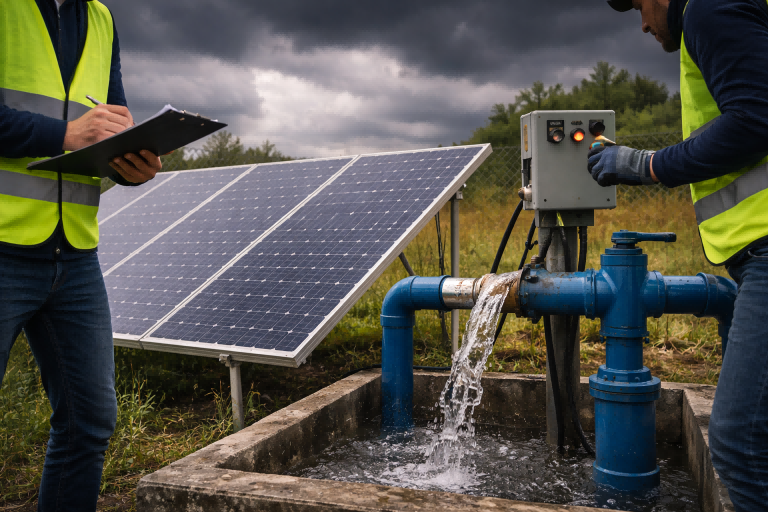
This reliance on the sun has a direct impact.
It can limit water availability for critical tasks.
Livestock needs water at dawn and dusk.
Crops may require irrigation outside of peak sun hours.
This fundamental limitation has traditionally made potential users hesitate.
They question if a solar pump can truly be a reliable, standalone solution.
However, viewing this as an unsolvable weakness is an outdated perspective.
Modern solar pumping systems are not just a pump and a panel.
They are intelligent, integrated solutions.
They are specifically engineered to overcome these exact challenges.
Let's explore each weakness and see how today's technology transforms them into manageable design considerations.
Weakness 1: It Only Works When the Sun is Shining
Your farm needs water consistently.
Your animals get thirsty at night.
But a basic solar pump stops working after sunset, leaving you without a reliable 24/7 water supply.
The most cited weakness is its reliance on direct sunlight.
This means water production is inconsistent, fluctuating with the weather and stopping completely at night, making it unreliable for round-the-clock needs.
This is the most logical and common concern.
A system powered by the sun is, by definition, dependent on the sun.
On a perfectly clear day, the pump operates at its peak performance during the middle of the day.
Water flow will be lower in the early morning and late afternoon.
On a heavily overcast day, the pump might only operate at 20-30% of its capacity, or not at all.
At night, it produces zero water.
For many applications, this is perfectly acceptable.
Filling a large storage tank during the day provides a buffer of water that can be used at any time.
But for direct irrigation or livestock watering systems without large storage, this intermittency is a critical failure point.
It's the single biggest reason potential customers, like an Australian farm owner, might choose a diesel generator over a solar solution, despite the high running costs.
They prioritize reliability over long-term savings.
This weakness had to be solved for solar pumps to become a truly viable alternative to grid or fossil fuel power.
The Solution: Hybrid Power for 24/7 Reliability
The weakness of sun dependency is completely eliminated by a modern AC/DC hybrid controller.
This intelligent device acts as the brain of the water pump system.
It is not just a power converter; it is an energy management system.
It provides the pump with two power inputs: a DC input for the solar panels and an AC input for the grid or a generator.
How Hybrid Technology Works
The controller's internal logic is designed to prioritize solar energy to ensure the lowest possible operating cost.
- Full Sun Operation: During bright daylight hours, the controller directs 100% of the DC power from the solar panels to the pump. The AC input is dormant. You get free water.
- Cloudy Day Operation: When clouds reduce the solar output, the pump's performance would normally drop. The hybrid controller detects this voltage drop. It then draws just enough AC power from the backup source to supplement the solar energy, maintaining consistent pump speed and water flow. It maximizes the use of every bit of available solar power before using the AC backup.
- Nighttime Operation: When the sun sets, the solar DC input drops to zero. The controller automatically and seamlessly switches over to the AC input. The pump continues to run at full capacity, ensuring water is available throughout thenight.
This hybrid approach offers the perfect balance.
It gives the user the economic and environmental benefits of solar power without sacrificing the 24/7 reliability of a traditional grid-powered system.
For a distributor, offering a hybrid solution transforms the conversation from "it only works in the sun" to "it provides the cheapest water possible, guaranteed, 24 hours a day."
Weakness 2: High Initial Investment Cost
You see the long-term benefits of a solar pump.
No fuel costs and no electricity bills sound great.
But the upfront price for the pump, panels, and controller seems much higher than a conventional pump.
A solar water pump system often has a higher upfront cost compared to a traditional electric or generator-powered pump.
This initial investment for panels, controller, and pump can be a significant barrier for farmers and homeowners.
The "sticker shock" is real.
When a customer compares the price of a simple submersible pump to a complete solar pumping kit, the solar option almost always looks more expensive.
The kit includes not just the pump, but also multiple solar panels, mounting hardware, wiring, and a specialized controller.
A conventional AC pump just needs the pump itself and a connection to an existing power source.
This initial cost difference is a major hurdle.
For a distributor like Andrew, it's difficult to compete on price alone against a less expensive, grid-powered alternative.
The entire value proposition must be re-framed from "initial purchase price" to "total cost of ownership" over the system's life.
However, even the initial cost is a weakness that modern technology directly addresses.
The key is not the price of the pump itself, but the efficiency of the entire system.
Efficiency is the secret to reducing the initial investment.
The Solution: High-Efficiency Motors Reduce System Cost
The biggest cost component in a solar water pump kit is not the pump.
It is the solar panels.
Therefore, the most effective way to lower the total system cost is to reduce the number of solar panels required.
This is achieved through an ultra-high-efficiency motor.
The Power of the BLDC Motor
Legacy solar pumps often used standard DC motors with an efficiency of around 60-70%.
This means 30-40% of the precious solar energy was wasted as heat before it could even be used to move water.
Modern, high-performance solar pumps use a Brushless DC (BLDC) permanent magnet motor.
These motors are a leap forward in technology.
- Over 90% Efficiency: A BLDC motor converts more than 90% of electrical energy into rotational force. This dramatic increase in efficiency means the motor can do the same amount of work with significantly less power.
- Fewer Panels Needed: A pump system with a 90% efficient motor might need only three solar panels to achieve the same water flow as an older system that required four or five panels. With panels costing hundreds of dollars each, this can reduce the total kit cost by 25% or more.
- Compact and Powerful Design: BLDC motors using advanced materials like neodymium iron boron magnets are also smaller and lighter than their predecessors. A modern motor can be up to 47% more compact and 39% lighter. This makes installation easier and cheaper, especially for deep well applications.
By focusing on motor efficiency, the high initial cost weakness is directly attacked.
A more efficient system requires a smaller, less expensive solar array, making the upfront investment much more competitive and the long-term return on investment (ROI) even more compelling.
When you factor in zero fuel costs and zero electricity bills, a properly sized, high-efficiency solar pump system can often pay for itself in just 1-3 years.
Weakness 3: One Pump Cannot Solve Every Problem
You need to pump water from a specific well.
Maybe the well is very deep, or the water is sandy.
You worry that a standard solar pump won't have the right performance or will wear out quickly.
A single solar pump model is not a universal solution; its performance is limited.
A pump designed for high flow may lack the pressure for deep wells, while a high-head pump may offer insufficient flow for large-scale irrigation.
The term "solar water pump" is a broad category.
Assuming any solar pump will work for any application is a common and costly mistake.
This leads to a perceived weakness: that solar pumps are not versatile or powerful enough for demanding situations.
A customer might install a pump and find that the water-flow is just a trickle.
Or, the pump works great for a few months and then fails because the water quality destroys its internal components.
This isn't a weakness of solar pump technology itself.
It is a failure of selecting the right type of pump for the specific job.
The hydraulics of the pump end—the part that actually moves the water—is just as important as the motor that drives it.
Water sources are diverse. They vary in depth, mineral content, and sediment levels.
A robust product portfolio must offer different pump technologies to overcome these specific environmental challenges.
An expert supplier doesn't just sell a "solar pump."
They provide a tailored water-moving solution.
The Solution: A Specialized Portfolio for Diverse Needs
To overcome this weakness, a manufacturer must offer a range of pump types, each engineered for a different application.
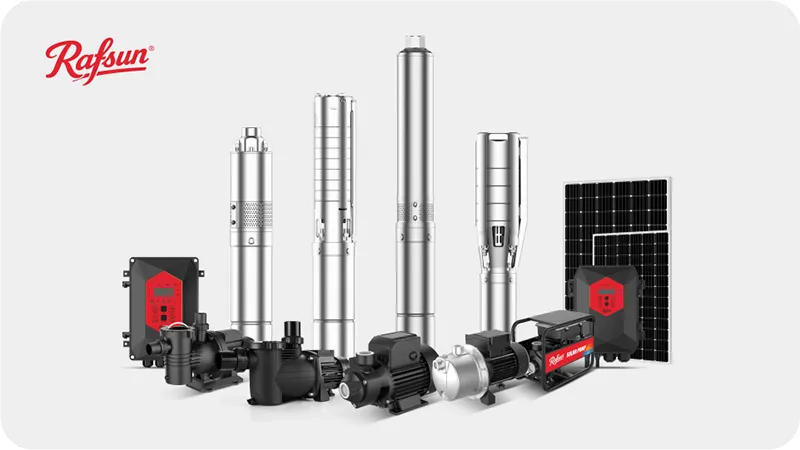
The three primary designs for deep well solar pumps each solve a specific problem.
Challenge 1: Very Deep Wells (High Head, Low Flow)
For deep boreholes where water must be lifted a great distance, pressure (head) is more important than volume (flow).
- The Solution: Solar Screw Pump. This pump uses a progressing cavity design. A spiral-shaped stainless steel rotor turns inside a rubber stator. This action pushes "pockets" of water upward with very high force. While the flow rate is lower, it can pump water from depths that a standard centrifugal pump cannot reach. It is also extremely resistant to sand.
Challenge 2: Irrigation Needs (High Flow, Moderate Head)
For farm or pasture irrigation, the priority is moving a large volume of water. The well may not be extremely deep.
- The Solution: Solar Plastic Impeller Pump. This is a multi-stage centrifugal pump. It uses a series of impellers to move large quantities of water. Using durable, wear-resistant engineered plastic for the impellers makes the pump lightweight, economical, and excellent at handling water with fine sand or silt.
Challenge 3: Corrosive Water (High Corrosion Resistance)
In regions with acidic or alkaline water, standard pump materials can corrode and fail quickly.
- The Solution: Solar Stainless Steel Impeller Pump. This premium pump uses SS304 stainless steel for all components that touch the water, including the impellers, pump body, and inlet/outlet. This provides maximum protection against corrosion, ensuring a long and reliable service life in the most aggressive water environments.
| Perceived Weakness | Specific Problem | The Engineered Solution | Primary Application |
|---|---|---|---|
| "Not Enough Pressure" | Water source is very deep. | Solar Screw Pump | Deep domestic wells, livestock watering. |
| "Not Enough Water" | Need high volume for irrigation. | Solar Plastic Impeller Pump | Farm irrigation, filling reservoirs. |
| "Pump Fails Quickly" | Water is sandy or corrosive. | Solar Screw or Stainless Steel Pump | Sandy wells or acidic/alkaline water. |
By offering a flexible portfolio, a distributor can confidently address any customer need.
This turns the weakness of "limited performance" into a strength of "customized, effective solutions."
Conclusion
The traditional weaknesses of solar water pumps are solved.
Sun dependency, high cost, and performance limits are overcome by hybrid controllers, efficient motors, and specialized pump designs.
Frequently Asked Questions
What happens if a solar pump runs dry?
Modern systems have dry-run protection. The controller senses the lack of water and stops the motor to prevent damage, automatically restarting after a set time.
How long do solar water pumps last?
With a brushless motor and proper application, a high-quality solar pump can last over 10 years, far longer than systems with brushed motors that wear out.
Can solar pumps work for big farms?
Yes, by using high-flow pump models and designing a sufficiently large solar array, solar pumps can meet the high-volume demands of large-scale agricultural irrigation.
Do solar water pumps require batteries?
No, most modern systems do not require batteries. They either pump water into a storage tank during the day or use an AC/DC hybrid controller for 24/7 operation.
How much maintenance do solar pumps need?
They are virtually maintenance-free. The panels may need occasional cleaning, but the brushless motor and controller are solid-state and require no regular service.
Can a solar pump handle dirty water?
It depends on the pump type. A solar screw pump is exceptionally good at handling sandy or gritty water, while standard centrifugal pumps can be damaged by it.
Is it difficult to install a solar water pump?
Installation is straightforward for professionals. It involves setting up the panels, mounting the pump in the well, and connecting the wiring to the controller.