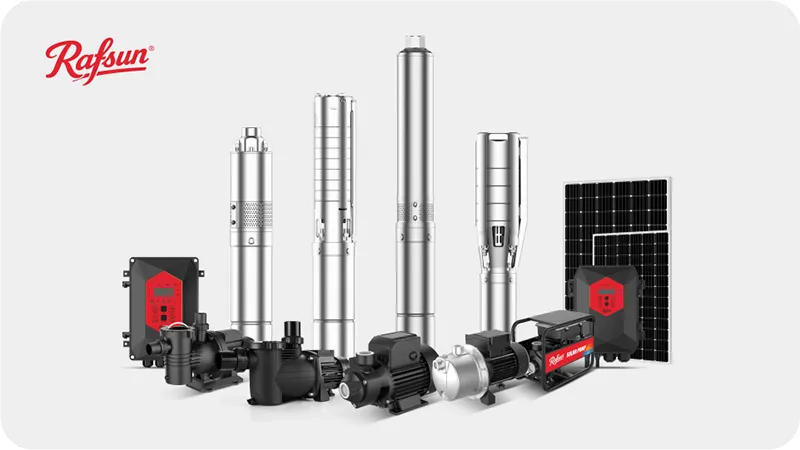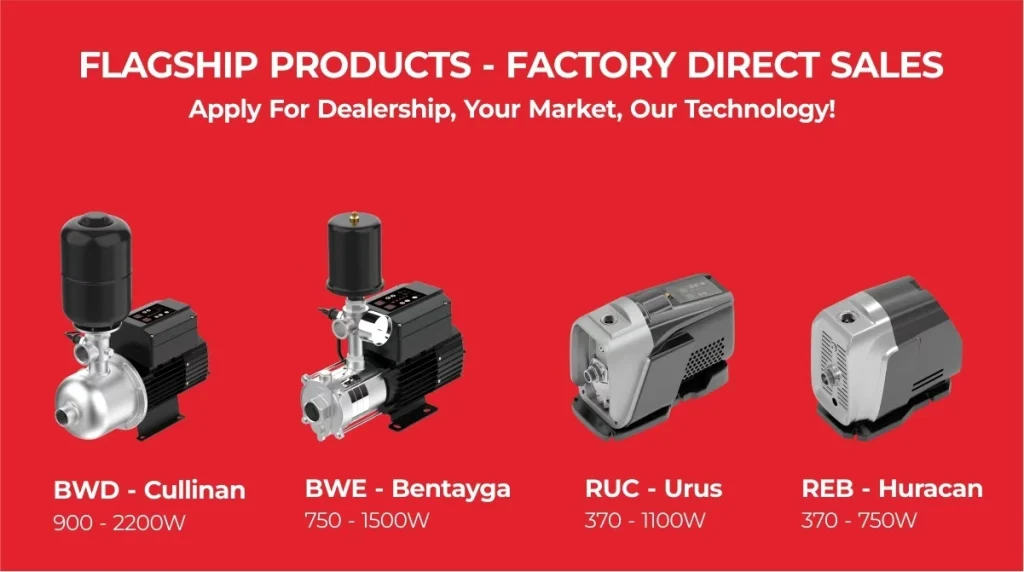
Struggling with high electricity bills just to keep your pool clean?
The constant hum of the pump eats into your budget, making a relaxing amenity a source of financial stress.
You need a cost-effective, reliable solution.
To run a pool pump, you generally need a solar panel array with a wattage that is at least 1.5 times the pump's power rating. For a typical 1 horsepower (750W) pool pump, you would require approximately 1200 watts of solar panels to ensure consistent operation, even on less sunny days.
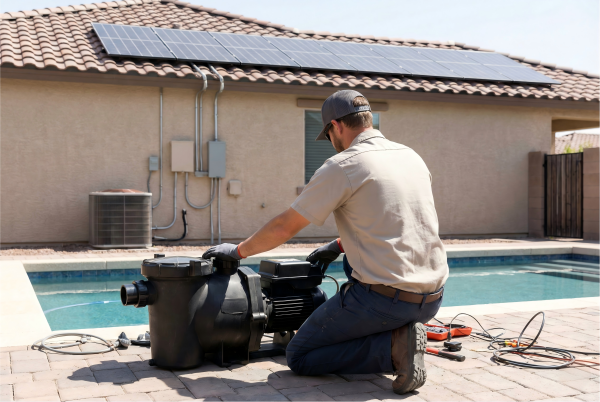
Choosing the right solar panels is just the first step.
The real efficiency of any solar water pumping system, whether for a pool or a deep well, goes far beyond the panels.
It lies in the heart of the system: the pump's motor and its intelligent controls.
Understanding this core technology not only helps you size your system correctly but also ensures you invest in a solution that is durable, efficient, and perfectly matched to your specific needs.
Let's explore the critical components that define a high-performance solar pumping system.
The Core of Solar Pumping: High-Efficiency BLDC Motors
Struggling to find a solar pump motor that delivers power without wasting precious solar energy?
Inefficient motors require more solar panels, driving up initial costs and system complexity.
This makes solar solutions seem less viable.
At the heart of every modern, high-performance solar pump is a Brushless DC (BLDC) permanent magnet motor. These motors are the core powerhouse, often achieving efficiencies over 90%, which directly reduces the number of solar panels needed and lowers overall system costs for end-users.
A motor’s efficiency is the single most important factor in determining the overall performance and economic value of a solar water pump system.
When a motor runs efficiently, it converts a higher percentage of electrical energy from the solar panels directly into mechanical power to move water.
This is where BLDC permanent magnet motor technology truly excels, representing a significant leap forward from older, less efficient motor designs.
Let's break down the technical advantages and what they mean for you.
The Power of Permanent Magnets
The key to this high efficiency lies in the motor's design.
Unlike traditional motors that use energy to create a magnetic field in the rotor, BLDC motors utilize powerful permanent magnets.
Specifically, the rotor is often constructed from high-grade 40SH neodymium iron boron, one of the strongest magnetic materials available.
This design eliminates the energy loss associated with energizing a conventional rotor, immediately boosting efficiency by a significant margin.
Technical and Market Advantages
The benefits of this advanced engineering are substantial and impact everyone from the distributor to the end-user.
From a technical standpoint, these motors deliver not just high efficiency but also strong power and high torque in a surprisingly compact package.
On average, a BLDC motor can be up to 47% smaller and 39% lighter than a traditional motor of equivalent power output.
This has huge implications for the market.
| Feature | Advantage for Distributors & Users |
|---|---|
| High Efficiency (>90%) | Reduces the required solar panel wattage, lowering initial system cost by 15-20%. |
| High Power Density | Smaller and lighter motor makes pumps easier to transport, handle, and install. |
| Maintenance-Free Design | Brushless construction means no brushes to wear out, ensuring a long service life with zero maintenance. |
| High Torque | Provides reliable startup power, even in low-light conditions, maximizing water output. |
The brushless design also means there are no physical brushes to wear down over time.
This makes the motor virtually maintenance-free and dramatically extends its operational lifespan, ensuring reliability in remote or hard-to-access locations.
As the core driving force, an efficient BLDC motor is the strategic foundation of a competitive solar pump portfolio, enabling systems that are more powerful, more affordable, and more reliable.
Matching the Pump to the Need: Low Flow, High Head
Do you need to pump water from a very deep well but don't require massive volume?
Many pumps that handle high pressure fail in deep wells or can't handle sandy water.
This leaves you without a reliable water source.
For deep wells requiring high lift (head) but lower flow rates, the solar screw pump is the ideal solution. Its unique progressing cavity design allows it to push water from great depths efficiently, making it perfect for domestic water supply and livestock watering in off-grid areas.
When sourcing water, the challenge is often not just about volume, but about depth.
In many regions, especially arid landscapes across Africa and Latin America, the water table can be hundreds of feet below the surface.
Lifting water over such a vertical distance requires a pump specifically designed to generate high pressure, or "head."
This is the exact scenario where the solar screw pump, also known as a progressing cavity pump, proves its unique value.
It's a specialized tool for a challenging job.
How a Screw Pump Works
The mechanics of a screw pump are elegant and effective.
Unlike centrifugal pumps that use impellers to sling water outwards, a screw pump utilizes a single helix-shaped stainless steel rotor that rotates inside a double helix rubber stator.
As the screw turns, it creates a series of sealed cavities that "progress" from the pump's inlet to the outlet.
This action pushes the water through compression, building significant pressure to overcome the gravitational pull of a deep well.
This design is what allows it to achieve a very high head with a relatively low flow rate.
Key Applications and Strengths
The unique performance characteristics of the solar screw pump make it the go-to choice for specific applications where other pumps might fail.
- Domestic Water Supply: For homes and small communities relying on deep boreholes, the screw pump provides a consistent and reliable flow for daily needs.
- Livestock Drinking Water: It's an essential tool for ranchers and farmers to water animals in remote pastures, delivering water from deep underground sources directly to troughs.
- Small-Scale Irrigation: Ideal for drip irrigation systems in gardens or small plots where high pressure is needed to operate the system, but large water volumes are not.
Why It Excels in Harsh Conditions
One of the most significant advantages of the screw pump is its resilience.
The design is inherently resistant to abrasion from sand and silt, a common issue that can quickly destroy the impellers of centrifugal pumps.
The rubber stator can handle small particulates without significant wear, ensuring a longer service life in wells with less-than-perfect water quality.
| Feature | Performance Specification | Ideal Environment |
|---|---|---|
| Pumping Mechanism | Progressing Cavity (Screw) | Deep wells, Boreholes |
| Flow Rate | Low (e.g., 1-5 m³/hour) | Domestic, Livestock |
| Head (Lift) | Very High (up to 200+ meters) | Areas with low water tables |
| Sand Resistance | Excellent | Wells with sandy or silty water |
While its flow rate is limited, making it unsuitable for large-scale farm irrigation, its ability to provide high-pressure water from extreme depths makes it an indispensable part of a comprehensive solar water pump portfolio.
It solves a critical problem for users in some of the world's most challenging environments.
Delivering Volume: The High-Flow, Wear-Resistant Choice
Need to move a lot of water for your farm or pasture, but worried about sand wearing out your pump?
Standard pumps can fail quickly in abrasive conditions, leading to costly replacements and downtime.
You need a durable, high-volume solution that won’t break the bank.
The solar plastic impeller pump is a multi-stage centrifugal pump designed for high flow and medium head. Its durable, engineered plastic impellers offer excellent resistance to fine sand, making it a lightweight, economical, and high-performance choice for farm irrigation and pasture water supply.
When the primary goal is moving a significant volume of water for applications like irrigating crops or supplying water to large herds of livestock, a different type of pump technology is required.
The focus shifts from high pressure to high flow.
This is the domain of the multi-stage centrifugal pump, and the solar plastic impeller model offers a powerful combination of performance, durability, and value, making it a popular choice across Africa and the Americas.
Its design is optimized for delivering more water per minute, efficiently and reliably.
The Power of Multi-Stage Centrifugal Design
Unlike a screw pump, a centrifugal pump uses a series of rotating impellers to move water.
Each impeller and diffuser combination is called a "stage."
As water enters the pump, the first impeller spins, using centrifugal force to throw the water outwards at high velocity.
The water is then caught by a diffuser, which slows the water down and converts its velocity into pressure.
It then guides the water to the inlet of the next impeller, and the process repeats.
Each stage adds more pressure, allowing the pump to achieve a medium head while each impeller contributes to a high overall flow rate.
The Advantage of Engineered Plastic Impellers
The choice of material for the impellers is critical, especially in real-world conditions where water is rarely perfectly clean.
Using a high-strength, wear-resistant engineered plastic for the impellers provides several key benefits:
- Sand Resistance: The material is specifically formulated to be highly resistant to abrasion from fine sand and silt. This prevents the rapid wear and tear that can degrade pump performance and lead to failure.
- Lightweight: Plastic impellers reduce the overall weight of the pump. This makes it easier and cheaper to transport, and simplifies the installation process, which can often be done without heavy lifting equipment.
- Economical: Manufacturing with engineered plastics is more cost-effective than with stainless steel, allowing these pumps to be offered at a more accessible price point, which is a crucial factor for many agricultural users.
| Feature | Performance Characteristic | Key Benefit |
|---|---|---|
| Flow Rate | High | Irrigates larger areas faster; waters more livestock. |
| Head | Medium | Suitable for wells of moderate depth and pressurizing irrigation systems. |
| Impeller Material | Wear-Resistant Plastic | Excellent durability in water with fine sand; extends pump life. |
| Cost & Weight | Economical & Lightweight | Lower initial investment and easier installation. |
While this pump may not be the best choice for highly corrosive water or extremely deep wells where massive head pressure is required, its ability to deliver high volumes of water reliably and affordably makes it the workhorse of solar-powered agriculture around the globe.
Built for Tough Conditions: Premium Corrosion Resistance
Is your water source acidic or alkaline, causing standard pumps to corrode and fail prematurely?
Corrosive water eats away at inferior materials, leading to frequent, expensive pump replacements and water contamination.
You need a pump built to last in aggressive water environments.
The solar stainless steel impeller pump is a premium model built entirely from SS304 stainless steel. It is specifically designed for high corrosion resistance, offering high flow and medium-to-high head for reliably pumping water in acidic, alkaline, or other corrosive conditions.
Water quality varies dramatically from one region to another.
In some areas, groundwater can be naturally acidic or alkaline due to the local geology, or it may contain dissolved minerals and salts that are highly corrosive to standard metals.
In these challenging environments, a standard pump simply won't survive for long.
For these applications, a more robust and specialized solution is required.
The solar stainless steel impeller pump is engineered from the ground up to provide maximum durability and a long service life, even when operating in the most aggressive water conditions.
The Superiority of SS304 Stainless Steel
The key to this pump's resilience is its construction material.
Both the impellers and the pump body are manufactured from SS304 grade stainless steel.
This material is a high-quality alloy containing significant amounts of chromium and nickel, which gives it exceptional corrosion-resistant properties.
The chromium forms a passive, invisible layer on the surface of the steel that protects it from reacting with oxygen and corrosive elements in the water.
This prevents rust and degradation, ensuring the pump's structural integrity and performance over many years.
Targeted Applications for Premium Performance
This pump is not a one-size-fits-all solution; it is a premium product targeted at niche markets where its specific advantages are a necessity.
- Alkaline Soil Regions: In areas like those found in parts of Australia and the Americas, high soil alkalinity can lead to highly alkaline groundwater. A stainless steel pump is essential for reliable water extraction.
- Industrial or Mining Runoff Areas: Water sources near certain industrial or mining activities may have a low pH (acidic), requiring a pump that can withstand chemical corrosion.
- High-End Residential and Ranches: For high-value properties and ranches that demand the highest level of reliability and water purity, a stainless steel pump ensures no corrosion byproducts contaminate the water supply.
Comparing Durability and Cost
While the initial investment for a stainless steel pump is higher than for its plastic impeller counterpart, the long-term value is undeniable in the right context.
The extended service life and superior reliability mean fewer replacements and less downtime, resulting in a lower total cost of ownership over the pump's lifespan.
| Pump Type | Primary Advantage | Best For | Limitation |
|---|---|---|---|
| Plastic Impeller | High Flow & Value | General farming, sandy water | Poor in corrosive conditions |
| Stainless Steel Impeller | Corrosion Resistance & Durability | Acidic/alkaline water, premium applications | Higher initial cost & weight |
For distributors, offering a stainless steel model allows them to cater to a high-end segment of the market that prioritizes long-term durability and is willing to invest in premium quality.
It completes a product portfolio, ensuring a reliable water solution is available for virtually any water condition.
Ensuring 24/7 Operation with Hybrid AC/DC Systems
What happens when you need water on cloudy days or at night, but your solar pump stops working?
Relying solely on solar power means no water when the sun isn't shining, jeopardizing crops, livestock, and domestic supply.
You need a system that guarantees water access around the clock.
A hybrid AC/DC solar pump system provides the ultimate solution for uninterrupted water supply. It automatically prioritizes free solar energy when available and seamlessly switches to AC grid power or a generator during low-sunlight periods, ensuring you have water 24/7 without worry.
The greatest strength of solar power—its reliance on the sun—is also its most significant limitation.
For many critical applications, water access cannot be restricted to daylight hours.
Whether it's for household use in the evening, irrigating crops overnight, or ensuring livestock always have water, a 100% reliable system is non-negotiable.
Recognizing this critical need, advanced solar pump systems now incorporate hybrid technology, blending the best of both worlds: the free, clean energy of solar and the constant availability of AC power.
The Brains of the Operation: The Hybrid Controller
The magic behind this flexibility is the AC/DC hybrid controller.
This intelligent device is designed with two separate power inputs, allowing you to connect both your solar panel array and an AC power source (like the grid or a generator) at the same time.
The controller's sophisticated software constantly monitors the power coming from the solar panels.
Smart Power Management in Action
The system operates on an intelligent, automatic hierarchy to maximize efficiency and minimize cost.
- Priority on Solar: When there is sufficient sunlight, the controller automatically uses 100% of the power from the photovoltaic (PV) panels to run the pump. This is the most cost-effective mode, using free energy from the sun.
- Hybrid Functionality: On overcast days or when solar power is reduced, the controller's hybrid function kicks in. It intelligently assesses the available solar energy and supplements it with just enough AC power to meet the pump's demands. This feature maximizes the use of every available watt of solar energy before drawing from the grid.
- Automatic AC Switchover: When there is no solar input at all, such as at night or during heavy storms, the controller will automatically switch over completely to the AC power source.
This entire process is seamless and requires no manual intervention.
The user simply enjoys a constant, reliable water supply, regardless of the time of day or weather conditions.
| Power Source Scenario | Controller Action | User Benefit |
|---|---|---|
| Full Sunlight | Uses 100% PV power. | Zero running cost. |
| Partial Clouds / Low Light | Blends PV and AC power. | Maximizes use of free solar energy. |
| No Sunlight / Night | Switches to 100% AC power. | Uninterrupted 24/7 water supply. |
This hybrid capability transforms a solar water pump from a daytime-only device into a comprehensive, all-weather water solution.
For distributors, it provides a powerful selling point that addresses a key customer concern.
For end-users, it delivers ultimate peace of mind and worry-free water access, 24 hours a day.
Conclusion
The best solar pump system combines an efficient BLDC motor, the right pump type for the job, and an intelligent hybrid controller, ensuring reliable and cost-effective water access anywhere.
FAQs
1. How many solar panels are needed for a 2 hp pool pump?
A 2 hp (approx. 1500W) pump typically requires a solar array of 2250 to 3000 watts to ensure reliable performance, accounting for system inefficiencies and less-than-ideal sunlight conditions.
2. Can I run a pool pump directly from a solar panel?
Yes, you can run a DC pool pump directly from solar panels, but an MPPT controller is highly recommended to maximize efficiency and protect the pump motor from voltage fluctuations.
3. Do solar pool pumps work on cloudy days?
Solar pool pumps will run at a reduced speed on cloudy days. For full performance, a hybrid AC/DC system or a battery backup is necessary to supplement the lower solar power.
4. What is the average cost of a solar pool pump system?
The cost varies widely based on pump size and panel requirements, but a complete system for an average residential pool can range from $1,500 to $4,000 for equipment.
5. How long do solar pool pumps last?
A high-quality solar pool pump, especially one with a BLDC motor, can last 10-15 years or more with minimal maintenance, while solar panels often have a warranty of 25 years.
6. Is a solar pool heater or a solar pump a better investment?
A solar pump is often a better initial investment as it reduces daily electricity costs year-round, while a solar heater only provides savings during the swimming season.
7. Can an existing AC pool pump be converted to solar?
Yes, an existing AC pump can be powered by solar using an inverter to convert the DC power from the panels to AC power for the pump, though a native DC pump is more efficient.
8. Do I need batteries for my solar pool pump?
Batteries are not required if you only plan to run the pump during daylight hours. They are only necessary if you need to store energy for nighttime or cloudy-day operation.