Choosing the right irrigation pump feels overwhelming.
A poor choice leads to wasted water, high energy bills, and weak crops.
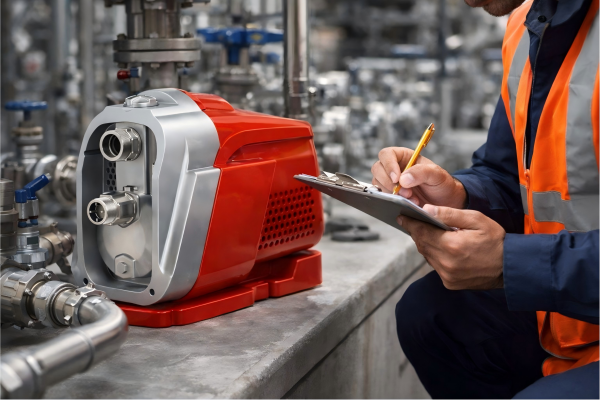
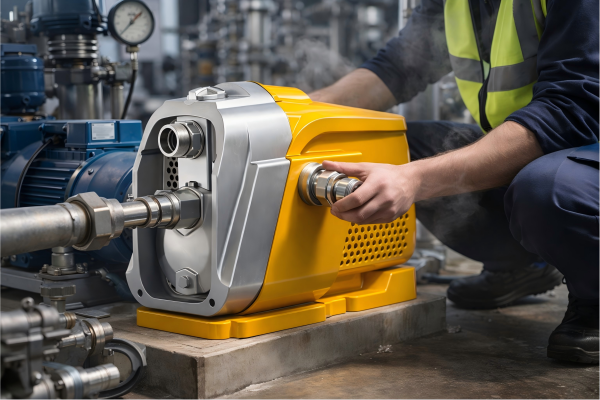
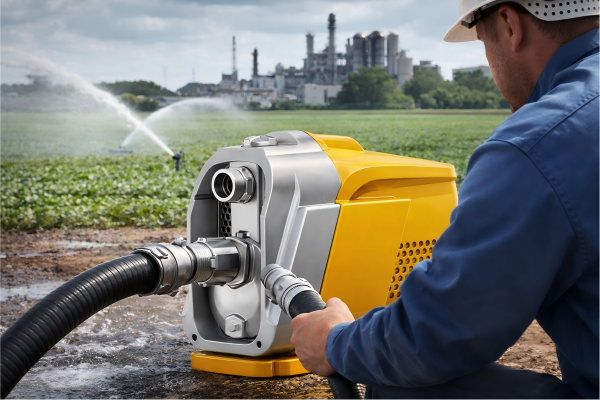
Centrifugal pumps are the most commonly used type for irrigation.
For modern, sustainable farming, the solar-powered submersible centrifugal pump, especially the plastic impeller model, is the most popular due to its high flow rate, efficiency, and cost-effectiveness.
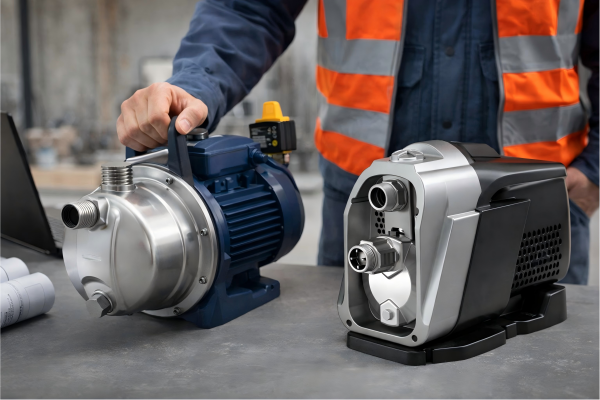
While centrifugal pumps are the popular answer, the term covers a wide range of designs.
The "most common" pump may not be the "best" pump for your specific situation.
The ideal choice for a large Australian ranch with alkaline water will be vastly different from a small farm with a deep well in Africa.
Understanding the key differences is crucial for maximizing your efficiency and return on investment.
This guide will explore the most effective and popular types of modern irrigation pumps, breaking down their specific uses, strengths, and limitations.
We will help you move beyond a one-size-fits-all approach and select the perfect pump to meet your unique agricultural needs.
The Centrifugal Impeller Pump | The High-Flow Workhorse
You need to move a large volume of water to irrigate fields or pastures.
Slow, low-flow pumps just won't cut it, risking crop dehydration and lost profits.
**The centrifugal impeller pump is the go-to solution for high-volume water needs.
Its design is perfect for delivering the high flow rates required for farm irrigation, making it the most common choice for commercial agriculture worldwide.
**
The centrifugal pump is the engine of modern agriculture for a reason.
It operates on a simple yet powerful principle.
An electric motor spins one or more impellers at high speed.
As water enters the pump, the rotating impellers sling the water outward using centrifugal force, rapidly increasing its velocity and pressure.
This energy effectively moves large quantities of water from your well to your fields.
In submersible models, these pumps consist of multiple stages stacked on top of each other.
Each stage contains an impeller and a diffuser, and each one adds more pressure to the water.
This multi-stage design allows the pump to achieve an excellent balance of high flow and medium head (lifting pressure), making it incredibly versatile for most well depths found in agriculture.
The primary decision for buyers is choosing the impeller material, which directly impacts the pump's durability, cost, and ideal application.
Plastic vs. Stainless Steel Impellers
The choice of material is a critical decision based on your water quality and budget.
- Plastic Impeller (High Flow, Wear-Resistant): This is the most popular and economical choice.
These pumps use impellers made from high-strength, durable engineered plastic.
This material makes the pump lightweight, affordable, and surprisingly effective at resisting abrasion from fine sand, often lasting longer than metal in such conditions.
It's the perfect workhorse for general farm irrigation, pasture water supply, and home gardens where water quality is not corrosive. - Stainless Steel Impeller (Premium Quality, Corrosion-Resistant): This is the premium option for harsh environments.
The pump utilizes SS304 stainless steel for all water-contact parts, including the impellers and pump body.
This provides outstanding resistance to corrosion from acidic, alkaline, or saline water.
While it has a higher initial cost, its long service life in aggressive water makes it a more economical choice over the long term, preventing frequent replacements.
Performance Breakdown
Understanding the trade-offs will help you make the right investment.
| Impeller Type | Best For | Key Advantage | Main Limitation |
|---|---|---|---|
| Plastic | General farm irrigation, sandy water | High flow at a lower cost, lightweight | Poor durability in corrosive water |
| Stainless Steel | Acidic/alkaline water, high-value sites | Extreme corrosion resistance, long life | Higher initial cost and weight |
For over 80% of agricultural applications with normal water quality, the plastic impeller pump offers an unbeatable combination of performance and value.
For those in regions known for challenging water, like the alkaline soil areas of Australia, investing in a stainless steel model is essential for long-term reliability.
The Solar Screw Pump | The Deep Well Specialist
You have a very deep well, and standard pumps struggle to lift water to the surface.
Your water needs are for livestock or a small garden, not a massive field, so you don't need huge flow.
**The solar screw pump is the master of high-lift, low-flow applications.
Functioning like an Archimedes' screw, it efficiently pushes water from extreme depths, making it the ideal solution for deep wells, domestic water supply, and small-scale drip irrigation.
**
The screw pump, also known as a progressing cavity pump, operates completely differently from a centrifugal pump.
Instead of slinging water, it pushes it.
The design features a single helical stainless steel screw (the rotor) that turns inside a double helical rubber sleeve (the stator).
As the rotor turns, it forms a series of sealed cavities that move steadily from the pump's inlet to its outlet.
This mechanism provides a constant, non-pulsating flow and can generate immense pressure (head) with relatively low power consumption.
This makes it exceptionally good at its job: fighting gravity over long distances.
Where a centrifugal pump might require significant power and multiple stages to lift water 150 meters, a screw pump is designed for this exact task.
Its unique design also gives it an incredible advantage in handling abrasive materials.
The flexible rubber stator can pass sand and silt that would quickly damage the tight tolerances of a high-speed impeller.
Why Choose a Screw Pump?
This pump is a specialist tool, not a general-purpose one.
You choose it when you face specific challenges that other pumps can't handle efficiently.
- Extreme Well Depth: This is the screw pump's signature strength.
If your well is over 100 meters (330 feet) deep, a screw pump is often the most energy-efficient and reliable option.
It overcomes the high head with less power than a comparable centrifugal pump. - High Sand and Silt Content: For newly drilled wells or aquifers with a lot of grit, the screw pump is highly resilient.
Its ability to handle abrasives without rapid wear significantly extends its service life in harsh water conditions. - Low Volume Needs: The pump's lower flow rate is perfectly suited for applications like filling home water tanks, supplying livestock troughs, or running a targeted drip irrigation system for a small farm or garden.
Performance Characteristics
| Feature | Advantage | Limitation |
|---|---|---|
| Head (Lift) | Can efficiently lift water from >150 meters. | Not the best choice for shallow wells. |
| Flow Rate | Low power consumption for the pressure generated. | Not suitable for flood irrigation or large sprinklers. |
| Sand Handling | Superior resistance to abrasive wear. | The rubber stator is a wear part that will need eventual replacement. |
In electricity-scarce regions like parts of Africa and Latin America, the ability to access deep groundwater with a minimal solar panel array makes the solar screw pump an empowering and life-changing technology.
The Motor & Controller | The Brains and Brawn of the System
You think the pump itself is all that matters.
But an inefficient motor or a basic controller can waste energy, require more solar panels, and leave you without water when you need it.
**The motor and controller are as important as the pump.
A high-efficiency BLDC motor and a smart MPPT controller dramatically reduce solar panel costs, increase daily water output by over 30%, and ensure system reliability.
**
The pump head is just the tool; the motor is the power, and the controller is the intelligence that manages that power.
Modern solar pumping systems have made huge leaps in both areas, creating a package that is far more efficient and reliable than older technologies.
The BLDC Motor: Core Power and Efficiency
The heart of every top-tier solar pump is a Brushless DC (BLDC) permanent magnet motor.
This is a massive upgrade over older brush motors or standard AC motors.
- Extreme Efficiency: BLDC motors convert electricity into rotational force with over 90% efficiency.
Traditional motors can be as low as 60-70% efficient.
This means more water is pumped for every watt of solar energy produced. - Compact and Powerful: These motors use powerful rare-earth magnets (like Neodymium iron boron), allowing them to be smaller and lighter.
A modern BLDC motor can be up to 47% smaller and 39% lighter than a traditional motor of the same power, simplifying installation. - Long Life & Maintenance-Free: With no brushes to wear out, these motors are incredibly reliable and have a service life that can exceed 10 years with zero maintenance.
The market value is simple: a more efficient motor requires fewer solar panels to do the same job, directly lowering the upfront cost of the entire system.
The Controller: Smart Energy Management
The controller is the brain that maximizes the use of solar energy and protects the system.
- MPPT (Maximum Power Point Tracking): This is the most critical feature.
An MPPT controller constantly adjusts the electrical load to find the perfect balance of voltage and current from the solar panels.
This "sweet spot" maximizes power harvesting and can increase the total volume of water pumped per day by over 30% compared to basic controllers. - Hybrid AC/DC Functionality: Advanced controllers offer both DC (solar) and AC (grid/generator) inputs.
The system prioritizes free solar power.
If sunlight is insufficient (on cloudy days or at night), it can automatically blend in or switch completely to an AC power source.
This ensures you have a reliable water supply 24/7, without any manual switching.
Together, an efficient motor and a smart controller form a synergistic system that lowers costs, boosts performance, and provides water whenever you need it.
Conclusion
Centrifugal pumps are most common, but the best pump is the one matched to your well, water type, and flow needs, powered by an efficient motor and a smart controller.
Frequently Asked Questions
What are the two main types of irrigation pumps?
The two main categories are surface pumps, which sit on land, and submersible pumps, which are placed down in the well, underwater.
How do I choose the correct irrigation pump?
Consider four key factors: required flow rate (GPM), total dynamic head (lift + pressure), well diameter, and water quality (sandy or corrosive).
Can I use a drinking water well pump for irrigation?
Yes, but ensure it provides enough flow and pressure for your irrigation method.
Many domestic well pumps are lower flow than what is needed for large-scale watering.
What is the most efficient type of water pump?
Pump efficiency depends on the specific design.
However, systems using a high-efficiency BLDC motor and an MPPT controller offer the highest overall system efficiency.
What size pump do I need for a sprinkler system?
This depends on the number of sprinkler heads and their required GPM and PSI.
Add the GPM for all heads on one zone and find a pump that meets that flow at the required pressure.
How deep can a submersible pump go?
Standard models work well up to 100 meters.
For depths greater than this, specialized high-pressure models or screw pumps are required for efficient operation.