Choosing the right pump feels overwhelming.
A poor choice leads to weak water pressure, high energy costs, and constant maintenance headaches.
For most well applications, the answer is clear.
A submersible pump is generally better for wells because it is more efficient, powerful, and reliable.
Normal (surface) pumps are only suitable for drawing water from very shallow sources, like ponds or shallow wells less than 7 meters deep.
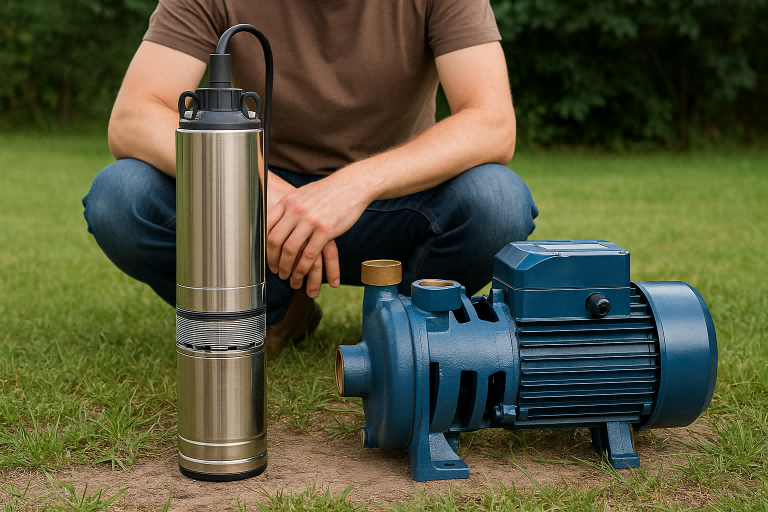
The debate between a submersible pump and a normal pump is not about which one is "good" or "bad."
It is about physics.
Each pump type is designed for a completely different job.
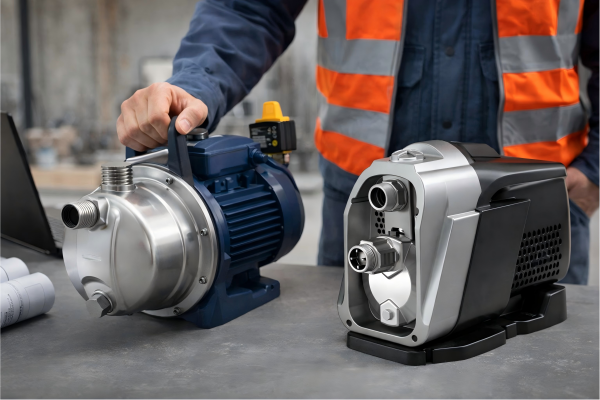
A normal pump, also called a surface pump, sits on the ground and uses suction to pull water up.
A submersible pump goes directly into the water source and uses direct pressure to push water up.
This fundamental difference in operation—pushing versus pulling—is the source of every major advantage and disadvantage.
Understanding this core principle will tell you everything you need to know to select the right pump and avoid costly mistakes.
Let's explore why pushing water is almost always superior for well applications.
Why Efficiency is the Biggest Difference
You worry about high electricity bills from your water pump.
Inefficient pumps waste energy and money every single minute they run.
The right pump design can cut energy use dramatically.
A submersible pump is far more efficient because it pushes water instead of pulling it.
This direct-drive method avoids the energy losses associated with suction, making it up to 30% more efficient than a surface pump doing the same job.
The single most important factor in a pump's performance is efficiency.
Efficiency is a measure of how much electrical energy is converted into the useful work of moving water.
Every watt of electricity that does not become water pressure is wasted as heat and noise.
This is where the operational difference between submersible and surface pumps becomes critical.
A submersible pump is submerged in the water, right at the start of its job.
Its motor turns impellers that immediately pressurize the water and push it up the pipe.
All of the motor's energy is applied directly to moving the water column.
A surface pump, however, must first create a vacuum in the suction pipe to draw water up from the source before it can push it.
This act of "sucking" is incredibly inefficient and is limited by the laws of atmospheric pressure.
This wasted effort translates directly into higher operating costs.
The Power of Pushing Water
A submersible pump benefits from a design that is inherently efficient.
Its operation is simple and direct.
-
Direct Energy Transfer: The pump's motor applies force directly to the water. There is no energy wasted on creating suction.
-
High-Efficiency Motors: Modern submersible pumps use advanced brushless DC (BLDC) permanent magnet motors. These motors can achieve efficiencies of over 90%, meaning more than 90% of the electricity consumed is converted into rotational force.
-
Natural Cooling: The surrounding water constantly cools the motor. A cool motor runs more efficiently and has a much longer service life.
The Weakness of Pulling Water
A surface pump is always fighting a battle against physics, which leads to multiple points of energy loss.
-
Suction Losses: A significant portion of the pump's energy is spent just trying to lift the water to the pump inlet. This energy does nothing to create pressure for your house or farm.
-
Priming Requirement: Surface pumps are not self-priming. They must have a perfectly airtight suction line filled with water to work. Air leaks are a common problem, causing the pump to run without moving water, which wastes energy and can damage the pump.
-
Lower-Efficiency Motors: Many surface pumps still use older, less efficient AC induction motors. The combination of an inefficient motor and an inefficient pumping method leads to much higher energy consumption for the same amount of water delivered.
| Feature | Submersible Pump | Normal (Surface) Pump | Impact on the User |
|---|---|---|---|
| Pumping Method | Pushes Water | Pulls Water (Suction) | Submersible is 25-30% more energy-efficient. |
| Core Motor Tech | High-Efficiency BLDC (>90%) | Standard AC Induction (~70-80%) | Lower electricity bills and reduced solar panel needs. |
| Priming Needed? | No (Self-Priming) | Yes (Requires a perfect seal) | Submersible is more reliable and easier to install. |
| Cooling | Water-Cooled | Air-Cooled | Submersible motor lasts longer due to better cooling. |
For a distributor or installer, the efficiency argument is paramount.
Promoting a submersible pump is promoting a solution that provides the end user with tangible, long-term savings on their energy bills and a more reliable water system.
Which Pump Is Better for Deep Wells?
You have a deep well, and you are not sure if a normal pump is strong enough.
Choosing the wrong pump will result in little to no water flow.
There is only one correct choice for deep wells.
A submersible pump is the only option for a deep well.
A normal surface pump can only lift water from a maximum depth of about 7-8 meters due to atmospheric pressure limits. Submersible pumps have no such depth limitation.
The most significant and non-negotiable difference between a submersible pump and a surface pump is the depth from which they can draw water.
This is not a matter of quality or power; it is a hard limit set by physics.
A surface pump works like drinking through a straw.
It reduces the pressure inside the pipe, and the air pressure on the surface of the water outside the pipe pushes the water up.
At sea level, the maximum height that atmospheric pressure can push a column of water is 10.3 meters.
In reality, due to friction and pump inefficiencies, the practical suction limit for any surface pump is only about 7 to 8 meters (around 25 feet).
A submersible pump does not have this limitation.
It does not pull water.
It sits deep inside the well and pushes a column of water up from below.
Because it is pushing, its ability to lift water is limited only by the power of its motor and the design of its impellers.
This allows submersible pumps to be installed in wells that are hundreds of meters deep.
The Strict Limit of Surface Pumps
The 7-8 meter suction limit is an unavoidable constraint for all surface pumps.
-
Atmospheric Dependence: The pump's performance will decrease at higher altitudes where the air pressure is lower.
-
Water Level Drop: If the water level in your well or pond drops below the pump's suction limit, it will stop working completely. This is a major risk in dry seasons.
-
Inability to Go Deeper: If you have a well that is 10 meters deep, a surface pump is not an option. It is physically impossible for it to lift the water to the surface.
The Unlimited Potential of Submersible Pumps
Submersible pumps are designed specifically to overcome the limitations of depth.
-
High Head Capability: "Head" is the vertical distance a pump can lift water. Submersible pumps are engineered to produce very high head. For instance, a solar screw pump is a type of submersible pump designed for low flow but extremely high head, making it perfect for the deepest wells.
-
Consistent Performance: A submersible pump's performance is not affected by altitude or minor drops in the water level (as long as the pump remains submerged).
-
Application-Specific Designs: The submersible pump portfolio includes different models for different needs.
- Screw Pumps: Ideal for very deep domestic wells where high lifting power is more important than high flow.
- Centrifugal Impeller Pumps: Designed for high flow rates in wells of medium depth, perfect for farm irrigation.
| Parameter | Submersible Pump | Normal (Surface) Pump | Winner for Deep Wells |
|---|---|---|---|
| Maximum Depth | 100+ meters | ~7-8 meters | Submersible Pump (By a huge margin) |
| Operating Principle | Pushes water up | Sucks water up | Submersible Pump |
| Performance at Depth | High and Consistent | Zero (Fails to operate) | Submersible Pump |
| Best Use Case | Deep wells, boreholes | Shallow wells, ponds, rivers | N/A |
For anyone with a well deeper than a few meters, the choice is already made.
A submersible pump is not just the "better" option; it is the only viable option.
Which Pump Lasts Longer?
You want to install a pump and forget about it.
Frequent breakdowns mean no water, costly repairs, and constant frustration.
One pump type is designed to be more durable.
A submersible pump generally lasts longer and requires less maintenance.
Its sealed design protects it from the elements, the motor is water-cooled for a longer life, and it is self-priming, which prevents a major cause of pump damage.
When considering the long-term value of a pump, durability and maintenance requirements are just as important as initial performance.
A pump that performs well but fails after a few years is not a good investment.
The physical location and operating environment of a pump play a huge role in its lifespan.
A submersible pump operates in a very stable environment.
It is installed deep underground, inside a sealed well casing.
Here, it is protected from weather, freezing temperatures, dust, accidental damage, and theft.
Its motor benefits from being constantly submerged in cool water, which is the perfect way to dissipate heat and prevent overheating—the number one killer of electric motors.
A normal surface pump, by contrast, lives a much harsher life.
It is typically installed outdoors or in a pump house, where it is exposed to rain, sun, humidity, dust, and temperature swings.
Its air-cooled motor can struggle on hot days, and all its components are subject to weathering and corrosion.
This exposure inevitably leads to a shorter lifespan and more frequent maintenance needs.
The Protected Life of a Submersible Pump
The inherent design of a submersible pump promotes longevity.
- Sealed Environment: The entire pump and motor unit is hermetically sealed in a stainless steel housing, protecting it from water ingress and corrosion.
- Constant Cooling: The motor never has a chance to overheat as long as it is submerged.
- Self-Priming: Submersible pumps are always submerged in water, so they never need to be primed. This eliminates the risk of "running dry," a condition where a pump operates without water, leading to rapid overheating and catastrophic failure. Surface pumps are very vulnerable to this.
- Material Choices for Water Quality: Submersible pumps are available in different materials to match the water conditions.
- A plastic impeller pump offers excellent resistance to wear from fine sand.
- A premium stainless steel impeller pump provides maximum corrosion resistance for acidic or alkaline water, ensuring an extremely long service life in harsh environments.
The Exposed Life of a Surface Pump
A surface pump faces numerous environmental challenges that shorten its life.
- Weather Exposure: Rain, snow, and sun degrade the pump housing, seals, and electrical components.
- Overheating Risk: The motor is air-cooled, which is less effective than water cooling. On a hot day, a hard-working pump can easily overheat.
- Risk of Running Dry: If the suction line develops a small air leak, or if the foot valve fails, the pump can lose its prime. If it is then switched on, it will run dry and destroy itself quickly.
- Vibration and Noise: Surface pumps create significant noise and vibration, which contributes to mechanical wear and tear over time. Submersible pumps are virtually silent.
For a customer like Andrew in Australia, who values quality and low long-term costs, the durability advantage of a submersible pump is a powerful selling point.
It represents a more robust, reliable, and "install-and-forget" solution.
Conclusion
A submersible pump is better for wells due to its superior efficiency, depth capability, and durability.
A surface pump is only for shallow water.
Frequently Asked Questions
What are the disadvantages of a submersible pump?
The main disadvantages are that they can be more difficult to access for repairs since they are inside the well, and the initial cost can be higher than a surface pump.
Do submersible pumps use a lot of electricity?
No, modern submersible pumps, especially those with BLDC motors, are highly energy-efficient. They use significantly less electricity than a surface pump to move the same amount of water.
Can a submersible pump be used in a lake?
Yes, a submersible pump can be used in a lake or pond. It should be placed inside a protective sleeve or intake screen to prevent debris from being drawn into the pump.
Why is my submersible pump so loud?
A submersible pump should be nearly silent. If you can hear it, it may be caused by vibration against the well casing, worn-out bearings, or cavitation from pumping sand or air.
Which pump is best for home use?
For a home with a well, a submersible pump is almost always the best choice due to its efficiency, reliability, and silent operation.
How do I choose a submersible pump?
Choose a submersible pump based on your well's depth (determines head requirement), your daily water needs (determines flow rate), and your water quality (determines pump materials).
Can a submersible pump push water uphill?
Yes, pushing water uphill is exactly what submersible pumps are designed to do. The "head rating" of the pump tells you the maximum vertical height it can push water.