Struggling with inconsistent water pressure or frequent pump failures?
This can lead to system damage and operational headaches.
Choosing a pump suited for your specific needs is the first step toward reliability.
The most reliable pump is one perfectly matched to its job.
For high-viscosity fluids, positive displacement pumps are excellent.
For moving low-viscosity fluids like water, centrifugal pumps are famously dependable, especially modern intelligent models with advanced electronic protections and high-quality materials.
Understanding reliability isn't just about picking a category.
It's about knowing what makes a pump robust for its intended task.
From the materials used in its construction to the intelligence of its control system, many factors contribute to a long, trouble-free service life.
Let's explore the most dependable pump types and uncover the specific features that truly define modern reliability in pumping technology.
This knowledge will help you make a better choice for your application.
Positive Displacement Pumps
Are you trying to move thick, viscous fluids or materials with solids?
Using the wrong pump can cause constant clogging and premature failure.
A positive displacement pump is engineered for these exact challenges.
Positive displacement (PD) pumps are highly reliable for applications requiring a consistent, pulsation-free flow, regardless of pressure changes.
They excel at handling high-viscosity liquids, slurries, and solids by trapping and moving a fixed volume of fluid with each cycle.
Positive displacement pumps operate on a straightforward principle.
They trap a specific amount of fluid in a chamber and then force (displace) it out through the discharge port.
This mechanism makes their flow rate directly proportional to their speed, offering incredible precision.
It's a fundamentally different approach compared to pumps that impart velocity to the fluid.
This core design is what makes them so robust for challenging media.
How They Achieve Reliability
The reliability of PD pumps stems from their simple and effective operating method.
Because they move fluid gently without high shear forces, they are ideal for sensitive or abrasive materials.
They don't rely on velocity, which means they can effectively handle thick liquids that would stop other pump types in their tracks.
- Consistent Flow: They deliver a fixed amount of fluid with each revolution, ensuring a stable and predictable output.
- High-Pressure Capability: They can generate very high pressures, even at low flow rates.
- Self-Priming: Many PD pump designs can pull fluid from a level below the pump, a valuable feature in many setups.
- Viscosity Handling: Their performance often improves as the viscosity of the fluid increases, as it reduces internal slippage.
Common Types and Their Strengths
There are several designs within the positive displacement family, each tailored for specific tasks.
Choosing the right one is crucial for achieving maximum reliability and efficiency.
| Pump Type | Operating Principle | Best For |
|---|---|---|
| Rotary Pumps (Gear, Lobe, Vane) | Rotating gears, lobes, or vanes trap and move fluid. | Clean, viscous fluids like oils and resins. |
| Reciprocating Pumps (Piston, Plunger) | A back-and-forth motion of a piston or plunger moves fluid. | High-pressure applications like cleaning and injection. |
| Diaphragm Pumps | A flexible diaphragm moves back and forth, changing chamber volume. | Abrasive slurries, chemicals, and shear-sensitive fluids. |
Understanding these distinctions ensures you select a pump that won't just work, but will last.
A rotary lobe pump, for instance, is perfect for delicate food products, while a rugged piston pump is the workhorse for high-pressure washing systems.
Each is reliable in its own context.
Centrifugal Pumps
Are you dealing with low flow or pressure in your water system?
This common issue can be frustrating in both homes and businesses.
A centrifugal pump is often the most reliable solution for boosting water pressure.
Centrifugal pumps are the most common type used for moving low-viscosity fluids like water.
Their reliability comes from a simple, robust design with few moving parts.
Properly sized and maintained, they offer a very long service life for general fluid transfer and pressure boosting applications.
Centrifugal pumps are a cornerstone of modern fluid handling.
They are valued for their ability to deliver high flow rates efficiently.
Their simple design makes them cost-effective to manufacture and maintain, which has contributed to their widespread adoption in industries from water supply and HVAC to agriculture and fire protection.
However, the definition of a "reliable" centrifugal pump has evolved significantly.
While the basic design is robust, modern advancements in motor technology, electronic controls, and material science have created a new class of highly intelligent and exceptionally durable pumps.
These are not just simple machines anymore; they are sophisticated systems.
The Evolution to Intelligent Centrifugal Pumps
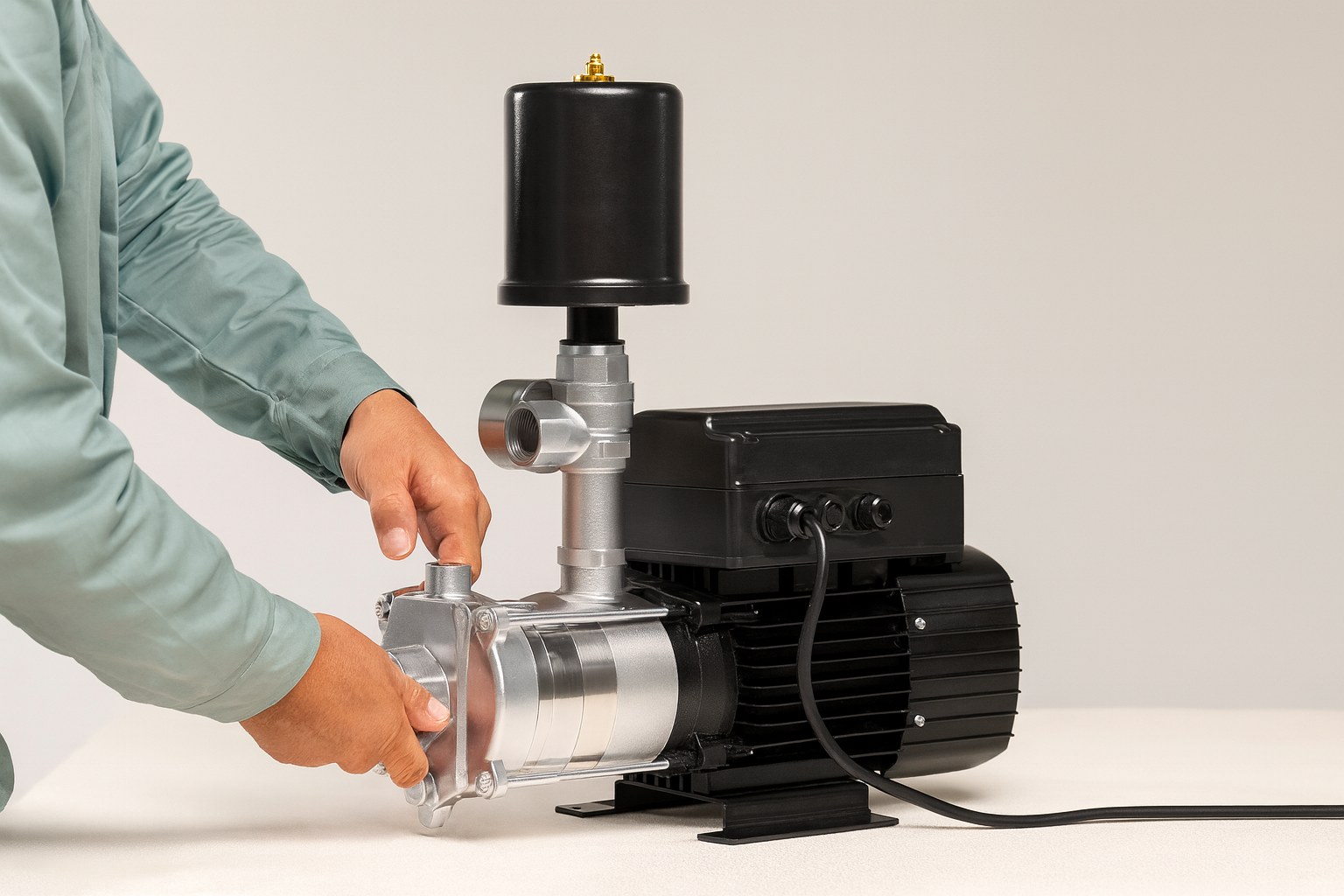
The biggest leap in centrifugal pump reliability comes from the integration of smart technology.
Modern pumps are not just "on" or "off.
" They think.
They adapt.
This intelligence protects the pump from damaging conditions and optimizes its performance for unparalleled energy efficiency and longevity.
The Impact of Variable Frequency Drives (VFDs)
The single most important innovation is the Variable Frequency Drive (VFD).
A VFD controller adjusts the motor's speed in real-time to meet the system's demand.
This has several profound benefits for reliability:
- Constant Pressure Supply: The VFD continuously adjusts pump speed to maintain a perfectly stable water pressure, eliminating fluctuations that stress plumbing.
- Soft Start & Soft Stop: The drive gently ramps the motor up and down. This eliminates the sudden mechanical shock and electrical surge of traditional fixed-speed pumps, dramatically reducing wear on the motor, bearings, and couplings. It also prevents hydraulic water hammer, protecting your entire pipe system.
- Massive Energy Savings: By running only at the speed needed, a VFD pump can reduce electricity consumption by 50% or more, lowering operational costs and reducing thermal stress on the motor.
Core Motor and Material Superiority
The intelligence of the VFD is paired with superior hardware.
Premium materials and advanced motor designs are non-negotiable features of a top-tier reliable pump.
| Component | Modern Feature | Reliability Benefit |
|---|---|---|
| Motor | Permanent Magnet Synchronous Motor (PMSM) | Higher efficiency, generates less heat, and operates almost silently (under 50dB) compared to older asynchronous motors. |
| Impeller | AISI 304 Stainless Steel or Brass | Provides excellent resistance to corrosion and abrasion, ensuring the hydraulic performance does not degrade over time. |
| Bearings | Premium Precision Bearings (e.g., NSK/C&U grade) | Offer significantly quieter operation, higher precision, and a much longer operational lifespan than standard bearings. |
| Housing | UV-Resistant Engineering Plastic or Cast Iron | Protects the pump internals from environmental degradation, especially in outdoor installations. |
These components are not just line items on a spec sheet.
They are fundamental choices that directly translate to a longer, more dependable service life.
A pump built with these materials is designed to last.
Submersible Pumps
Do you need to pump water from a deep well or a sump pit?
Surface pumps can struggle with suction lift and are exposed to weather.
A submersible pump is hermetically sealed and sits directly in the water.
Submersible pumps are highly reliable because they are located within the fluid source, which cools the motor and ensures it is always primed.
Being submerged protects them from the elements and often results in quieter, more energy-efficient operation, contributing to a longer service life.
Submersible pumps are uniquely designed for their environment.
Their entire assembly, including the motor, is contained in a waterproof housing and is fully submerged in the fluid to be pumped.
This design solves a major challenge faced by surface pumps: suction lift.
Instead of pulling water up, a submersible pump pushes it, which is a far more efficient process, especially from great depths.
This fundamental advantage makes them the default choice for deep wells, boreholes, and sump dewatering applications.
Their reliability is directly tied to this clever and practical design.
Why Submersion Enhances Reliability
Placing a pump underwater might seem counterintuitive, but it provides several key benefits that increase its lifespan and performance.
The surrounding water is not just the medium being pumped; it's a critical part of the pump's operating environment.
Superior Thermal Management
One of the primary enemies of any electric motor is heat.
Excessive heat degrades motor windings and bearings, leading to premature failure.
A submersible pump uses the surrounding water as a constant coolant.
Fluid flowing past the motor housing continuously draws heat away, allowing the motor to run cooler and more efficiently than an equivalent air-cooled motor on the surface.
This constant cooling is a major factor in their long-term durability, especially in continuous-duty applications.
Priming and Cavitation Prevention
A pump is "primed" when its casing is full of water and free of air.
Surface pumps can lose their prime if there are small leaks in the suction line, forcing them to run dry, which can quickly destroy the pump seal.
- Always Primed: Because a submersible pump is already underwater, it is always primed and ready to operate. It can never run dry unless the entire water source is depleted.
- Cavitation Resistance: They are less susceptible to cavitation, a damaging phenomenon caused by low pressure at the suction inlet. By being submerged, there is positive inlet pressure from the water above it, which helps prevent the formation and collapse of destructive vapor bubbles.
Protection from External Factors
Locating the pump underwater shields it from many of the hazards present on the surface.
This physical protection adds another layer to its overall reliability.
It avoids issues like freezing in cold climates, overheating in direct sun, physical damage from accidents, and vandalism.
Furthermore, it keeps the pump out of sight and significantly reduces audible operational noise, a major benefit in residential or noise-sensitive areas.
The combination of natural cooling, guaranteed priming, and environmental protection makes submersible pumps an exceptionally reliable choice for their intended applications.
Diaphragm Pumps
Do you need to pump abrasive slurries, harsh chemicals, or sandy water?
Conventional pumps with tight tolerances would quickly wear out and fail.
Diaphragm pumps are built to handle these tough jobs without being damaged.
Diaphragm pumps, also known as membrane pumps, are exceptionally robust and reliable for harsh conditions.
They can handle abrasive and corrosive fluids, run dry without damage, and manage liquids with high solids content, making them ideal for construction dewatering, chemical transfer, and mining applications.
A diaphragm pump is a type of positive displacement pump with a uniquely forgiving design.
Instead of using closely meshed gears or pistons, it uses a flexible diaphragm made of a durable material like rubber or Teflon.
This diaphragm is moved back and forth, either by a mechanical linkage or pressurized air.
This motion increases and decreases the volume of a chamber, drawing fluid in through an inlet check valve and pushing it out through an outlet check valve.
The key to its reliability is that the fluid only contacts the diaphragm and the check valves.
The pump's sensitive mechanical components are completely isolated from the fluid path.
Unmatched Durability for Difficult Fluids
The genius of the diaphragm pump is its operational simplicity and the isolation of its drive mechanism.
This design makes it inherently resistant to the two biggest killers of pumps: abrasion and corrosion.
How They Handle Abrasives and Solids
Traditional pumps rely on tight clearances between rotating or sliding parts.
When sandy water or an abrasive slurry passes through, these particles get caught in those clearances, scoring and eroding the components until the pump fails.
- No Close-Fitting Parts: In a diaphragm pump, there are no rotating seals or close-tolerance parts in the fluid path. The fluid passes through a wide-open chamber, significantly reducing wear from abrasive particles.
- Ability to Run Dry: If the fluid supply is interrupted, most pumps will rapidly overheat and destroy their seals or bearings. A diaphragm pump can run dry indefinitely without any damage, as there is no friction from mating parts that requires fluid for lubrication and cooling.
Excellence in Chemical Handling
For aggressive chemicals, the choice of pump material is everything.
A single incompatible material can lead to rapid corrosion and catastrophic failure.
Diaphragm pumps offer a major advantage here.
| Component in Contact with Fluid | Material Options | Main Benefit |
|---|---|---|
| Diaphragms | Nitrile, Neoprene, Teflon (PTFE), Santoprene | Wide range allows for selection of the best material for chemical compatibility and temperature resistance. |
| Valve Balls/Seats | Stainless Steel, Teflon, Nitrile | The ball-and-seat check valves can also be configured with materials to match the chemical being pumped. |
| Pump Body | Polypropylene, Aluminum, Stainless Steel, PVDF | The entire fluid-wetted body can be chosen to ensure total resistance to corrosion. |
This ability to customize all wetted parts with chemically-resistant materials makes diaphragm pumps one of the most reliable choices for dosing, transferring, and handling a vast range of chemicals, from acids to solvents.
Their simple, sealless design also minimizes potential leak points, a critical safety feature in chemical applications.
How to ensure reliability
Are you frustrated by pumps that fail sooner than they should?
Investing in a new pump only to have it break down wastes time and money.
True reliability comes from a smart approach, not just a purchase.
Ensuring pump reliability is a multi-step process.
It starts with matching the pump to the application, choosing a quality manufacturer, and committing to proper maintenance.
Even more, embracing modern pump technology with built-in electronic protections is the surest way to guarantee a long service life.
Achieving real, long-term pump reliability goes far beyond the initial purchase.
It is a holistic strategy that encompasses selection, installation, operation, and maintenance.
A top-of-the-line pump can fail quickly if misapplied, while a correctly chosen, well-maintained pump can provide decades of service.
The most significant modern factor in this equation is the introduction of onboard intelligence.
Advanced pumps now act as their own guardians, using sophisticated electronics to protect themselves from the most common causes of failure.
This represents a paradigm shift from passive durability to active, intelligent self-preservation.
The "14-Shield": A New Standard in Pump Protection
The gold standard for a modern, reliable pump is a comprehensive suite of built-in electronic protections.
Think of it as having a dedicated technician watching over the pump 24/7.
A system with a "14-Shield" or similar multi-protection package is designed to anticipate and prevent failure before it happens.
Key protections fall into several categories:
Electrical & Thermal Safeguards
Grid power is rarely perfect, and motors generate heat.
These protections shield the pump's most sensitive electronic and mechanical parts.
- Voltage Protection: Automatically shuts down if input voltage is too high or too low, preventing damage to the electronics.
- Overcurrent & Stall Protection: Detects if the motor is drawing too much current, which could indicate a jam or impending failure, and stops the motor to prevent a burnout.
-Overheating Protection: Monitors the temperature of both the drive electronics and the motor itself. If temperatures exceed safe limits, it shuts the pump down to cool off.
System & Hydraulic Protections
These safeguards protect the pump from damaging conditions within the plumbing system.
They are arguably the most critical for day-to-day reliability.
| Protection Type | Function | The Problem It Solves |
|---|---|---|
| Dry Run Protection | Senses a lack of water and stops the pump. Often uses a smart algorithm to periodically re-check for water. | Prevents the pump from running without water, which would quickly destroy its mechanical seal and cause overheating. |
| Antifreeze Protection | Monitors water temperature and automatically circulates water for a few moments if it nears freezing. | Prevents water from freezing and expanding inside the pump casting, which can crack and destroy the pump. |
| Pipeline Leak Warning | Detects if the pump is cycling on and off too frequently, which indicates a small leak in the system. | Alerts the user to a potential problem, saving water and preventing unnecessary wear on the pump. |
| Sensor Failure Warnings | The system self-diagnoses its own sensors (pressure, temperature) and reports a failure. | Ensures the pump's protective systems are always working correctly and alerts you if a sensor needs replacement. |
The Ultimate Reliability Feature: Sealed Electronics
Perhaps the most crucial physical feature for electronic reliability is a fully sealed or "potted" main controller board.
In this design, the entire printed circuit board (PCB) is encapsulated in a solid block of waterproof, dustproof resin.
This IP67-rated protection makes the pump's electronic brain impervious to moisture, condensation, and dust—the leading causes of electronic failure in humid or harsh environments.
This single feature can extend the controller's lifespan by years, preventing the vast majority of moisture-related faults.
Conclusion
The most reliable pump is one perfectly matched to its task, built with quality materials, and safeguarded by modern, intelligent electronic protections.
Frequently Asked Questions
What is the difference between a positive displacement pump and a centrifugal pump?
Positive displacement pumps trap and move fixed volumes of fluid, ideal for high viscosity. Centrifugal pumps use an impeller to generate flow, best for low-viscosity fluids.
Can a pump be too powerful?
Yes, an oversized pump can cause excessive pressure, leading to system damage, water hammer, and inefficiency. It's crucial to correctly size the pump for the application's needs.
What does it mean for a pump to "run dry"?
Running dry means operating without fluid. This is highly damaging for most pumps as the fluid is needed for lubrication and cooling, leading to rapid seal failure and overheating.
How often should I service my pump?
Service intervals depend on the pump type and usage. A simple residential booster pump may only need an annual check, while industrial pumps in harsh service require more frequent inspections.
What is a VFD in a pump?
A VFD (Variable Frequency Drive) is an electronic controller that adjusts the pump motor's speed to match demand, providing constant pressure, energy savings, and reduced mechanical wear.
How can I make my water pump last longer?
Ensure it's the correct type for your fluid, install it properly, perform regular maintenance, and choose a model with comprehensive electronic protections against dry running and voltage issues.
What is better, a jet pump or a submersible pump?
For deep wells (over 25 feet), a submersible pump is far more efficient and reliable. Jet pumps are suitable for shallow wells and are located on the surface for easy access.
What pump is best for dirty water?
A diaphragm pump or a solids-handling submersible "trash" pump is best. Their designs can pass solids and abrasives without the clogging or rapid wear that would damage standard pumps.