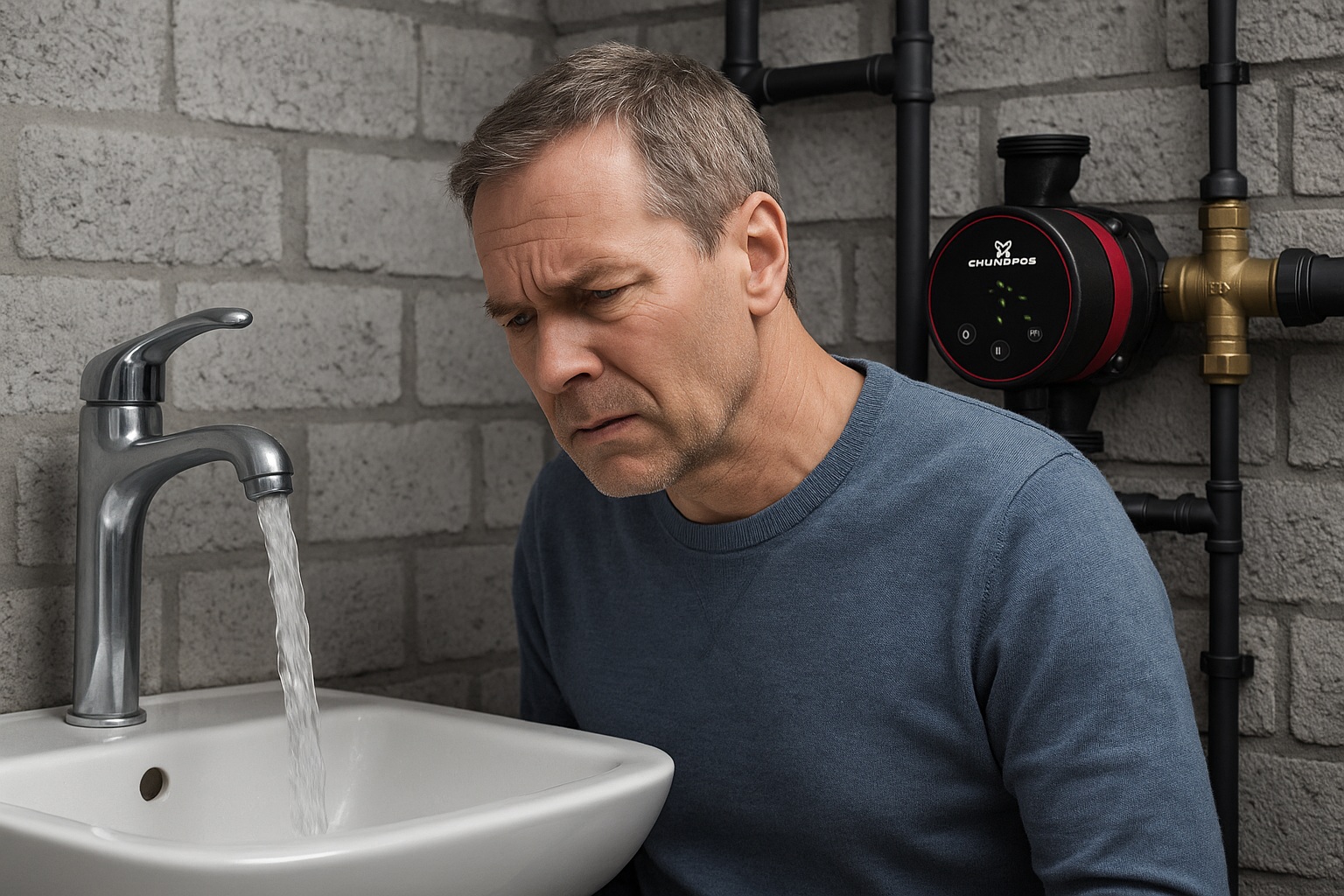
Struggling with weak, fluctuating water pressure?
It's a common frustration in homes and businesses.
Modern pump technology offers a perfect, silent solution.
Grundfos is the world's largest water pump manufacturer.
The Denmark-based company produces over 16 million pump units annually for residential, commercial, and industrial use.
It employs more than 19,000 people and has a presence in over 130 countries, making it a true global leader in the industry.
While knowing the largest manufacturer is useful, it's just the starting point.
The real question for homeowners and professionals is about performance and reliability.
What truly defines a superior water pump in today's market?
The answer lies not just in size, but in the advanced technology inside the pump itself.
Let's explore the technical features that separate ordinary pumps from the truly exceptional ones.
A Comprehensive Insight into Advanced Booster Pump Technology
Are you tired of pumps that are noisy, inefficient, and unreliable?
Many systems fail to deliver consistent pressure.
They often lead to high energy bills and frequent maintenance headaches.
A modern booster pump, from a professional engineering viewpoint, is a highly advanced system.
It prioritizes performance, durability, smart operation, and user safety.
This is achieved through high-grade materials, robust electronic protections, and a sophisticated, user-focused control system.
A deep dive into the technical details reveals what makes these pumps stand out.
We will deconstruct the key attributes that define a top-tier product.
This analysis is based on the design philosophy of leading-edge pump systems.
It’s about understanding the synergy between mechanics, electronics, and smart controls.
Core Drive Technology and Performance
The heart of any modern booster pump is its drive system.
This technology dictates efficiency, noise level, and pressure control.
The most advanced systems use a Permanent Magnet Synchronous Motor (PMSM).
This motor works together with a Variable Frequency Drive (VFD).
This combination is the foundation for delivering constant, stable water pressure.
It virtually eliminates the annoying fluctuations common with older pump models.
The synergy between the PMSM and VFD controller creates exceptionally quiet performance.
Noise levels can be as low as 50 decibels, which is quieter than a typical library.
This makes them ideal for installation in residential properties where noise is a major concern.
Beyond being quiet, these systems offer incredible control.
They allow for precise pressure customization.
Users can adjust the pressure within a wide range, often from 20% to 95% of the pump's maximum capability.
This flexibility caters to a vast array of different application needs, from a small home to a light commercial building.
Another critical feature is the soft start and soft stop function.
This function is essential for the mechanical health and longevity of the pump.
It gradually ramps the motor speed up and down during on/off cycles.
This process significantly reduces mechanical stress on all pump components.
It also helps to prevent a phenomenon known as hydraulic shock, or "water hammer," in the plumbing system.
Water hammer can damage pipes and fittings over time, so this feature provides crucial protection for the entire water system.
Excellence in Mechanical and Material Engineering
The long-term reliability of a water pump depends heavily on its construction.
A commitment to quality is shown through the careful selection of internal components.
Each part should be chosen for both high performance and a long service life.
Let's look at the specific materials and engineering choices that define a premium pump.
Advanced Stator and Rotor Design
The stator is a key motor component engineered for efficiency and durability.
- 600-Grade Silicon Steel: This material is used to enhance motor efficiency by reducing electrical core losses.
- Low Temperature Rise (≤50K): This indicates superior thermal management, which directly contributes to a longer operational lifespan for the motor.
- Class F Insulation Wire: This wire provides high thermal resistance, ensuring the motor can operate reliably even under demanding, high-heat conditions.
- Dual Insulation: This is a vital safety feature that enhances protection against potential electrical faults.
The motor's rotor is equally important.
Advanced designs use a high-performance ferrite magnet.
This magnet can withstand high temperatures, often up to 150°C, without demagnetization.
This ensures the motor maintains its power and efficiency over its entire life.
Some systems also offer an optional EMC+PFC configuration.
This addition ensures electromagnetic compatibility and power factor correction.
These features are essential for meeting strict international electrical standards.
Premium Mechanical Components
The quality of a pump is often revealed in its smaller, critical parts.
| Component | Material/Type | Advantage |
|---|---|---|
| Bearings | NSK/C&U | 16% higher precision, 40% quieter, 11% longer lifespan. |
| Impeller | AISI304 Stainless Steel | Excellent corrosion resistance and durability in the hydraulic core. |
| Housing | UV-Resistant ABS | Protects the exterior from environmental damage and sun exposure. |
Using high-quality bearings from reputable manufacturers is a critical detail.
They are a clear indicator of a manufacturer's focus on long-term reliability.
Similarly, the impeller is the hydraulic heart of the pump.
Using AISI304 stainless steel ensures it can handleต่างๆ kinds of water quality without corroding or wearing out prematurely.
This focus on superior materials ensures the pump's mechanical integrity for years to come.
Uncompromising Electronic Reliability
Are you worried about a pump's electronics failing due to moisture or dust?
This is a common failure point in damp environments.
A simple plastic cover often isn't enough to protect sensitive circuit boards.
The most significant design choice for long-term electronic reliability is full PCB potting.
This process involves completely sealing the main controller board in a waterproof compound.
It creates an IP67-rated barrier, making the electronics immune to moisture, dust, and condensation.
The most advanced and reliable pumps go to great lengths to protect their electronic brains.
The harsh, damp environment where pumps operate is the natural enemy of printed circuit boards (PCBs).
Moisture, condensation, and dust can cause short circuits and corrosion, leading to premature failure.
A top-tier solution to this problem is what can be called an "UltraShield" PCB Potting strategy.
The Power of Potting
Potting is a process where the entire PCB, with all its sensitive components, is fully encased in a solid, non-conductive epoxy or urethane compound.
This creates a complete, hermetic seal around the electronics.
This barrier is 100% waterproof and dustproof.
It typically achieves an Ingress Protection rating of IP67 for the core electronics.
An IP67 rating means the component is completely protected against dust and can be submerged in water up to 1 meter deep for 30 minutes without damage.
For a water pump, this level of protection is transformative.
It is estimated to prevent up to 95% of failures that are typically caused by moisture.
By isolating the electronics from the operating environment, this potting feature is projected to extend the controller's lifespan by 3 to 5 years.
This single feature is one of the most powerful indicators of a pump designed for true, long-term reliability.
It shows a deep understanding of real-world failure modes and a commitment to engineering a robust solution.
It moves the electronics from being a vulnerability to being a fortress.
A Comprehensive Suite of Protection Functions
Is your current pump protected from common problems like dry-running or voltage spikes?
Many basic pumps lack the intelligence to protect themselves.
This leads to catastrophic failures and expensive replacements.
An intelligent pump's brain resides in its comprehensive protection system.
This system actively monitors an array of conditions to safeguard the unit against faults.
Key protections include monitoring for electrical, thermal, and hydraulic issues, ensuring the pump operates safely and reliably.
A truly smart pump is defined by its ability to self-diagnose and self-protect.
The most advanced systems feature a suite of a dozen or more automatic protection functions.
This "digital shield" actively monitors dozens of parameters in real-time.
It can prevent damage before it occurs, dramatically increasing the pump's lifespan and reliability.
Let's break down these critical safeguards.
Electrical & Thermal Protections
These protections shield the motor and electronics from harmful electrical events and overheating.
- Input Voltage Protection: The pump automatically shuts down if the incoming voltage is too high or too low, protecting the motor from damage.
- Overcurrent Protection: If the motor draws too much current, the system stops to prevent a burnout.
- Phase Loss Protection: In three-phase models, this prevents damage if one of the power phases is lost.
- Stall Protection: If the impeller is blocked and cannot turn, the pump shuts off to prevent motor damage.
- Driver Board Overheating Protection: A sensor on the PCB monitors its own temperature and will shut down if it gets too hot.
System & Sensor Protections
These functions protect the pump from hydraulic issues and sensor failures.
One of the most critical is a smart dry-run protection system.
Running without water is one of the fastest ways to destroy a pump.
An intelligent system uses a multi-stage recovery algorithm.
| Detection Count | Action | Sleep / Wait Period |
|---|---|---|
| First Dry Run | Attempt self-priming (360s) | 5 minutes |
| 2nd - 4th Dry Run | Stop and wait | 2 hours |
| 5th+ Dry Run | Stop and wait | 6 hours |
This smart approach conserves energy while periodically checking if the water supply has returned.
Other key system protections include:
- Antifreeze Protection: In cold climates, the pump will automatically run for a few seconds if the water temperature drops near freezing, preventing ice from forming and damaging the pump.
- Pipeline Leak Warning: The pump's logic can detect a small, persistent drop in pressure, indicating a leak in the plumbing system, and will alert the user.
- Sensor Failure Warnings: The system self-diagnoses its own sensors and provides specific error codes if the pressure sensor or a temperature sensor fails.
Intuitive User Interface and Real-Time Monitoring
Are you intimidated by complex pump controls and confusing displays?
Many powerful devices are hard to operate.
Users need a system that is both powerful and easy to manage.
Despite its internal complexity, an advanced pump is designed for simple operation.
A clear interface with just a few buttons and distinct LED indicators makes it user-friendly.
This allows for easy pressure adjustment, status checks, and access to deep-level data without needing a manual.
Advanced technology is useless if it's too complicated for the average person to use.
The best-engineered pumps balance sophisticated internal workings with a simple, intuitive user interface.
The goal is to give the user complete control and insight without causing confusion.
Simple, Direct Controls
A well-designed control panel typically features only a few buttons for all primary functions.
- Power On/Off: A single, short press of the power button toggles the pump's operation.
- Pressure Adjustment: Simple UP and DOWN buttons allow the user to easily increase or decrease the target water pressure. The change बैकफिल्टर्स immediately.
- Factory Reset: A long press of the power button, usually for 3 seconds, can restore the pump to its original default settings.
This minimalist approach ensures that anyone can operate the pump's basic functions without needing to study a manual.
Live Data Display for Deeper Insight
For more advanced users or technicians, the pump should offer access to its real-time operating data.
A long press of a mode or set button can cycle the digital display through several critical parameters.
This turns the pump into a diagnostic tool for the entire water system.
| Display Code | Parameter Displayed | Unit |
|---|---|---|
| A.xx | Water Temperature | Degrees Celsius |
| P.xxx | Real-Time Power Consumption | Watts |
| xxxx | Motor Speed | RPM (Revolutions Per Minute) |
| U.xxx | Input Voltage | Volts |
| t.xx | PCB Temperature | Degrees Celsius |
| C.xx | Recovery Pressure Setting | Bar/PSI |
This live feedback is invaluable for troubleshooting and optimizing the system.
For example, observing high power consumption (P.xxx) could indicate a problem, while monitoring the input voltage (U.xxx) can diagnose issues with the power grid.
At-a-Glance LED Indicators
In addition to the digital display, a set of clear LED lights provides immediate visual feedback on the pump's status.
These indicators allow a user to understand what the pump is doing from a distance, without needing to press any buttons.
Common indicators include lights for:
- Constant pressure mode is active.
- A pipeline leak has been detected.
- An input voltage fault (too high or low).
- Water shortage (dry-run protection) is active.
- Pump output power level (often a bar graph).
This combination of simple controls, deep data access, and clear indicators makes the pump both user-friendly for homeowners and a powerful tool for professionals.
Conclusion
The best water pump is defined by its intelligent technology.
It combines a quiet, efficient motor with robust materials, total electronic protection, and smart, self-preserving software for unmatched reliability and performance.
FAQs
What is the quietest type of water pump?
Pumps with a Permanent Magnet Synchronous Motor (PMSM) and a Variable Frequency Drive (VFD) are the quietest, often operating below 50 decibels.
What is a VFD booster pump?
A VFD (Variable Frequency Drive) booster pump uses smart technology to adjust its motor speed, maintaining constant water pressure while saving significant energy.
How do I choose a water booster pump?
Consider your required flow rate, pressure needs, and water source. Choose a VFD pump for energy efficiency, quiet operation, and better system protection.
What causes a booster pump to lose pressure?
Pressure loss can be caused by leaks in the plumbing, a faulty pressure switch, a damaged impeller, or incorrect pump settings.
Can a booster pump run continuously?
A VSD/VFD booster pump is designed to run as needed to maintain pressure. Its variable speed operation reduces wear, allowing for long, reliable service life.
How do you protect a water pump from running dry?
Choose a pump with built-in dry-run protection. This feature automatically shuts off the pump when it detects a lack of water, preventing motor burnout.
What is a constant pressure water pump system?
This system uses a VFD controller to speed up or slow down the pump, ensuring the water pressure in your pipes remains stable and consistent.