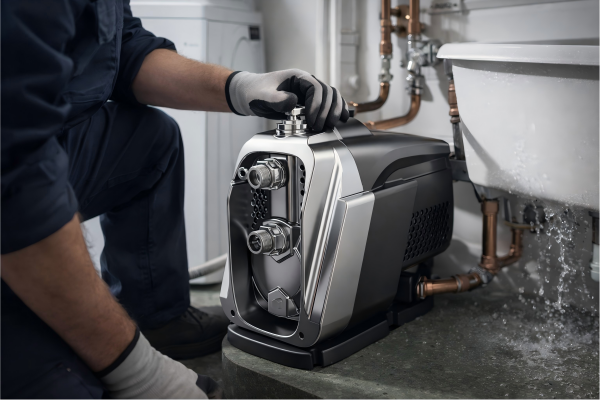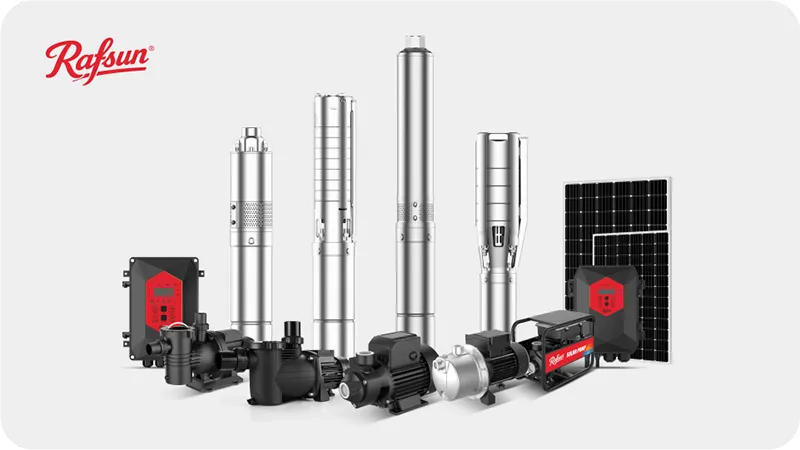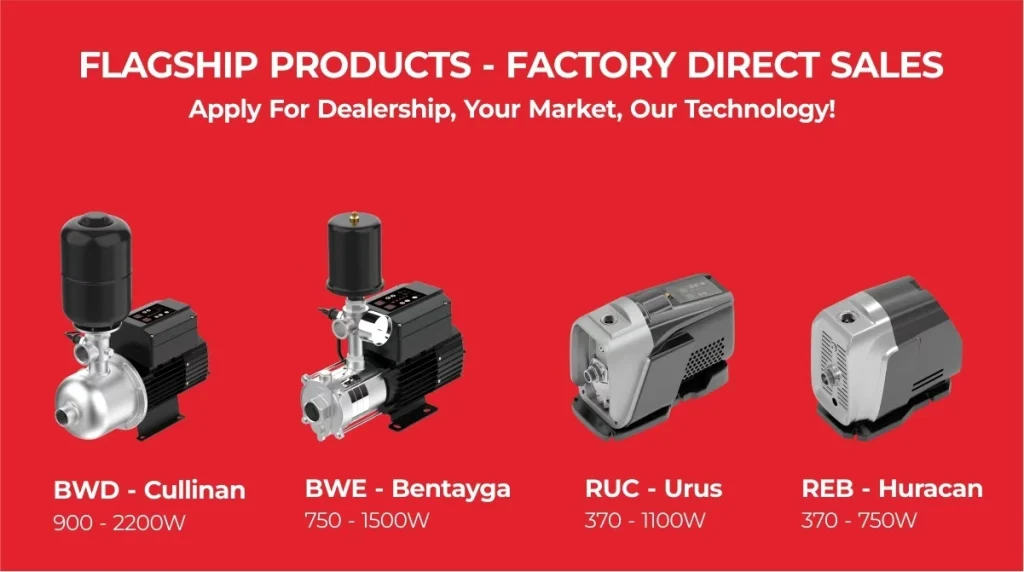
Tired of weak showers and trickling taps?
Low water pressure is a common frustration.
A booster pump is the solution to this annoying problem.
We use a booster pump primarily to increase low water pressure and flow rate in a plumbing system.It provides the necessary force to deliver water effectively to taps, showers, and appliances, ensuring a strong and consistent supply throughout a home, farm, or commercial building.
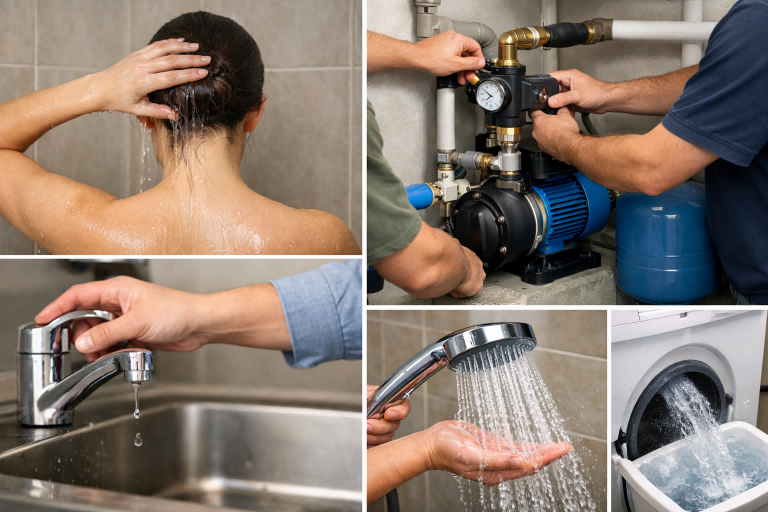
The need for a booster pump stems from a simple problem: the water pressure coming into your property is not strong enough to meet your needs.
This can happen for many reasons, from living in a tall building to being far from the municipal water source, or using a private well.
Regardless of the cause, the result is the same: an unsatisfying and often impractical water experience.
A booster pump is an active solution.
It doesn't just manage the existing pressure; it adds energy to the water system.
By understanding the specific situations that call for this boost, you can see why it's such an essential piece of equipment for millions of people worldwide.
From urban high-rises to remote agricultural operations, these pumps are the key to unlocking functional and efficient water distribution.
To Overcome Insufficient Municipal Water Pressure
Is your top-floor shower just a dribble?
City water pressure often drops in tall buildings or homes far from the main line.
A booster pump restores the strong, consistent flow you need.
For homes and buildings connected to a municipal supply, a booster pump is used to counteract low pressure caused by high elevation (e.g., apartments), distance from the water main, or high-demand periods that strain the city's system, ensuring adequate pressure everywhere.
The most common reason for installing a booster pump in an urban or suburban setting is to fix the shortcomings of the local water supply.
Municipal systems are designed to deliver water over vast areas to thousands of customers.
While they do a remarkable job, they can't always provide perfect pressure to every single tap.
Gravity and friction are the primary enemies.
Water loses pressure as it travels uphill or through long distances of pipe.
If you live in a multi-story apartment building, your unit is essentially at the top of a hill from the perspective of the water main.
Similarly, if your home is one of the last on a long suburban street, the pressure you receive may be significantly lower than what your neighbors closer to the main enjoy.
This is not a system failure, but a simple reality of physics.
A booster pump installed in your home acts as a private relay station.
It takes the incoming, low-pressure water and gives it the kick it needs to travel the final distance to your third-floor bathroom or kitchen sink with vigor.
It solves the "last mile" problem of water delivery, ensuring your home's internal plumbing system has the pressure it was designed for.
Restoring Pressure in Multi-Story Buildings
In any structure taller than a few floors, water pressure becomes a significant challenge.
The municipal supply might provide a healthy 50 PSI at ground level, but for every 2.31 feet the water has to climb, it loses 1 PSI.
For a resident on the 10th floor, roughly 100 feet up, the pressure can drop by over 43 PSI.
This leaves them with a negligible flow that is barely functional.
A booster pump is the standard solution in these scenarios.
Often, a large commercial booster pump system is installed in the building's basement to pressurize the water for all the upper floors.
For individual apartments or townhouses, a smaller, point-of-use booster pump can be installed to solve the problem for a single residence.
Compensating for Distance and High Demand
Even in a single-story home, your distance from the water tower or pumping station matters.
Friction loss occurs as water rubs against the inside of the pipes over long distances.
If you are at the far end of the supply network, you may experience perpetually low pressure.
This situation is often made worse during periods of high community demand, such as in the morning when many people are showering and getting ready for work.
As more taps are opened across the neighborhood, the overall pressure in the main line can drop significantly.
A home booster pump insulates you from these fluctuations.
It ensures that regardless of whether your neighbors are watering their lawns or the city's demand is at its peak, your internal home pressure remains constant and strong.
To Create Pressure from a Private Water Source
Using a private well or rainwater tank?
These sources have no natural pressure.
A pump is essential to not only lift the water but also to pressurize it for your home or farm.
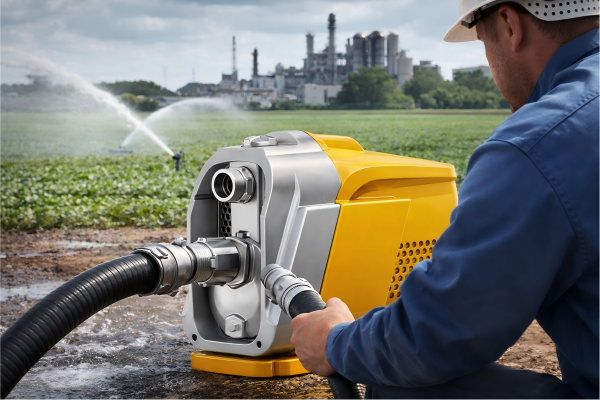
**When using a private water source like a well, spring, or tank, a pump is used to both lift the water and create the necessary pressure for distribution.
In this role, the pump functions as the primary "booster" for the entire off-grid water system.**
When you move away from municipal water, the entire responsibility for water pressure falls on you.
A well, a lake, or a rainwater harvesting tank are simply reservoirs of water at rest.
To make this water useful, you need to add energy to it.
This is a fundamental reason we use pumps.
They convert electrical energy into hydraulic energy, giving the water the momentum it needs to flow through pipes, out of taps, and into irrigation systems.
In this context, the pump you choose does more than just "boost" existing pressure; it creates pressure from scratch.
This makes the selection process absolutely critical.
You need a pump that can handle two distinct jobs: lifting the water from its source (which could be hundreds of feet underground) and then pushing it with enough force to be useful.
The right choice depends entirely on the specific demands of your application, from the depth of your well to the amount of water you need and the quality of the water itself.
Choosing the Right Pump for the Job
The pump's internal design dictates its performance.
There is no single "best" pump, only the best pump for a specific task.
Matching the pump type to the water source and demand is the key to a successful system.
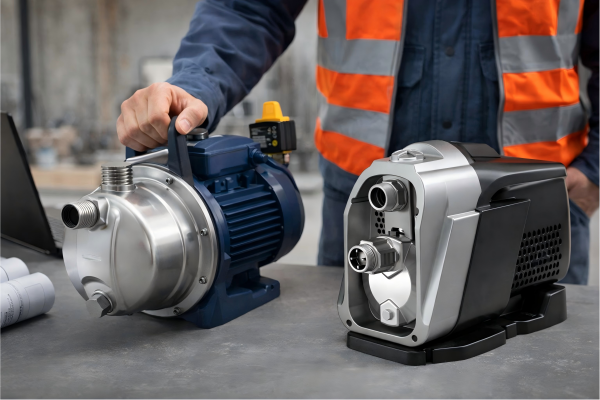
- For Deep Wells and High Lift: When water is very deep underground, you need a pump that specializes in creating a high head (pressure). A solar screw pump is ideal for this. It uses a helical rotor to push water upwards with immense force. While its flow rate may be lower, its ability to lift water from depths of 100 meters or more is its primary advantage.
- For High Volume and Irrigation: When the goal is to move a large amount of water, such as for irrigating a farm or watering livestock, a high flow rate is more important than extreme pressure. A multi-stage centrifugal pump, such as a solar plastic impeller pump, is perfect. Its impellers are designed to move large volumes of water efficiently at a moderate head.
- For Challenging Water Quality: Water is not always pure. It can be acidic or alkaline, which can destroy a standard pump. In these corrosive environments, a solar stainless steel impeller pump is necessary. The SS304 stainless steel construction resists corrosion, ensuring a long service life even in harsh water conditions.
Comparing Pump Types for Private Systems
Making the wrong choice can lead to poor performance or premature pump failure.
The table below illustrates how different pump designs are suited for different private water system needs.
| Feature / Application | Solar Screw Pump | Solar Plastic Impeller Pump | Solar Stainless Steel Impeller Pump |
|---|---|---|---|
| Primary Strength | High Head (Pressure) | High Flow (Volume) | Corrosion Resistance |
| Ideal Water Source | Very Deep Wells | Shallow Wells, Ponds, Tanks | Wells with Acidic/Alkaline Water |
| Best For | Domestic water, Livestock | Farm irrigation, Pastures | High-end homes, Harsh environments |
| Key Limitation | Lower Flow Rate | Lower Corrosion Resistance | Higher Initial Cost |
To Improve System Efficiency and Reduce Costs
Think running a pump is expensive?
Inefficient older motors can waste over 30% of their energy.
Modern pumps with advanced motors dramatically cut electricity costs and improve performance.
**A key reason to use a modern booster pump is to achieve high operational efficiency.
By utilizing advanced technologies like Brushless DC (BLDC) motors, these pumps can deliver superior water pressure while consuming significantly less energy, leading to lower electricity bills.**
Using a booster pump isn't just about getting more pressure; it's also about getting that pressure in the most intelligent and cost-effective way possible.
An old, inefficient pump can be a major drain on your electricity budget, turning the solution to one problem into another.
The motor is the heart of any pump, and it's the single biggest factor in determining its energy consumption.
Traditional AC induction motors or older brushed DC motors can have efficiencies as low as 60-70%.
This means up to a third of the electricity you pay for is wasted as heat, not used to move water.
This is a massive hidden cost over the life of the pump.
This is why the advancement in motor technology is so crucial.
The goal is to maximize the conversion of electrical power into water power.
A modern, high-quality booster pump is chosen specifically for its ability to do this job with minimal waste.
This efficiency not only saves money month after month but also has significant benefits for the overall design and cost of the water system, especially when powered by solar energy.
The Power of a High-Efficiency Motor
The technological leap from older motors to modern Brushless DC (BLDC) permanent magnet motors is a game-changer for pump efficiency.
These advanced motors are the core of today's premium pump systems.
- Superior Efficiency: BLDC motors consistently achieve efficiencies of over 90%. This 20-30% improvement over older motors translates directly into lower operating costs. Over a decade of operation, this can add up to savings that exceed the initial cost of the pump.
- Compact and Powerful Design: These motors leverage powerful materials like neodymium iron boron magnets. This allows them to be significantly smaller and lighter than traditional motors while delivering the same or even greater power. A modern BLDC motor can be up to 47% smaller and 39% lighter, which simplifies installation and reduces shipping costs.
- Durability and Low Maintenance: The "brushless" design means there are no brushes to wear out and replace. This results in a maintenance-free motor with a much longer operational lifespan.
The Impact on Solar-Powered Systems
Efficiency becomes even more critical in an off-grid, solar-powered water system.
Solar panels are a major component of the total system cost.
An inefficient pump requires a larger, more expensive solar array to get the same job done.
By using a pump with a high-efficiency BLDC motor, you can power your entire water system with a smaller number of solar panels.
This can reduce the upfront installation cost by a significant margin.
The efficiency of the motor directly impacts the economic viability of a solar pumping solution, making it a more accessible and cost-effective option for agriculture and households in remote, sun-rich regions.
To Ensure a Reliable Water Supply, 24/7
What if your water depends on the sun?
Cloudy days or nighttime could mean no water.
An intelligent hybrid system guarantees you have water whenever you need it, day or night.
**We use a booster pump with an intelligent controller to guarantee a completely reliable, uninterrupted water supply.
By automatically managing power sources, such as switching from solar to the grid, the system provides water 24/7, regardless of weather conditions or time of day.**
For many, particularly in rural or off-grid areas, a water pump is not a convenience—it's a lifeline.
It supplies water for drinking, sanitation, livestock, and crops.
In these situations, reliability is the most important feature of the entire system.
A pump that only works when the sun is shining or when the grid is stable is a system with a critical weakness.
The "why" behind using a sophisticated modern pump system is to eliminate this weakness and create total water security.
This is achieved not just by the pump itself, but by the "brain" that controls it.
A simple pump system has a simple on/off switch.
An intelligent pump system has a controller that can make decisions.
It can monitor its own health, optimize its power usage, and, most importantly, manage multiple power sources to ensure it can run whenever needed.
This transforms the pump from a simple machine into a resilient, autonomous water supply solution.
This level of reliability is essential for critical applications and provides peace of mind for any user who depends on their private water system.
The Problem of Intermittent Power
Solar power is a fantastic, clean, and free energy source, but it has one obvious limitation: it's only available when the sun is out.
A water system that runs purely on DC power from solar panels will shut down at night and will perform poorly on heavily overcast days.
For household use, this is inconvenient.
For critical livestock or irrigation applications, it can be disastrous.
Similarly, a system relying solely on grid power is vulnerable to blackouts and brownouts, which can be common in areas with unstable electrical infrastructure.
The Intelligent Hybrid Solution
To solve the problem of intermittent power, advanced AC/DC hybrid controllers have been developed.
These controllers are designed with inputs for both DC (solar) and AC (grid or generator) power.
This dual-capability is the key to 24/7 reliability.
- Automatic Power Switching: The controller continuously monitors the incoming power sources. When there is sufficient sunlight, it will prioritize using the free DC power from the solar panels. It uses an MPPT (Maximum Power Point Tracking) function to extract the maximum possible energy.
- Hybrid Power Blending: If solar power starts to fade on a cloudy day, the controller doesn't just switch off. It intelligently blends AC power with the available DC power, maximizing the use of free solar energy before drawing fully from the grid.
- Seamless Grid/Generator Takeover: When the sun goes down or if there is no solar input at all, the controller automatically and seamlessly switches over to the AC power source. The pump continues to run without interruption.
This intelligent management ensures that the user gets worry-free water access around the clock while still maximizing the cost savings of solar power whenever it's available.
Conclusion
We use booster pumps to solve low water pressure.
They ensure strong flow for homes, farms, and off-grid systems by providing the necessary power, efficiency, and reliability for any water source.
Frequently Asked Questions
Will a booster pump increase water volume?
No, a booster pump increases water pressure, not volume.
The maximum volume is limited by the size of the pipe supplying the pump.
Where should a booster pump be installed?
It should be installed on the main water line coming into the property, after the water meter but before the line splits to other fixtures.
Does a booster pump use a lot of electricity?
It depends on the motor's efficiency.
Modern pumps with high-efficiency BLDC motors use significantly less electricity than older, less efficient models.
Do I need a plumber to install a booster pump?
Professional installation by a qualified plumber is highly recommended to ensure it is installed safely, correctly, and in compliance with local codes.
How do I know what size booster pump I need?
Sizing depends on your required flow rate and pressure needs.
It's best to consult with a professional to calculate the correct size for your home.
Can a booster pump be too powerful?
Yes.
An oversized pump can create excessive pressure, potentially damaging your pipes, fittings, and appliances.
Proper sizing is crucial.