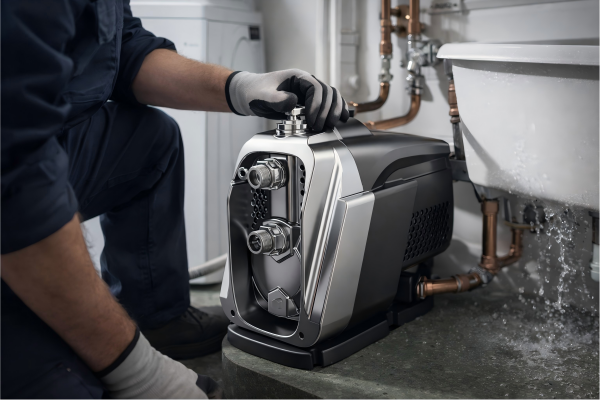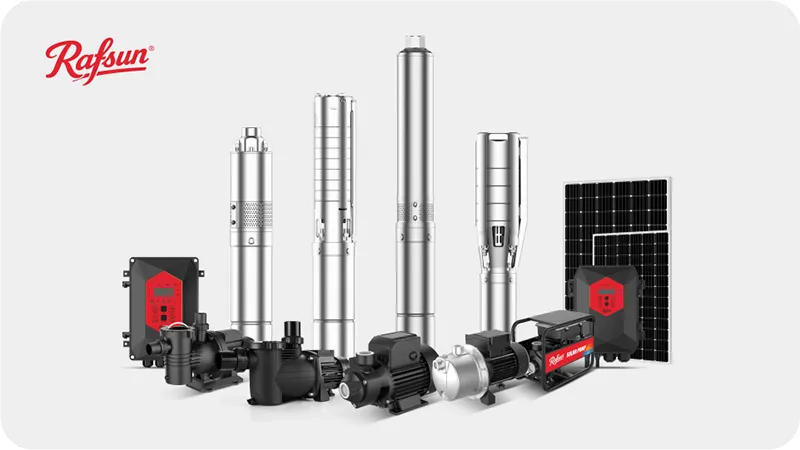
Your pump motor hums, power is flowing, but your pipes are dry.
You're burning electricity and risking serious damage to your equipment with every passing second.
If your pump is working but not circulating water, the most common causes are a loss of prime (air in the system), a clog in the suction line, a leak on the intake side, or an incorrect valve position.
That sound of the motor running is dangerously deceptive.
It creates a false sense of security while a critical failure is happening in real-time.
A pump needs water not just to move, but to survive.
Water acts as the primary coolant and lubricant for the pump's fast-moving internal components.
Without it, friction quickly generates destructive levels of heat.
This can melt the durable impellers of a solar plastic impeller pump or destroy the precise rubber stator in a solar screw pump in under a minute.
Understanding why a pump runs but fails to circulate water is the first step in preventing a simple issue from turning into a costly replacement.
The Prime Directive: Is Your Pump Full of Air?
The motor sounds healthy, yet not a single drop of water appears.
This common problem isn't a motor failure; it's a priming failure.
The pump is spinning air, not water.
Your pump is not circulating water because it has likely lost its prime.
An airlock, or pocket of trapped air inside the pump casing or suction line, prevents the pump from creating the necessary vacuum to draw in and move water.
For most pumps to work, they must be completely filled with water before they are turned on.
This initial charge of water is called the "prime."
The pump uses this water to create a pressure differential, which then pulls more water in from the source.
If air gets into the system, the impeller or screw just spins freely, unable to get a "grip" on the lightweight air to create suction.
This condition, known as an airlock or losing prime, is the single most frequent reason a healthy pump fails to move water.
It’s a simple problem with a potentially devastating outcome if not corrected immediately.
Understanding How Pumps Lose Prime
A pump can lose its prime for several reasons, all of which involve air entering the suction side of the system.
Even a tiny amount of air can break the vacuum and stop the flow.
- Initial Installation: A pump that was not filled with water (primed) before its first use will never be able to start pumping.
- Leaks in the Suction Line: The most common culprit. A small crack in the intake pipe or a loose fitting on a hose clamp can suck in air instead of water because the suction line is under negative pressure.
- Low Water Levels: If the water level in the well, tank, or sump drops below the intake point, the pump will begin to draw in air.
- Off-Gassing: In some cases, dissolved gases in the water can come out of the solution within the low-pressure suction line, creating air pockets that accumulate in the pump.
The Correct Priming Procedure
Priming is the process of manually filling the pump and suction line with water to purge all the air.
While the specifics can vary, the general steps are universal.
- Turn Off All Power: Never attempt to work on a pump while it is connected to a power source. Disconnect it completely.
- Open Air Vents: Open any air bleed valves or plugs on the top of the pump casing or on the discharge piping to allow trapped air to escape.
- Fill the Pump: Locate the priming port, which is usually a plug on the top of the pump casing. Slowly pour water into this port until the casing is completely full and water flows out of the air vents.
- Seal the System: Close and tighten the priming port and any air vents.
- Restore Power and Test: Turn the pump back on. It should now build pressure and begin circulating water within 30-60 seconds.
If the pump loses prime again shortly after, it confirms you have an air leak somewhere on the suction side that must be located and sealed.
How Modern Technology Mitigates Priming Issues
Modern solar pump systems an intelligent BLDC permanent magnet motor and an MPPT controller offer a crucial layer of protection.
The controller can detect the tell-tale signs of a pump running without load.
It recognizes that the power draw (wattage) is abnormally low because the motor is just spinning air.
This triggers a "dry-run protection" feature, which automatically shuts the pump down, preventing it from burning itself out while the owner investigates the cause of the lost prime.
Investigating the Intake: Suction Side Blockages and Leaks
You've primed the pump multiple times, but it keeps losing prime.
The problem isn't the pump itself.
The issue lies in the path the water takes to get to the pump.
If your pump loses prime repeatedly, you have a leak in your suction line or a blockage at the intake.
Even a pinhole leak can draw in enough air to stop circulation, while a clogged foot valve will starve the pump of water.
A pump can only output what it can take in.
The suction line is the most critical and also the most vulnerable part of any pumping system.
Unlike the discharge side, which is under pressure, the suction side is under a vacuum.
This means that any imperfection, whether it's a small crack or a loose fitting, will not leak water out; it will suck air in.
Similarly, any debris that blocks the intake screen or foot valve will effectively starve the pump, preventing it from getting the water it needs to function.
Solving a recurring circulation problem almost always begins with a meticulous inspection of the entire suction line, from the intake screen all the way to the pump's inlet port.
The Hunt for Air Leaks
Finding an air leak on a suction line can be tricky because it won't be visibly dripping.
You are looking for the source of an invisible air intrusion.
- Check All Fittings: Start at the pump and work your way back. Ensure every threaded fitting is sealed with plumber's tape or sealant and every hose clamp is tight.
- Inspect the Pipe: Carefully examine the entire length of the suction pipe or hose for any cracks, splits, or abrasions, paying close attention to bends and connection points.
- The Shaving Cream Trick: For surface pumps, you can apply shaving cream over suspect fittings while the pump is running. If there's a leak, the vacuum will suck the shaving cream into the fitting, revealing the problem area.
Clearing Intake Blockages
A blockage on the intake is another common reason a pump will fail to circulate water or will produce very low flow.
The pump is essentially trying to suck through a clogged straw.
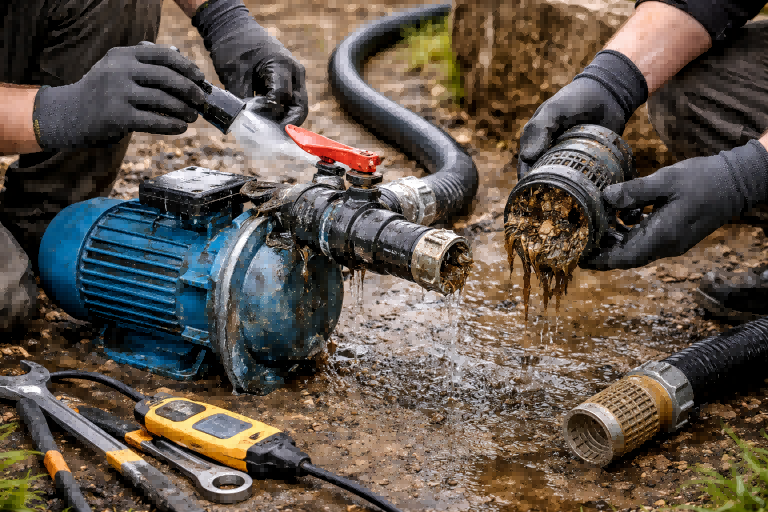
- Foot Valve/Strainer: Most suction lines end with a foot valve (a one-way valve that keeps water in the line) and a strainer screen. These are common places for leaves, sediment, sand, or other debris to accumulate. They must be pulled from the water source and cleaned thoroughly.
- Pipe Obstructions: In rare cases, an obstruction can become lodged inside the suction pipe itself.
The type of pump you have influences its sensitivity to debris.
A solar screw pump is highly resistant to sand and silt, making it ideal for wells in Africa and Latin America.
However, a high-flow solar plastic impeller pump, while excellent at handling fine sand, can still be stopped by larger organic debris like leaves or weeds wrapping around its intake screen.
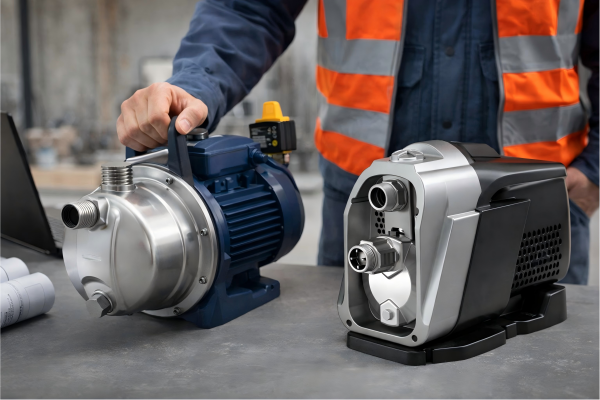
A premium solar stainless steel impeller pump has the same vulnerabilities to intake blockages, underscoring that a clean, well-maintained intake is essential for any pump type.
| Problem Symptom | Likely Suction-Side Cause | Recommended Action |
|---|---|---|
| Pump runs, never builds pressure | Initial prime lost due to large air leak | Inspect all pipe connections and seal them. |
| Pump works for a few minutes, then stops | Small air leak or dropping water level | Check fittings, verify water source is deep enough. |
| Pump circulates, but at very low flow | Partial blockage of intake screen | Pull suction line and clean foot valve/strainer. |
| Pump is noisy, sounds like gravel | Cavitation due to starved intake | Clean intake screen, check for obstructions in pipe. |
Internal Affairs: A Look Inside the Pump
You've checked for airlocks and confirmed the suction line is clear.
Yet, the water still isn't flowing.
It's time to consider that the problem may be inside the pump itself.
If priming and suction line checks fail, the pump's impeller or internal components may be damaged, worn, or clogged.
A broken impeller will spin without moving water, while a clogged one will severely restrict flow, both resulting in no circulation.
When all external factors have been eliminated, the investigation must turn to the heart of the pump: the water-moving mechanism.
This could be the impeller in a centrifugal pump or the screw rotor and stator in a progressing cavity pump.
Although these components are designed for durability, they are not indestructible.
Running the pump dry, pumping highly abrasive materials, or simple long-term wear can lead to damage that renders the pump unable to build pressure.
The motor might be turning the shaft perfectly, but if the component at the end of that shaft is compromised, no work gets done.
This is when a physical inspection becomes necessary.
Diagnosing a Damaged Impeller
The impeller is a rotating disc with vanes that fling water outward, creating pressure.
For high-flow pumps like solar plastic impeller and solar stainless steel impeller models, the impeller is the single most critical component.
-
Clogged Impeller: Sometimes, stringy debris or small stones can get past the intake screen and become lodged in the impeller vanes. This will completely stop or drastically reduce the pump's ability to move water. The pump will need to be disassembled to clear the obstruction.
-
Worn Impeller: Pumping abrasive materials like sand over a long period can wear down the impeller vanes. As the vanes lose their sharp edges and tight tolerances, the pump's efficiency drops until it can no longer create enough pressure. The impeller must be replaced.
-
Broken Impeller: A severe impact from a large solid or extreme stress from cavitation can crack or break the impeller vanes. In this case, the motor spins the shaft, but the broken impeller cannot move any water. This requires immediate replacement. A premium solar stainless steel impeller pump is far more resistant to abrasive wear and impact damage than a plastic one, making it a better choice for harsh water conditions in places like Australia or the Americas.
Issues with Screw Pumps
A solar screw pump operates on a different principle.
It uses a helical metal rotor spinning inside a flexible rubber stator to form sealed cavities that move water.
-
Worn Stator: The most common failure mode is the wearing out of the rubber stator. As it wears, the seal between the rotor and stator weakens, and the pump loses its ability to push water against high pressure (head). The pump might still move some water at zero pressure but will fail to pump it up from the well.
-
Detached Rotor: In rare cases of extreme stress, the rotor can become detached from the motor shaft. The motor will run, but the rotor will not spin, resulting in zero water flow.
All internal inspections and repairs require turning off the power and carefully disassembling the pump according to the manufacturer's instructions.
This level of diagnosis helps determine whether a simple repair is possible or if a full replacement is more cost-effective.
Conclusion
When your pump runs without circulating water, methodically check for loss of prime, suction side issues like clogs or leaks, and finally, internal pump damage for a quick resolution.
Frequently Asked Questions
Why is my pump running but not pumping?
This is often due to a loss of prime, meaning there is air in the system. Other causes include a clogged intake line or a damaged impeller.
How do you fix a pump that is not pumping?
Start by turning off the power and priming the pump to remove all air. If that fails, inspect and clear the suction line and intake screen for any blockages.
What are the symptoms of a bad water pump?
Symptoms include low water pressure, strange noises like grinding or whining, the motor overheating, or the pump running continuously without shutting off.
How do you prime a pump that won't prime?
If a pump won't hold its prime, it indicates a leak on the suction side. You must find and seal the air leak in the intake pipe or fittings.
Can a pump be damaged by running dry?
Yes, running a pump dry for even a few minutes can cause severe damage due to overheating, potentially melting seals and plastic components or seizing the motor.
What happens if a pump is air-locked?
An air-locked pump will run but will not be able to create suction or move water. This leads to the motor overheating and can cause permanent damage if not corrected.
How can I tell if my pump is clogged?
A clogged pump will result in very low or no water flow, and the pressure gauge will read much lower than normal. You may also hear unusual straining noises from the motor.
Does a submersible pump need to be primed?
No, a submersible pump does not need to be primed because it operates completely underwater, so its intake and casing are always filled with water.