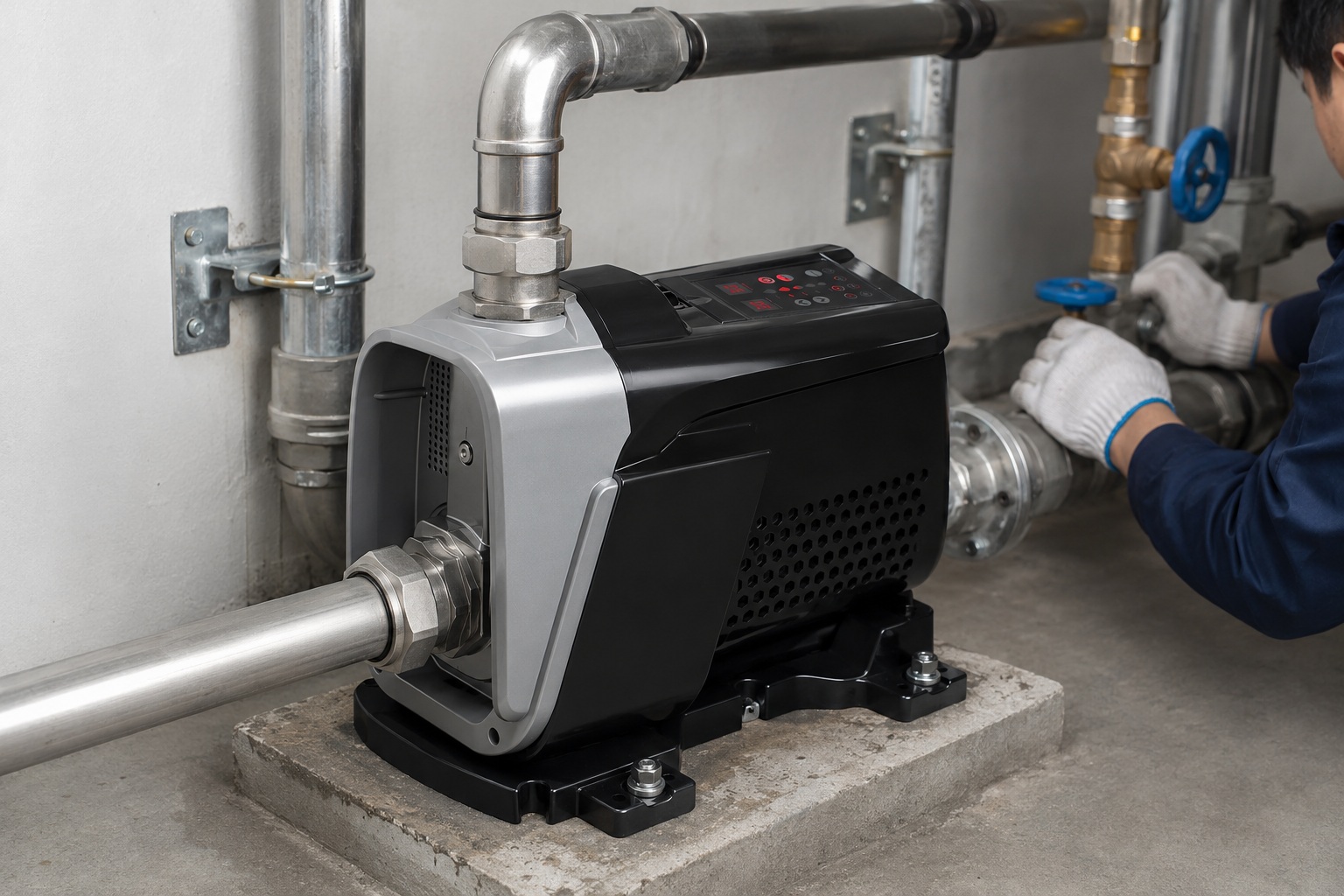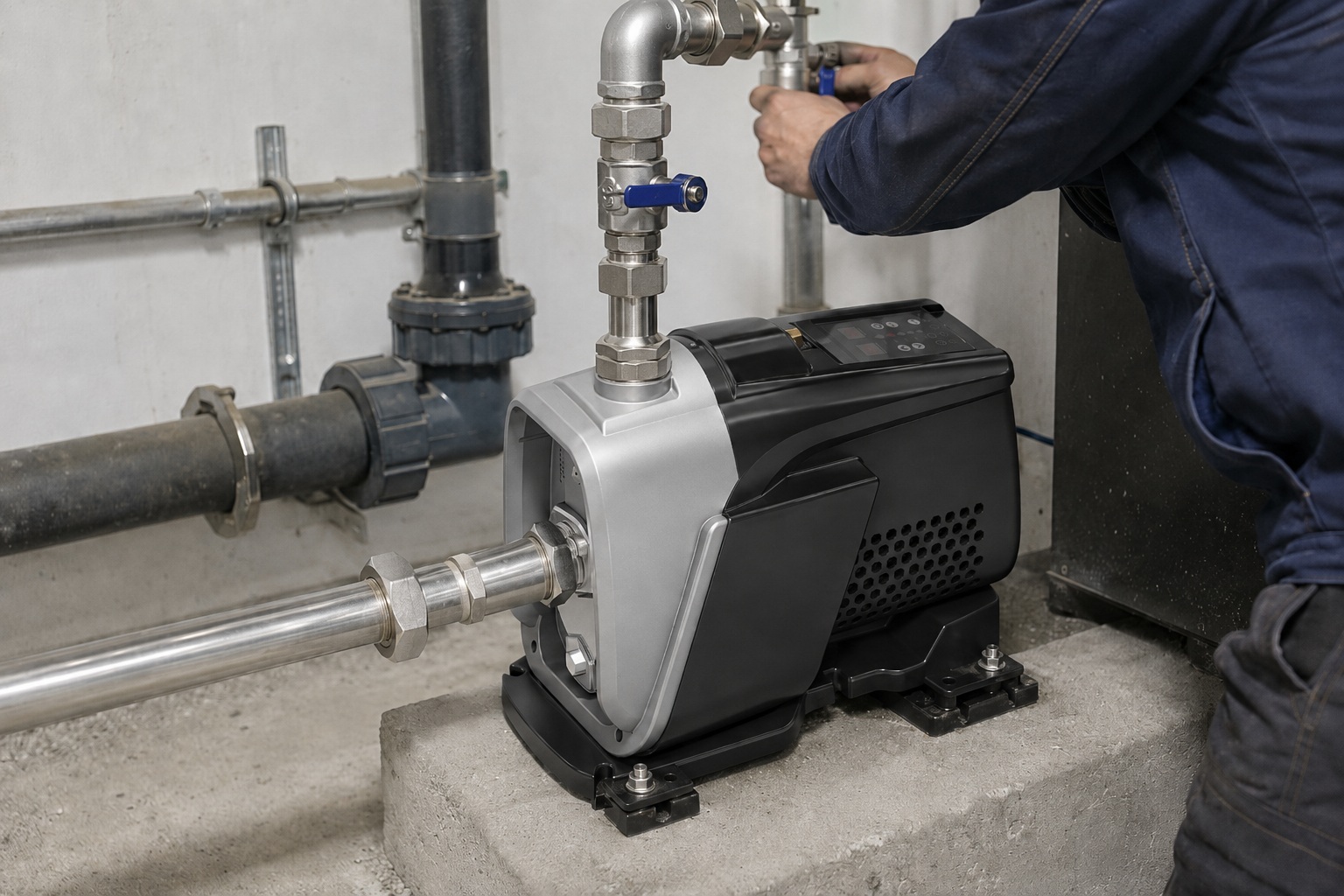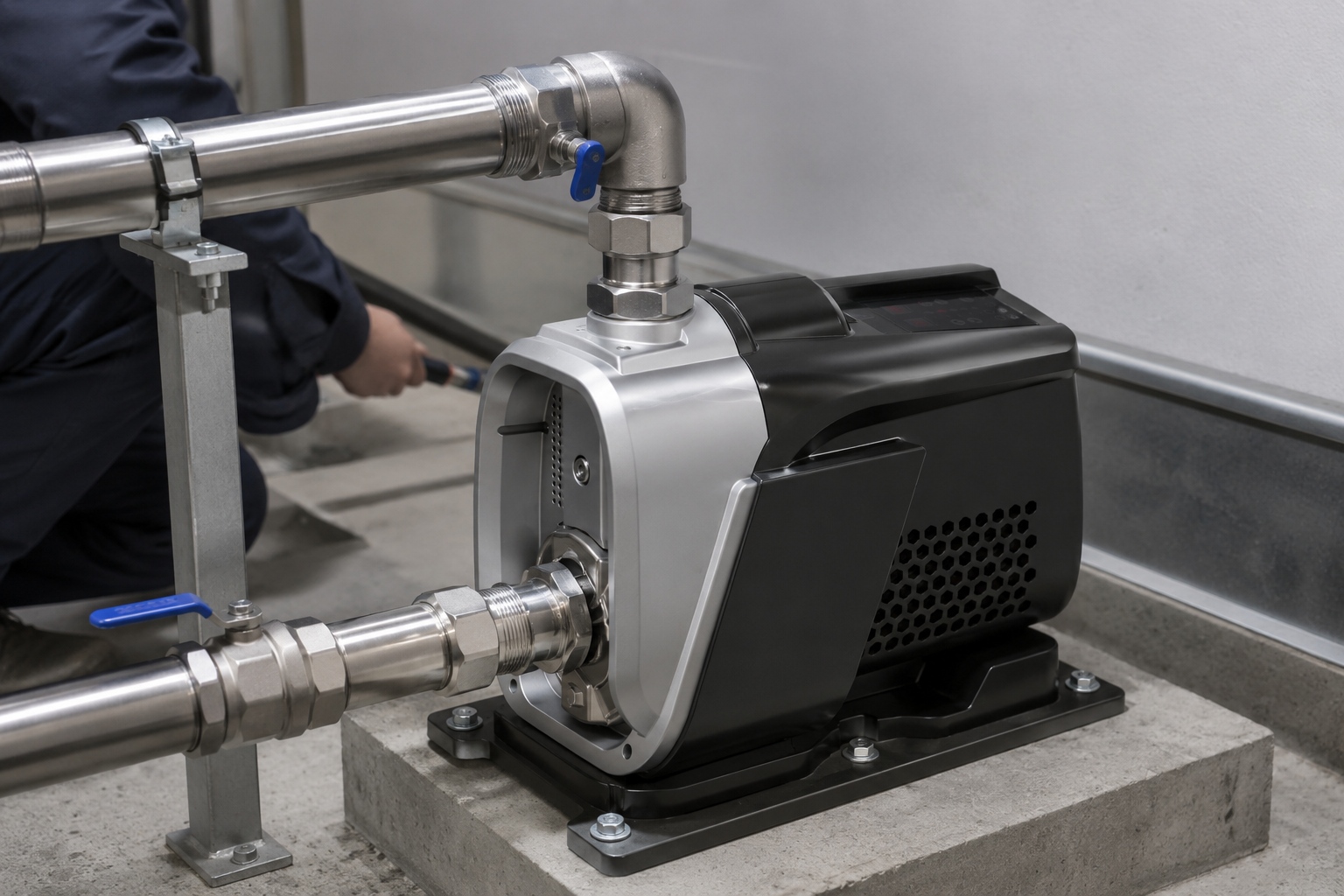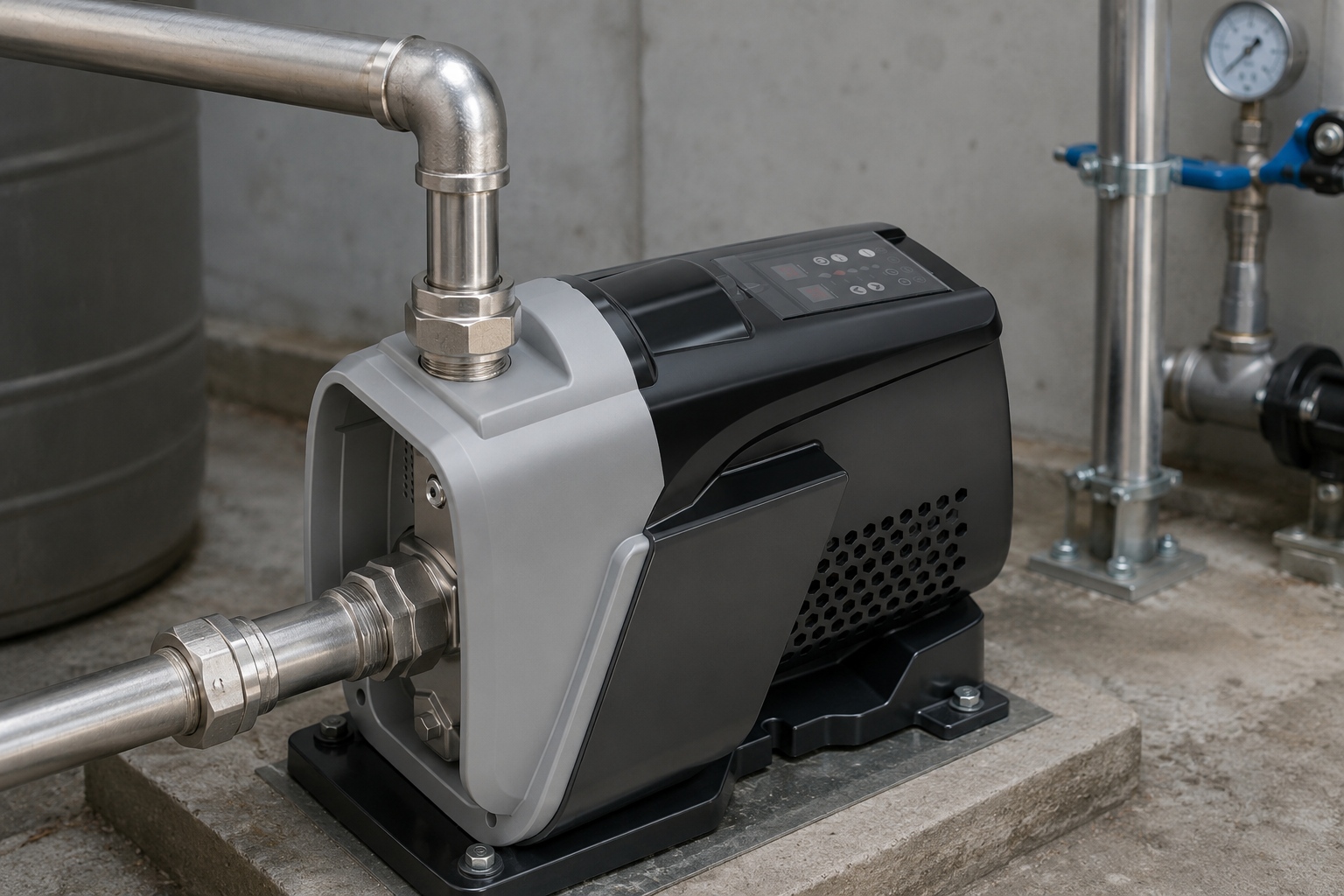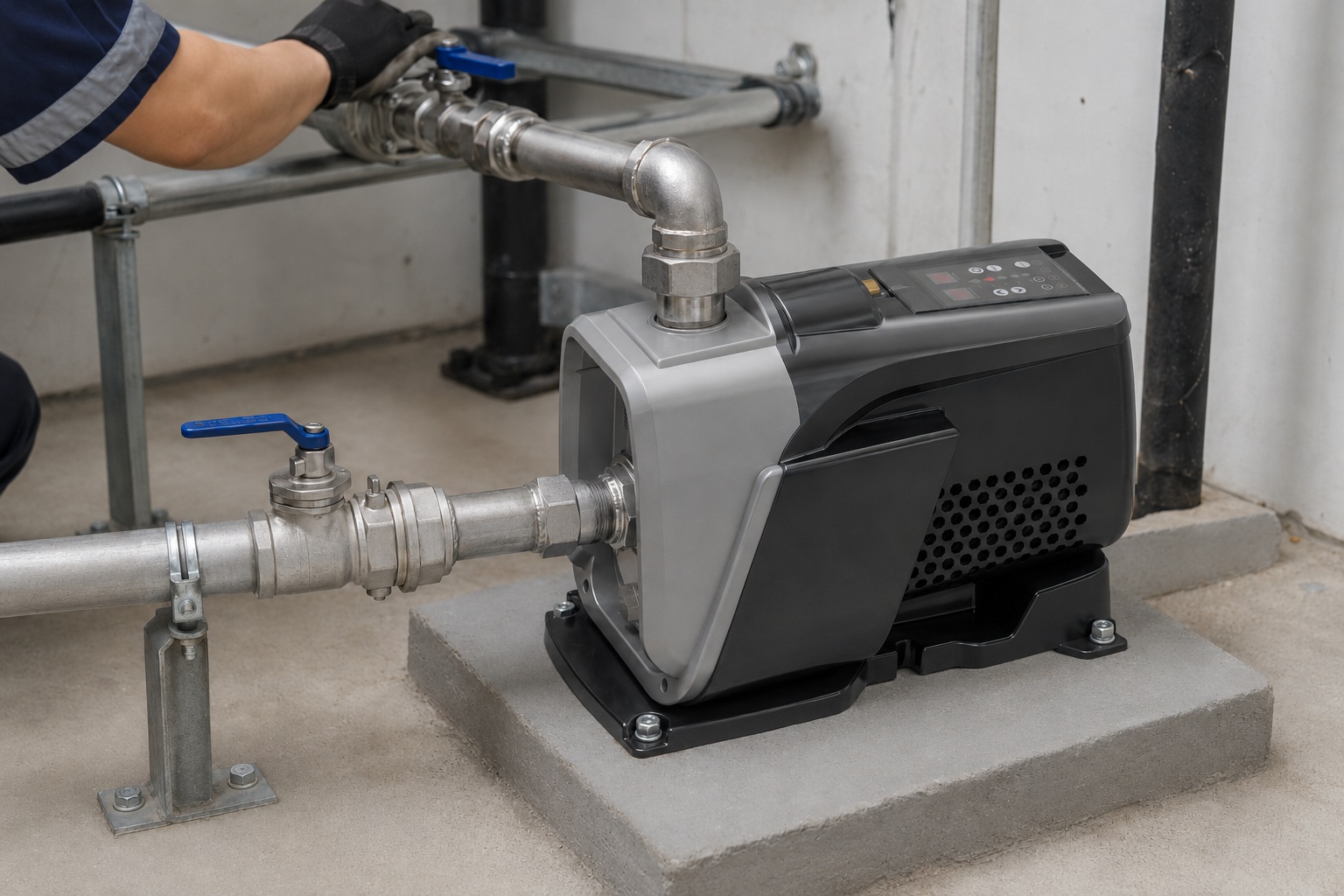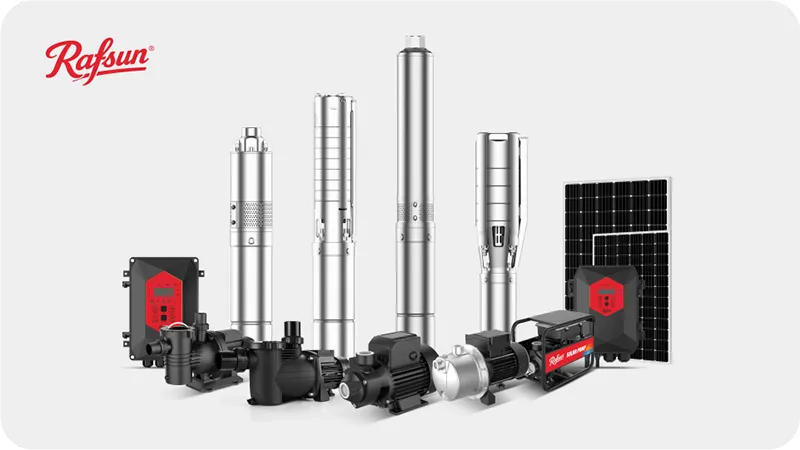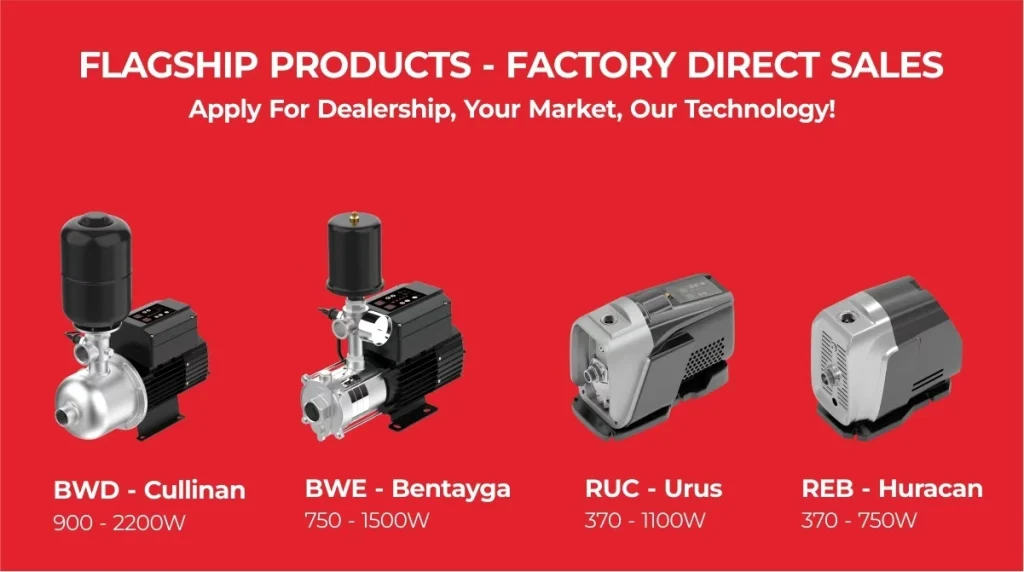
Struggling with high energy costs for your water systems?
These inefficiencies can reduce profitability and lead to customer dissatisfaction.
Choosing the right energy-efficient pump is the key to solving this problem.
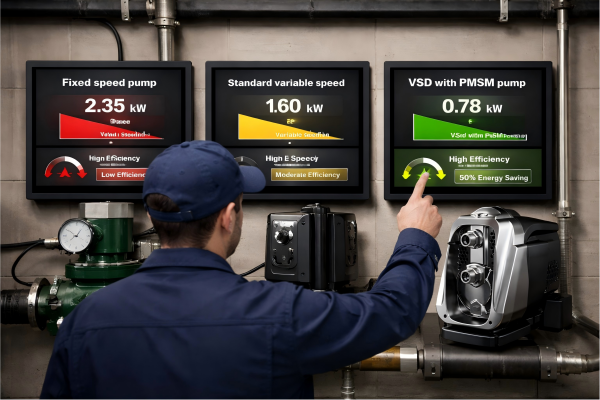
The most energy-efficient pumps are typically those equipped with a Variable Speed Drive (VSD), particularly models using permanent magnet synchronous motors (PMSM).
Their ability to adjust speed to match real-time demand can reduce energy consumption by up to 50% compared to fixed-speed pumps.
Choosing the right pump involves more than just picking a model off a shelf.
It’s about understanding the core principles that govern its performance and energy use.
An inefficient pump not only inflates electricity bills but also increases maintenance costs and shortens its operational life.
For distributors like you, providing customers with energy-efficient solutions is a powerful competitive advantage.
It demonstrates a commitment to quality and long-term value, building trust and securing repeat business.
Let’s dive into the key factors that determine pump efficiency, so you can make informed decisions for your inventory and your clients.
Understanding Pump Efficiency Metrics
Are your clients complaining about unexpectedly high electricity bills?
This often traces back to a pump operating far from its ideal efficiency point.
Understanding key efficiency metrics helps you diagnose these issues and select better products.
The most critical metric is the Best Efficiency Point (BEP).
This is the flow rate and pressure at which a pump operates most efficiently.
Operating a pump at or near its BEP ensures minimal energy waste, reduces vibration, and extends the pump’s lifespan.
To truly grasp pump efficiency, we need to look beyond the nameplate rating.
The BEP is a crucial starting point, but it’s just one piece of the puzzle.
A pump’s performance is shown on its pump curve chart, which graphically represents the relationship between flow rate (Q) and head (H), or pressure.
The efficiency curve is usually overlaid on this chart, peaking at the BEP.
Selecting a pump where the system’s typical duty point aligns with the pump’s BEP is paramount for energy savings.
A mismatch can result in a dramatic drop in efficiency, sometimes by as much as 20-30%.
Breaking Down the Key Metrics
Several other factors contribute to the overall picture of pump efficiency.
Understanding these allows for a more detailed comparison between different models and technologies.
-
Specific Speed (Ns): This is a dimensionless index number used to classify pump impellers by their type and proportions. It helps predict a pump’s performance characteristics and select the most suitable pump geometry for a specific application. A lower specific speed is typical for high-head, low-flow pumps, while a higher specific speed indicates a low-head, high-flow pump.
-
Motor Efficiency: The pump itself is only half the equation. The electric motor driving it has its own efficiency rating. Modern motors, especially permanent magnet synchronous motors (PMSMs), offer significantly higher efficiency (often over 90%) compared to traditional asynchronous motors. This directly translates to lower overall energy consumption.
-
Wire-to-Water Efficiency: This is the most comprehensive metric. It measures the overall efficiency of the entire pumping system, from the electrical input ("wire") to the hydraulic output ("water"). It accounts for losses in the motor, the drive (if applicable), and the pump’s hydraulic components.
A holistic view is essential.
A highly efficient pump paired with an inefficient motor or used in the wrong application will still result in a wasteful system.
| Metric | What It Measures | Why It Matters | Typical High-Efficiency Range |
|---|---|---|---|
| Best Efficiency Point (BEP) | The point of highest hydraulic efficiency | Guarantees lowest energy use and longest life | 75-92% (for centrifugal pumps) |
| Motor Efficiency | Electrical to mechanical power conversion | Directly impacts overall power consumption | 90-96% (for PMSM/IE4+ motors) |
| Wire-to-Water Efficiency | Overall system efficiency (power in vs. water out) | Provides a true measure of system performance | 50-80% (varies greatly by system) |
By focusing on wire-to-water efficiency, you ensure that you are evaluating the entire package, which is what ultimately determines the operational cost for the end-user.
Centrifugal vs. Positive Displacement: The Efficiency Showdown
Confused about which pump type offers the best efficiency for a specific job?
Choosing the wrong type can lead to poor performance and wasted energy.
Understanding their core differences is key to matching the right pump to the application.
For high-flow, low-viscosity applications, a well-selected centrifugal pump operating near its BEP is highly efficient.
For low-flow, high-pressure, or high-viscosity applications, a positive displacement (PD) pump is generally more energy-efficient as its flow rate is less affected by pressure changes.
The choice between a centrifugal and a positive displacement pump is a fundamental decision in system design.
It dictates not only the initial cost but also the long-term operational efficiency.
Centrifugal pumps are the most common type, using rotational energy from an impeller to move fluids.
They are masters of moving large volumes of thin liquids, like water, at relatively low pressures.
However, their efficiency is highly sensitive to the system’s operating conditions.
If the system pressure increases, the flow from a centrifugal pump decreases significantly, and its efficiency plummets.
Positive displacement pumps, on the other hand, operate by trapping a fixed amount of fluid and forcing it into the discharge pipe.
This mechanism means they deliver a nearly constant flow regardless of the system pressure (head).
This makes them ideal for applications requiring precise dosing or for moving thick, viscous fluids that would bog down a centrifugal pump.
While they may have a higher initial cost, their consistent efficiency across varying pressures can lead to substantial energy savings in the right scenario.
Analyzing Performance Characteristics
Let’s delve deeper into the specific characteristics that define their efficiency in different contexts.
Centrifugal Pump Efficiency Factors
A centrifugal pump’s efficiency is intimately tied to its design and operating point.
- Impeller Design: The shape, size, and number of vanes on the impeller are optimized for a specific range of flow and pressure. Using a pump outside this range is a primary cause of inefficiency.
- Specific Speed (Ns): As mentioned earlier, this determines the impeller’s shape. A radial flow impeller (low Ns) is better for high head, while an axial flow impeller (high Ns) is suited for high flow. Matching Ns to the application is critical.
- Operating Point: The further a centrifugal pump operates from its BEP, the more energy is wasted through internal recirculation, turbulence, and friction. Continuous operation away from the BEP can reduce efficiency by over 25% and cause premature wear.
Positive Displacement Pump Efficiency Factors
PD pumps maintain high efficiency under a wider range of conditions.
- Internal Slippage: The main source of inefficiency in a PD pump is "slip," which is the fluid that leaks from the high-pressure outlet back to the low-pressure inlet. This is more pronounced with lower viscosity fluids.
- Mechanical Friction: As they have more moving parts in contact (gears, lobes, pistons), mechanical friction accounts for a portion of energy loss.
- Pressure Independence: A key advantage is that their efficiency remains relatively flat across a wide pressure range. If an application involves fluctuating discharge pressures, a PD pump will almost always be more efficient than a centrifugal alternative.
| Feature | Centrifugal Pump | Positive Displacement Pump |
|---|---|---|
| Best For | High flow, low pressure, low viscosity fluids | Low flow, high pressure, high viscosity fluids |
| Efficiency vs. Pressure | Highly dependent; drops sharply away from BEP | Relatively constant across a wide pressure range |
| Flow Rate vs. Pressure | Flow decreases as pressure increases | Flow is nearly constant as pressure increases |
| Primary Inefficiency Source | Operating away from BEP, turbulence | Internal slippage, mechanical friction |
Ultimately, selecting the most efficient pump type requires a thorough analysis of the system’s requirements, including fluid properties, flow rate, and the entire range of operating pressures.
The Game-Changer: Variable Speed Drives (VSDs) and Motor Technology
Are your customers still using fixed-speed pumps for variable-demand applications?
This is a massive source of wasted energy, like keeping a car’s accelerator floored and controlling speed with the brake.
Adopting modern drive and motor technology is the single biggest step toward pump efficiency.
A Variable Speed Drive (VSD), also called a Variable Frequency Drive (VFD), dramatically improves efficiency.
By adjusting the pump’s motor speed to precisely match system demand, a VSD can reduce energy consumption by 30-60%, offering a rapid return on investment.
The traditional approach to pump control is archaic and inefficient.
Pumps were often oversized to meet a theoretical maximum demand that rarely occurs.
Control was achieved by throttling valves or bypass lines, which create artificial pressure and waste enormous amounts of energy.
It’s a brute-force method that is simply no longer acceptable in a world focused on energy costs and sustainability.
The introduction of VSDs revolutionized pump system efficiency.
A VSD controls the pump by changing the frequency and voltage of the electricity supplied to the motor.
According to the Pump Affinity Laws, even a small reduction in pump speed leads to a massive reduction in power consumption.
For instance, reducing a pump’s speed by just 20% can result in a power saving of nearly 50%.
This makes VSDs an essential component for any application with fluctuating flow or pressure requirements, such as residential water boosting, HVAC systems, or industrial processes.
The Power of the Motor: Permanent Magnet Technology
The VSD is only part of the modern efficiency equation.
The motor itself has undergone a significant evolution.
For decades, the standard has been the AC asynchronous (or induction) motor.
While reliable, they have inherent efficiency limitations.
The new frontier is the Permanent Magnet Synchronous Motor (PMSM).
Why PMSM is Superior
Permanent magnet motors represent a leap forward in motor design and offer several distinct advantages over their asynchronous counterparts.
- Higher Efficiency: PMSMs do not require electricity to create a magnetic field in the rotor; they use high-strength permanent magnets instead. This eliminates rotor energy losses, making them 5-15% more efficient than even the best induction motors (IE3/IE4 standards).
- Wider Efficiency Range: This high efficiency is maintained across a much broader range of speeds and loads. While an induction motor’s efficiency drops off at lower speeds, a PMSM remains highly efficient, which is perfect when paired with a VSD.
- Higher Power Density: They are smaller and lighter for the same power output. This makes pump units more compact and easier to install.
- Cooler Operation: Due to lower energy losses, PMSMs run cooler. This extends the life of the motor’s windings and bearings, significantly improving reliability and reducing maintenance needs.
| Feature | Asynchronous Motor (IE3) | Permanent Magnet Motor (PMSM/IE5) |
|---|---|---|
| Peak Efficiency | ~91-94% | ~95-97% |
| Efficiency at 50% Speed | Drops significantly | Remains very high |
| Rotor Energy Loss | Yes (induced current) | No (permanent magnets) |
| Size & Weight | Larger and heavier | Smaller and lighter |
| Operating Temperature | Hotter | Cooler |
For businesses focused on providing top-tier, technologically advanced products, pumps integrating VSDs with permanent magnet motors are the clear choice.
They deliver unparalleled energy savings, superior performance, and enhanced reliability—key selling points for discerning customers like Andrew.
System Design: Why the Pump is Only Part of the Equation
Have you ever installed a top-of-the-line, high-efficiency pump only to get poor results?
The problem often isn’t the pump itself, but the system it’s connected to.
A poorly designed system can cripple the performance of even the most advanced pump.
Overall system efficiency depends heavily on factors beyond the pump.
Pipe diameter, length, bends, fittings, and valves all create friction losses (system head).
Minimizing these losses is just as important as selecting an efficient pump for achieving low energy consumption.
Think of your water system as a chain.
The pump is one link, but the chain is only as strong as its weakest link.
You can have a pump with 90% hydraulic efficiency, but if it’s forcing water through undersized pipes with numerous sharp bends, you’re wasting energy to overcome unnecessary friction.
This friction is known as system head, and it’s the resistance the pump must work against.
A well-designed system aims to minimize this head to an absolute minimum.
Every component, from the intake to the point of discharge, must be considered.
Failing to account for the total system effect leads to oversized pumps, throttled valves, and massive energy waste—all of which could have been avoided with better planning during the design phase.
This holistic approach is what separates average installations from truly high-performance, energy-efficient systems.
Optimizing the System for Peak Efficiency
Achieving a highly efficient system requires a methodical approach that analyzes each component’s impact on hydraulic performance.
Key Areas for System Optimization
-
Proper Pipe Sizing: This is perhaps the most critical factor. Using pipes that are too small for the required flow rate dramatically increases friction loss. A general rule is to maintain fluid velocity below 2 m/s (6.5 ft/s). Doubling a pipe’s diameter can reduce friction loss by a factor of 10 or more. While larger pipes have a higher initial cost, the energy savings often provide a payback period of less than two years.
-
Minimizing Bends and Fittings: Every elbow, tee, and valve adds to the system’s total friction. Use sweeping, long-radius bends instead of sharp 90-degree elbows where possible. Eliminate unnecessary fittings and valves. A single sharp elbow can create as much friction as several feet of straight pipe.
-
Correct Valve Selection: Not all valves are created equal. Gate and ball valves, when fully open, create very little friction. Globe valves, used for throttling, create significant friction even when fully open. Choose the right type of valve for the application to minimize pressure drop.
-
Intake and Discharge Design: Ensure the pump’s suction line is short, straight, and properly submerged to prevent vortexing and air entrainment, which can damage the pump and kill efficiency. The discharge piping should be designed to minimize head loss.
| System Component | Poor Design (High Energy Loss) | Good Design (Low Energy Loss) | % Potential Energy Saving |
|---|---|---|---|
| Piping | Undersized, high velocity (>3 m/s) | Properly sized, low velocity (<2 m/s) | 15-25% |
| Bends | Multiple sharp 90° elbows | Sweeping, long-radius bends | 5-10% |
| Valves | Throttling with globe valves for control | VSD for control, fully open gate/ball valves | 20-40% |
| Layout | Complex, long pipe runs | Simple, direct pipe runs | 5-15% |
By educating your clients on these system-level principles, you add value beyond just supplying a product.
You become a partner in helping them build truly efficient and cost-effective water management systems.
Conclusion
To select the most energy-efficient pump, focus on models with VSDs and permanent magnet motors.
Ensure the pump is correctly sized for the application and the entire system is optimized to minimize friction.
Frequently Asked Questions
Which type of pump is the most efficient?
Pumps with Variable Speed Drives (VSDs) and permanent magnet motors offer the highest efficiency, as they adjust speed to match demand, cutting energy use significantly compared to fixed-speed pumps.
How can I reduce my pump’s energy consumption?
The best way is by installing a VSD. Additionally, ensure your pump is correctly sized for the job and that your piping system is designed to minimize friction losses.
What is the power consumption of a 1HP water pump?
A 1HP motor consumes approximately 0.746 kilowatts (kW) per hour. Actual consumption will vary based on the pump’s load, efficiency, and how long it runs each day.
Do bigger pumps use more electricity?
Yes, a larger pump motor will have a higher power rating and use more electricity to operate at full load. However, an oversized pump running inefficiently can waste more energy.
What is the most efficient centrifugal pump?
The most efficient centrifugal pump is one where the system’s normal operating point aligns perfectly with the pump’s Best Efficiency Point (BEP) as shown on its performance curve.
How does a VFD save money on pumps?
A VFD (or VSD) saves money by slowing the pump down when full flow is not needed. Since power usage is proportional to the cube of the speed, small speed reductions lead to large energy savings.
At what percentage of load are motors most efficient?
Most electric motors are most efficient when operating between 75% and 95% of their full rated load. Efficiency drops significantly below 50% load, making proper sizing crucial.
How do I choose an energy-efficient water pump?
Look for pumps with high wire-to-water efficiency ratings. Prioritize models with integrated VSDs and permanent magnet motors, and work with your supplier to ensure it is correctly sized for your system.