Worried about pump failure?
Running a pump dry can cause catastrophic damage, leading to costly repairs and operational downtime.
Understanding why this happens is key to protecting your investment.
No, you should never run a standard centrifugal pump without water, even for a short time.
This practice, known as dry running, will quickly lead to severe damage.
The water acts as a coolant and lubricant for the pump's internal components, especially the mechanical seal.
Without it, overheating and failure are almost certain.
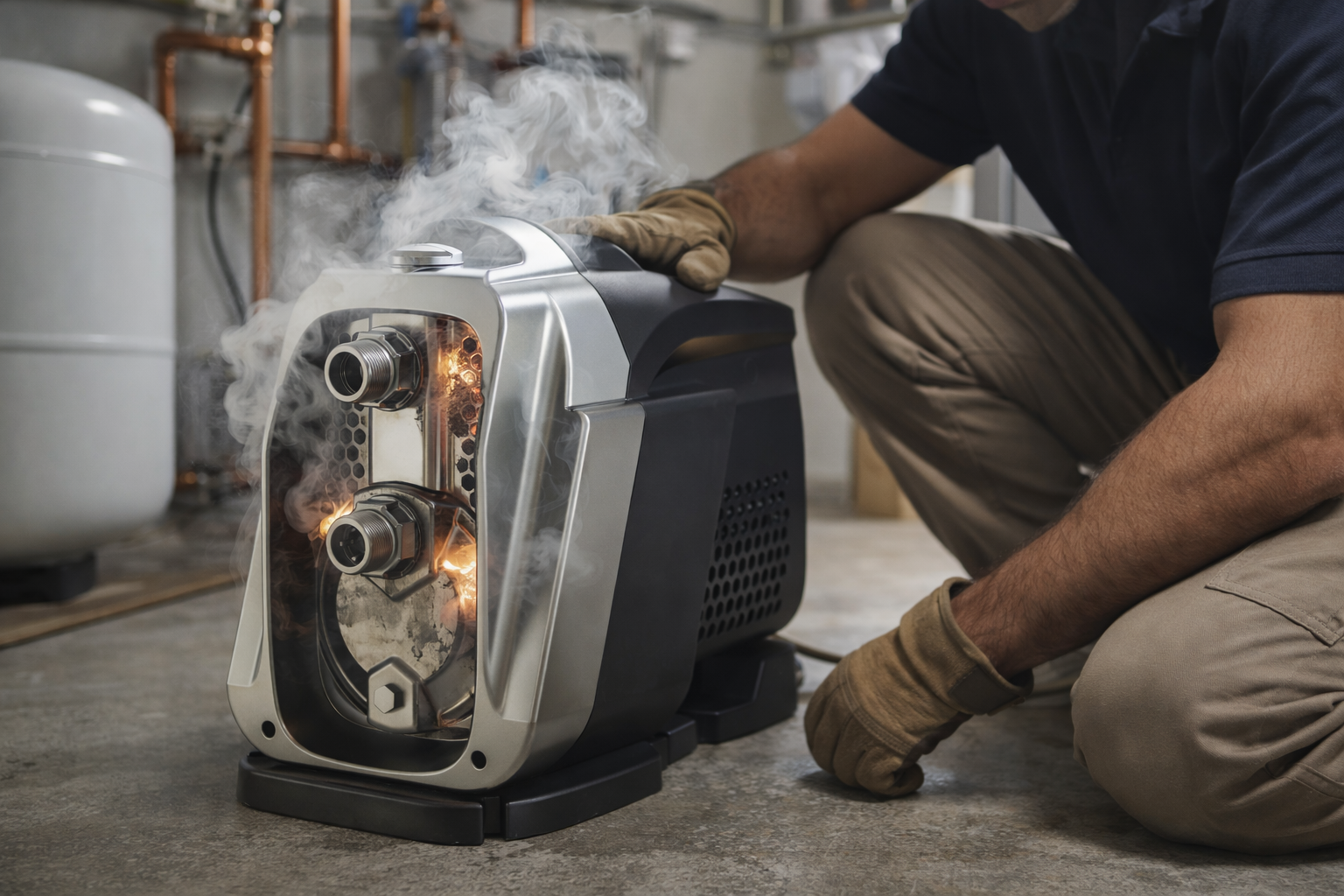
Running a centrifugal pump without water is one of the quickest ways to destroy it.
Many pump operators, both new and experienced, have faced this issue.
The consequences can be immediate and severe, affecting not just the pump but your entire operation.
Let's explore the specific damages that occur and why they happen so quickly.
This knowledge is crucial for anyone responsible for fluid handling systems.
We will break down the mechanics of the failure to help you prevent it.
What Happens Internally During Dry Running?
Your pump is overheating, and you don't know why.
This sudden temperature spike can lead to total pump failure and expensive emergency replacements.
The cause is often dry running, a silent killer for fluid systems.
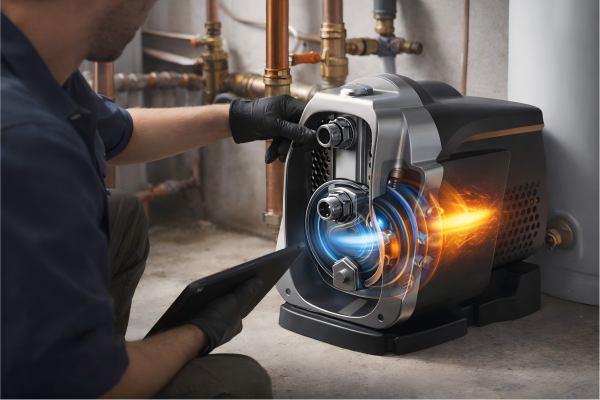
During dry running, the mechanical seal heats up exponentially.
The seal faces, which require a fluid film for lubrication, rub against each other directly.
This friction generates intense heat, often exceeding 200°C (392°F) within seconds, causing them to crack, warp, or shatter completely.
The impeller can also sustain damage.
A centrifugal pump is a precision machine.
Its components work together in a very specific environment.
That environment must include water or the specified fluid.
When the fluid disappears, the system's balance is instantly destroyed.
The primary victim is the mechanical seal.
The Mechanical Seal Failure Cascade
The mechanical seal is arguably the most critical and delicate component.
It prevents water from leaking out along the drive shaft.
It consists of two primary parts: a rotating seal face and a stationary seal face.
In normal operation, a micro-thin layer of fluid separates these two faces.
This fluid film performs two vital jobs.
It lubricates the faces, allowing them to spin against each other with minimal friction.
It also dissipates the heat generated by that minimal friction.
During a dry run, this fluid film vanishes.
The seal faces make direct, hard contact.
The result is a rapid and destructive temperature increase.
Friction generates heat almost instantaneously.
The material of the seal faces, often carbon, ceramic, or silicon carbide, cannot withstand this thermal shock.
They can crack, chip, or even shatter completely.
An estimated 75% of premature pump failures are linked to mechanical seal issues, with dry running being a primary cause.
Once the seal is compromised, catastrophic failure is imminent.
| Component | Normal Operation (with Water) | Dry Running (without Water) | Consequence |
|---|---|---|---|
| Seal Faces | Lubricated by a thin fluid film. | Direct, high-friction contact. | Extreme heat, cracking, shattering. |
| Elastomers | Kept cool and flexible by fluid. | Exposed to high heat, become brittle. | Hardening, cracking, loss of sealing. |
| Impeller | Cooled by flowing fluid. | Heats up from friction and casing heat. | Melting (if plastic), warping, seizure. |
| Pump Casing | Temperature regulated by fluid. | Heats up significantly from internal friction. | Warping, potential for permanent damage. |
Damage to Other Components
The damage doesn't stop at the mechanical seal.
The heat generated can travel throughout the pump.
Elastomers, like O-rings and gaskets, are also vulnerable.
These rubber components will harden and crack when exposed to excessive temperatures, leading to further leaks.
The impeller is also at risk.
While many impellers are made of metal, some applications use thermoplastic impellers.
These can easily melt or warp from the heat, causing a total loss of pumping capability.
Even metal impellers can be damaged if the heat is intense enough to cause bearings to fail, leading to contact with the pump casing.
In severe cases, the entire pump can seize, meaning the rotating assembly locks up and cannot be turned.
This level of damage often requires a complete pump replacement, not just a simple repair.
Why Does Dry Running Occur in the First Place?
Your system pressure has suddenly dropped to zero.
Operations are halted, and you're scrambling to find the cause before production losses mount.
Often, the root problem is an empty tank or a closed valve, which has caused your pump to run dry.
Dry running typically happens due to operational errors or system failures.
Common causes include an empty supply tank, a closed or clogged suction valve, or a suction line that is not fully submerged.
Essentially, any situation that prevents liquid from reaching the pump's inlet can lead to it.
Understanding the "why" is just as important as understanding the "what".
Preventing dry running means identifying the potential failure points in your system.
These issues can often be subtle.
A slow leak in a suction line might not be immediately obvious.
A valve that appears open might be clogged internally.
Let's examine the most common scenarios that lead to a pump being starved of fluid.
By recognizing these risks, you can implement strategies to protect your equipment.
Common Operational and System Failures
Dry running is rarely a spontaneous event.
It is almost always the result of a specific failure or oversight.
Pinpointing these can help create effective prevention protocols.
-
Tank or Sump Emptied: This is the most straightforward cause.
The pump simply runs out of fluid to move.
This can happen if consumption outpaces supply or if level sensors fail. -
Closed Suction Valve: Human error is a major factor.
A valve on the suction side of the pump may be accidentally closed or not fully opened after maintenance.
This effectively blinds the pump from its water source. -
Clogged Suction Line or Strainer: Debris can accumulate in the suction line or block the intake strainer.
This blockage restricts or completely stops flow, starving the pump of liquid even if the tank is full.
This accounts for up to 30% of suction-related issues in industrial settings. -
Air Leak in Suction Piping: Centrifugal pumps are designed to move liquid, not air.
A small leak in the suction line, perhaps from a faulty gasket or a cracked pipe, can allow air to be drawn into the system.
This can cause the pump to lose its prime and begin to run dry.
System Design and Environmental Factors
Sometimes the problem is baked into the system's design.
A poorly designed system can be prone to dry running conditions.
| Design Flaw | Description | Prevention Strategy |
|---|---|---|
| Suction Lift Too High | The vertical distance from the water source to the pump is too great. The pump cannot physically lift the water. | Lower the pump's position or raise the water level. Ensure the NPSHa > NPSHr. |
| Inadequate Priming | The pump casing and suction line are not completely filled with water before startup. | Install priming systems (e.g., foot valves, priming chambers) and verify prime before every start. |
| Vortex Formation | If the water level is too low, a whirlpool (vortex) can form, drawing air into the suction line. | Ensure adequate submergence of the suction pipe. Use vortex breakers. |
Net Positive Suction Head Available (NPSHa) must always be greater than the Net Positive Suction Head Required (NPSHr) by the pump.
If NPSHa falls below NPSHr, the liquid will vaporize inside the pump, a phenomenon called cavitation.
While technically not the same as dry running, cavitation also causes severe damage from collapsing vapor bubbles and can lead to a loss of flow that mimics dry run conditions.
Proper system engineering is the first line of defense against all these issues.
How Can You Reliably Prevent Dry Running?
You need to ensure your pumps are protected 24/7.
Relying on manual checks isn't enough and leaves your expensive equipment vulnerable to human error.
Automated systems provide the ultimate safeguard for your critical operations.
The most effective way to prevent dry running is by installing dedicated monitoring devices.
These include low-level float switches in the supply tank, flow sensors on the discharge line, and power monitors that detect the drop in motor load characteristic of a dry-running pump.
Prevention is always better than a cure, especially when the cure involves replacing a thousand-dollar pump.
Modern technology offers robust solutions to this age-old problem.
While good operational practices are essential, automated systems remove the element of chance.
They act as a constant, vigilant guard for your pumping system.
Let's explore the most reliable methods, from simple mechanical switches to sophisticated electronic monitors.
Integrating these technologies can provide peace of mind and save you significant money in the long run.
Level and Flow-Based Protection
These methods focus on ensuring fluid is present and moving correctly.
-
Float Switches: This is one of the simplest and most reliable methods.
A float switch is placed in the supply tank or sump.
When the liquid level drops below a safe point, the switch opens or closes an electrical circuit.
This circuit is wired to the pump's motor control, shutting it down automatically before the suction intake is exposed to air.
They are highly effective for tank-based applications. -
Flow Switches: A flow switch is installed on the discharge side of the pump.
It monitors the rate of fluid moving through the pipe.
If the flow drops below a pre-set minimum (indicating a lack of suction or a blockage), the switch will trip and shut down the pump.
This protects the pump not only from empty tanks but also from closed discharge valves, which can also cause damage.
Electronic and Motor-Based Monitoring
These advanced methods monitor the pump's operational parameters to infer a dry-run condition.
-
Power Monitors (Load Monitors): This is a very clever method of protection.
A centrifugal pump motor draws a certain amount of electrical power (amperage) when it is moving liquid.
When the pump runs dry, it is no longer doing work, and the motor load drops significantly.
A power monitor tracks this amperage.
If the power draw falls below a specific setpoint for a defined period, the monitor correctly assumes the pump is running dry and shuts it off.
Modern Variable Frequency Drives (VFDs) often have this underload protection built-in, offering a two-in-one solution for control and protection. -
Temperature Sensors: Since overheating is the primary killer in a dry run, monitoring temperature is a direct approach.
A temperature sensor can be installed on the pump casing or near the mechanical seal.
If the temperature exceeds a safe limit, the sensor sends a signal to shut down the motor.
This is a last line of defense, as it trips only after a dangerous condition has already begun, but it can prevent catastrophic failure.
Choosing the right protection depends on your specific application, budget, and the criticality of the pump.
In many high-value systems, a combination of methods—such as a float switch and a power monitor—is used to provide redundant, fail-safe protection.
Investing a small percentage of the pump's cost in a reliable protection system can prevent a 100% loss of the asset.
Are There Pumps That Can Run Dry?
Is there any pump that can survive being run without water?
You need a pump for an application where the liquid supply is intermittent, and you cannot risk constant failures.
Standard centrifugal pumps are not an option, but specialized designs exist.
Yes, some pumps are specifically designed to handle dry running.
These include certain types of self-priming pumps with large fluid reservoirs, specialized magnetic drive pumps, or pumps constructed from materials that can withstand the friction and heat. However, they are the exception, not the rule.
While the general rule is "never run a pump dry," engineering has provided some exceptions for specific, challenging applications.
These pumps are not your standard, off-the-shelf models.
They incorporate unique design features or materials that allow them to survive for limited or even extended periods without liquid.
It is critical to understand that these are specialized solutions for specific problems.
Let's look at what makes these pumps different and where they might be used.
Knowing these options exist can help you select the right pump for jobs where fluid supply might be unreliable.
Specialized Centrifugal Designs
Some centrifugal pumps have been modified to better handle dry-run scenarios.
-
Self-Priming Pumps with Reservoirs: Some self-priming centrifugal pumps feature an extra-large priming chamber.
This chamber holds a reserve of liquid that can be used to cool and lubricate the mechanical seal for a period even after the main suction source is lost.
The pump can continue to run and attempt to re-prime itself.
However, this capability is still limited.
If it cannot re-prime itself before the reserve liquid is lost or overheated, damage will still occur. -
Pumps with Double Mechanical Seals: In critical applications, pumps can be fitted with a double mechanical seal arrangement.
This involves two sets of seals with a barrier fluid between them.
This barrier fluid is maintained at a pressure higher than the process fluid, so it lubricates the seal faces.
Even if the pump runs dry on the process side, the seals remain lubricated and cooled by the barrier fluid.
This is a complex and expensive solution reserved for hazardous or very high-value applications.
Alternative Pump Technologies
Sometimes, the best solution is to move away from traditional centrifugal designs.
| Pump Type | Dry Run Capability | Working Principle | Common Application |
|---|---|---|---|
| Magnetic Drive Pump | Excellent (with compatible materials) | The motor drives the impeller via a magnetic coupling, eliminating the need for a traditional shaft seal. | Chemical transfer, high-purity fluids. |
| Air-Operated Diaphragm (AODD) | Indefinite | Air pressure flexes diaphragms back and forth, pumping fluid. No seals or rotating parts in the fluid path. | Slurries, abrasive fluids, transfer duties. |
| Peristaltic (Hose) Pump | Excellent | A rotor with rollers compresses a flexible tube, pushing the fluid forward. The fluid is contained entirely within the tube. | Dosing, metering, shear-sensitive fluids. |
Magnetic Drive (Mag-Drive) Pumps are a type of sealless centrifugal pump.
They eliminate the mechanical seal, which is the component most vulnerable to dry running.
However, they still have internal bearings that require lubrication.
If these bearings are product-lubricated, dry running can still cause damage, though typically not as rapidly.
Some mag-drive pumps use materials that can tolerate dry running for short periods.
Positive Displacement Pumps, like Air-Operated Diaphragm (AODD) pumps or Peristaltic pumps, are often inherently capable of running dry without damage.
Their working principle does not rely on the process fluid for lubrication or cooling of critical components.
For applications with a high risk of intermittent flow, choosing one of these technologies is often the safest and most cost-effective long-term solution.
Conclusion
Never run a standard centrifugal pump dry.
Protect your equipment with automated monitoring like float switches or power monitors to prevent costly, catastrophic failures and ensure operational reliability.
Frequently Asked Questions (FAQs)
Q1: How long can a centrifugal pump run without water before damage?
Damage begins within seconds.
Intense heat can destroy the mechanical seal in under a minute, leading to rapid failure.
Q2: Can you run a pump dry for priming?
No, a standard centrifugal pump must be filled with water (primed) before it is started.
Running it dry to try and draw water will damage it.
Q3: Does cavitation mean the pump is running dry?
Not exactly.
Cavitation is the formation and collapse of vapor bubbles due to low pressure, while dry running is a complete lack of liquid.
Both cause severe damage.
Q4: Can a self-priming pump run dry?
Some can for a limited time, as they hold a reserve of water.
However, they cannot run dry indefinitely and will eventually fail without a water source.
Q5: What is the first thing to get damaged when a pump runs dry?
The mechanical seal is the first and most vulnerable component.
The extreme heat from friction causes it to crack or shatter almost immediately.
Q6: What is the best dry run protection for a submersible pump?
Float switches are the most common and reliable method.
They ensure the pump shuts off if the water level drops too low, preventing it from running dry.
Q7: How does a VFD protect a pump from dry run?
A VFD can be programmed to monitor motor load.
When a pump runs dry, the load drops, and the VFD can detect this "underload" condition and shut the pump off.
Q8: Can a pool pump run dry?
No, a pool pump will suffer the same rapid seal damage as any other centrifugal pump if run without water.
Always ensure the pump basket is full and there's no air in the system.