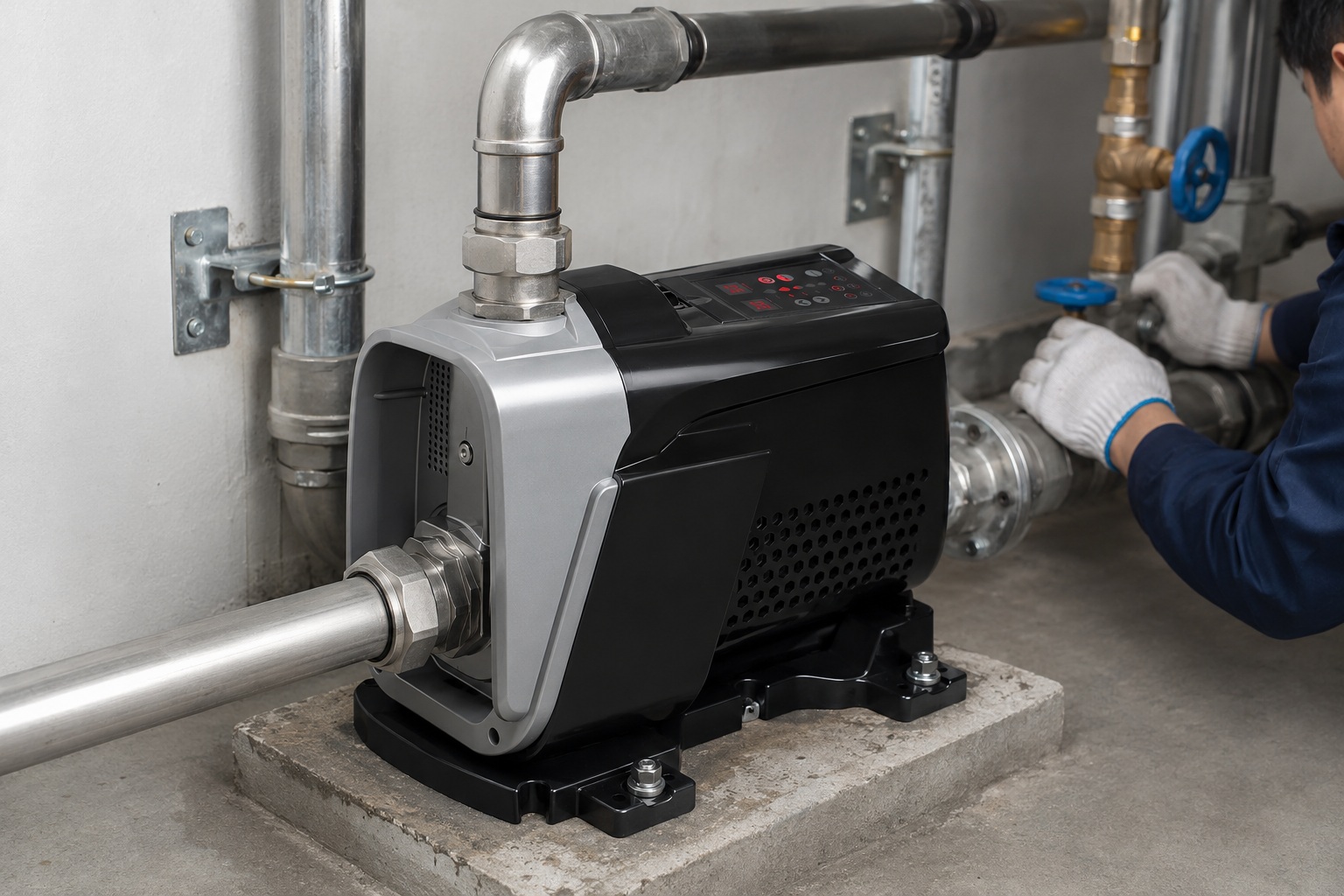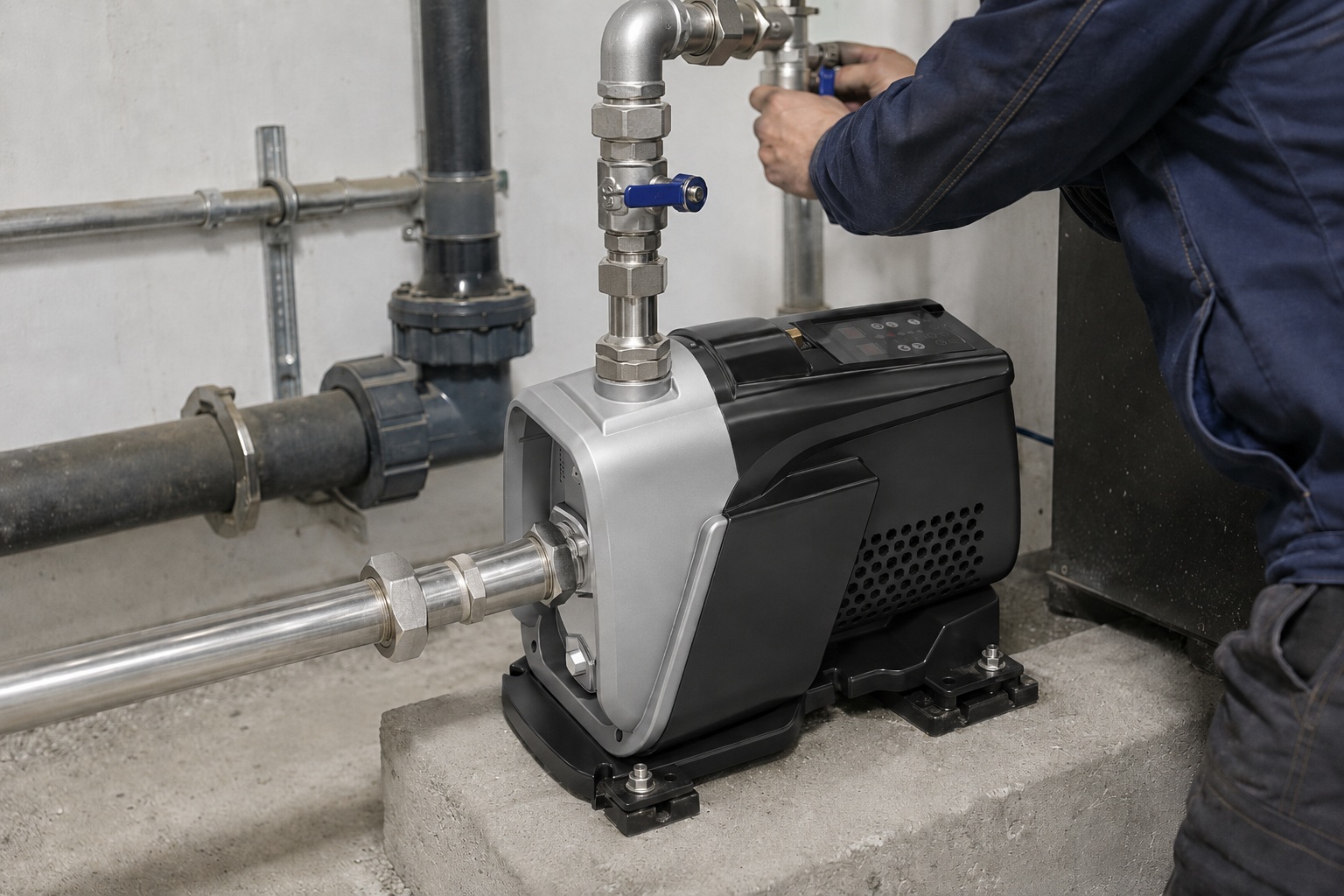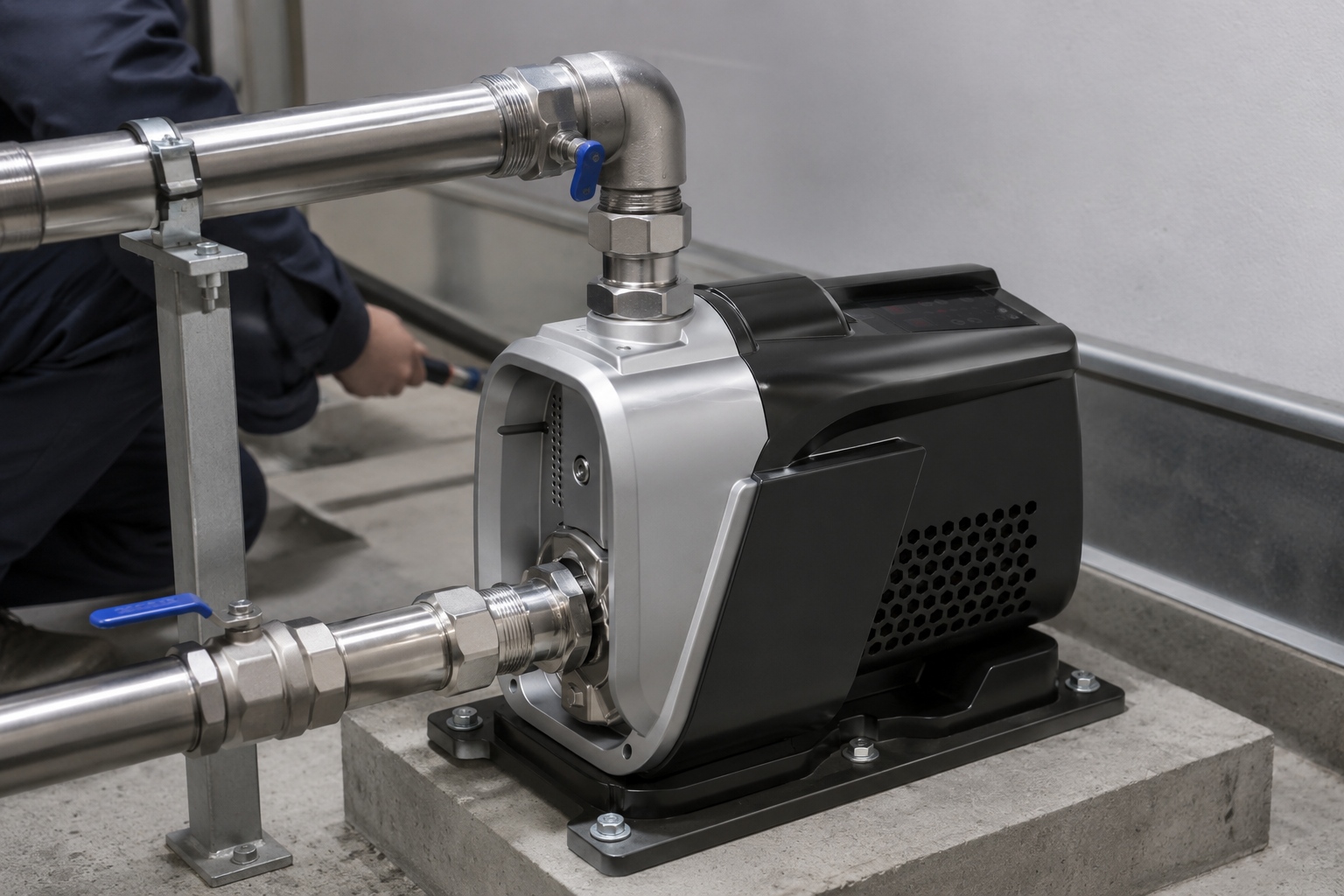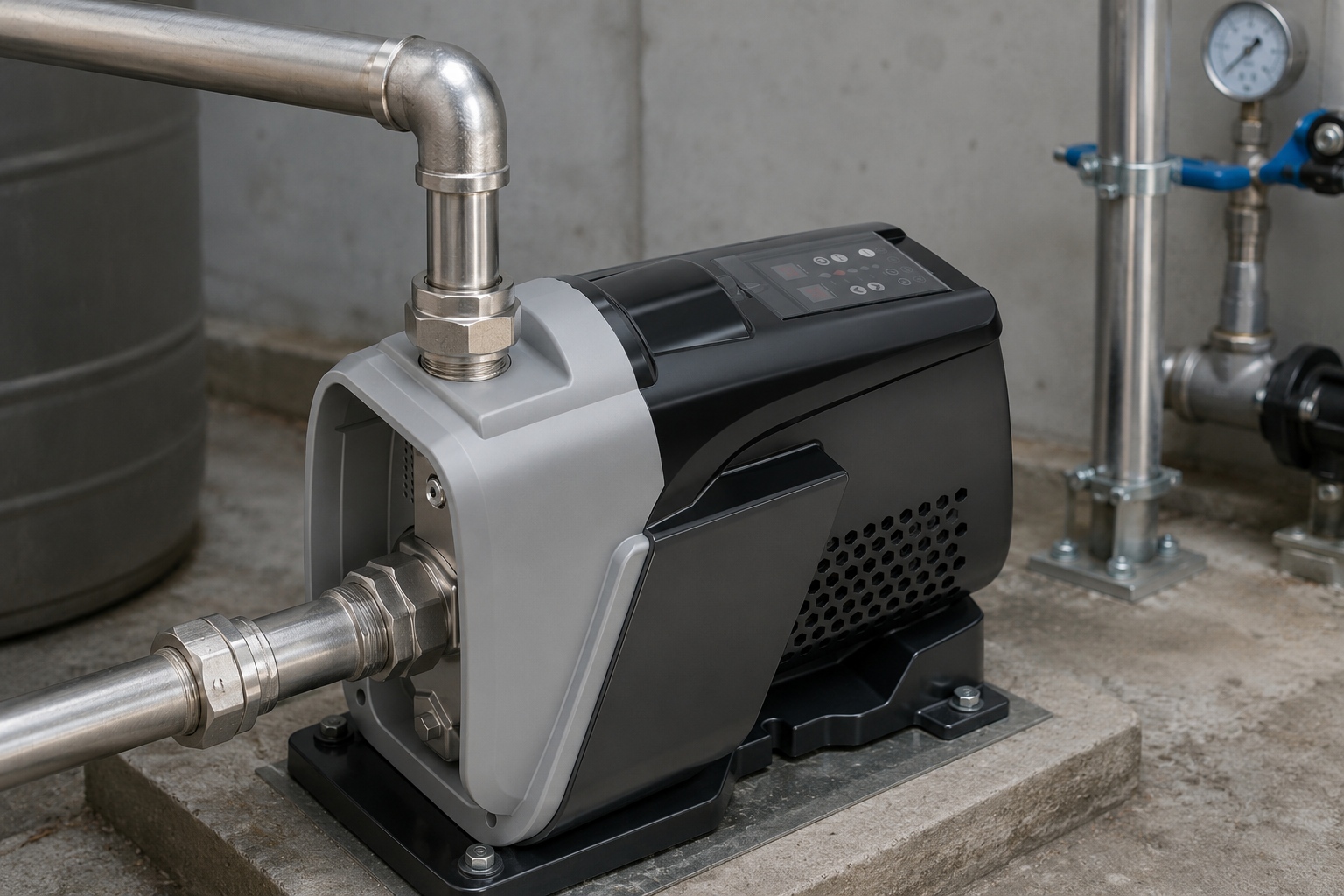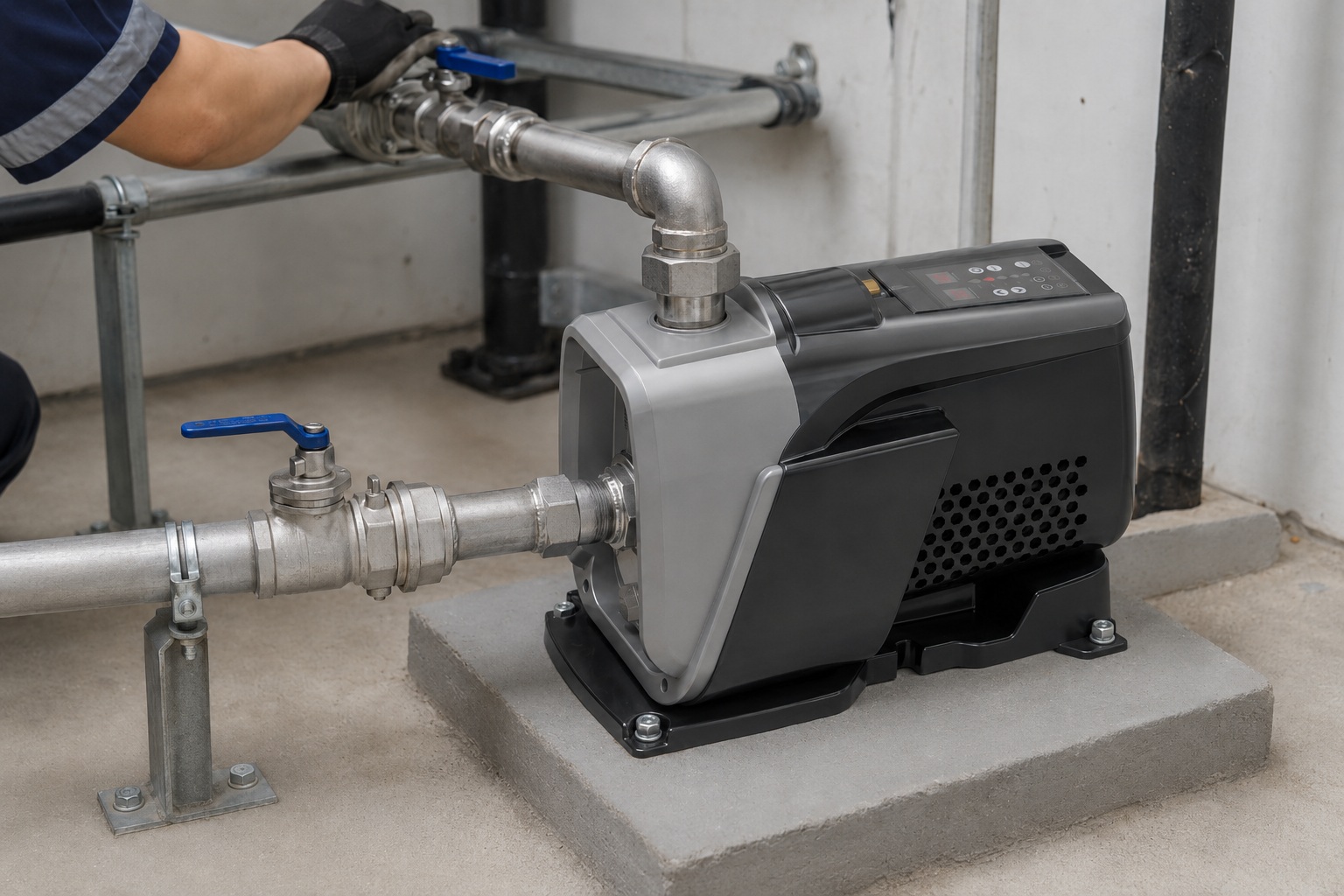
If your water pump regains flow after priming but loses it again, the timing of the fault is an important clue. Record whether it happens during operation, after an overnight stop or only when the water source is low.
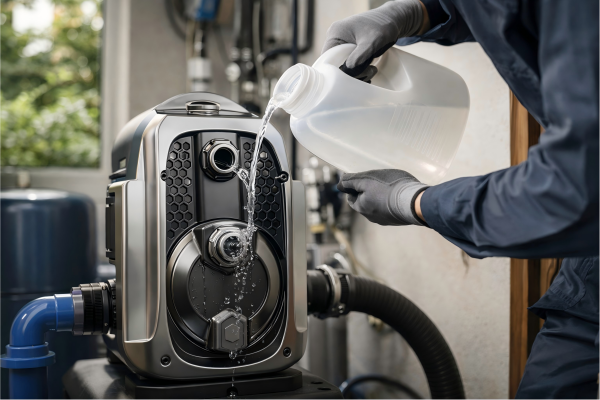
Why does air keep getting into my water pump?
| What you observe | What to check |
|---|---|
| The pump loses prime while idle. | Have the installer check whether the suction line drains back through a leaking foot or check valve. Inspect serviceable seals and suction fittings. |
| Air appears during a long pumping cycle. | Check the water level while the pump is running. The intake can become exposed as the level falls. Look for air entering through suction-side joints. |
| The problem started after a filter change. | Check the filter housing gasket and the model-specific filling procedure. A suction-side connection can admit air without showing a visible water leak. |
| Flow is steady but pressure is low. | Record inlet and outlet pressure and flow. A restriction, inadequate inlet pressure or an unsuitable duty point can resemble an air problem. |
How to restore prime before testing
For a surface pump, follow the step-by-step pump bleeding guide and the model manual. Isolate power, allow the pump to cool and relieve system pressure before opening any designated port. Do not run a pump dry or open a pressurized fitting to look for bubbles.
What to send an installer or distributor
Send the pump model, water source, vertical suction lift, pipe diameter, valve arrangement and the time it takes for the fault to return. A photo of the suction route and pressure readings during normal flow and during the fault help narrow down the cause. Contact RAFSUN for model-specific guidance.