You need reliable water access, even in winter.
You worry that shorter, darker days will render a solar pump useless.
This halts your investment in a sustainable, off-grid solution.
Yes, solar pumps absolutely work in winter, although their output is reduced. Modern systems use high-efficiency motors and intelligent controllers to maximize performance even with weaker sunlight, ensuring a consistent, reliable water supply year-round.
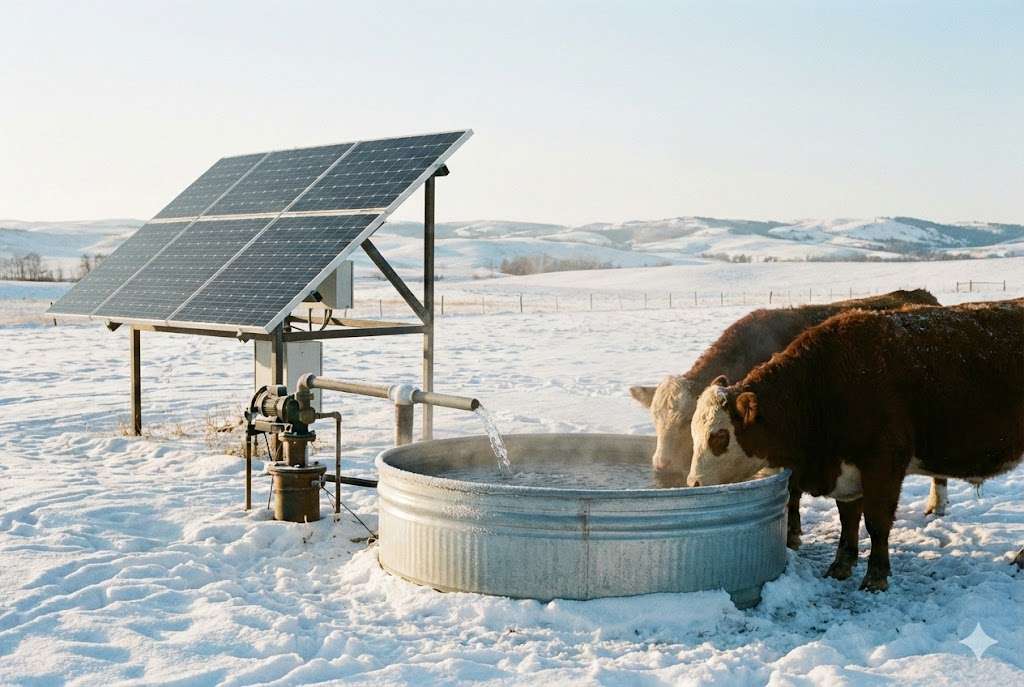
The effectiveness of a solar pump during the winter months is a common and valid concern for potential users.
It is a misconception that they cease to function.
The reality is that a well-designed solar pumping system is engineered to handle variable conditions, including the challenges of winter.
The solution isn't about avoiding winter; it's about leveraging superior technology to overcome its limitations.
Key components, from the solar panels themselves to the core motor and controller, play a vital role.
Understanding how these elements work together reveals why modern solar pumps are a viable and resilient water solution throughout all four seasons.
Understanding Winter Solar Challenges
You rely on consistent solar power for your water needs.
Winter brings shorter days and unpredictable weather, threatening your system's output.
Understanding these factors is key to planning for year-round reliability.
Winter challenges solar pumps with fewer daylight hours, a lower sun angle reducing energy intensity, and potential snow cover on panels. However, the cold temperatures can surprisingly improve solar panel efficiency, partially offsetting these effects.
The primary challenge for any solar-powered system in winter is the reduced availability of its fuel source: sunlight.
This isn't a single issue but a combination of factors that collectively decrease the total energy generated each day.
However, a professional solar pump system is designed with these exact variables in mind, ensuring it can perform reliably.
The technology isn't just about capturing sunlight; it's about making the absolute most of every bit of light it receives.
This efficiency becomes paramount when the available solar energy, or "solar irradiance," is at its lowest.
By understanding the specific challenges, distributors can better advise clients on system sizing and performance expectations.
The Impact of Shorter Daylight Hours
The most obvious winter challenge is the reduction in daylight.
In many regions, the number of "peak sun hours"—the equivalent number of hours per day when solar irradiance is at its peak—can drop by 50% or more compared to summer.
For example, a location might experience 6-7 peak sun hours in summer but only 2-3 in winter.
This directly translates to less time for the pump to operate at full capacity.
A system must be efficient enough to pump a sufficient volume of water within this shorter operational window.
Sun Angle and Irradiance
During winter, the sun is lower in the sky.
This lower angle means sunlight travels through more of the Earth's atmosphere before reaching the solar panels.
This atmospheric filtering reduces the intensity, or irradiance, of the sunlight.
Furthermore, the angled light strikes the panels less directly (unless they are on an adjustable mount), which also reduces power generation per square meter.
This lower intensity means the system's motor and controller must be sensitive enough to operate on a weaker electrical current.
The Surprising Effect of Cold
Contrary to popular belief, solar panels are more efficient in cold weather.
Heat is actually a source of energy loss for photovoltaic cells.
For every degree Celsius below 25°C (77°F), a typical solar panel's efficiency increases by approximately 0.3% to 0.4%.
This means on a bright, cold, sunny winter day, the panels will produce more power per hour than on an equally bright but very hot summer day.
This efficiency boost can help compensate for the lower irradiance levels.
The Obstacle of Snow and Ice
The most direct physical barrier to winter production is snow or a heavy frost covering the panels.
Even a thin layer of snow can reduce or completely block sunlight, halting energy production.
Proper installation, such as mounting panels at a steeper angle (e.g., 45-60 degrees), can help snow slide off more easily.
However, manual clearing of panels may be necessary after heavy snowfall to restore the pump's function.
| Parameter | Typical Summer Conditions | Typical Winter Conditions | Impact on Pumping |
|---|---|---|---|
| Peak Sun Hours | 6 - 8 hours | 2 - 4 hours | Shorter daily runtime |
| Sun Angle | High (Direct) | Low (Indirect) | Lower power input per hour |
| Panel Temperature | High (e.g., 45°C) | Low (e.g., 0°C) | Increased panel efficiency |
| Daily Water Output | 100% of Rating | 30% - 50% of Rating | Lower total daily volume |
The Technology That Makes Winter Pumping Possible
You need a pump that runs even when the sun is weak.
Standard motors stall or fail in winter's low-light conditions, leaving you without water.
Advanced motor and controller technology is the solution.
The heart of a winter-capable solar pump is its high-efficiency Brushless DC (BLDC) permanent magnet motor. Paired with a Maximum Power Point Tracking (MPPT) controller, this combination extracts the maximum available energy, even from weak winter sunlight.
The ability of a solar pump to function effectively in winter is not accidental; it is a direct result of superior engineering.
The system's performance in low-light conditions is determined almost entirely by the efficiency of its core components: the motor and the controller.
An inefficient system wastes the precious little solar energy available on a winter day, leading to stalling or a complete failure to start.
A highly efficient system, however, can convert even weak sunlight into the productive work of pumping water.
This technological leap is what separates a reliable, four-season water solution from a system that only performs well under ideal summer conditions.
As a distributor, highlighting this technological advantage is key to building customer confidence.
The Powerhouse: BLDC Permanent Magnet Motor
The Brushless DC (BLDC) motor is the cornerstone of modern solar pumps.
Unlike older motor types, BLDC motors achieve electrical-to-mechanical conversion efficiencies exceeding 90%.
This means over 90% of the scarce winter solar energy is turned into pumping power.
- High Efficiency: This efficiency reduces the amount of power needed to start the pump (the "startup threshold"). A BLDC motor might start pumping with as little as 30-40 watts, whereas an older system might require over 100 watts, a level that may not be reached on a cloudy winter day.
- High Torque at Low Speed: These motors, often utilizing powerful neodymium iron boron magnets, provide strong starting torque. This allows them to begin pumping water even when rotating slowly in low light, rather than needing a large jolt of power to get started.
- Reliability: The brushless design eliminates the most common point of failure and wear in DC motors, making them exceptionally durable and maintenance-free, which is critical for remote installations.
The Brains: Maximum Power Point Tracking (MPPT)
The MPPT controller acts as a sophisticated power optimizer between the solar panels and the motor.
Solar panels have a specific voltage and current at which they produce the absolute maximum power, and this "maximum power point" changes constantly with sunlight intensity and temperature.
The MPPT controller's job is to continuously track this optimal point and adjust the electrical load to match it.
In winter, this function is critical.
The MPPT can boost the current to the motor when voltage is high but sunlight is weak, effectively squeezing every last watt of available power from the panels.
This intelligent management can increase the total water pumped throughout a winter day by as much as 30% compared to a system without MPPT.
| Technology Feature | How it Helps in Winter | Tangible Benefit |
|---|---|---|
| BLDC Motor ( >90% Efficiency) | Converts a higher percentage of weak sunlight into power. | Pump starts earlier in the day and runs longer. |
| Low Startup Threshold | Requires very little power to begin operating. | Can pump water even on overcast winter days. |
| MPPT Controller | Constantly optimizes power from panels to motor. | Increases daily water volume by up to 30%. |
| Variable Speed Operation | Motor speed adjusts to available sunlight. | Pumps slowly in low light instead of shutting off. |
Choosing the Right Pump for Winter Reliability
You need a water solution that won't fail in the cold.
Some pumps are prone to freezing or are inefficient in low-power situations.
Selecting the right pump type ensures consistent winter performance.
For winter, a submersible deep well pump is often ideal as it's protected from freezing below the frost line. A solar screw pump excels in these conditions due to its high starting torque and efficiency at low speeds.
While the motor and controller are crucial for generating power in winter, the pump itself—the "wet end"—must be suited for cold-weather operation.
The choice of pump type can significantly impact the system's overall reliability and effectiveness when temperatures drop.
Factors like freeze protection, material durability, and operational efficiency under low-power conditions must be considered.
For distributors serving regions with harsh winters, guiding customers to the correct pump type is as important as sizing the solar array correctly.
A well-chosen pump ensures that the hard-won solar energy is not wasted by an inefficient or unsuitable water-moving mechanism.
Submersible vs. Surface Pumps
The first major consideration is whether the pump is submersible or surface-mounted.
- Submersible Pumps: These are placed deep within the well, far below the surface frost line where the groundwater temperature remains stable and above freezing year-round. This is the single most effective method of freeze protection, making them the superior choice for most winter applications.
- Surface Pumps: These are located above ground and are highly susceptible to freezing. All surface-level plumbing, including the pump housing and pipes, must be thoroughly drained or insulated and heated to prevent ice damage, adding complexity and potential points of failure.
Matching Pump Type to Winter Conditions
Among submersible pumps, different designs offer unique advantages for the low-power variable-speed operation common in winter.
-
Solar Screw Pump: This pump type uses a helical rotor (a screw) inside a rubber stator. It is a positive displacement pump, meaning it moves a fixed amount of water with each rotation.
- Winter Advantage: They offer exceptionally high starting torque and maintain high efficiency even when running at very low speeds. This makes them perfect for winter, as the MPPT controller can run the motor very slowly in weak light and still effectively lift water. Their ability to handle high head (lifting distance) with low flow is well-suited for filling a storage tank slowly over a short winter day.
-
Solar Centrifugal Pump (Plastic or Stainless Steel Impeller): These pumps use spinning impellers to move water.
- Winter Considerations: They are designed for higher flow rates and require a certain minimum speed to operate efficiently. In the very low-light conditions of winter, they may not reach this optimal speed, causing their efficiency to drop significantly. They are best suited for winter applications where high volumes are needed and the solar array is large enough to ensure the pump reaches its operational speed threshold even on shorter days.
The following table helps clarify the best use cases for winter.
| Pump Type | Key Strength | Ideal Winter Application | Why It Works Well |
|---|---|---|---|
| Solar Screw Pump | High efficiency at low speeds | Livestock watering, domestic use with a tank | Can pump effectively all day, even in very weak light. |
| Solar Centrifugal Pump | High flow rate | Large-scale irrigation (if array is large enough) | Moves a lot of water quickly when the sun is out. |
| Surface Pump | Easy access for maintenance | Mild climates with no freezing risk | Not generally recommended for harsh winter climates. |
For maximum winter reliability, especially in deep wells, the solar screw pump is often the most resilient and efficient choice.
Conclusion
Solar pumps work effectively in winter.
Modern systems with high-efficiency motors and smart controllers are designed to perform reliably, ensuring water access year-round despite shorter days and weaker sunlight.
Frequently Asked Questions
How can I make my solar water pump more efficient in winter?
Ensure panels are clean and free of snow. If possible, adjust the panel tilt to a steeper angle to better catch the low winter sun and help shed snow.
Do solar panels need direct sunlight to work?
No, solar panels can produce power from indirect or diffused light, such as on an overcast day. However, their output will be significantly lower than in direct sunlight.
Will a solar water pump freeze?
A submersible pump located below the frost line in a well will not freeze. Surface pumps and any above-ground pipes are at risk and must be properly winterized.
How much water can a solar pump produce in winter?
Expect a solar pump to produce roughly 30-50% of its rated summer volume in winter. This reduction is due to shorter days and less intense sunlight.
At what temperature do solar pumps stop working?
The pump and electronics are rated for a wide temperature range. The limiting factor is not the cold itself but the lack of sunlight or panels being covered by snow.
Is it worth getting a solar water pump in a cold climate?
Yes, it is worth it. A correctly sized system with a storage tank can provide a reliable, cost-effective, and independent water supply in any climate.