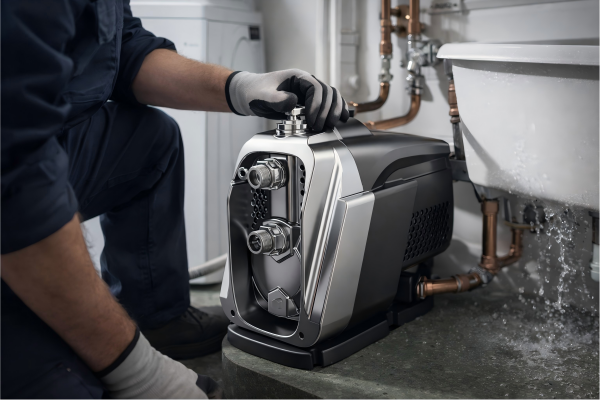
Dealing with a failing water pump means fluctuating water pressure and the risk of a complete shutdown.
This can disrupt your entire household or business.
On average, a professional well pump replacement costs between $2,900 and $4,000, while a car water pump replacement typically ranges from $400 to $1,100. Costs vary based on the pump type, location, and job complexity.
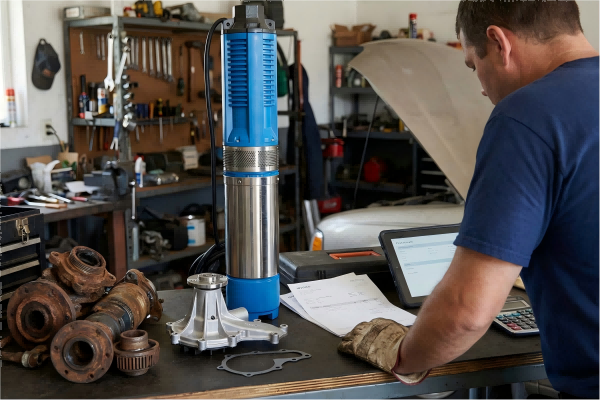
Understanding the final price tag for a water pump replacement can feel complicated.
The total cost isn't just about the pump itself.
It involves a mix of factors including the type of system you have, labor rates in your area, and whether any related components also need attention.
This guide will break down all the key elements that influence the cost, helping you understand what to expect and how to make an informed decision for your home or vehicle.
Water Pump Replacement Cost Breakdown
A sudden pump failure can leave you without water or with an overheating engine.
You need to know the potential cost to budget for this critical repair.
Well pump replacements typically range from $2,900 to $4,000 for professional installation. Automotive water pump replacements are less expensive, usually costing between $400 and $1,100, including parts and labor.
The cost of replacing a water pump varies significantly depending on its application.
A well pump for a home is a much more complex and expensive job than replacing a water pump in a car's engine.
The price for a well pump includes a more expensive unit, more intensive labor, and potentially other system components like the pressure tank.
An automotive pump replacement involves a smaller part and less complex labor, though accessibility can still affect the final price.
Let's explore the specific costs for each type.
Residential Well Pump Costs
Replacing a well pump is a significant investment in your home's infrastructure.
The equipment itself is robust, and the installation requires specialized knowledge of plumbing and electrical systems.
- Professional Installation: The average cost, including the pump and professional labor, is between $2,900 and $4,000.
- DIY Parts Only: Purchasing a high-quality well pump yourself might cost anywhere from $625 to $2,600, depending on the type and performance. However, this does not include the necessary tools, wiring, or plumbing materials.
This estimate covers the pump and the standard installation process.
Additional tasks like digging to access the well or replacing old wiring can increase the final price.
Automotive Water Pump Costs
The water pump is a vital part of your vehicle's cooling system.
Replacing it is a common maintenance task that is much less costly than a residential pump.
- Parts: The pump itself typically costs between $200 and $400.
- Labor: Professional labor costs generally fall between $225 and $517.
- Total Professional Cost: Most car owners will pay a total of $400 to $1,100 for a complete replacement.
Luxury cars or vehicles with hard-to-reach pumps can cost more due to higher part prices and longer labor times.
It's often recommended to replace the timing belt at the same time, which can be bundled to save on labor costs.
Cost Comparison: Well Pump vs. Automotive Pump
This table highlights the key differences in cost between residential well pump and automotive water pump replacements.
| Feature | Well Pump Replacement | Automotive Water Pump Replacement |
|---|---|---|
| Total Avg. Cost | $2,900 – $4,000 | $400 – $1,100 |
| Key Cost Driver | Well depth, pump type, professional installation | Vehicle model, engine access, labor rates |
| Labor Intensity | High (involves plumbing, electrical, lifting) | Moderate to High (depends on accessibility) |
| DIY Feasibility | Not recommended for most homeowners | Possible for experienced home mechanics |
Factors Affecting Replacement Cost
Your water pump gave out, and now you're facing a replacement bill.
But you're worried that the final cost could be much higher than the initial quote.
The final cost depends on the pump type, well depth, labor rates, and whether additional parts like a pressure tank or timing belt need replacing. Accessibility of the pump is a major factor for both homes and vehicles.
The price you pay for a water pump replacement is rarely a single, flat fee.
Several variables can significantly impact the total cost.
For a well pump, the depth it needs to be installed at is a primary factor.
For a car, the engine's design determines how many hours of labor are needed.
Understanding these factors will help you see why one quote might be higher than another and what is truly involved in the job.
Let's examine each of these cost influencers in detail.
System Type and Location
The specific system your pump serves is the biggest cost determinant.
- Well Systems: Deeper wells require more powerful pumps and more labor to install, pushing costs toward the higher end of the range. A shallow well pump replacement will be closer to the lower end.
- Automotive Systems: The make and model of your car are critical. A simple 4-cylinder engine with an externally mounted water pump is easy to service. In contrast, a modern V6 engine where the pump is driven internally by the timing chain requires extensive disassembly, dramatically increasing labor hours and cost. For example, replacing a pump on a Ford 3.5L V6 can take over 10 hours of labor, versus 2-4 hours for a more accessible design.
Labor Rates and Accessibility
Where you live and how hard it is to get to the pump both play a major role.
- Geographic Location: Labor rates vary widely. A mechanic in a small town might charge $50 per hour, while a shop in a major city like New York or Chicago could charge $150 per hour or more.
- Pump Accessibility:
- Well Pumps: Submersible pumps require pulling many feet of pipe and wiring from the well, which requires special equipment. Above-ground jet pumps are easier to service but may be located in tight crawl spaces.
- Automotive Pumps: If a pump is buried under other engine components, the mechanic must spend hours removing parts just to reach it. This is the primary reason why the same job can cost twice as much on one car compared to another.
Parts Type (OEM vs. Aftermarket vs. Advanced Systems)
The quality and technology of the replacement pump will affect both the upfront cost and long-term performance.
- OEM (Original Equipment Manufacturer): These parts are identical to the one your car or system came with. They offer guaranteed fit and quality but are the most expensive.
- Aftermarket: These are made by third-party companies. Quality can vary, but they are a more affordable option. High-quality aftermarket parts can be just as reliable as OEM.
- Advanced Pumps (VFD): For residential systems, upgrading to a modern Variable Frequency Drive (VFD) pump is an option. While the upfront cost is higher, these pumps offer constant pressure, are ultra-quiet, and can reduce electricity consumption by up to 50%. Their advanced protections and durable materials also lead to a longer lifespan, providing better value over time.
Bundling Repairs
You can often save significant money by doing related maintenance at the same time.
This strategy is about reducing total labor costs.
- For Cars: If your water pump is driven by the timing belt, it's industry best practice to replace both at the same time. The labor to access both parts is nearly identical. Doing them together can save you 25% or more on total labor compared to doing them separately later.
- For Wells: When replacing a well pump, it's wise to inspect the pressure tank, check valve, and electrical wiring. Replacing a borderline-old pressure tank at the same time adds to the part cost but requires very little extra labor, preventing a future service call.
Signs of a Failing Water Pump
You've noticed strange noises or a drop in water pressure.
You're unsure if it's a minor issue or a sign that your water pump is about to fail completely, leaving you with a costly emergency.
Key signs of a failing pump include coolant leaks and overheating in cars, or low water pressure, sputtering faucets, and high electric bills for well pumps. Any whining or grinding noise from the pump is a clear warning.
A water pump rarely fails without warning.
Whether in your car or in your well, it will usually exhibit symptoms that signal trouble.
Recognizing these signs early is crucial.
Ignoring them can lead to much more severe and expensive damage, such as a seized engine in your car or a burned-out motor in your well pump.
Prompt action not only prevents a catastrophic failure but also gives you time to plan for the repair without the stress of an emergency.
Here are the specific symptoms to watch for in both systems.
H3: Symptoms in Automotive Systems
A car's water pump is central to keeping the engine cool.
Failure can lead to serious engine damage.
- Coolant Leaks: This is the most common sign. You may see puddles of green, orange, or pink fluid under the front of your car. Look for drips or residue around the pump itself.
- Engine Overheating: If your car's temperature gauge climbs into the red, the pump may not be circulating coolant effectively. You might also see steam coming from the engine bay.
- Whining or Grinding Noises: A high-pitched whining sound that changes with engine speed often indicates a failing bearing inside the pump.
- Loose Pulley: If you can (with the engine off), try to wiggle the pulley on the front of the pump. If there is any play or wobbling, the bearing is worn out and failure is imminent.
H3: Symptoms in Well Pump Systems
A failing well pump affects your entire home's water supply.
The signs can be subtle at first.
- Low or Fluctuating Water Pressure: If your showers are weak or faucets pulse, the pump may be struggling to maintain pressure.
- Sputtering Faucets: Air spitting from the faucets indicates that the pump may be drawing in air, a sign of a problem in the well or with the pump itself.
- Unexplained High Electric Bills: A pump that is wearing out has to run longer and work harder to do its job, which consumes more electricity.
- Dirty Water: If the pump's filter or internal mechanics fail, it can stir up sediment and send dirty water into your home.
- No Water At All: This is a sign of a complete pump failure, a tripped breaker due to a faulty motor, or a problem with the pressure switch.
Can Modern Pumps Save You Money?
Your old pump is failing, and you're just looking for the cheapest replacement.
But you're worried that a cheap pump will fail again in a few years, costing you more in the long run.
Yes, modern pumps like VFD models can save money over time. Though their initial cost is higher, they reduce electricity bills by up to 50%, prevent water hammer, and their advanced protections extend their lifespan significantly, reducing future replacement costs.
When faced with a replacement, simply buying the same type of pump you had before might not be the most cost-effective choice.
Pump technology has advanced significantly.
Modern intelligent pumps, particularly those with a Variable Frequency Drive (VFD), offer a whole new level of efficiency, durability, and performance that can lead to substantial long-term savings.
These systems don't just pump water; they manage your entire water supply intelligently.
Let's break down the specific features of these advanced pumps and how they translate into tangible benefits for homeowners and property managers.
H3: Superior Performance & Energy Efficiency
The core of a modern pump is its intelligent design.
- Constant Pressure Supply: A VFD works with a Permanent Magnet Synchronous Motor (PMSM) to adjust its speed in real-time. This means it delivers perfectly stable, fluctuation-free water pressure, no matter how many taps are open.
- Energy Savings: Traditional pumps run at full power every time they turn on. VFD pumps only use the exact amount of energy needed to meet the current demand. This can lead to electricity savings of up to 50%, which adds up to a significant amount over the pump's lifespan.
- Ultra-Quiet Operation: The combination of a PMSM motor and VFD controller results in noise levels under 50dB, which is quieter than a library.
H3: Unmatched Durability & Reliability
Advanced pumps are built to last, with multiple layers of protection.
- Comprehensive Safety Protections: These pumps feature built-in electronic safeguards against common issues like dry running, overheating, power surges, freezing, and more. This prevents the pump from destroying itself in adverse conditions.
- Waterproof Electronics: A critical feature is sealing the main electronic controller (the PCB) in a waterproof compound. This achieves an IP67 rating, making it completely impervious to moisture and condensation, which is a leading cause of electronic failure in standard pumps. This alone can extend the controller's life by 3-5 years.
- Premium Materials: They are constructed with high-grade materials like AISI304 stainless steel or brass impellers and corrosion-resistant housings to ensure a long service life.
H3: Smart Design and System Longevity
These pumps are designed to protect not just themselves, but your entire plumbing system.
- Soft Start/Stop: The pump gradually ramps up to speed instead of jolting on instantly. This reduces mechanical stress on the pump and motor and eliminates "water hammer"—the loud banging in pipes that can damage fittings and joints over time.
- Reduced Cycling: They work with a pressure tank to reduce how often the pump needs to turn on and off. Drastically reducing start/stop cycles (by up to 70%) is one of the most effective ways to extend a motor's operational life.
While the initial investment is higher, the combined savings on electricity, prevention of plumbing damage, and a much longer, more reliable service life make modern VFD pumps a smarter financial decision in the long run.
FAQs
1. How long should a water pump last?
A car's water pump typically lasts 60,000 to 100,000 miles. A residential well pump has a longer lifespan, usually lasting 10 to 15 years with proper maintenance.
2. Can I replace a water pump myself?
Replacing a car water pump is possible for an experienced DIY mechanic. However, replacing a well pump is complex and not recommended due to electrical work and specialized tools required.
3. What happens if you don't replace a failing water pump?
In a car, it will lead to engine overheating and catastrophic damage. For a well, you will eventually lose all water access, and the pump motor may burn out completely.
4. Should I replace my thermostat with the water pump?
Yes, in a car, it is highly recommended to replace the thermostat when replacing the water pump. The part is inexpensive, and the labor is already being done to access that area.
5. Does homeowners insurance cover a new well pump?
It depends on the policy and the cause of failure. Insurance may cover it if it fails due to a covered peril like a lightning strike, but not from normal wear and tear.
6. Why is labor so expensive for a water pump replacement?
Labor costs are high when the pump is difficult to access. For cars, this means removing many other engine parts. For wells, it involves pulling the pump from deep underground.
Conclusion
Replacing a water pump is a critical repair with costs varying by system.
Understanding the factors, from pump type to labor, empowers you to budget effectively and choose a lasting solution.