You need to move water in a remote location.
Grid power is unreliable or completely unavailable.
This leaves you searching for an independent, cost-effective solution.
Yes, solar pumping machines, commonly known as solar water pumps, not only exist but are a highly advanced and reliable technology. They use energy from solar panels to efficiently move water for agriculture, livestock, and domestic use, completely off-grid.
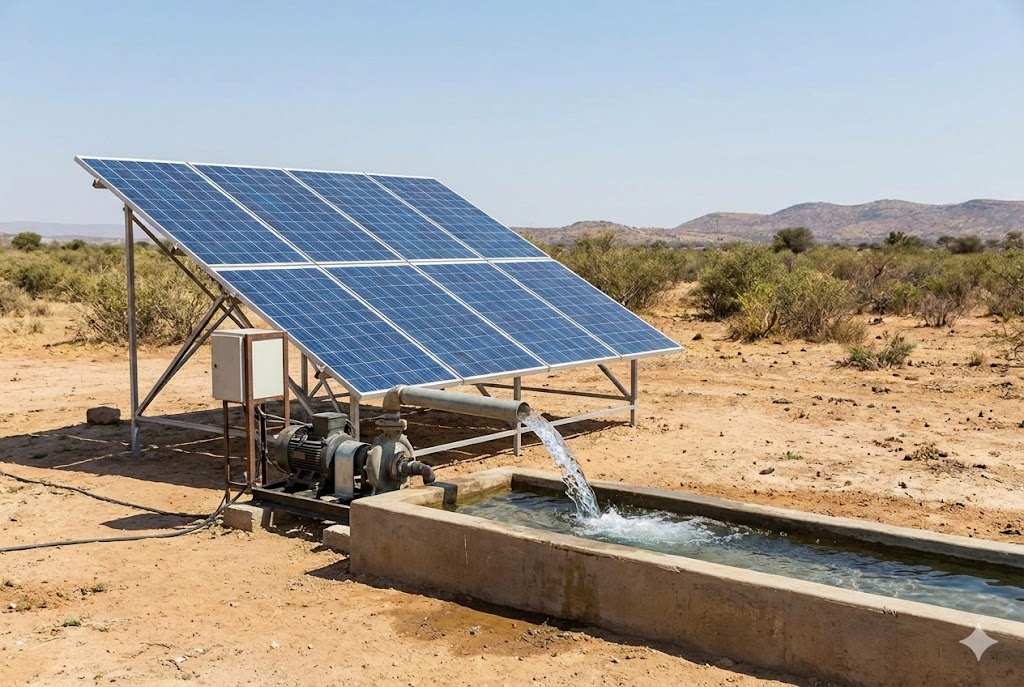
The term "machine" perfectly captures the essence of these systems.
They are far more than just a simple pump attached to a solar panel.
Modern solar pumping machines are complete, engineered solutions.
They consist of a specialized pump, a highly efficient motor, and an intelligent controller.
This combination is designed to maximize water output using only the power of the sun.
The technology has evolved to a point where there is a specific type of solar pumping machine for nearly every application, from lifting water from extreme depths to irrigating vast fields.
Let's explore the powerful and diverse world of these solar-powered workhorses.
The Deep Well Specialist: The Solar Screw Pump**
You have a very deep well.
Standard pumps cannot generate enough pressure to lift the water.
This makes your deep water source unusable.
For the deepest wells, the solar screw pump is the specialized solution. This machine uses a positive displacement mechanism to create immense pressure, lifting water from depths that are impossible for other common solar pump types to reach.
The solar screw pump is a true feat of engineering, designed for one primary purpose: conquering depth.
It does not use impellers like a conventional centrifugal pump.
Instead, its core is a helical stainless steel rotor that turns inside a durable rubber stator.
This mechanism traps "pockets" of water between the rotor and the stator.
As the rotor spins, it forces these pockets of water vertically up the pipe.
This process is known as positive displacement.
It builds pressure incrementally and consistently, allowing the machine to work against the immense weight of a very tall column of water.
This design makes it the undisputed champion for high-head, low-flow applications.
It is the go-to solution for providing domestic water or livestock water from boreholes that can be hundreds of meters deep, particularly in arid regions of Africa and Latin America.
Its ability to handle water with a higher sand content without damage also sets it apart from more sensitive designs.
How Positive Displacement Beats Depth
The screw mechanism's effectiveness comes down to pure physics.
Every component is optimized to generate and maintain high pressure.
- Seal and Push: The tight fit between the steel rotor and the rubber stator creates a near-perfect seal. This prevents water from slipping backward, which is a common point of efficiency loss in centrifugal pumps under high pressure.
- High Sand Resistance: The screw design is inherently more robust against abrasive particles. It can manage a sand content up to 3% without significant wear, whereas impeller pumps may wear down quickly, losing up to 25% of their efficiency.
- Consistent Flow Rate: Unlike centrifugal pumps whose flow drops dramatically as head increases, a screw pump delivers a more stable and predictable flow rate across its entire operational depth range.
Matching the Machine to the Application
For distributors, understanding the performance curve of a screw pump is essential.
It allows you to sell a solution that works where others fail.
| Feature | Solar Screw Pump | Solar Impeller Pump |
|---|---|---|
| Pumping Mechanism | Positive Displacement (Screw) | Centrifugal Force (Impeller) |
| Max Head | Very High (150m+) | Medium (up to 100m) |
| Flow Rate | Low to Medium | Medium to High |
| Sand Tolerance | High | Moderate |
| Ideal Use | Deep domestic wells, livestock watering | Farm irrigation, community supply |
This machine is the specific tool for a specific job.
When a customer's primary problem is extreme well depth, the solar screw pump is the only reliable answer.
The High-Volume Performer: The Solar Plastic Impeller Pump**
You need to irrigate a farm.
You need to water a large herd of livestock.
A low-flow pump will not provide the volume of water you require.
Yes, a solar pumping machine with a plastic impeller is the ideal solution for high-volume needs. It is a multi-stage centrifugal pump designed to move a large quantity of water efficiently, making it perfect for agriculture and irrigation.
This type of solar pumping machine is the workhorse of the industry.
It is designed for efficiency in moving large amounts of water to moderate heights.
Inside the pump casing, there is a series of precisely molded, wear-resistant plastic impellers.
When the high-efficiency motor spins these impellers, they use centrifugal force to accelerate water outward and upward.
Each impeller in the stack acts as a "stage," adding more pressure and lift.
The more stages, the higher the potential head.
This design is incredibly effective for applications where flow rate is more critical than extreme depth.
It's the reason these pumps are so popular for farm irrigation, pasture water supply, and filling large residential water tanks in regions across Africa and the Americas.
The use of high-quality engineered plastic for the impellers makes the pump lightweight and economical.
It also provides excellent resistance to fine sand, ensuring a longer service life in wells that are not perfectly clean.
Balancing Flow and Head
The key to this machine's success is its ability to find the perfect balance between water volume (flow) and lifting height (head).
- Centrifugal Force Dynamics: The shape and speed of the impellers are engineered to move the maximum amount of water. The design prioritizes creating velocity, which translates directly into a high flow rate.
- Multi-Stage Power: By stacking impellers, the machine can achieve respectable heads of up to 100 meters. A typical 4-inch model with multiple stages can deliver over 10 cubic meters of water per hour, sufficient for irrigating several acres of land.
- The Best Efficiency Point (BEP): Every centrifugal pump has a specific head and flow combination where it operates with peak efficiency, often over 85%. Sizing the machine correctly to operate at or near its BEP ensures maximum water output for the solar energy available.
Where High Volume is King
This machine's value is demonstrated in applications where "how much" is the most important question.
| Application Focus | Required Flow | Required Head | Ideal Machine Type |
|---|---|---|---|
| Drip Irrigation | High | Medium | Plastic Impeller Pump |
| Pivot Irrigation | Very High | Medium | Plastic Impeller Pump |
| Deep Well for a Single Home | Low | Very High | Solar Screw Pump |
| Filling a Cattle Trough | Medium | Low-Medium | Plastic Impeller Pump |
This solar pumping machine provides an unmatched combination of high water output and cost-effectiveness.
It is the answer for anyone who needs to turn sunlight into a flowing river.
The Durability Champion: The Solar Stainless Steel Impeller Pump**
You have corrosive or aggressive water.
You need a machine that guarantees a long service life.
A standard pump might fail prematurely, costing you time and money.
Yes, for harsh water conditions, there is a solar pumping machine with stainless steel impellers. This premium model offers maximum durability and corrosion resistance, ensuring reliable performance in acidic or alkaline water environments.
This is the high-endurance model in the solar pumping machine lineup.
It operates on the same multi-stage centrifugal principle as the plastic impeller pump.
It is designed to deliver high flow rates at medium-to-high head.
The crucial difference lies in the material.
Both the impellers and the pump body are constructed from high-grade SS304 stainless steel.
This upgrade transforms the machine into a fortress against chemical attack.
It is specifically engineered for challenging water sources, such as those with low pH (acidic) or high pH (alkaline) levels.
These conditions can cause plastic components to become brittle or metal components to corrode quickly.
The SS304 stainless steel construction provides superior resistance to this type of degradation.
This makes it the ideal choice for alkaline soil regions in Australia, certain parts of the Americas, and for high-end residential or commercial properties where reliability is the top priority.
While it comes at a higher initial cost, its extended service life and unwavering performance make it a wise long-term investment.
Material Science for Unfailing Performance
The choice of stainless steel is not just about longevity; it is critical for maintaining performance over time.
- Corrosion Resistance: SS304 stainless steel is a stable alloy that resists oxidation and chemical reactions. In water with a pH outside the neutral 6.5-8.5 range, this can extend the pump's lifespan by over 200% compared to standard materials.
- Maintaining Hydraulic Efficiency: Corrosion can roughen the surface of an impeller, creating drag and reducing its efficiency. A corroded impeller can lose 10-15% of its pumping efficiency. The smooth, unchanging surface of stainless steel ensures the pump maintains its factory performance curve for years.
- Structural Integrity: The strength of stainless steel allows the machine to handle the high pressures of deep well operation without any risk of component fatigue or failure.
Applications Demanding Premium Quality
For an importer like Andrew in Australia, offering a stainless steel option is crucial for markets with known water quality issues.
| Water Condition | Plastic Impeller Risk | Stainless Steel Advantage |
|---|---|---|
| Acidic Water (Low pH) | Can become brittle, crack | Chemically inert, no damage |
| Alkaline Water (High pH) | Can degrade over time | Highly resistant to alkaline corrosion |
| High Mineral Content | Scale buildup can affect shape | Easier to clean, less buildup |
| High-End Application | Perceived as lower quality | Meets demand for durability |
This solar pumping machine is the definition of robust.
It is built to last in environments where other pumps simply cannot survive.
The Heart of the Machine: The BLDC Permanent Magnet Motor**
You see different types of pump ends.
You wonder what powers them all.
The pump itself is just the tool; the motor is the force.
Yes, every modern solar pumping machine is powered by a core technology: the high-efficiency BLDC permanent magnet motor. This advanced motor converts solar energy into pumping power with over 90% efficiency, making the entire system viable.
The BLDC (Brushless DC) motor is the technological heart of the modern solar pumping machine.
It is the unsung hero that makes everything else possible.
This motor is fundamentally different from older, less efficient motor types.
It uses powerful rare-earth permanent magnets (specifically 40SH neodymium iron boron) on its rotor.
An intelligent electronic controller precisely manages the flow of electricity to the stator windings.
This creates a rotating magnetic field that pulls the rotor around with incredible force and minimal wasted energy.
The efficiency of these motors often exceeds 90%.
In contrast, a standard AC induction motor might only be 75% efficient.
This 15% (or more) efficiency gain is massive in a solar-powered system.
It means the pump can deliver more water with the same number of solar panels.
Or, it can operate for more hours during the day, starting earlier in the morning and working later into the afternoon.
The BLDC motor's high torque, compact design, and maintenance-free operation are the key reasons why solar pumping has become such a powerful and competitive technology worldwide.
How Motor Efficiency Powers Performance
The technical advantages of the BLDC motor translate directly into real-world benefits for the end-user.
- More Water, Less Panels: A 90% efficient motor requires fewer solar panels to achieve the same water output as a 75% efficient motor. This can reduce the total system cost by 15-25%, a significant saving for a large project.
- High Torque for Tough Jobs: BLDC motors produce high torque even at low speeds. This is critical for starting a pump under load, especially a screw pump in a deep well, preventing the motor from stalling.
- Compact and Lightweight Design: Advanced BLDC motors can be 47% smaller and 39% lighter than traditional motors of equivalent power. This makes installation easier and less expensive, as heavy lifting equipment may not be needed.
- Unmatched Reliability: With no brushes to wear out, the BLDC motor is virtually maintenance-free. Its expected service life is often over 25,000 hours, ensuring years of trouble-free operation.
The motor is the engine of the entire solar pumping machine.
Its superior efficiency and power are the foundation upon which the system's performance is built.
Conclusion
Solar pumping machines are a diverse and powerful technology.
Choosing the right pump and motor combination ensures a reliable, off-grid water solution for any application.
Frequently Asked Questions
What machine is used for solar water pumps?
A complete solar water pumping system is used. It includes solar panels, an intelligent controller, and a specialized pump with a high-efficiency BLDC motor.
How does a solar powered water pump work?
Solar panels convert sunlight into DC electricity. A controller manages this power and sends it to a brushless (BLDC) motor, which drives the pump to move water.
Can a solar water pump work without a battery?
Yes, most modern solar pumps are designed to work directly from solar panels during the day. They pump water when the sun is shining, often into a storage tank for later use.
How many solar panels are needed to run a water pump?
The number of panels depends on the pump's power rating (in watts) and the daily water requirement. A small pump may need 2-4 panels, while a large irrigation pump could need 20 or more.
Do solar pumps work on cloudy days?
Solar pumps can work on cloudy days, but their output will be significantly reduced. Their performance is directly proportional to the amount of sunlight they receive.
Can a solar pump work at night?
A standard solar pump cannot work at night. However, hybrid systems with an AC/DC controller allow the pump to be powered by grid electricity or a generator when there is no sunlight.