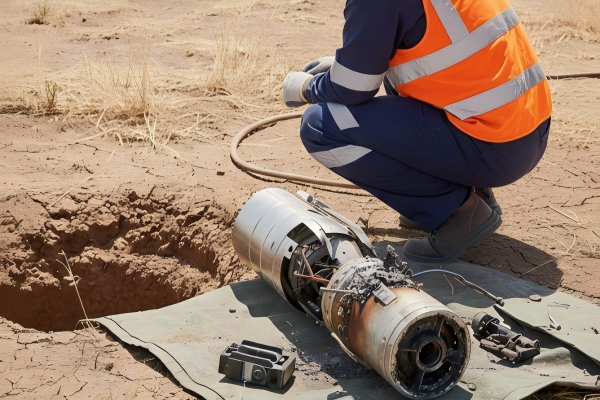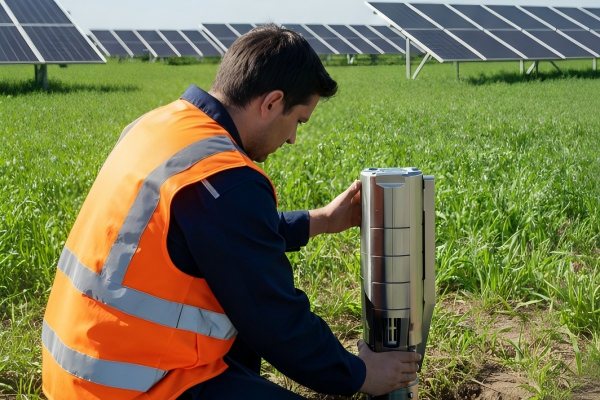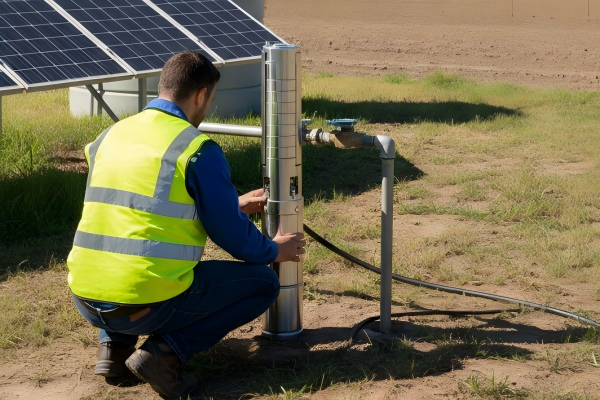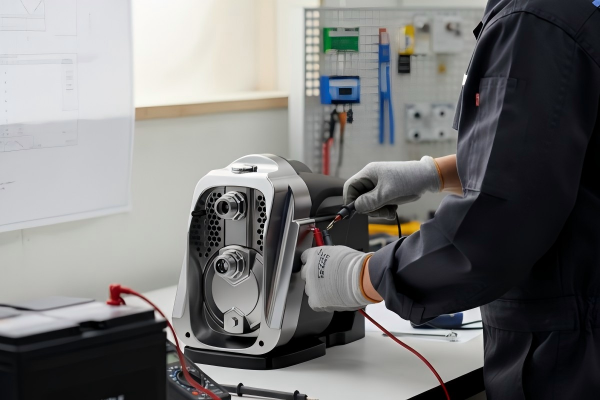
Your pump suddenly runs quiet, and water flow stops.
You think the pump has failed, but the real problem might be simpler and more dangerous.
This silence is pump starvation, a condition that can quickly destroy your equipment.
A pump becomes starved when it does not receive enough fluid at its inlet.
The most common causes are a blockage in the suction line, a water source that has run dry, or a poorly designed piping system that restricts flow to the pump's intake.
Pump starvation is not a failure of the pump itself.
It is a failure of the system to supply the pump with the water it needs.
Imagine trying to drink a thick milkshake through a very thin straw.
You pull and pull, but you get very little liquid, and the straw might even collapse.
A starved pump is in a similar situation.
It is trying to move water that is not there.
This condition is different from running completely dry.
In a starvation scenario, there is some water, but not enough to meet the pump's design flow rate.
This creates a partial vacuum at the inlet.
The consequences of this vacuum are severe.
It leads to cavitation, where vapor bubbles form and violently collapse inside the pump.
It can also cause the pump to overheat, as the low flow of water is not enough to cool the motor and mechanical seals.
Understanding the specific causes of starvation is the first step toward preventing catastrophic damage to your entire water system.
We will explore the common culprits, from simple blockages to more complex design flaws.
Part 1 | The Impact of Suction Line Blockages
You have a powerful pump, but your water pressure is weak or non-existent.
You blame the pump, not realizing a simple blockage is choking your entire system.
Ignoring this "clog" will lead to the pump's premature and costly failure.
The most direct cause of pump starvation is a physical blockage in the suction line.
A filter, strainer, or foot valve clogged with sediment, debris, or bio-fouling will physically prevent water from reaching the pump, leading to severe starvation and damage.
Every pump system has components on the suction side designed to protect the pump from damage.
These include foot valves, strainers, and filters.
The foot valve sits at the bottom of the suction line in a well or tank and acts as a one-way check valve to keep the pipe primed.
Strainers are screens placed over the intake to stop large debris like leaves, rocks, or animals from being sucked in.
While these components are essential, they are also the most common locations for blockages to occur.
Over time, they can become completely clogged with sediment, sand, rust scale, or biological growth like algae.
When this happens, the flow path for the water is severely restricted or cut off entirely.
The pump continues to run, trying to pull its designed volume of water, but the clog acts like a closed valve.
This creates a powerful vacuum in the suction pipe between the clog and the pump.
The pump is effectively starved of water, and the destructive process of cavitation begins almost immediately.
Identifying the Culprits
Several types of blockages can occur, each with its own cause.
- Sediment and Sand: In wells, particularly in sandy regions across Africa or Australia, fine particles can be drawn in and pack tightly against the intake screen.
- Bio-fouling: In tanks or ponds, algae and other biological matter can grow on the surface of strainers and foot valves, creating a thick mat that blocks flow.
- Debris: In surface water applications, leaves, twigs, and plastic bags are common sources of blockages.
- Collapsed Piping: A suction hose or poly pipe that is not rated for vacuum can collapse inward under the pump's suction force, pinching off the flow.
The Symptoms of a Blockage
A clogged suction line produces clear warning signs.
An operator might notice a significant drop in pressure and flow at the outlet.
The pump motor may sound different, often quieter or making a rumbling noise as it cavitates.
In a solar pump system, the intelligent controller provides a crucial clue.
The controller's display will show the motor running at high RPMs, but the power consumption (wattage) will be abnormally low.
For example, a pump that normally uses 800 watts to deliver water may only draw 300 watts when starved by a blockage.
This tells a technician that the motor is spinning freely because there is no water load.
Regular inspection and cleaning of all intake filters and screens are the most effective ways to prevent starvation caused by blockages.
For distributors, providing a maintenance schedule with each pump sold is a vital part of ensuring customer success and reducing warranty claims.
Part 2 | When System Design Is the Enemy
You just installed a new pump, but it is not performing as expected and is already making noise.
You are frustrated, thinking you bought a faulty pump.
The problem likely lies in a system design that is starving the pump from day one.
Pump starvation is frequently caused by poor initial system design.
Using suction pipes that are too narrow, too long, or installing too many sharp bends creates excessive friction, drastically reducing pressure at the pump inlet and causing starvation.
A pump does not just push water; it must first pull water in.
The entire piping system between the water source and the pump's inlet is known as the suction line.
The design of this line is critically important.
Every foot of pipe, every elbow, and every valve creates friction, which works against the pump's ability to draw water.
This total friction is called "friction loss," and it causes a pressure drop.
If the friction losses in the suction line are too high, the pressure at the pump inlet can fall below the water's vapor pressure.
This induces a state of starvation and cavitation, even if the water source is full and the intake screen is perfectly clean.
This is a common and costly mistake in pump installations, particularly in agricultural and domestic water systems.
An installer might save a small amount of money by using a narrower pipe, not realizing they are dooming the pump to a short and inefficient life.
The Critical Role of Pipe Diameter
Pipe diameter is the single most important factor in suction line design.
Water moving through a narrow pipe must travel at a much higher velocity to deliver the same flow rate as in a wider pipe.
According to Bernoulli's principle, as fluid velocity increases, its pressure decreases.
Furthermore, friction loss increases exponentially with velocity.
This means that even a small reduction in pipe diameter can cause a massive increase in friction loss and a dangerous drop in inlet pressure.
| Pump Flow Rate | 1.5" Pipe Velocity | 1.5" Friction Loss (per 100ft) | 2" Pipe Velocity | 2" Friction Loss (per 100ft) |
|---|---|---|---|---|
| 20 GPM | 4.0 ft/s | ~5.6 PSI | 2.3 ft/s | ~1.5 PSI |
| 30 GPM | 6.0 ft/s | ~12.2 PSI | 3.4 ft/s | ~3.3 PSI |
| 40 GPM | 8.0 ft/s | ~20.9 PSI | 4.5 ft/s | ~5.7 PSI |
As the table shows, for a flow of 40 GPM, switching from a 1.5-inch pipe to a 2-inch pipe reduces the friction loss by nearly 73%.
A good rule of thumb is to size the suction pipe so that the water velocity is below 5 ft/s (1.5 m/s).
Other Design Flaws
Beyond pipe diameter, other design elements contribute to starvation.
- Suction Lift: The vertical distance from the water surface to the pump inlet. The higher the lift, the lower the inlet pressure.
- Pipe Length: The longer the suction pipe, the greater the total friction loss.
- Elbows and Fittings: Every 90-degree elbow can add the equivalent friction of several feet of straight pipe. Using sweeping, 45-degree bends instead of sharp 90-degree elbows can significantly reduce pressure drop.
For a distributor, educating installers is paramount.
Providing simple sizing charts and installation best-practice guides can prevent the majority of starvation issues related to poor design.
This ensures the end-user gets the performance they expect and protects the reputation of the pump brand.
Part 3 | The Danger of a Depleted Water Source
Your well pump suddenly stops delivering water, even though it seems to be running.
You might assume a mechanical failure, but the real issue could be that your well has run dry.
This is a common cause of pump starvation that can quickly destroy your submersible pump.
Pump starvation occurs when the water level in the source—such as a well, borehole, or tank—drops below the pump's intake.
The pump begins to draw in a mix of air and water, leading to a complete loss of flow and severe damage from overheating.
A submersible pump is designed to be fully immersed in water.
The water serves two critical functions beyond being pumped.
First, it flows over the motor housing, providing essential cooling.
Second, it lubricates the internal bearings and seals.
When the water level in a well drops, a dangerous situation unfolds.
The "static water level" is the level when the pump is off.
The "dynamic water level" or "pumping water level" is the level when the pump is running.
As the pump operates, it draws down the water level around it.
In wells with a slow recovery rate or during periods of drought, the dynamic water level can drop all the way down to the pump's intake.
At this point, the pump is no longer submerged.
It begins to suck in air along with the remaining water.
This is a severe form of starvation.
The pump immediately stops moving a solid column of water, and flow at the surface ceases.
Inside the pump, the motor is no longer being cooled by the flow of water.
It begins to overheat rapidly.
The internal bearings and seals, which rely on water for lubrication, start to run dry, generating intense friction and heat.
This combination of overheating and running without lubrication can destroy a pump in a matter of minutes.
Diagnosing a Depleted Source
The signs of a depleted water source are distinct.
- Sudden Cessation of Flow: Water will be flowing normally, and then it will stop completely, sometimes sputtering air.
- Controller Faults: Most modern solar pump controllers have built-in protections for this exact scenario. They monitor the motor's load. When the pump starts sucking air, the load plummets. The controller recognizes this as a "dry run" or "pump starved" condition and will shut down the motor to prevent damage, often displaying a specific error code.
- Well Recovery: If the pump is turned off for a period (e.g., an hour) and then restarted, it may pump water again for a short time before stopping. This indicates the well is slowly refilling, but its recovery rate is lower than the pump's flow rate.
Prevention and Mitigation
Protecting a pump from a depleted source is crucial.
- Proper Pump Placement: The pump should always be set well below the expected maximum drawdown level of the well, but also well above the bottom to avoid sucking up sediment.
- Run-Dry Protection: Using a pump system with an intelligent controller that has reliable dry-run protection is the best defense. This is a standard feature on high-quality BLDC motor systems.
- Level Probes: For critical applications, float switches or conductive level probes can be installed in the well. These are wired to the controller and provide a direct measurement of the water level, shutting off the pump when the level gets too low.
For distributors selling into arid regions like South Africa or parts of the Americas, highlighting robust dry-run protection is a major selling point.
It provides peace of mind to the end-user and protects their investment in a valuable water asset.
Part 4 | How Starvation Destroys Different Pump Types
Your pump is starved, and you know it is bad, but you are not sure exactly what is happening inside.
You worry that the damage is permanent, but you do not understand how it affects your specific type of pump.
This knowledge is crucial for diagnostics and preventing a repeat failure.
Pump starvation damages different pumps in unique ways.
In centrifugal pumps, it causes cavitation that erodes the impellers.
In screw pumps, cavitation attacks the rubber stator, while the lack of flow in any submersible pump leads to overheating and motor failure.
While all pumps suffer from starvation, the internal failure mechanisms vary significantly based on the pump's design.
Understanding these differences helps an operator or technician correctly diagnose the aftermath of a starvation event.
It also helps a distributor recommend the right pump for an application where starvation might be a recurring risk.
For example, a sand-resistant screw pump might be a good choice for a well with a lot of sediment, but it is just as vulnerable to starvation damage as any other pump if the well runs dry.
The damage is simply targeted at a different component.
Centrifugal Pumps (Plastic or Stainless Steel Impeller)
Centrifugal pumps, whether they use economical plastic impellers or durable stainless steel impellers, are damaged by cavitation.
- Mechanism: When the pump is starved, the pressure at the eye of the first-stage impeller drops below the water's vapor pressure. Vapor bubbles form and are then swept to a higher-pressure area on the impeller vane, where they violently collapse.
- The Damage: These implosions act like microscopic hammer blows, creating shockwaves with immense localized pressure. Over time, this process, known as "pitting," physically blasts away material from the impeller. On a plastic impeller, this can look like the material has been chewed or melted. On a stainless steel impeller, it creates a rough, spongy texture.
- The Result: The erosion of the impeller changes its hydraulic shape, drastically reducing its efficiency. The pump can no longer generate the flow or pressure it was designed for, even if the starvation issue is corrected.
Screw (Progressing Cavity) Pumps
Screw pumps are workhorses for high-head, low-flow applications, but starvation attacks their most critical component.
- Mechanism: Starvation creates a vacuum at the pump inlet. As in a centrifugal pump, this causes vapor bubbles to form. These bubbles are trapped in the sealed cavities between the steel rotor and the rubber stator. As the rotor turns, it compresses the cavity, and the bubbles implode.
- The Damage: Instead of hitting a metal impeller, the shockwaves slam into the soft rubber of the stator. This does not just erode the rubber; it physically tears and rips chunks out of it. The damage is usually concentrated in the first few inches of the stator.
- The Result: The primary function of the stator is to form a tight seal against the rotor. When pieces are missing, this seal is compromised. The pump suffers from massive "internal recirculation" or "slip," where water leaks backward. It can no longer build pressure, and flow drops to almost zero.
Overheating in All Submersible Motors
Separate from the "wet end" damage, all submersible pumps face a common threat from starvation: overheating.
High-efficiency BLDC motors are compact and powerful, but they rely on the constant flow of water past the motor housing to dissipate heat.
When the pump is starved, this cooling flow stops.
The motor temperature can rise rapidly, exceeding its design limits of over 90%.
This can cause the winding insulation to melt, leading to an electrical short and complete motor failure.
Conclusion
Pump starvation is caused by inlet blockages, poor design, or a dry source.
It destroys pumps through cavitation and overheating.
Proper design and monitoring are essential for prevention.
Frequently Asked Questions
What is the difference between pump starvation and cavitation?
Pump starvation is the cause, which is a lack of fluid at the inlet.
Cavitation is the effect, which is the formation and collapse of vapor bubbles due to low pressure.
Can a pump be starved on the discharge side?
No, starvation is strictly an inlet-side or suction-side problem.
A blockage on the discharge side is called "dead-heading" and causes different issues, primarily rapid overheating.
How do you test for pump starvation?
The easiest way is to check the suction and discharge pressures.
In a starved condition, you will have an unusually high vacuum on the suction side and very low pressure on the discharge side.
Will a larger motor fix pump starvation?
No, a larger motor will not fix starvation.
The problem is hydraulic, not electrical.
A larger motor will just fail faster when subjected to starvation conditions.
Can running a pump at a lower speed prevent starvation?
Sometimes, yes.
Slowing a pump with a VFD reduces its required inlet pressure (NPSHr), which can be enough to stop starvation and cavitation in borderline systems.
What is NPSH?
NPSH stands for Net Positive Suction Head.
It is the measure of absolute pressure present at the pump's suction inlet.
To prevent starvation, the available NPSH must be greater than the required NPSH.
Is pump starvation noisy?
It can be.
If starvation leads to severe cavitation, the pump will be very noisy, sounding like it is pumping gravel.
If it is a complete lack of water, the pump may become unusually quiet.