You invest in a solar pump expecting it to last for decades.
But you fear it might fail prematurely, wasting your money.
Understanding component lifespans is key to ensuring a long-term return on your investment.
A solar pump system's lifespan varies by component.
Solar panels can last over 25 years, while the pump and motor typically last 10-15 years.
Longevity heavily depends on the pump type, motor technology, water quality, and proper maintenance.
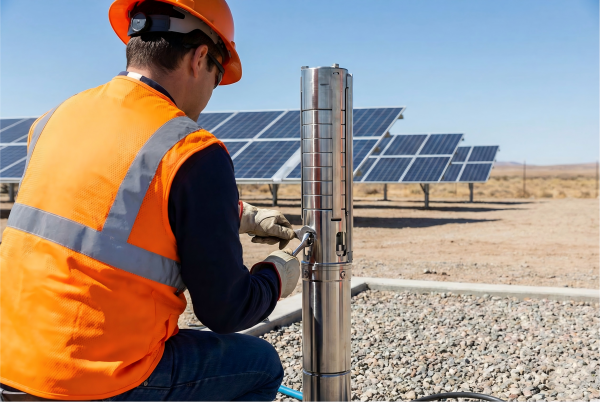
A solar pump is not a single item.
It is a complete system.
The question "What is the lifespan of a solar pump?" has a layered answer.
You cannot judge the system by a single number.
The true lifespan of your investment is determined by the durability of its individual parts.
These parts include the solar panels, the motor, the pump itself, and the electronic controller.
Each has its own expected lifespan and is affected by different factors.
To make a wise purchasing decision, you need to look beyond the initial price.
You must understand how these components work together and what makes them last.
Let's break down the system to reveal what truly determines how long your water will flow.
The Power Source | Solar Panel Longevity
You see solar panels on roofs lasting for decades.
You assume they last forever.
But degradation is a real concern that could reduce your pump's power over time.
Solar panels have the longest lifespan in the system, typically with a performance warranty of 20-25 years.
They degrade slowly, usually losing less than 1% of their efficiency per year, ensuring decades of reliable power.
The solar panels are the most visible and often the most durable part of the entire system.
They are designed to withstand the elements for decades.
Most high-quality manufacturers offer a linear performance warranty.
This warranty guarantees that the panels will still produce a certain percentage of their original power after a long period.
It is common to see a warranty for 80-85% of rated power output after 25 years.
This predictable, slow decline in performance is a key reason why solar technology is such a reliable long-term investment.
However, the lifespan is not just about power output.
It is also about physical resilience.
Understanding Panel Construction and Durability
Solar panels are built to be tough.
They consist of several layers laminated together for protection and performance.
- Anodized aluminum frame for rigidity and corrosion resistance.
- Tempered glass front sheet to protect against impact like hail and debris.
- Encapsulant layers (usually EVA) that bond the components and protect cells from moisture.
- The solar cells themselves (monocrystalline or polycrystalline).
- A protective backsheet.
This robust construction allows them to endure extreme temperatures, high winds, and heavy snow loads.
Product warranties, which cover manufacturing defects, are typically shorter, often 10 to 12 years.
The real-world lifespan often exceeds both warranty periods if the panels are not physically damaged.
The Inevitable Reality of Degradation
All solar panels degrade over time.
This means their ability to convert sunlight into electricity slowly decreases.
The rate of degradation is a critical factor in a panel's quality.
Premium panels may have a degradation rate as low as 0.5% per year.
A lower-quality panel might degrade at 1% or more per year.
Over 25 years, this difference becomes significant.
A panel degrading at 0.5% annually will retain over 87% of its power.
A panel degrading at 1% annually will only retain about 78% of its power.
For a water pumping system, this means the pump may run for fewer hours per day or at a lower speed as the years go by.
It is crucial to over-provision the solar array slightly during the initial design phase to account for this long-term degradation.
Dust, dirt, and bird droppings can also significantly reduce output, but this is not permanent degradation.
Regular cleaning can restore performance to its optimal level, acting as the primary form of maintenance for this component.
The Core of the System | Pump and Motor Lifespan
The pump works hard underground, out of sight.
You worry it's the weak link that could fail unexpectedly.
This uncertainty about the pump's durability makes it difficult to trust the entire system long-term.
The pump and motor have a more variable lifespan of 10 to 15 years.
Longevity is directly tied to the motor's technology and the pump type's resistance to abrasion and corrosion from your specific water source.
The "pump" is actually two distinct parts working together: the motor and the pump end.
The motor provides the power.
The pump end, or "wet end," is what moves the water.
These components are the system's true workhorses.
They operate in harsh, unseen environments.
Their lifespan is influenced by engineering quality, material selection, and the conditions of the well.
This is where the most significant differences between high-quality and low-quality systems are found.
A well-engineered motor and a properly selected pump end can provide over a decade of trouble-free service.
A poor choice can lead to failure in just a few years.
Understanding the technology inside these components is essential for predicting their durability.
The BLDC Motor: Engineered for Longevity
The motor is the engine of your water pump.
Modern, high-efficiency solar pumps utilize a Brushless DC (BLDC) permanent magnet motor.
This design is fundamentally more reliable and durable than older brushed motor technologies.
- No Brushes to Wear Out: Traditional DC motors use carbon brushes to transfer power, which wear down and create dust, eventually requiring replacement. BLDC motors are electronically commutated, eliminating this common point of failure. This makes them virtually maintenance-free.
- Cooler Operation: BLDC motors are highly efficient, often exceeding 90%. Less energy is wasted as heat, so the motor runs cooler. Heat is a primary enemy of electronic components and motor windings, so cooler operation directly translates to a longer life.
- Sealed for Life: Submersible motors are sealed in a stainless steel housing, often filled with oil or water for cooling and lubrication. This protects the internal components from the well water, preventing rust and electrical shorts.
The use of high-strength materials, like 40SH neodymium iron boron magnets, ensures the motor maintains its power and torque over many years of service. A robust BLDC motor is the foundation of a 10+ year pump lifespan.
The Pump End: Matching Materials to Water Quality
The pump end's lifespan is almost entirely dependent on matching its materials to your water conditions.
This is not a one-size-fits-all situation.
A pump that lasts 15 years in clean water might fail in 2 years in sandy or corrosive water.
| Pump Type | Primary Materials | Lifespan in Clean Water | Lifespan in Sandy Water | Lifespan in Corrosive Water |
|---|---|---|---|---|
| Solar Screw Pump | Stainless Steel Rotor, Rubber Stator | High | Very High | Medium |
| Plastic Impeller Pump | Engineering Plastic Impellers | High | Medium | Low |
| S.S. Impeller Pump | SS304 Impellers & Body | Very High | Medium | Very High |
Solar Screw Pumps are excellent in sandy conditions. The rubbing action of the screw against the rubber stator can handle abrasive particles better than the tight tolerances of a centrifugal pump.
Solar Plastic Impeller Pumps are a cost-effective choice for clean water. The impellers are made from durable, wear-resistant engineered plastics. However, fine, abrasive sand will slowly wear them down, reducing pressure and flow. Highly acidic or alkaline water can also make the plastic brittle over time.
Solar Stainless Steel Impeller Pumps offer the ultimate durability for most applications. The SS304 stainless steel is highly resistant to both abrasion and corrosion, making it the premium choice for difficult wells or when maximizing lifespan is the top priority. It is the best defense against acidic or alkaline water conditions often found in parts of Australia or the Americas.
The Brains of the Operation | Controller Lifespan
The controller is a box of complex electronics.
You worry it could be fried by a power surge or just fail over time.
This makes you question the reliability of the whole "intelligent" system.
A well-made solar pump controller, or MPPT, has an expected lifespan of 8 to 12 years.
Its primary role is to protect the pump motor from damage, which in turn maximizes the motor's own lifespan.
The solar pump controller is the system's brain and bodyguard.
It is much more than a simple on/off switch.
The controller's main job is Maximum Power Point Tracking (MPPT).
This means it constantly adjusts the electrical load to extract the absolute maximum amount of power from the solar panels as the sunlight conditions change throughout the day.
This ensures the pump starts earlier, runs faster in full sun, and stops later in the evening, maximizing the total water pumped each day.
But its role in system longevity is even more critical.
It provides a suite of protective features that act as a safety net for your investment, the motor.
A controller's own lifespan depends on the quality of its electronic components and its ability to manage heat.
How the Controller Protects Your Investment
The controller is constantly monitoring the system's electrical parameters.
If it detects an unsafe condition, it will instantly shut down the pump to prevent damage.
This protection is arguably the most important factor in achieving a long motor life.
Key protective functions include:
- Dry Run Protection: If the well runs out of water, the pump can quickly overheat and fail. The controller detects the change in motor load and stops the pump, automatically attempting to restart later.
- Over-voltage and Reverse Polarity Protection: Protects the electronics from incorrect wiring during installation or from spikes from the solar array.
- Over-current and Overload Protection: If the pump gets clogged with debris or sand, the motor will draw excessive current. The controller stops the motor before the windings can burn out.
- Soft Start: The controller slowly ramps up the motor speed instead of starting it at full power. This reduces mechanical stress on the pump, motor, and pipes, contributing to a longer mechanical life.
Factors Affecting Controller Longevity
Like any piece of electronics, the controller's life is finite.
Its lifespan is primarily determined by two things: component quality and heat management.
- Component Quality: Industrial-grade capacitors, transistors, and microprocessors will last far longer than cheaper, consumer-grade equivalents. This is a major differentiator between reputable and low-cost brands.
- Heat Management: Heat is the enemy of electronics. A well-designed controller will have a large, finned aluminum heat sink to passively dissipate heat. It must be installed in a shaded, well-ventilated location, never in a sealed box exposed to direct sunlight. A controller that runs hot will have a significantly shorter lifespan.
Some advanced controllers also feature AC/DC hybrid capabilities.
This allows the system to be powered by a generator or the grid when there is no sun.
This feature adds complexity but also enhances reliability by ensuring a 24/7 water supply, adding another layer of value to the system.
Conclusion
A solar pump's lifespan is a story of its parts.
With quality components and proper selection for your water conditions, a system can reliably deliver water for well over a decade.
Frequently Asked Questions
What maintenance does a solar water pump require?
Maintenance is minimal.
It mainly involves cleaning the solar panels a few times a year and occasionally checking electrical connections.
The pump and motor are generally maintenance-free.
Can a solar pump run at night?
Not on its own.
To have water at night, you must either pump into a storage tank during the day or use a hybrid controller with an AC power source like the grid or a generator.
What happens to a solar pump on cloudy days?
The pump will run at a reduced speed and flow rate.
On very heavily overcast days, it may not run at all.
A water storage tank is the best solution for cloudy weather.
How much does a solar water pump system cost?
The cost varies widely based on well depth, required water volume, and component quality.
Systems can range from a few hundred to many thousands of dollars.
Can I install a solar water pump myself?
DIY installation is possible for those with good electrical and plumbing skills.
However, professional installation is recommended to ensure safety, proper grounding, and warranty validity.
Do solar pumps need batteries?
No, the vast majority of solar pumping systems do not use batteries.
It is far more reliable and cost-effective to use the sun's energy to pump water into a storage tank.