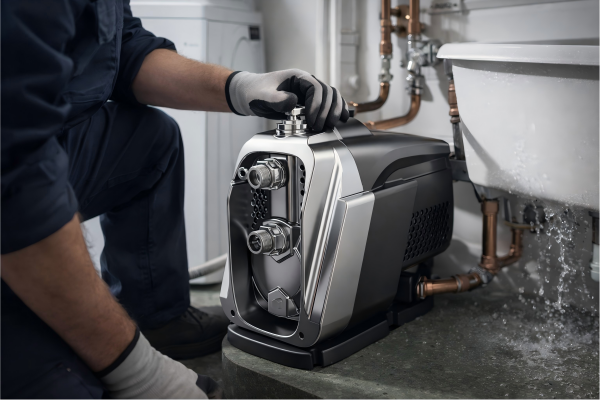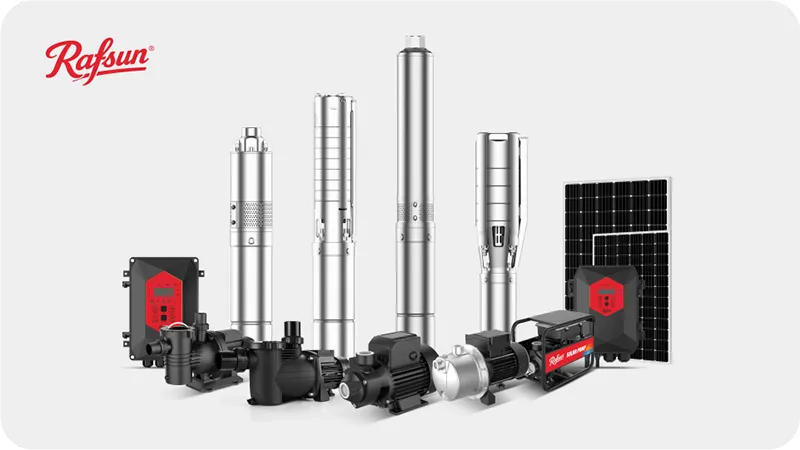
Struggling with industrial tasks that demand immense force?
Low-pressure systems can't handle demanding jobs like high-pressure cleaning, water jet cutting, or large-scale fluid transfer, leading to inefficiency and failure.
A high-pressure pump is designed to convert mechanical energy into intense fluid pressure.
It enables tasks requiring forceful injection, cleaning, or precise fluid movement in industries like manufacturing, oil and gas, and aerospace, where standard pumps would be insufficient.
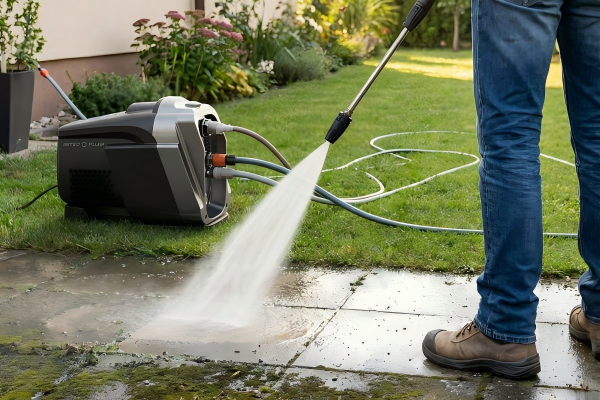
High-pressure pumps are the unseen workhorses behind many of our modern industrial processes.
They provide the necessary power to move fluids under extreme conditions.
Without them, many critical operations would simply not be possible.
Understanding their function is key for any professional involved in fluid dynamics, from system designers to facility managers.
This article will break down what these powerful devices are, the different types available, their common applications, and the fundamental principles of how they operate.
Let's explore the world of high-pressure pumps and uncover why they are so essential.
What is a High Pressure Pump?
Is your current pump system failing to deliver the force you need?
This lack of pressure can stall projects, decrease efficiency, and impact your bottom line, creating a constant operational headache.
A high-pressure pump is a specialized device designed to significantly increase the pressure of a fluid.
It applies force to the liquid, moving it at pressures far beyond the capabilities of standard pumps, typically operating between 70 and 700 Bars to meet demanding industrial requirements.
A high-pressure pump is engineered for one primary task.
It takes a fluid at a lower pressure and boosts it to a much higher pressure.
This process is not about moving large volumes quickly.
Instead, the focus is on generating force.
Imagine trying to push water through a very small opening with great power.
That is the essence of what these pumps do.
The operational pressure range is a key differentiator.
Standard water pumps in a home might operate at 3-4 Bars.
In contrast, high-pressure pumps start where normal pumps leave off, often around 70 Bars.
They can go up to 700 Bars or even higher for specialized applications.
This capability makes them indispensable in heavy industry.
The term "fluid" is used because these pumps can handle more than just water.
They are used to move oils, chemicals, slurry, and gases.
The design and materials of the pump must be compatible with the fluid to prevent corrosion and ensure safety.
The Core Function: Creating Force
The fundamental principle is the conversion of energy.
A motor, either electric or combustion-driven, provides mechanical energy.
The pump's internal mechanism converts this rotational energy into hydraulic energy in the form of pressure.
This isn't magic; it follows basic physics principles.
By reducing the area through which a fluid is forced, its pressure increases dramatically.
This is why they are often paired with nozzles or injectors to focus the pressurized fluid into a powerful stream.
Think of it like putting your thumb over the end of a garden hose.
You reduce the exit area, and the water shoots out with much more force.
A high-pressure pump does this on a massive, industrial scale.
Not All Pumps Are Created Equal
It's vital to distinguish high-pressure pumps from high-flow pumps.
While some pumps can do both, they are often designed for one primary purpose.
- High-Flow Pumps: Focus on moving a large quantity of fluid in a given time. Think of drainage or large-scale water circulation. Pressure is secondary.
- High-Pressure Pumps: Focus on generating force. Flow rate is often lower but the fluid is delivered with incredible power.
This distinction is crucial for selecting the right equipment.
Choosing a high-flow pump for a high-pressure job will result in failure.
Conversely, using a high-pressure pump for a simple transfer task is inefficient and costly.
Understanding this difference is the first step in proper system design.
Types of High Pressure Pumps
Choosing the wrong pump type can lead to system failure and costly downtime.
Each application has unique requirements for flow and pressure, and a one-size-fits-all approach just doesn't work in demanding environments.
High-pressure pumps come in several designs, each suited for specific needs.
The main categories are positive displacement, centrifugal, and reciprocating pumps, which are selected based on whether the application demands constant flow, high volume, or extreme pressure with lower flow rates.
To make an informed decision for your project, it is essential to understand the core differences between the major types of high-pressure pumps.
Each design has inherent strengths and weaknesses that make it ideal for certain tasks and unsuitable for others.
Your choice will directly impact your system's efficiency, reliability, and long-term operating cost.
Let's break down the mechanics and best-use cases for the three most common types.
Positive Displacement Pumps
Positive displacement (PD) pumps operate by trapping a fixed amount of fluid and then forcing it into the discharge pipe.
This method ensures a constant flow rate, regardless of the discharge pressure.
This makes them extremely predictable and reliable for dosing and metering applications.
They are the go-to choice when a precise, consistent volume of fluid is required.
Think of a syringe.
Each push of the plunger displaces a specific volume of liquid.
A PD pump works on a similar, continuous principle.
This mechanical action is what allows it to overcome high back-pressure.
There are several sub-types of PD pumps:
- Rotary Pumps: Use gears, lobes, or screws that mesh together to move fluid.
- Diaphragm Pumps: Use a flexible membrane that is pushed back and forth by air or hydraulic fluid, creating a pumping action. These are excellent for handling corrosive or abrasive fluids as the mechanical parts do not touch the liquid.
- Peristaltic Pumps: Use rollers to squeeze a flexible tube, pushing the fluid forward. They are ideal for sterile or sensitive applications.
Centrifugal Pumps
Centrifugal pumps use a spinning impeller to generate velocity in the fluid.
The fluid enters the pump near the center of the rotating impeller.
The impeller's vanes catch the fluid and accelerate it radially outward.
As the fluid leaves the impeller, it enters a volute or diffuser casing, where the high velocity is converted into high pressure.
These pumps are best suited for applications requiring high flow rates.
They are the workhorses of water treatment plants and large-scale fluid transport systems.
While they can be designed for high pressure, especially in multi-stage configurations, their primary strength is volume.
A key characteristic of centrifugal pumps is that their flow rate varies with pressure.
As the system pressure increases, the flow rate from a centrifugal pump decreases.
They are generally simpler in design and have fewer moving parts than positive displacement pumps, often leading to lower maintenance costs.
Reciprocating Pumps
Reciprocating pumps are a type of positive displacement pump, but they deserve their own category due to their prominence in high-pressure applications.
They use a piston, plunger, or diaphragm moving back and forth in a cylinder to move fluid.
A forward stroke pushes the fluid out, and a backward stroke draws more fluid in.
Check valves are used to ensure the fluid only moves in one direction.
Plunger pumps are the most common type used for generating extremely high pressures.
Because the plunger is a solid cylinder, it can be built to withstand immense forces.
They are typically used in applications where high pressure is the primary goal, and flow rate is secondary.
Oil and gas extraction and high-pressure water-jet cleaning are classic examples.
| Pump Type | Primary Principle | Best For | Key Characteristic | Common Example |
|---|---|---|---|---|
| Positive Displacement | Traps and moves a fixed volume | Precise, constant flow | Flow rate is largely independent of pressure | Chemical injection |
| Centrifugal | Uses an impeller to add velocity | High flow rates | Flow rate decreases as pressure increases | Water treatment |
| Reciprocating | Piston/plunger moves back and forth | Very high pressure, low flow | Creates a pulsed flow | Pressure washing |
Applications of High Pressure Pumps
Without the right pump, critical industrial processes would grind to a halt.
From extracting oil deep in the earth to delicate cleaning, many operations are impossible without the ability to generate intense fluid pressure.
High-pressure pumps are essential in many industries.
They are used for oil and gas production, chemical processing, water treatment, and aerospace hydraulic systems.
Their ability to move fluids under immense force makes them critical for extraction, transportation, filtration, and power.
The versatility of high-pressure pumps means they are found in nearly every sector of the modern economy.
Their role is often hidden from public view, but the services they enable are fundamental to our daily lives.
Understanding these applications helps to appreciate the engineering and reliability required of these machines.
Let's explore some of the most common and critical uses in more detail.
Oil and Gas Production
The oil and gas industry is one of the largest users of high-pressure pumps.
They are vital at every stage of the process.
Extraction: Pumps are used to inject water, steam, or chemicals into reservoirs to force oil and gas out of the ground. This process, known as enhanced oil recovery, requires enormous and sustained pressure.
Transportation: Once extracted, crude oil and natural gas must be transported over long distances through pipelines. High-pressure pumps provide the force needed to move these fluids from remote wells to processing facilities, often hundreds of miles away.
Processing: Within a refinery, various processes require fluids to be moved between high-pressure vessels.
Chemical Processing
In the chemical industry, precision and reliability are paramount.
High-pressure pumps are used to move a wide variety of volatile, corrosive, and viscous chemicals.
Reactors: Many chemical reactions must occur under high pressure to proceed efficiently or to produce the desired output. Pumps feed raw materials into these high-pressure reactors.
Transportation: Similar to the oil industry, finished chemicals are often transported via pipeline or loaded onto tankers using powerful pumps.
Dosing: Positive displacement pumps are used to inject precise amounts of chemicals (like catalysts or inhibitors) into a process stream, where accuracy is critical.
Water Treatment and Cleaning
High pressure is a key tool in cleaning and purification.
Reverse Osmosis (RO): This is a primary method for desalination and water purification. High-pressure pumps force water through a semi-permeable membrane, leaving salts and impurities behind. This process requires pressures often exceeding 60 Bars.
Water Jetting: Extremely high-pressure pumps (sometimes over 2,500 Bars) are used to create a fine jet of water that can cut steel, clean industrial tanks, or remove concrete. It is a powerful and environmentally friendly alternative to other methods.
Pressure Washing: On a smaller scale, commercial and industrial pressure washers use these pumps to efficiently clean buildings, vehicles, and equipment.
Aerospace
Reliability in aerospace is a matter of life and death.
High-pressure pumps are at the heart of an aircraft's hydraulic systems.
These systems power critical functions that require immense force in a compact space.
Here are some key aircraft systems powered by hydraulics:
- Flight Controls: Moving the large control surfaces on the wings and tail (ailerons, elevators, rudder) against huge aerodynamic forces.
- Landing Gear: Extending and retracting the heavy landing gear assemblies.
- Brakes: Applying the massive force needed to stop a heavy aircraft upon landing.
- Flaps and Slats: Adjusting the wing shape for takeoff and landing.
These pumps must be lightweight, powerful, and incredibly reliable, showcasing an extreme of pump engineering.
How High Pressure Pumps Work
Not understanding how your pump works can lead to improper operation and costly maintenance.
Generic knowledge is not enough when dealing with an equipment failure that is holding up your entire operation.
All high-pressure pumps work by applying force to a fluid, but the mechanism varies by type.
Positive displacement pumps trap and squeeze a fluid, centrifugal pumps use rotational speed to create pressure, and reciprocating pumps use a back-and-forth piston to force fluid through.
While the end result is a high-pressure fluid stream, the journey the fluid takes inside the pump is unique to its design.
Grasping these core mechanical principles is essential for anyone responsible for selecting, operating, or maintaining these systems.
A deeper understanding of the "how" allows for better troubleshooting and optimization of your fluid handling processes.
Let's look more closely at the operational cycles of the main pump types.
The Mechanics of Positive Displacement
Positive displacement pumps are like a precise measuring-and-pushing machine.
The key concept is an expanding and contracting cavity.
The Suction Phase: The pump's internal mechanism creates an expanding cavity on the suction side. This expansion generates a vacuum, which draws fluid into the pump from the inlet.
The Trapping Phase: As the mechanism continues its cycle, the cavity is sealed off from the inlet. A fixed volume of fluid is now trapped inside the pump.
The Discharge Phase: The mechanism then reduces the volume of the cavity. Because liquids are largely incompressible, this action forces the fluid out of the discharge port.
A great example of this is a high-pressure diaphragm pump.
These pumps use a flexible diaphragm, often driven by compressed air.
- Air pressure is applied to one side of the diaphragm, pushing it forward.
- This movement reduces the volume of the liquid chamber, forcing the fluid out through a one-way discharge valve.
- The air pressure is then vented, and a spring or air on the opposite side returns the diaphragm.
- This return stroke expands the liquid chamber, drawing new fluid in through a one-way suction valve.
Some advanced designs use a 2:1 ratio.
They apply air pressure to the surface area of two diaphragms but only use one chamber for the working liquid.
This ingenious design effectively doubles the output pressure for a given air supply pressure, making it ideal for moving high-viscosity fluids or pumping over long distances.
The trade-off is a reduced flow rate, as the active liquid chamber volume is smaller.
The Dynamics of Centrifugal Force
Centrifugal pumps operate on a completely different principle.
They don't trap fluid; they energize it.
Fluid Entry: Fluid enters the pump at the center of a rapidly spinning impeller. This area is called the pump's eye.
Energy Transfer: The vanes of the impeller catch the fluid and rapidly accelerate it. This imparts kinetic energy (velocity) to the fluid.
Pressure Conversion: The fluid is thrown outward by centrifugal force into the pump casing, known as the volute. The volute is a specially shaped chamber that gradually widens. As the fluid slows down in this expanding area, its kinetic energy is converted into potential energy, or pressure.
For high-pressure applications, multiple impellers are often used in series.
This is called a multistage pump.
The discharge from the first stage becomes the suction input for the second stage.
Each stage adds more pressure, allowing the pump to reach very high final pressures.
This design is common for boiler feed water in power plants, where immense pressures are required to force water into a pressurized steam drum.
The Power of Reciprocation
Reciprocating pumps generate pressure through a simple, powerful, back-and-forth motion.
Let's use a plunger pump as the classic example.
The Suction Stroke: A plunger is pulled backward out of a cylinder. This creates a vacuum in the cylinder, which pulls a suction valve open and draws fluid in. The discharge valve remains closed due to the pressure in the outlet pipe.
The Discharge Stroke: The plunger is then pushed forward into the cylinder. This rapidly pressurizes the trapped fluid. The high pressure forces the suction valve to close and the discharge valve to open, pushing the fluid out into the system.
This cycle repeats, creating a powerful but pulsed flow.
To smooth out these pressure pulses, systems often include a component called a pulsation dampener or accumulator.
This is a small tank with a gas-filled bladder that absorbs the pressure spikes and releases fluid during the low-pressure part of the cycle.
Conclusion
In summary, high-pressure pumps are fundamental industrial tools.
They provide the force needed for processes in manufacturing, energy, and beyond, making them critical for modern operations and infrastructure.
FAQs
What is the main function of a pump?
A pump's main function is to move fluids (liquids or gases) from one place to another. It does this by converting mechanical energy into hydraulic energy.
How is high pressure created in a pump?
High pressure is created by reducing the area the fluid flows through or by mechanically forcing it. Positive displacement pumps trap and squeeze fluid to generate pressure.
What is the difference between a pump and a high-pressure pump?
A high-pressure pump is specifically designed to operate at significantly higher pressures than standard pumps. They focus on generating force, often with a lower flow rate.
What are high-pressure pumps used for?
They are used for tasks requiring immense force, like water jet cutting, hydraulic fracturing in oil and gas, reverse osmosis water purification, and powering aircraft hydraulic systems.
What is the pressure of a high-pressure pump?
High-pressure pumps typically operate between 70 and 700 Bars (about 1,000 to 10,000 PSI). Specialized pumps for applications like water jetting can exceed 4,000 Bars.
How do I choose a high-pressure pump?
To choose a pump, you must consider the required pressure, the necessary flow rate, the type of fluid being pumped, and the operational environment to ensure efficiency.
Are high-pressure pumps dangerous?
Yes, the high energy stored in the pressurized fluid can be extremely dangerous. Proper safety protocols, regular maintenance, and trained personnel are essential for safe operation.
Can a high-pressure pump be used for low pressure?
While technically possible, it is highly inefficient. Using a high-pressure pump for a low-pressure task wastes energy and can cause excessive wear on the components.