Struggling to move large volumes of fluid efficiently?
This common industrial challenge can lead to costly delays and operational bottlenecks.
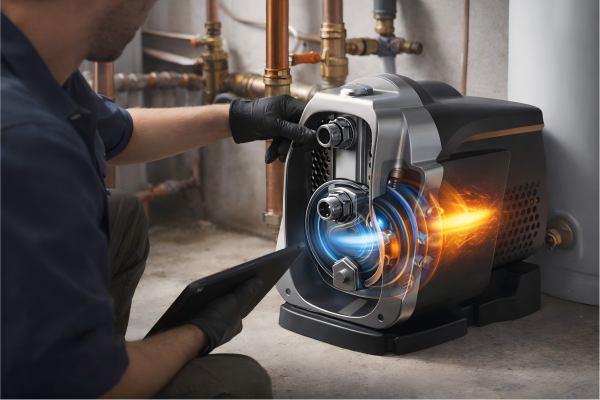
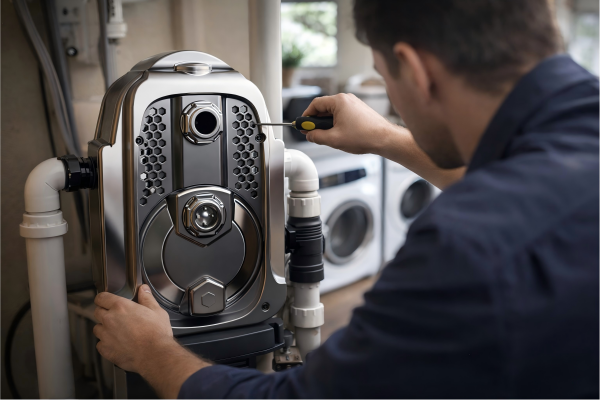
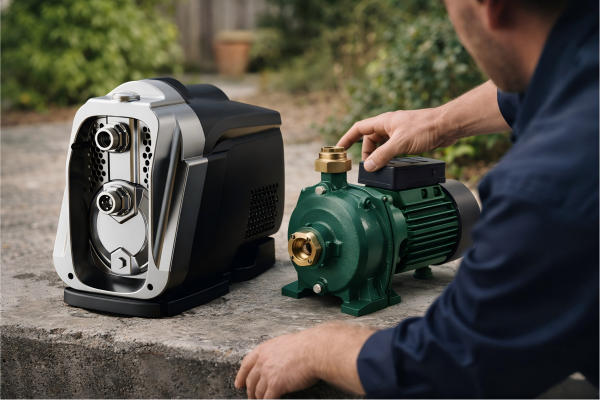
The solution is a reliable, high-performance centrifugal pump.
Centrifugal pumps are most used in a wide range of industries for transferring low-viscosity fluids.
Their primary applications include water supply and treatment, agriculture for irrigation, and various industrial processes like chemical manufacturing, power generation, and oil and gas operations due to their simple design and efficiency.
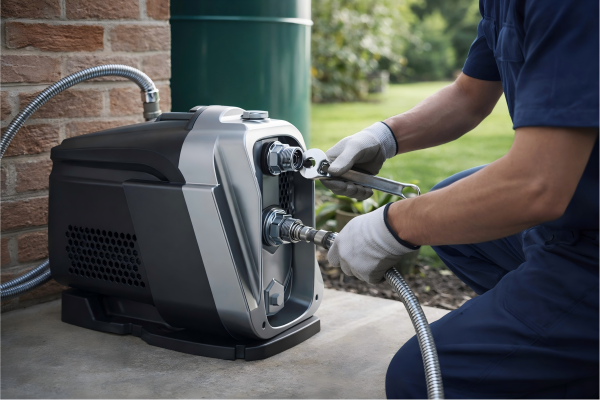
Centrifugal pumps are the unsung heroes of the modern world.
You find them everywhere, from towering skyscrapers to vast agricultural fields.
They are essential for moving water, chemicals, and other liquids.
Their simple design and reliable operation make them a top choice for countless applications.
But their versatility is what truly sets them apart.
This article explores the key sectors where these powerful machines are indispensable.
We will uncover why they are the go-to solution for fluid transfer challenges across the globe.
Let's dive into the specifics of where these pumps make the biggest impact.
Why are centrifugal pumps essential in municipal water systems?
Managing a city's water supply is a huge challenge.
Failures can leave thousands without clean water, causing public health crises.
Centrifugal pumps provide the reliable, high-volume flow needed for modern urban infrastructure.
Centrifugal pumps form the backbone of municipal water systems.
They are essential for drawing water from sources like rivers and reservoirs, treating it to drinking water standards, and distributing it through vast networks of pipes to homes, businesses, and for fire suppression services.
Centrifugal pumps perform several critical functions within municipal water management.
Their role begins right at the source.
They handle the initial raw water intake, a task that requires moving massive volumes efficiently.
These pumps must be robust enough to handle water that may contain silt, sand, and other debris.
From there, the water moves to treatment facilities where pumps are used in every stage of the purification process.
Raw Water Intake and Transfer
The first step is moving water from a natural source like a lake, river, or reservoir to a treatment plant.
Intake pumps are typically large, high-capacity vertical or horizontal centrifugal pumps.
They often operate 24/7, requiring exceptional durability and reliability.
For instance, a medium-sized city might require pumps capable of moving over 50 million gallons (approximately 189,000 cubic meters) of water per day.
The selection of these pumps depends heavily on the total dynamic head (TDH) and required flow rate.
Water Treatment Processes
Inside the treatment plant, smaller centrifugal pumps take over.
They are used for a variety of tasks that require precise control over flow and pressure.
| Treatment Stage | Pump Function | Key Considerations |
|---|---|---|
| Coagulation/Flocculation | Dosing pumps (often a type of centrifugal) add chemicals like alum or ferric chloride. | Chemical compatibility, precise flow control, corrosion resistance. |
| Sedimentation | Pumps transfer water between settling tanks. | Low-shear pumping to avoid breaking up flocs. |
| Filtration | Backwash pumps force clean water backward through filters to clean them. | High pressure and flow for short durations. Efficiency is key to reducing energy costs. |
| Disinfection | Dosing pumps inject chlorine or other disinfectants. | High accuracy and reliability to ensure public safety. |
Distribution and Boosting
After treatment, high-service pumps, which are large multistage centrifugal pumps, send the clean water into the municipal distribution network.
These pumps must generate enough pressure to overcome elevation changes and friction losses in miles of piping, ensuring adequate water pressure reaches every customer.
In sprawling or hilly areas, booster pump stations with smaller centrifugal pumps are installed within the network.
These stations automatically activate when pressure drops below a certain threshold, ensuring consistent service for all end-users.
For example, a booster pump might increase pressure by 30-50 PSI to serve a neighborhood on a hill.
This multi-layered approach ensures that even the most remote parts of a city receive reliable water service, a feat made possible by the versatility of centrifugal pumps.
How vital are centrifugal pumps for modern agriculture?
Farmers face constant pressure to increase crop yields with limited water.
Droughts and inefficient irrigation can devastate harvests and livelihoods.
Centrifugal pumps offer a powerful, cost-effective solution for delivering water exactly where it's needed.
In agriculture, centrifugal pumps are crucial for irrigation.
They move water from sources like wells, rivers, or canals to fields, enabling everything from large-scale sprinkler and pivot systems to localized drip irrigation.
Their efficiency directly impacts crop yield and farm profitability, especially in arid regions.
The role of centrifugal pumps in agriculture has transformed farming from a rain-dependent practice to a highly controlled science.
They empower farmers to manage water resources effectively, which is critical for food security worldwide.
About 70% of the world's freshwater withdrawals are used for agriculture, and efficient pumping is key to making every drop count.
Different farming applications require different types of pump setups.
Large-Scale Irrigation Systems
Center-pivot and linear-move irrigation systems cover vast circular or rectangular fields.
These systems require a constant, high-volume water supply with significant pressure to operate the sprinklers along their length.
Large, end-suction centrifugal pumps are the standard choice here.
They are typically powered by diesel engines or electric motors and must be durable enough to run for thousands of hours per season in harsh outdoor conditions.
A pump for a quarter-mile pivot system might need to deliver 800-1,200 gallons per minute (GPM) at a pressure of 60-90 PSI.
Drip and Micro-Irrigation
Drip irrigation is a highly efficient method that delivers water directly to the plant's root zone.
While it uses less water overall, it still relies on centrifugal pumps to pressurize the system.
These systems operate at lower pressures (15-30 PSI) but require a clean, consistent flow to prevent emitters from clogging.
Multistage centrifugal pumps are often used because they can provide steady pressure even when the flow demand changes as different irrigation zones are activated.
This precise water delivery can increase water efficiency by up to 95% compared to traditional flood irrigation.
Other Agricultural Applications
Beyond field irrigation, centrifugal pumps are used in numerous other ways on a farm.
- Water Transfer: Moving water from a source to a holding pond or storage tank.
- Fertigation and Chemigation: Injecting liquid fertilizers and pesticides into the irrigation water. This requires pumps made from chemically resistant materials.
- Livestock Watering: Pumping water from wells or ponds to troughs for animals.
- Aquaculture (Fish Farming): Circulating and aerating water in fish ponds. Continuous operation is critical for maintaining oxygen levels.
The choice of pump is critical for optimizing energy use.
Using a variable speed drive (VSD) with a centrifugal pump can reduce energy consumption by 30-50% in irrigation applications.
The pump's speed is adjusted to precisely match the water demand, avoiding wasted energy from throttling valves or running the pump at full speed when it is not necessary.
This makes modern agriculture more sustainable and profitable.
What role do centrifugal pumps play in the industrial sector?
Industrial plants handle complex processes that depend on precise fluid movement.
A pump failure can halt production, damage expensive equipment, and create safety hazards.
Centrifugal pumps are the workhorses that provide the reliable flow needed to keep these facilities running.
Centrifugal pumps are indispensable in the industrial sector.
They are used for everything from pumping raw materials and handling corrosive chemicals to circulating heating and cooling fluids, managing wastewater, and providing boiler feedwater.
Their robust construction ensures continuous operation in demanding environments.
In the vast landscape of industrial manufacturing, centrifugal pumps are the most common type of pump, accounting for an estimated 75% of all pumps installed.
Their adaptability allows them to be customized for an incredible range of fluids, temperatures, and pressures.
This makes them a cornerstone of production in nearly every industrial segment.
Chemical and Petrochemical Processing
The chemical industry places extreme demands on equipment.
Pumps must handle fluids that are highly corrosive, abrasive, toxic, or at extreme temperatures.
Centrifugal pumps designed for these applications are built from specialized materials.
| Pump Material | Typical Application |
|---|---|
| Stainless Steel (316) | General chemicals, acids, solvents. Good corrosion resistance. |
| Duplex Stainless Steel | Seawater, brines, and chloride-containing environments. High strength. |
| Titanium | Highly corrosive chemicals like wet chlorine and nitric acid. |
| Lined Pumps (e.g., PFA/Teflon) | Aggressive acids and bases where metallic options are unsuitable. |
Compliance with industry standards like API 610 is mandatory in petrochemical plants.
These standards dictate strict requirements for pump design, materials, and testing to ensure safety and reliability in handling flammable and hazardous hydrocarbons.
These heavy-duty pumps are critical for processes like fractional distillation, catalytic cracking, and fluid transfer between storage tanks.
Power Generation
In power plants, both fossil fuel and nuclear, centrifugal pumps are vital for an efficient thermodynamic cycle.
The most critical application is the boiler feedwater pump.
This is a high-pressure, multistage centrifugal pump that forces deaerated water into the boiler or steam generator.
Pressures can exceed 3,000 PSI in supercritical power plants.
Failure of this pump will immediately shut down the entire plant.
Other key applications include:
- Condensate Extraction Pumps: These pull condensed steam (water) from the condenser under a vacuum and send it to the deaerator.
- Cooling Water Pumps: These are massive pumps that circulate water from a river, lake, or cooling tower to the condenser to cool the exhaust steam. Flow rates can be in the hundreds of thousands of GPM.
General Manufacturing and HVAC
Beyond heavy industry, centrifugal pumps are ubiquitous in general manufacturing and commercial buildings.
- Heating, Ventilation, and Air Conditioning (HVAC): Pumps circulate hot or chilled water through buildings for climate control. These are the most common pump application in the commercial world.
- Wastewater Treatment: Submersible centrifugal pumps with grinder or vortex impellers are used to move raw sewage and industrial effluent containing solids.
- Food and Beverage Production: Hygienic centrifugal pumps, made from polished stainless steel with easy-to-clean designs, are used to transfer products like milk, juice, and beer.
The selection process for an industrial pump is meticulous, focusing on the fluid's properties, system requirements, and the total lifecycle cost, which includes initial price, energy consumption, and maintenance.
Conclusion
Centrifugal pumps are a foundational technology.
Their use spans critical sectors from municipal water and agriculture to nearly every form of industry, making modern life and commerce possible.
FAQs
What is the main working principle of a centrifugal pump?
A centrifugal pump converts rotational energy from a motor into energy in a moving fluid. An impeller accelerates the fluid, which is then slowed in a casing (volute), converting velocity to pressure.
Can a centrifugal pump run without water?
No, running a centrifugal pump dry will quickly damage it. The pumped fluid acts as a coolant and lubricant for the internal seals and bearings, which will overheat and fail without it.
What is the difference between a positive displacement pump and a centrifugal pump?
A centrifugal pump's flow rate varies with pressure, while a positive displacement pump delivers a constant flow regardless of pressure. Centrifugal pumps are better for low-viscosity fluids and high flow rates.
What is cavitation in a pump and why is it bad?
Cavitation is the formation and collapse of vapor bubbles inside a pump. It occurs when suction pressure is too low. This collapse creates noise, vibration, and can rapidly erode pump components.
What is a self-priming centrifugal pump?
A self-priming pump can evacuate air from its suction line without external help. It has a built-in fluid reservoir that allows it to create a vacuum and lift fluid from a lower level.
How do you control the flow rate of a centrifugal pump?
Flow can be controlled by a throttling valve on the discharge line or, more efficiently, by using a variable speed drive (VSD) to change the pump's motor speed.
What is the "Best Efficiency Point" (BEP) of a pump?
The BEP is the point on a pump's performance curve where it operates most efficiently, converting the highest percentage of input power into fluid movement. Operating near the BEP maximizes performance and minimizes wear.