Tired of weak showers and faucets that barely trickle?
This frustration comes from low water pressure, but a whole house pump offers a powerful, home-wide solution.
A whole house pump, or booster pump, is a system installed on your main water line.
It increases the water pressure for your entire home.
This ensures a strong, consistent flow to every faucet, shower, and appliance, solving issues caused by low municipal supply or well systems.
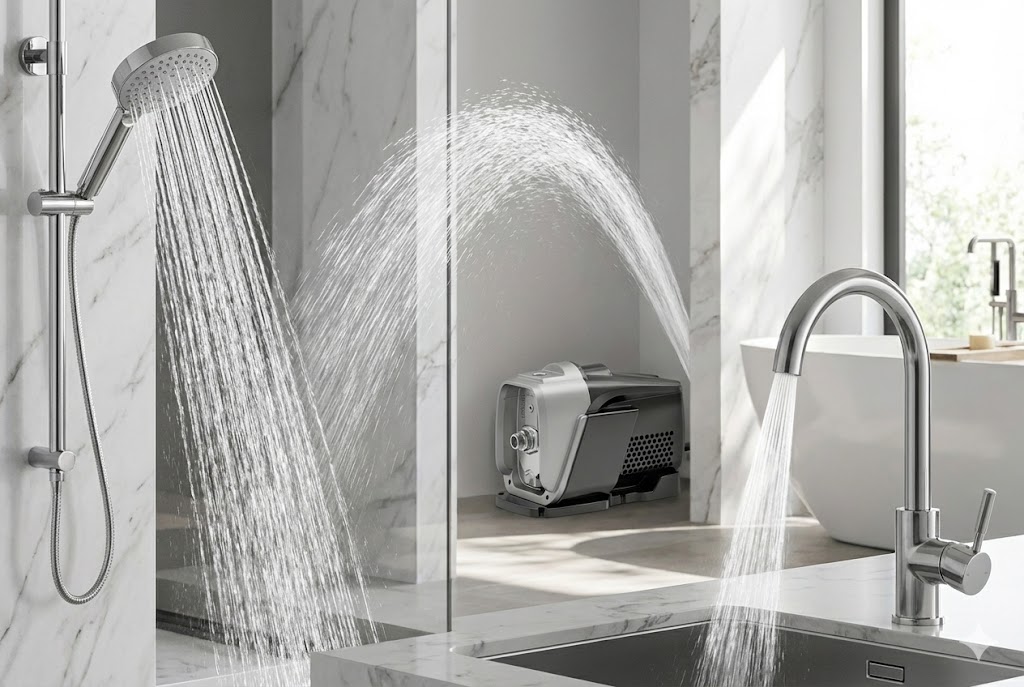
Experiencing inconsistent water pressure can turn simple daily tasks into frustrating chores.
One moment your shower is fine, and the next it's a disappointing drizzle.
This variability not only affects your comfort but can also impact the performance of appliances like washing machines and dishwashers.
Understanding the technology designed to solve this problem is the first step toward a more reliable water supply.
Let's explore how these essential systems work to bring consistent pressure and flow back to your entire home, making low-pressure problems a thing of the past.
How it works
Struggling with a pump that can't keep up with demand?
Constant pressure drops disrupt your entire water system.
A modern booster pump solves this with intelligent, automatic adjustments.
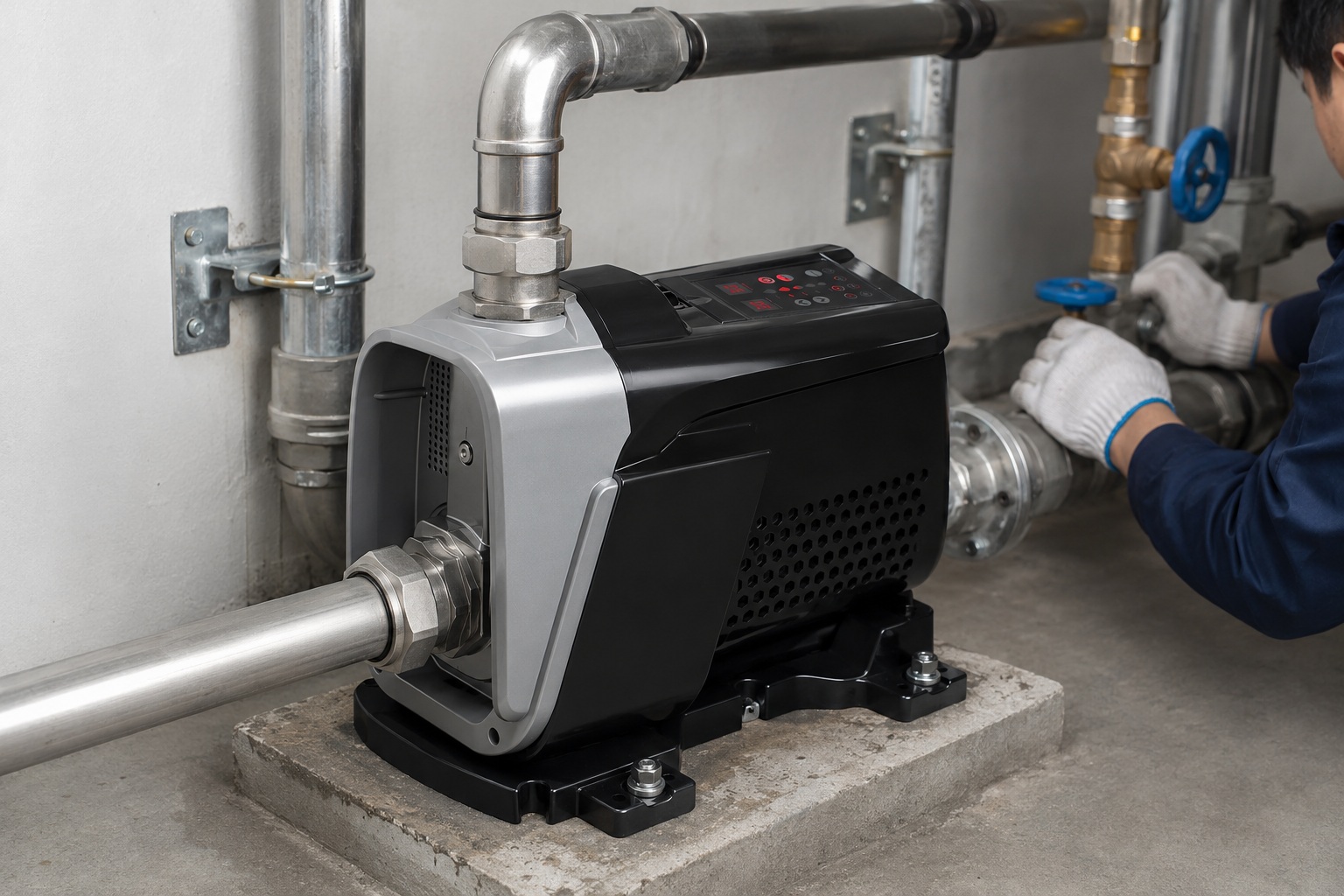
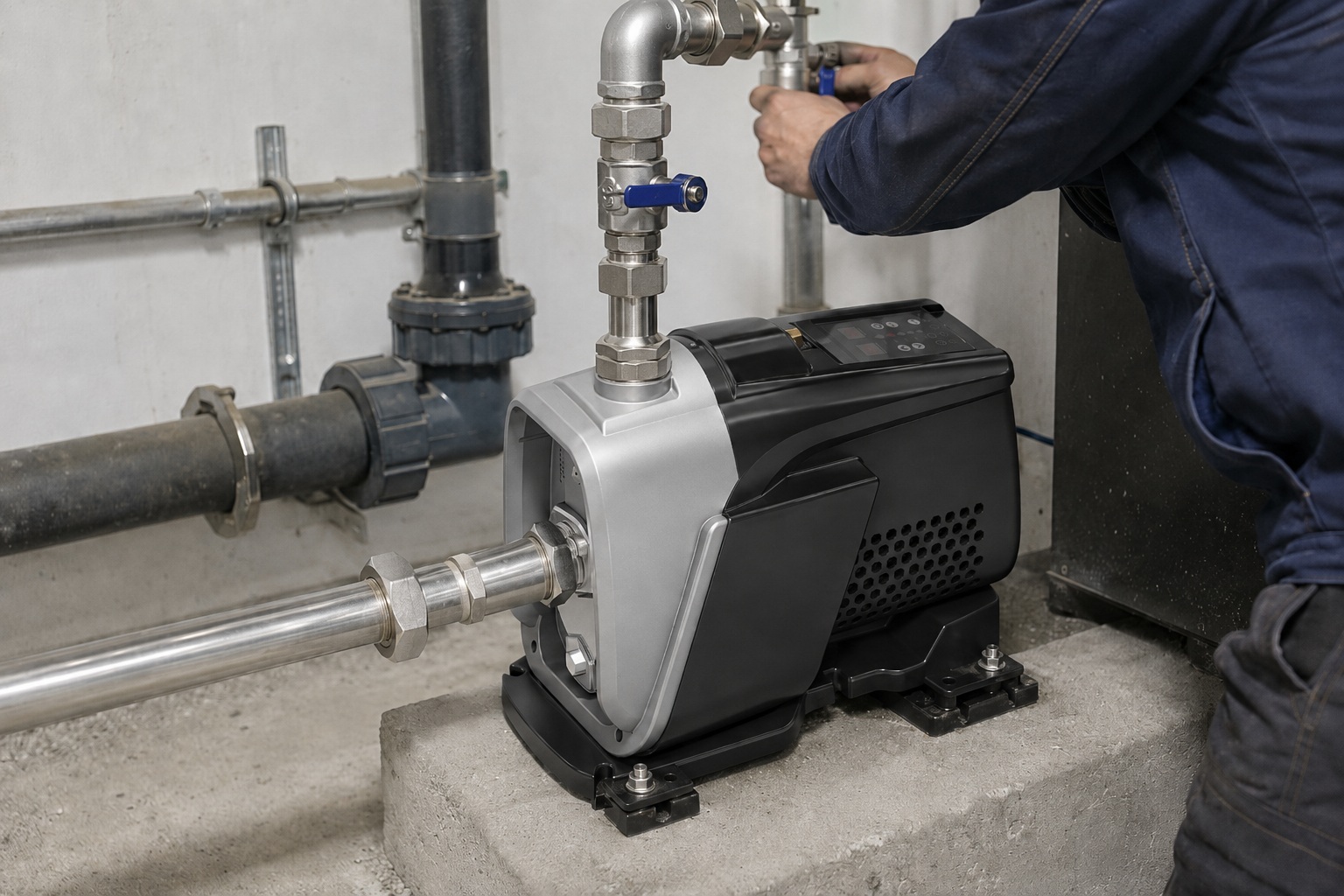
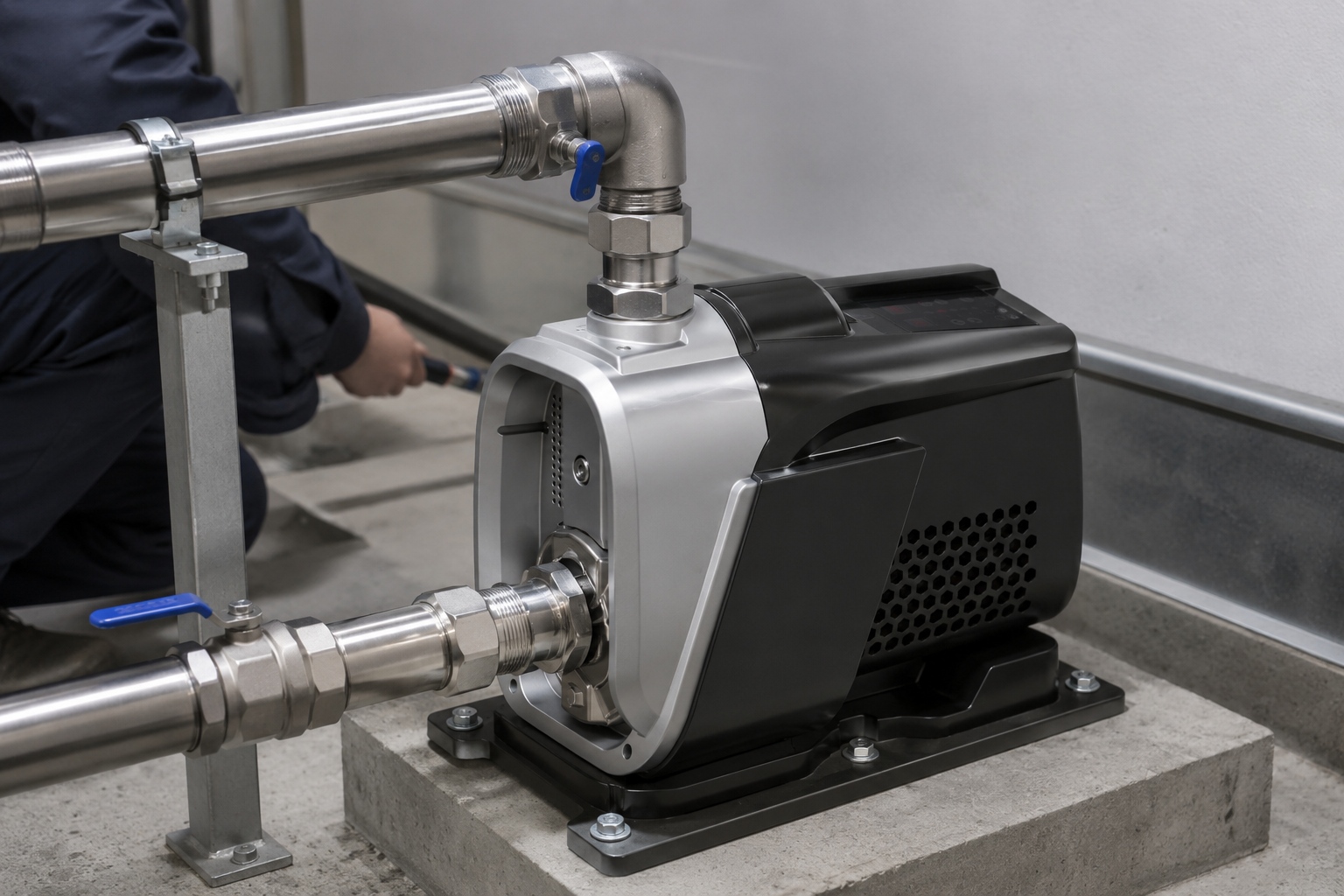
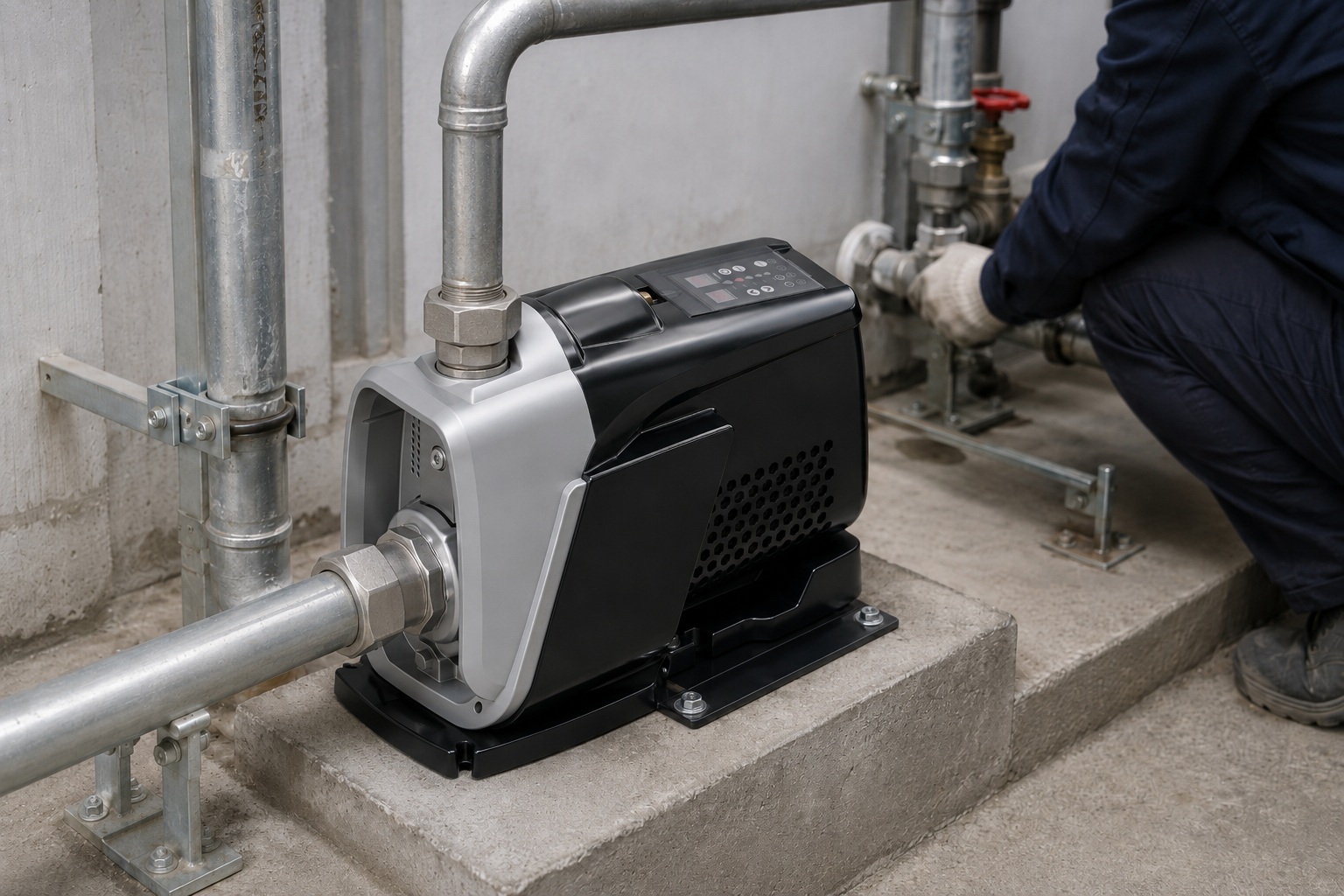
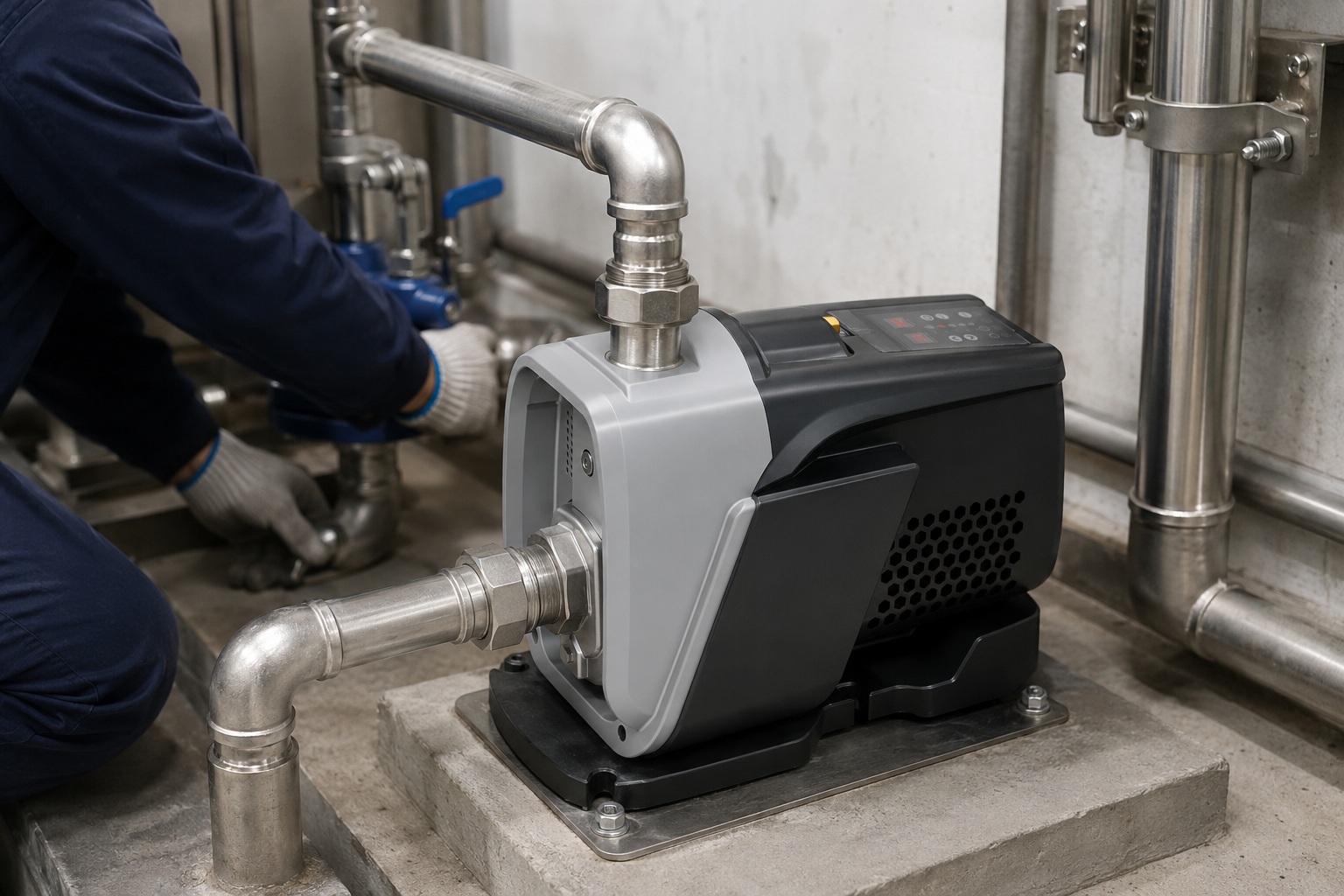
A whole house pump is installed where the main water line enters your house.
It uses a motor-driven impeller to spin and increase the pressure of the incoming water.
A pressure switch automatically turns the pump on when pressure drops and off when it's restored, saving energy.
To truly grasp how a whole house pump transforms your water supply, we need to look beyond the basic concept.
The real magic happens in the details of its components and operational logic.
From the point of installation to the intricate dance between sensors and motors, each part plays a critical role.
This system is more than just a motor; it's an intelligent solution designed for efficiency and reliability.
Let's break down the mechanics piece by piece to understand how it delivers that perfect, steady stream of water you expect.
The Core Installation Process
A proper installation is the foundation of a pump's performance.
It's typically placed on the main water line after the water meter and main shutoff valve.
This strategic placement ensures that all water entering the home is pressurized before it branches out to individual fixtures.
The pump needs to be accessible for future maintenance.
It should also be protected from freezing temperatures.
Understanding the Internal Mechanism
At the heart of every booster pump is an impeller.
An impeller is a rotor with vanes that spins at high speed.
When water enters the pump, the motor spins the impeller.
The impeller's rotation flings the water outward, using centrifugal force.
This action dramatically increases the water's velocity and pressure before it exits the pump.
Some pumps use a single impeller (single-stage).
Others use multiple impellers in a series (multi-stage) for even higher pressure, which is ideal for large or multi-story buildings.
The Role of the Pressure Switch and Tank
The pressure switch is the pump’s brain for basic models.
It is connected to a small pressure tank.
This tank holds a small amount of pressurized water.
When you open a faucet, water comes from the tank first.
This causes the pressure in the system to drop.
Once the pressure falls below a pre-set level (the cut-in pressure), the switch activates the pump motor.
The pump then runs, supplying water and refilling the pressure tank.
When the faucet is closed, the pressure builds up until it reaches the cut-off setting, and the switch turns the pump off.
This cycle prevents the pump from running constantly, which saves energy and reduces wear on the motor.
The table below outlines this simple operational sequence.
| Step | Action | System Response |
|---|---|---|
| 1 | Faucet is opened | Water flows from the pressure tank. |
| 2 | Pressure drops | System pressure falls below the 'cut-in' threshold. |
| 3 | Switch activates | The pressure switch turns the pump motor on. |
| 4 | Pump runs | The pump supplies water to the open faucet and refills the tank. |
| 5 | Faucet is closed | Pressure builds up to the 'cut-off' threshold. |
| 6 | Switch deactivates | The pressure switch turns the pump motor off. |
Why you might need one
Does your water flow slow to a trickle when someone else showers?
This common problem points to inadequate water pressure.
A whole house booster pump is the definitive solution to this issue.
You might need a whole house pump if you experience symptoms of low water pressure.
These include weak showers, faucets that take too long to fill a sink, or appliances that underperform.
It's also essential for homes on well systems or located far from the municipal supply.
Recognizing the signs of poor water pressure is the first step.
However, understanding the underlying causes is just as important for choosing the right solution.
The problem isn't always as simple as being far from the city water main.
Factors like your home's elevation, the age of your plumbing, or high-demand periods in your neighborhood can all contribute.
Let's dive deeper into the specific scenarios where a booster pump becomes not just a luxury, but a necessity for modern living.
Battling Low Municipal Water Pressure
Many homes get water from a city or municipal supply.
The pressure from this supply can be surprisingly low.
This can happen if your home is at a higher elevation than the water tower.
It can also happen if you live at the end of the supply line.
During peak usage times, like in the morning when everyone is getting ready for work, the demand on the system increases.
This increased demand causes a pressure drop for the entire neighborhood.
A booster pump isolates your home from these fluctuations, drawing in the available water and pressurizing it to your desired level.
Solving Inconsistent Flow and Fluctuations
Sometimes the problem isn't consistently low pressure, but pressure that goes up and down.
This can be incredibly annoying.
Your shower might suddenly go from strong to weak for no apparent reason.
These fluctuations are often caused by other large water users on the same supply line.
For example, a nearby factory or farm using a large amount of water can cause a temporary pressure drop for surrounding homes.
A whole house pump with a pressure tank acts as a buffer.
It ensures that the pressure inside your home remains stable, even when the pressure outside is fluctuating.
Boosting Supply from Wells or Rainwater Systems
Homes that rely on a private well or a rainwater harvesting system face different challenges.
The performance of a well pump can change depending on the water level in the well.
Rainwater systems depend on stored water, and the pressure can be very low without a dedicated pump.
In these "off-grid" scenarios, a whole house booster pump is not just for comfort; it's a critical component.
It takes the variable or low-pressure supply from the tank or well and converts it into a reliable, city-like pressure for the entire house.
Key considerations when choosing a pump
Confused by the technical jargon when looking for a pump?
Terms like flow rate and VFD can be overwhelming.
Understanding these key factors is crucial for making the right choice.
When selecting a whole house pump, you must consider your water source, required flow rate, and the type of pump technology.
Modern "smart" pumps with intelligent controls offer superior efficiency and performance by adjusting their speed based on real-time demand, providing significant advantages over basic models.
Choosing a booster pump is a significant investment in your home's infrastructure.
Making an uninformed decision can lead to a system that is either undersized for your needs or oversized and inefficient.
It’s about more than just boosting pressure; it’s about finding a durable, energy-efficient, and intelligent solution.
Let's explore the critical technical details you should evaluate to ensure you select a pump that delivers long-term value and reliability.
Crucial Factor 1: Water Source and Flow Rate
Your water source is the first consideration.
A pump designed for a municipal supply may not be suitable for a well, which might require a pump with self-priming capabilities and a strong suction lift.
Next, you must calculate your household's peak water demand.
This is known as the required flow rate, measured in gallons per minute (GPM) or liters per minute (LPM).
You determine this by adding up the flow rates of all fixtures that could be running simultaneously.
For example, a shower, a kitchen faucet, and a washing machine might run at the same time.
An undersized pump will fail to maintain pressure during these high-demand moments.
A properly sized pump will handle this peak load effortlessly.
Crucial Factor 2: Pump Type and Core Motor Technology
Pumps come in different types, but the motor technology is what truly defines performance and efficiency.
- Single-Stage vs. Multi-Stage: As mentioned, multi-stage pumps use several impellers to achieve higher pressures, making them suitable for taller buildings or homes with very low starting pressure.
- Traditional Motors: Basic pumps use standard induction motors that run at a single, fixed speed. They turn on at full power and turn off completely. This can cause pressure spikes and use more energy.
- Advanced Motor Technology: High-end pumps use a Permanent Magnet Synchronous Motor (PMSM). These motors are significantly more efficient, quieter, and can operate at variable speeds. They generate less heat and have a longer lifespan.
Crucial Factor 3: The Importance of Intelligent Controls
The most significant advancement in pump technology is the use of a Variable Frequency Drive (VFD).
A VFD is a sophisticated controller that works with a PMSM to deliver truly intelligent performance.
Instead of the simple on/off operation of a basic pump, a VFD system constantly monitors water usage.
It precisely adjusts the motor's speed in real-time.
If you only turn on a small bathroom sink, the pump runs slowly, using minimal energy.
If you turn on multiple showers, the pump instantly speeds up to meet the demand, all while holding the water pressure perfectly constant.
This technology offers several key benefits:
- Constant Pressure: It eliminates the pressure fluctuations common with traditional pumps. The pressure you set is the pressure you get, always.
- Extreme Energy Efficiency: By running only as fast as needed, a VFD pump can reduce electricity consumption by 50% or more compared to a fixed-speed pump.
- Quiet Operation: The motor rarely runs at full speed, resulting in noise levels that are often quieter than a library.
- Soft Start/Stop: The VFD gently ramps the motor up and down, preventing loud noises and hydraulic shock (water hammer) that can damage your pipes.
Advanced Features of Modern VFD Pumps
Are you worried about your pump failing unexpectedly?
A simple pump offers no protection against common issues.
Look for a system with built-in safeguards for true peace of mind.
Modern VFD booster pumps offer far more than just pressure.
They integrate a suite of advanced protections and smart features.
These include safeguards against dry run, electrical faults, and overheating, plus user-friendly controls for monitoring and adjustment, ensuring reliability and a long service life.
When you invest in a critical piece of home infrastructure like a water pump, you expect it to last.
Durability isn't an accident; it's the result of deliberate engineering choices.
From the materials used in its construction to the electronic systems that protect it from harm, every detail matters.
A top-tier pump is designed to withstand harsh conditions and prevent failures before they happen.
Let's examine the specific design elements and protection systems that separate a truly reliable pump from a standard one.
Uncompromising Electronic and Mechanical Reliability
The longevity of a pump is determined by the quality of its internal components.
Cheaper pumps often use standard-grade parts that wear out quickly.
Premium models, however, are built with superior materials and engineering.
- Material Excellence: Look for pumps that use high-grade materials like AISI304 stainless steel for impellers and pump bodies. This material offers excellent resistance to corrosion and wear, ensuring the purity of your water and the durability of the pump. The housing should be made of UV-resistant material to prevent degradation if installed outdoors.
- Sealed Electronics: The electronic controller is the pump's brain, and it's highly vulnerable to moisture and dust. Leading manufacturers use a process called potting, where the entire circuit board (PCB) is sealed in a waterproof resin. This creates an IP67-rated waterproof core, protecting the electronics completely and extending the controller's lifespan by several years.
- Superior Internals: High-quality pumps utilize premium components throughout. This includes using a high-grade silicon steel stator and Class F insulation wire in the motor for better efficiency and heat resistance. The use of high-precision bearings from reputable brands also contributes to quieter operation and a significantly longer operational life.
The "Shield": A Comprehensive Suite of Protections
An intelligent pump should be able to protect itself.
The most advanced VFD pumps feature a comprehensive suite of built-in safety functions.
This system actively monitors the pump's operation and environment, automatically responding to potentially damaging conditions.
This multi-layered defense system is crucial for long-term, worry-free operation.
Key protections to look for are summarized in the table below.
| Protection Category | Specific Safeguards | Benefit |
|---|---|---|
| Electrical | Over/Under Voltage, Overcurrent, Phase Loss | Prevents damage to the motor from an unstable power grid. |
| Thermal | Motor Overheating, PCB Overheating | Shuts down the pump to prevent permanent damage from excessive heat. |
| System | Dry Run (Water Shortage), Frost Protection | Prevents the pump from destroying itself when the water source runs out and from freezing in cold climates. |
| Hydraulic | Pipeline Leak Warning, Water Hammer Prevention | Alerts the user to costly leaks and protects plumbing from pressure spikes. |
A particularly smart feature is an advanced dry run protection algorithm.
If the pump detects a water shortage, it won't just shut off.
It will enter a cycle of trying to self-prime, followed by increasingly long "sleep" periods.
This allows it to automatically recover once water is restored, without needing manual intervention.
User-Friendly Interface and Smart Connectivity
Despite their internal complexity, modern pumps are designed for easy use.
They feature intuitive control panels with clear LED indicators and simple button layouts.
This allows users to easily turn the pump on or off and adjust the desired pressure.
Advanced models also offer a live data display.
With the press of a button, you can cycle through real-time information such as:
- Current power consumption (Watts)
- Motor speed (RPM)
- Input voltage
- Water and PCB temperature
This level of transparency gives you deep insight into the pump's performance.
Some pumps also offer optional WiFi connectivity.
This allows you to monitor and control your water system remotely from a smartphone app, providing the ultimate convenience and control.
Conclusion
A whole house pump is the definitive answer to low and inconsistent water pressure.
Modern VFD pumps offer constant pressure, energy savings, quiet operation, and robust self-protection for ultimate reliability.
FAQs
What size whole house booster pump do I need?
The size depends on your home's flow rate requirements and desired pressure.
Calculate the total GPM of fixtures you might use simultaneously to find the right size.
Are whole house booster pumps noisy?
Traditional pumps can be noisy.
However, modern pumps with VFD technology and permanent magnet motors are ultra-quiet, often operating at levels below 50 decibels.
How much does it cost to run a booster pump?
Running costs vary, but VFD booster pumps are highly efficient.
They can reduce electricity usage by 50% or more compared to fixed-speed pumps by only using the power needed.
Can a booster pump damage my pipes?
A properly installed modern pump with a soft-start feature will not damage pipes.
This technology prevents water hammer, the pressure surge that can stress plumbing systems.
Can I install a whole house booster pump myself?
While possible for those with advanced plumbing skills, professional installation is recommended.
This ensures correct placement, electrical wiring, and pressure settings for optimal performance and safety.
How long does a whole house water pump last?
A quality pump with features like sealed electronics and premium materials can last 10-15 years.
Basic models in harsh conditions may only last a few years.
Do I need a pressure tank with a VFD booster pump?
Yes, a small pressure tank is still recommended.
It reduces pump cycling for very small water uses, extending motor life and preventing water hammer.
Will a booster pump increase my water bill?
A booster pump does not use more water; it only increases the pressure of the water you already receive.
Your water bill should not be affected by its operation.