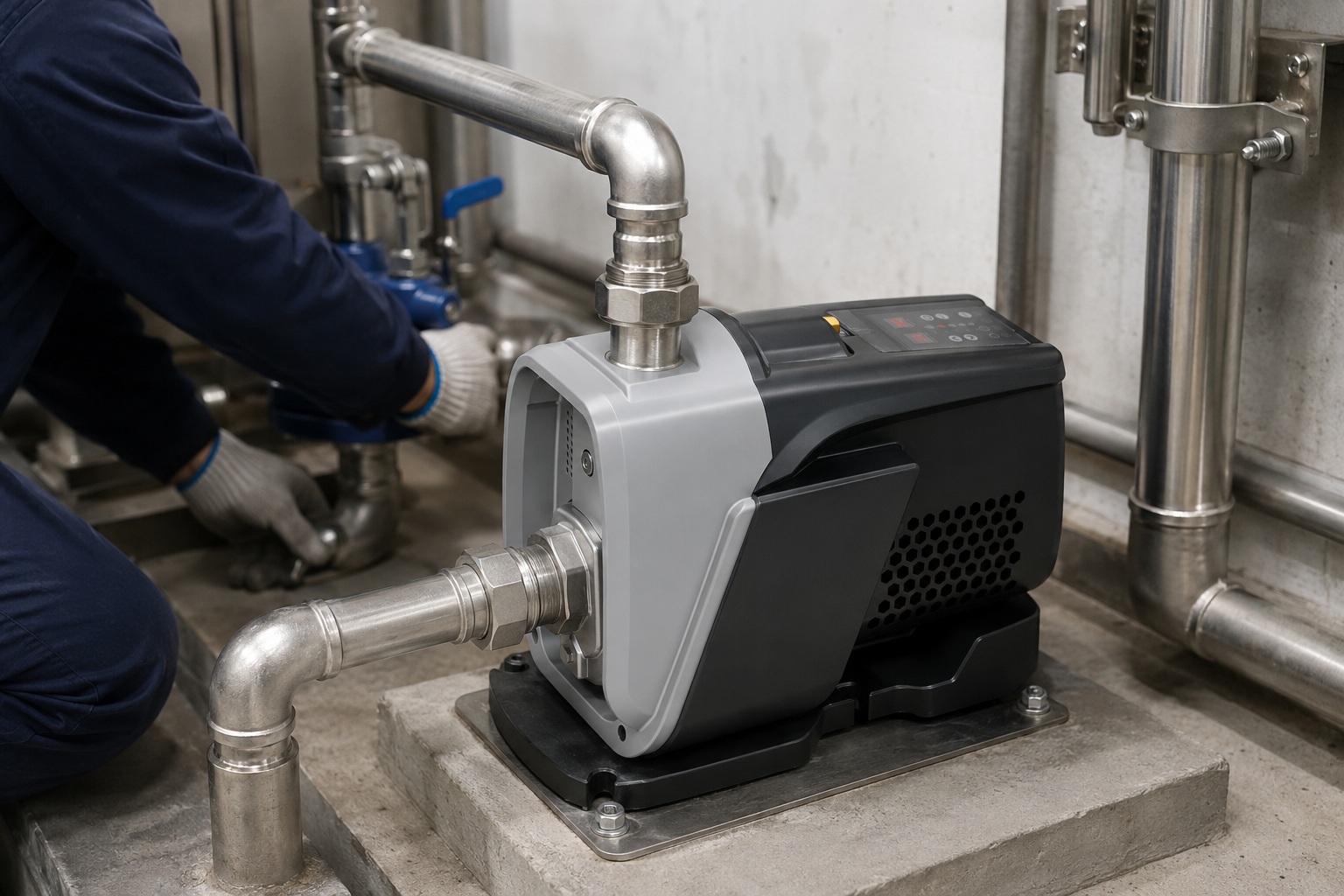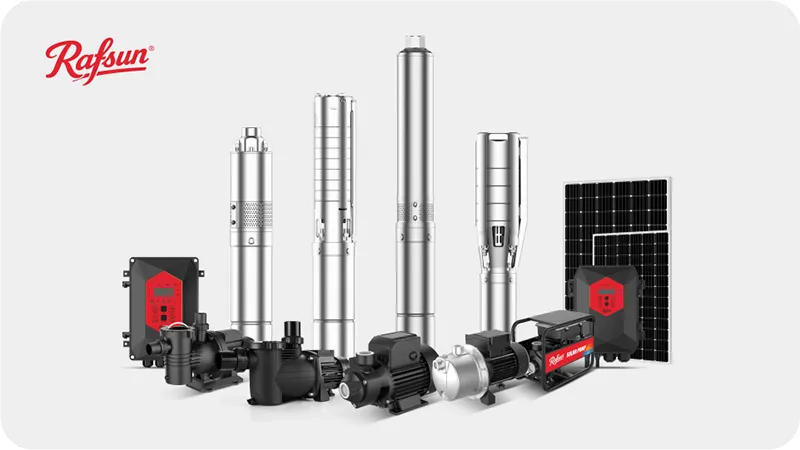
Struggling with inconsistent water pressure or high energy bills from your pump?
An oversized or undersized pump is often the culprit, leading to inefficiency and premature failure.
Sizing a vertical pump involves determining your Flow Rate (GPM) and Total Dynamic Head (TDH).
You then match these to a pump's performance curve to find the most efficient model for your application.
This ensures optimal performance, energy savings, and a long lifespan for your system.

Choosing the right pump might seem complex, but it boils down to understanding your system's specific needs.
Getting these two key numbers—flow rate and head—correct is the foundation of a reliable and cost-effective water system.
This guide will walk you through each step of the process.
We will break down the calculations in a clear, straightforward way.
You will learn how to confidently select a pump that works perfectly for years to come.
Step 1: Determine Required Flow Rate (GPM)
Guessing your flow rate leads to poor system performance.
Your fixtures might not get enough water during peak usage times.
A clear calculation ensures your system meets demand every time.
To find your required flow rate, list all fixtures that could run simultaneously.
Add up their individual flow rates (in Gallons Per Minute or GPM) to determine your peak demand.
This gives you a precise target for selecting the right pump.
Understanding your system's demand for water is the first and most critical step.
Flow rate, measured in Gallons Per Minute (GPM), is the volume of water the pump must deliver.
If this number is too low, your system will feel weak.
If it's too high, you waste energy and put unnecessary strain on your pump and pipes.
The goal is to find the "peak demand" your system will realistically face.
Identifying Peak Demand
Peak demand is not the sum of every single water outlet in the building.
It's the maximum amount of water you expect to use at any single moment.
Think about a typical morning in a home.
Someone might be taking a shower while a dishwasher is running.
However, it's unlikely that every shower, sink, and hose will be on at the exact same time.
Your first task is to list all the fixtures and appliances that use water.
This includes sinks, showers, toilets, washing machines, dishwashers, and outdoor spigots.
Estimating and Summing GPM
Once you have your list, you need to assign a typical flow rate to each item.
These are standard estimates, but they provide a strong baseline for your calculation.
You can use a table to organize this information clearly.
| Fixture | Typical Flow Rate (GPM) |
|---|---|
| Bathroom Sink | 1.0 - 2.0 |
| Kitchen Sink | 1.5 - 2.5 |
| Shower | 2.0 - 3.0 |
| Bathtub | 4.0 - 8.0 |
| Toilet | 1.6 - 3.0 |
| Dishwasher | 1.0 - 2.5 |
| Washing Machine | 1.5 - 3.0 |
| Garden Hose | 2.0 - 5.0 |
After listing the flow rates, add them up to find your theoretical maximum demand.
For a typical family home, this total might look very high, perhaps 20-30 GPM or more.
Now, apply a "simultaneous use factor."
You must estimate how many of these will realistically run together.
For most residential homes, a peak demand of 10-15 GPM is a very common and effective target.
For commercial or industrial applications, this calculation becomes more complex and may involve specific fixture unit methods outlined in plumbing codes.
Considering future needs is also wise.
If you plan to add a new bathroom or an irrigation system, account for that extra demand now to avoid needing a new pump later.
Step 2: Calculate Total Dynamic Head (TDH)
Calculating head pressure feels complicated and full of jargon.
Ignoring it can leave you with a pump that is too weak to deliver water where it's needed.
Following a simple formula removes the guesswork and ensures success.
Total Dynamic Head (TDH) is the total pressure the pump must overcome.
Calculate it by adding the vertical lift (Static Head), required discharge pressure (Pressure Head), and friction from pipes and fittings (Friction Loss).
This ensures your pump is powerful enough for the job.
Total Dynamic Head, or TDH, sounds technical, but it's just a measure of the total work your pump needs to do.
It is expressed in feet or meters of head.
Think of it as the total resistance the pump has to push against to move water from its source to the final destination.
TDH is not just about lifting water vertically.
It is a combination of three different forces all working against your pump.
Accurately calculating TDH is just as important as finding your flow rate.
A pump that can deliver your target GPM is useless if it can't overcome the system's head.
Understanding the TDH Formula
The formula to find your system's head requirement is straightforward.
It combines three key values into one number.
TDH = Static Head + Pressure Head + Friction Loss
Let's break down each of these components so you can calculate them for your own system.
Static Head: The Vertical Lift
Static Head is the easiest part to understand and measure.
It is the total vertical distance the water needs to travel.
Measure from the surface level of your water source (like the water level in a well or tank) to the highest point where the water will be discharged.
For example, if your pump is lifting water from a tank in the basement to a second-floor shower, the static head is that vertical distance in feet.
For a submersible pump, you measure from the pump's location in the water, not the water's surface.
Pressure Head: The Required Outlet Pressure
Most fixtures and irrigation systems need a certain amount of pressure to work correctly.
This pressure is usually measured in Pounds per Square Inch (PSI).
You must convert this required PSI into feet of head to add it to your TDH calculation.
The conversion is simple.
1 PSI = 2.31 feet of head
If your system requires 40 PSI at the highest outlet, your Pressure Head would be 40 * 2.31 = 92.4 feet.
A common target for residential homes is 30-50 PSI.
Friction Loss: The Hidden Resistance
Friction Loss is the resistance created as water moves through pipes, elbows, valves, and other fittings.
Longer, narrower pipes create more friction than shorter, wider ones.
Every bend and valve also adds resistance.
This is often the most overlooked part of the calculation, but it can have a significant impact.
You can find detailed friction loss charts online or from pipe manufacturers.
To estimate it, you need to know the total length of your pipe, its diameter, and the number of fittings.
For a simple residential system, a rough estimate is to add 10-20% of your combined Static and Pressure Head as Friction Loss.
For complex systems, a detailed calculation is necessary for accuracy.
Putting it all together gives you the TDH your new pump must be able to achieve while delivering your target GPM.
Step 3: Select the Pump (Using the Pump Curve)
You have your numbers, but pump charts are confusing.
Choosing a pump based on horsepower alone can lead to inefficiency and damage.
Matching your GPM and TDH to the pump curve is the only right way.
Look for a pump whose performance curve shows it can deliver your required GPM at your calculated TDH.
Choose a model where this duty point falls near its Best Efficiency Point (BEP).
This ensures the pump runs efficiently, quietly, and has a long service life.
Now you have the two most important pieces of data: your required Flow Rate (GPM) and your Total Dynamic Head (TDH).
This pair of numbers is your "duty point."
The final step is to use this duty point to select the perfect pump from manufacturer specification sheets.
The key tool for this task is the pump performance curve.
Every pump has a unique curve that shows exactly how it performs under different conditions.
Learning to read this chart ensures you choose a pump that is not just adequate, but optimal.
Finding Your Sweet Spot on the Curve
A pump curve is a graph.
The vertical axis typically shows the head (in feet or meters), and the horizontal axis shows the flow rate (in GPM or m³/h).
The curve itself shows the relationship between flow and head for that specific pump.
To use it, first find your required TDH on the vertical axis.
Then, find your required GPM on the horizontal axis.
Find where those two points intersect on the graph.
The ideal pump will have a performance curve that runs directly through, or very close to, your duty point.
If your duty point falls far away from any pump's curve, that pump is not a good match for your system.
Aiming for the Best Efficiency Point (BEP)
A pump curve chart often includes more than just the flow and head line.
It will also show efficiency ratings, often as islands or arcs on the graph labeled with percentages (e.g., 70%, 75%, 80%).
The Best Efficiency Point (BEP) is the point on the curve where the pump operates with the highest efficiency.
Ideally, your duty point should fall as close as possible to the BEP.
Operating a pump at its BEP means you get the most water moved for the least amount of energy consumed.
This translates directly to lower electricity bills.
It also means the pump is operating under the least amount of stress, which reduces noise, vibration, and wear on components like bearings and seals.
This leads to a significantly longer operational lifespan.
A good rule of thumb is to choose a pump where your duty point falls between 50% and 80% of its maximum flow capacity, which is typically where the BEP is located.
The Advantage of Modern Motor Technology
When selecting a pump, the technology inside matters just as much as the performance curve.
Modern pumps often use advanced motor and control systems to achieve superior performance.
Look for pumps with a Permanent Magnet Synchronous Motor (PMSM).
These motors are far more efficient than traditional asynchronous motors.
They also run much quieter, with some models operating at noise levels below 50dB.
When a PMSM is paired with a Variable Frequency Drive (VFD), the system becomes even more intelligent.
A VFD allows the pump to adjust its speed in real-time to maintain constant water pressure, regardless of changes in demand.
This "soft start" and "soft stop" functionality dramatically reduces mechanical stress and prevents water hammer in your pipes.
This intelligent control is not just about comfort; it is a core feature for system longevity and energy savings.
It ensures the pump only uses the exact amount of power needed at any given moment, which can cut electricity consumption significantly.
These features make the pump selection process about more than just matching a single duty point.
They offer a dynamic solution that adapts to your system for maximum efficiency across all conditions.
Key Considerations for Pump Selection
You've sized your pump, but other factors can cause system failure.
Overlooking details like suction lift or power supply can ruin an otherwise perfect installation.
Considering these final checks ensures a smooth, long-lasting setup.
Beyond GPM and TDH, check the suction lift requirements for non-submersible pumps.
Double-check that your available electrical power matches the pump's voltage and phase.
Also, consider sizing up slightly to account for any future expansion of your water system.
Selecting a pump that matches your duty point and operates near its BEP is the bulk of the work.
However, a few final considerations will ensure your choice is truly the best one for your situation.
These details protect your investment and guarantee the pump operates safely and reliably for years to come.
Thinking through these factors now prevents costly problems down the road.
Durability and Protection Features
A pump is a long-term investment, and its construction quality is paramount.
High-quality materials are a clear indicator of a well-built pump that is designed to last.
Look for key components made from durable, corrosion-resistant materials.
- Impellers: Impellers made from AISI 304 stainless steel or high-grade brass offer superior resistance to wear and corrosion compared to plastic alternatives.
- Housing: The pump body should be robust, with UV-resistant coatings if it will be exposed to sunlight.
- Bearings: High-precision, low-noise bearings from reputable manufacturers are critical for a long and quiet operational life.
Equally important is the pump's electronic brain and its built-in safety mechanisms.
Modern intelligent pumps come with a comprehensive suite of protections that act as a shield for the motor and electronics.
This system should monitor for and protect against a wide range of potential faults.
| Protection Type | Function |
|---|---|
| Electrical | Guards against over-voltage, under-voltage, over-current, and phase loss. |
| Thermal | Prevents overheating of the motor, drive board, and water. |
| System | Protects against dry run (water shortage), freezing, and system leaks. |
| Sensor | Self-diagnoses and reports failures in critical sensors. |
A standout feature in top-tier pumps is a fully potted or sealed controller board (PCB).
This process involves encasing the electronics in a waterproof resin, achieving an IP67 rating.
This completely protects the sensitive components from moisture, dust, and condensation, which are primary causes of electronic failure in pumps.
This single feature can extend the controller's lifespan by several years.
Suction Lift and Future Needs
For pumps that are not submersible, you must consider suction lift.
This is the vertical distance from the surface of the water source up to the pump's inlet.
Every pump has a maximum suction lift it can handle, often around 8 meters (25 feet) under ideal conditions.
Exceeding this limit will cause the pump to cavitate and fail.
Always ensure your installation is well within the pump's specified suction lift capability.
It is also wise to think about the future.
Are you planning to add an extra bathroom, a new irrigation zone, or another building?
If so, your water demand will increase.
Sizing a pump only for your exact current needs may mean it will be undersized in a few years.
It is often better to select a pump that has a slightly higher capacity than you need right now.
This provides a buffer and ensures the system can grow with your needs without requiring a premature and expensive replacement.
A VFD-controlled pump is especially advantageous here, as it can efficiently operate at a lower output for current needs and still have the capacity for future demand.
Conclusion
Correctly sizing a vertical pump is key to a reliable, efficient water system.
By calculating your flow rate and total dynamic head, you can choose a pump that saves energy and lasts longer.
FAQs
What is the difference between static head and dynamic head?
Static head is the vertical height the water is lifted.
Dynamic head includes static head plus all friction losses from pipes and fittings, giving a total resistance value.
What happens if a pump is oversized?
An oversized pump will cycle on and off too frequently, causing motor wear and high energy use.
It can also create excessive pressure, stressing your plumbing system.
What happens if my pump is undersized?
An undersized pump will fail to deliver the required water pressure and flow.
This results in poor performance at fixtures and the pump may run continuously, leading to overheating.
How do you calculate pump GPM for a house?
List all water fixtures and their standard flow rates.
Add the GPM for fixtures that might run at the same time to estimate your home's peak demand.
What is the best efficiency point (BEP) of a pump?
The BEP is the point on the pump's performance curve where it operates most efficiently.
Running a pump near its BEP saves energy and extends its lifespan.
How do you calculate friction loss in a pipe?
Friction loss is calculated using charts based on pipe diameter, length, material, and flow rate.
Every fitting, like an elbow or valve, also adds to the total friction loss.
Can I use a bigger pump to get more water pressure?
Yes, but it's often inefficient.
Oversizing can cause short-cycling and waste energy.
It is better to correctly calculate TDH and choose a pump designed for that pressure.
What does a VFD do for a pump?
A Variable Frequency Drive (VFD) adjusts the pump motor's speed to maintain constant pressure as water demand changes.
This saves energy and reduces mechanical stress on the system.