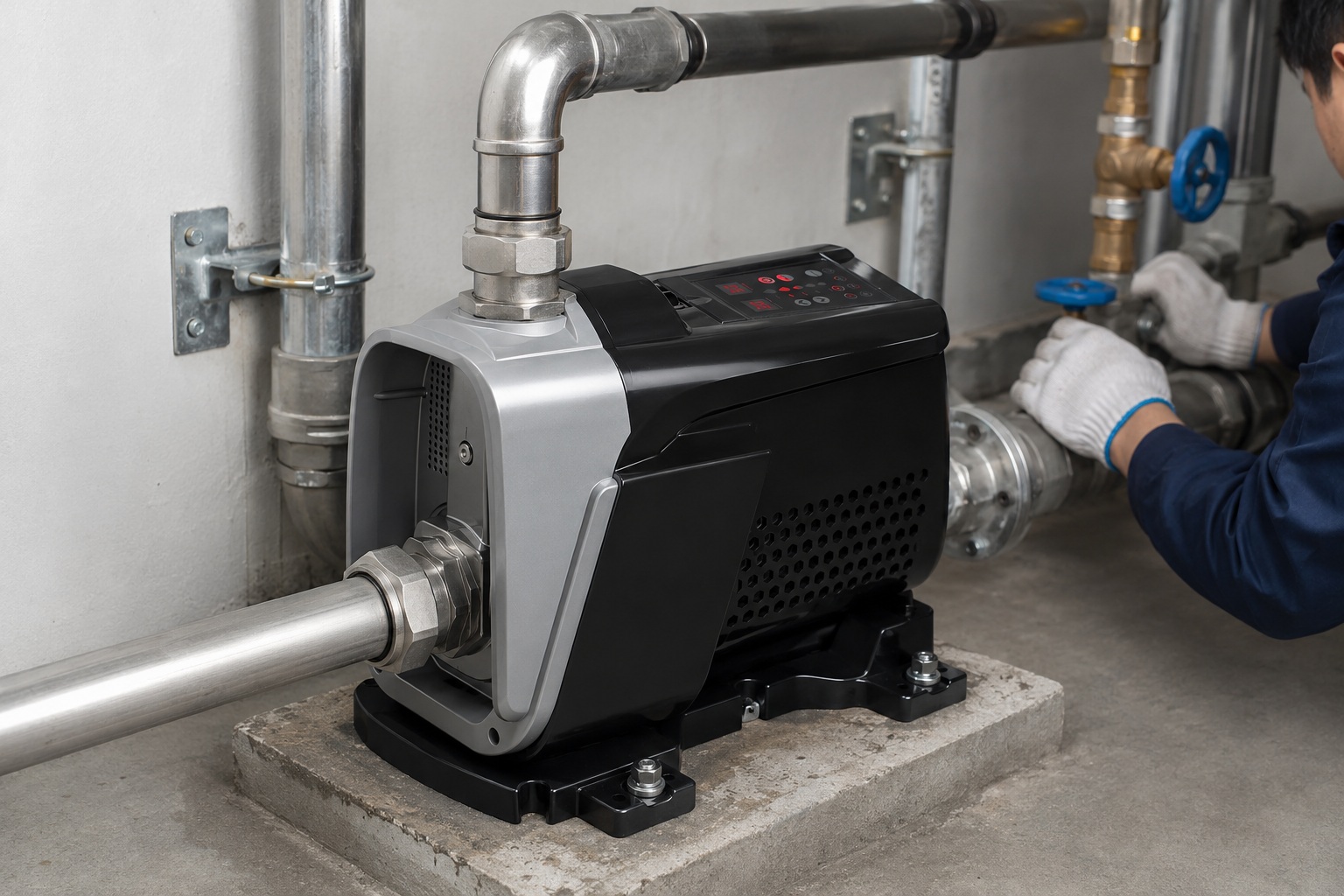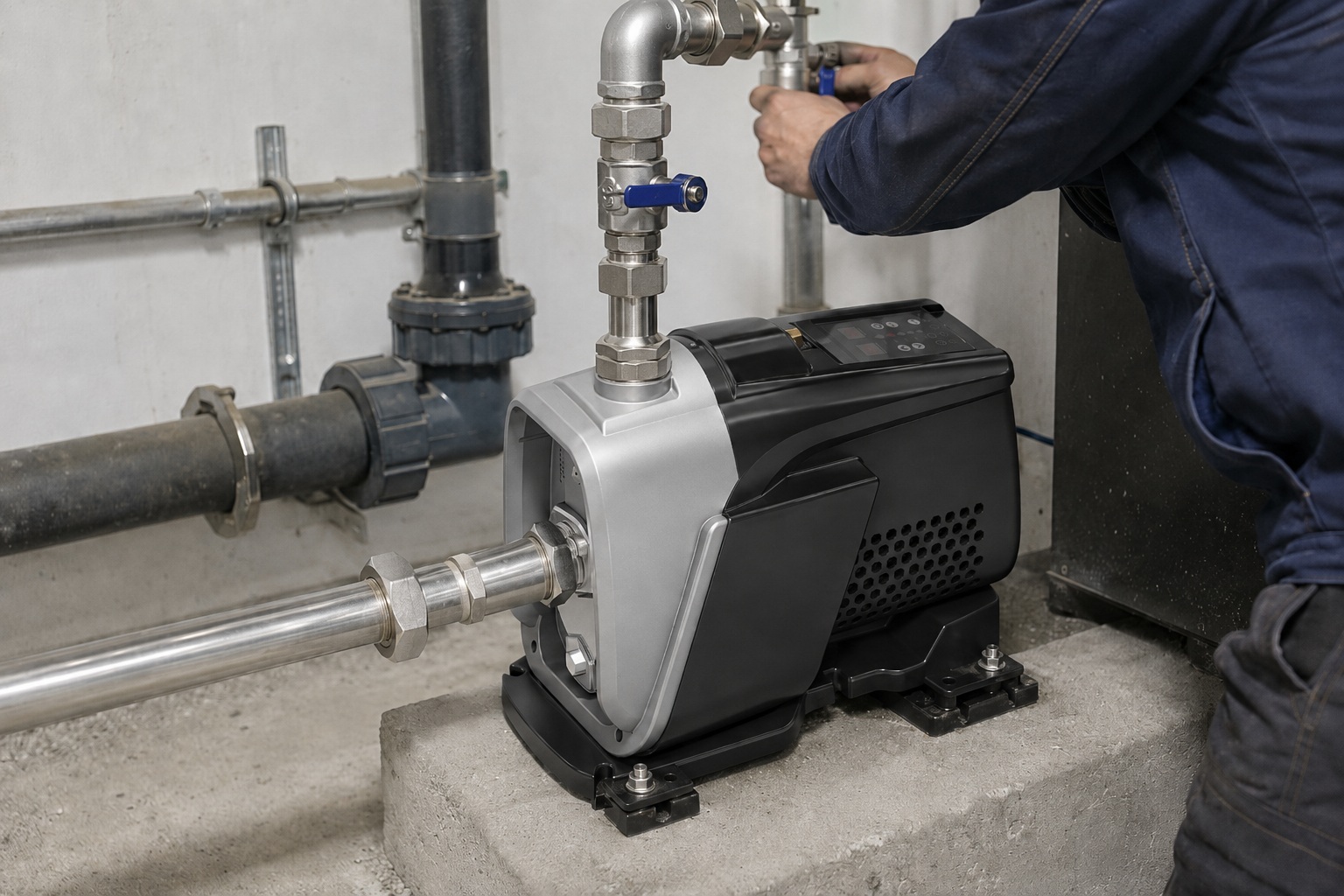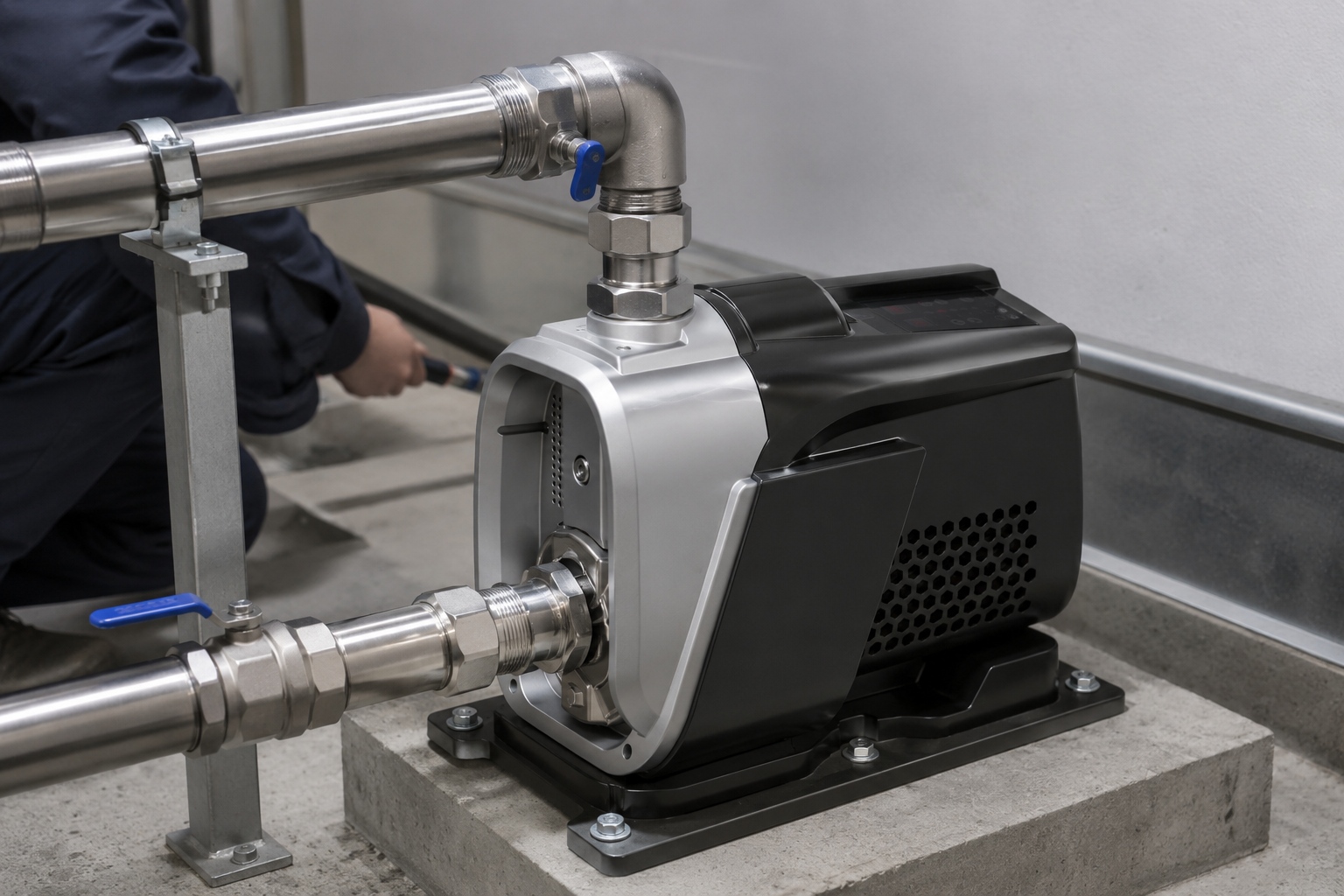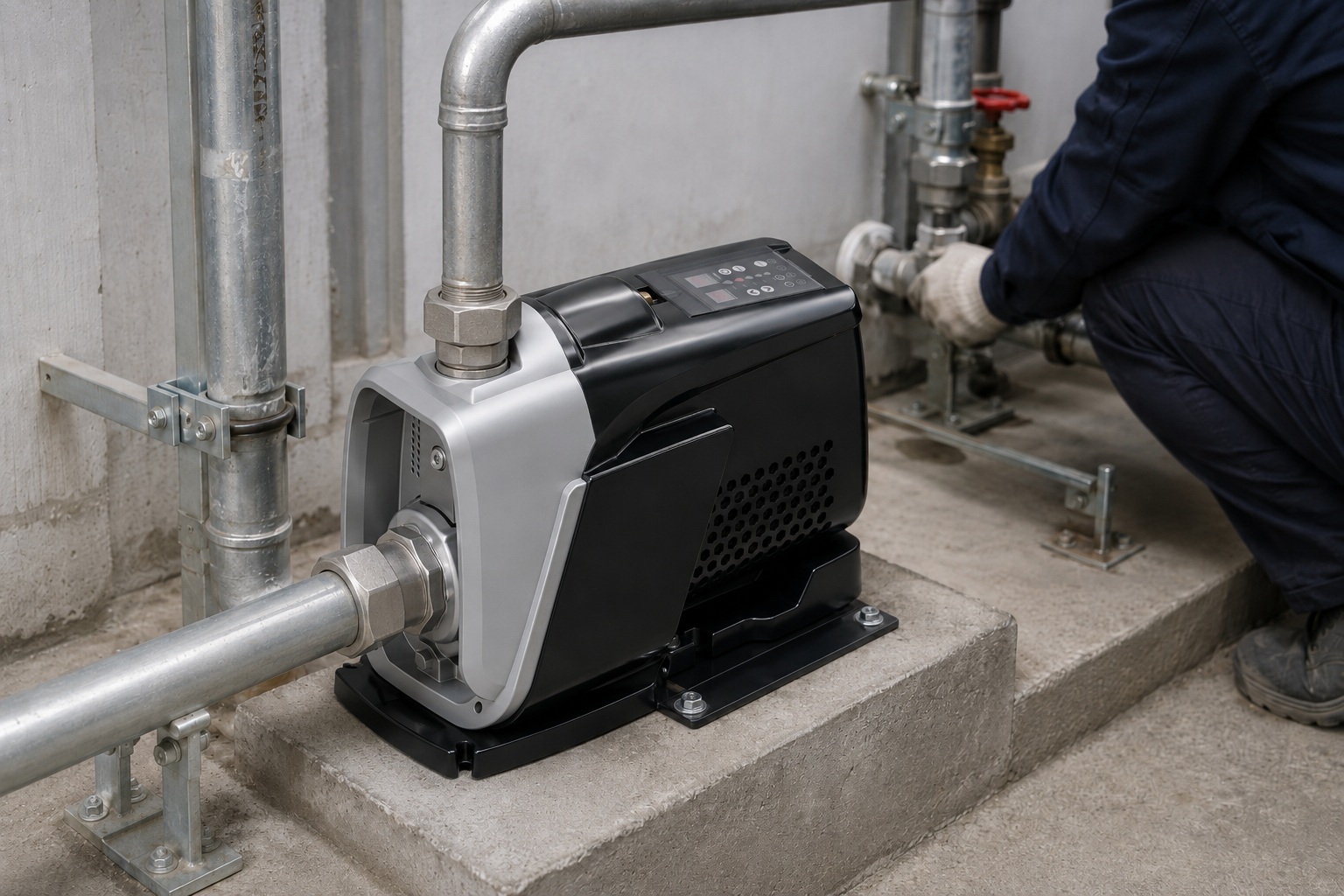
Struggling with a pump that won't stop cycling?
Worried about high energy bills and potential pump damage?
A pressure tank might be the simple solution you've been looking for.
Yes, in most cases, a pressure tank is highly recommended for an irrigation pump. It prevents rapid pump cycling, reduces wear and tear, saves energy, and provides stable water pressure. This small investment protects your larger pump investment and improves system efficiency.
A pressure tank seems like a simple component.
However, its role in an irrigation system is critical.
Understanding its function is the first step.
This knowledge helps you decide if it's right for your setup.
Many system owners overlook its importance.
They often learn the hard way through costly repairs or replacements.
Let's dive into the specifics of what these tanks do.
We will explore how to know if you need one.
This will ensure your irrigation system runs smoothly and efficiently for years.
What a Pressure Tank Does for an Irrigation System
Confused about what a pressure tank actually does?
Wondering if it's just an unnecessary extra part?
Understanding its core functions reveals its true value to your system's health.
A pressure tank stores pressurized water, acting as a buffer. This allows the system to handle small water demands without turning the pump on. It's crucial for absorbing pressure surges and ensuring a smooth, consistent flow for efficient irrigation.
A pressure tank is more than just a storage container.
It is a vital component for the health and efficiency of your entire irrigation system.
Its main job is to manage water pressure and pump operation.
Without it, your pump would work much harder than necessary.
This leads to premature failure and wasted energy.
Let's break down the three primary functions in detail.
Reduces Pump Cycling
Pump cycling is the number of times your pump turns on and off.
Every time the pump starts, it draws a large amount of electrical current.
This creates heat and stress on the motor windings and mechanical parts.
Imagine a small leak or a single sprinkler head operating for a short time.
Without a pressure tank, the pump would start and stop continuously to meet this tiny demand.
This rapid cycling is the leading cause of premature pump failure, with some studies indicating it can reduce a pump's lifespan by up to 50%.
The pressure tank provides a reservoir of pressurized water to handle these small demands.
The pump only turns on when the pressure in the tank drops below a pre-set level.
This drastically reduces the number of starts per hour, protecting the motor and saving energy.
| Pump Operation | Without Pressure Tank | With Pressure Tank |
|---|---|---|
| Small Water Demand | Constant on/off cycling | Tank supplies water, pump remains off |
| Motor Stress | High, from frequent starts | Low, from fewer starts |
| Energy Consumption | Increased by 30-50% | Optimized |
| Pump Lifespan | Significantly Reduced | Significantly Extended |
Provides Consistent Water Pressure
Pressure fluctuations can ruin the effectiveness of an irrigation system.
When a pump starts, it can create a sudden surge in pressure.
When it stops, the pressure can drop just as quickly.
This "water hammer" effect can damage pipes, fittings, and sprinkler heads.
It also results in uneven water distribution.
Some areas might get too much water, while others get too little.
A pressure tank acts as a shock absorber.
The air cushion inside the tank compresses and expands to smooth out these pressure spikes and drops.
It ensures a stable and consistent pressure is delivered to every sprinkler head in the system.
This results in more than 95% uniformity in water application, which is crucial for healthy plant growth and water conservation.
Saves Energy
Energy consumption is a major operational cost for any irrigation system.
As mentioned, a motor draws the most current during startup.
By minimizing the number of pump starts, a pressure tank directly reduces your electricity bill.
While the pump might run for a slightly longer continuous period to refill the tank, this is far more efficient than dozens of short bursts.
Energy savings can be substantial, often ranging from 15% to 30% depending on the system's usage patterns.
This financial saving, combined with the extended lifespan of the pump, makes a pressure tank an investment with a clear and rapid return.
It's a smart choice for any cost-conscious operation.
How to Know If Your System Needs a Pressure Tank
Is your pump constantly turning on and off?
Do you hear strange noises from your pipes?
These are clear signs that you need to evaluate your system for a pressure tank.
Your system needs a pressure tank if the pump cycles frequently (more than 30 times per hour), you experience water hammer, or you have any electronic controls like a VFD. It's almost always a necessary component for longevity and efficiency.
Determining the need for a pressure tank is a straightforward process.
It involves observing your current system's behavior and understanding its components.
In over 90% of modern irrigation setups, the answer is a clear "yes".
However, looking at specific symptoms can confirm the diagnosis.
Here are the key indicators to watch for.
Analyzing Your System's Behavior
The most obvious sign is rapid pump cycling.
Listen to your pump during a typical irrigation cycle.
If it turns on and off every few minutes, or even seconds, you have a problem.
This is the number one symptom that a pressure tank can solve.
Another key indicator is fluctuating water pressure.
Do your sprinklers pulse or "breathe" instead of spraying a steady stream?
Do you hear a loud banging or thumping sound in the pipes when the pump shuts off?
This is called water hammer, and it's a destructive force.
A pressure tank is specifically designed to cushion and absorb this shock.
Considering Your Pump and Control Type
The type of pump and its control system are critical factors.
| System Component | Indicator of Needing a Tank | Reason |
|---|---|---|
| Pump Type | Any submersible or centrifugal pump | These pumps are not designed for high-frequency starts. |
| Control System | Standard pressure switch | A standard switch has a fixed on/off pressure, causing rapid cycling without a tank to buffer the changes. |
| Control System | Variable Frequency Drive (VFD) | Even VFDs benefit. A small tank is needed to handle tiny leaks and prevent the VFD from "hunting" or constantly adjusting at zero flow. |
| System Size | Any system with multiple zones or long pipe runs | Longer pipe runs create more potential for pressure fluctuations and water hammer. |
Almost all standard, fixed-speed pumps controlled by a pressure switch require a pressure tank.
The switch works by sensing pressure, and without a tank, the pressure changes are instantaneous, leading to the damaging cycling we discussed.
Even if you have an advanced irrigation system with a Variable Frequency Drive (VFD), a small pressure tank is still highly recommended.
VFDs are excellent at maintaining pressure by adjusting pump speed.
However, they can struggle with zero-flow situations, like when all irrigation zones are closed but a tiny leak exists.
A small "diaphragm" tank gives the VFD a buffer to prevent it from constantly starting and stopping to chase that tiny demand.
It improves the low-flow performance and lifespan of these sophisticated systems.
Think of it as essential insurance for your high-value pump and controller.
Choosing the Right Size Pressure Tank for Your Irrigation Pump
Worried about picking the wrong tank size?
An undersized tank is useless, and an oversized one wastes money.
Proper sizing is key to unlocking all the benefits a pressure tank offers.
To size a tank, you need the pump’s flow rate (GPM) and desired runtime (usually 1-2 minutes). Multiply these to get the required drawdown volume. Then, check manufacturer charts to find a tank with that drawdown at your system’s pressure settings.
Selecting the correct pressure tank size is not a guessing game.
It is a calculated decision based on your pump's specifications and your system's operational goals.
An incorrectly sized tank can negate all the benefits we've discussed.
An undersized tank will not prevent rapid cycling.
An oversized tank is an unnecessary expense and takes up valuable space.
Let's walk through the professional method for sizing a tank correctly.
Understanding Key Sizing Terms
First, you must understand three concepts.
- Total Tank Volume: This is the full volume of the tank in gallons or liters. It is not the amount of water it delivers.
- Drawdown: This is the most important number. It is the actual amount of usable water that the tank will discharge between the pump's "cut-on" and "cut-off" pressure settings. Drawdown is always a fraction of the total tank volume.
- Pump Cut-in / Cut-out Pressure: These are the pressure switch settings. For example, a 40/60 PSI setting means the pump cuts-in (starts) at 40 PSI and cuts-out (stops) at 60 PSI.
The Sizing Formula
The goal of sizing is to ensure the pump runs for a reasonable amount of time during each cycle.
This is typically a minimum of one to two minutes for most residential and light commercial pumps.
This minimum runtime protects the motor from overheating.
Here is the basic formula:
Required Drawdown (in Gallons) = Pump Flow Rate (in GPM) x Desired Minimum Runtime (in Minutes)
Let's illustrate with an example.
Sizing Example
Suppose you have an irrigation pump with the following characteristics:
- Pump Flow Rate: 15 Gallons Per Minute (GPM)
- Desired Minimum Runtime: 1 minute
- Pressure Switch Setting: 40/60 PSI
Step 1: Calculate Required Drawdown
Required Drawdown = 15 GPM x 1 Minute = 15 Gallons.
You need a tank that can provide a drawdown of 15 gallons.
Step 2: Consult a Manufacturer's Chart
Now, you must look at a tank manufacturer's specification sheet.
The drawdown volume changes based on the pressure settings.
A typical chart might look like this:
| Total Tank Volume | Drawdown at 30/50 PSI | Drawdown at 40/60 PSI | Drawdown at 50/70 PSI |
|---|---|---|---|
| 20 Gallons | 6.9 Gallons | 6.2 Gallons | 5.6 Gallons |
| 35 Gallons | 12.0 Gallons | 10.8 Gallons | 9.8 Gallons |
| 44 Gallons | 15.2 Gallons | 13.6 Gallons | 12.4 Gallons |
| 62 Gallons | 21.4 Gallons | 19.3 Gallons | 17.5 Gallons |
In our example, we need 15 gallons of drawdown at a 40/60 PSI setting.
Looking at the chart, the 44-gallon tank only provides 13.6 gallons, which is too small.
We must choose the next size up.
The 62-gallon tank provides 19.3 gallons of drawdown at 40/60 PSI.
This meets and exceeds our 15-gallon requirement.
Therefore, the correct choice for this system is a 62-gallon pressure tank.
Choosing a slightly larger tank is always better than choosing one that is too small.
The Downsides of Not Using a Pressure Tank with Your Pump
Thinking of skipping the pressure tank to save a little money?
That small upfront saving can lead to huge long-term expenses.
The consequences of this decision can be severe and costly.
Not using a pressure tank leads directly to rapid pump cycling, which causes premature motor burnout and drastically shortens pump lifespan. It also creates pressure surges (water hammer) that can damage pipes, fittings, and sprinklers, leading to costly system-wide repairs.
Ignoring the need for a pressure tank is a common but serious mistake.
It may seem like a non-essential accessory, but it is a critical protective device.
The financial and operational consequences of omitting it are predictable and severe.
Let's detail the specific problems you will almost certainly encounter.
This will make the value proposition of a pressure tank crystal clear.
Catastrophic Pump Failure
This is the most significant and expensive consequence.
As we've covered, a pump without a tank will cycle excessively.
Each start-up cycle generates a surge of heat in the motor windings.
Without enough "off" time to cool down, this heat builds up.
This thermal stress degrades the insulation on the copper windings.
Eventually, the insulation fails, causing an electrical short.
The motor burns out, and the pump is ruined.
This isn't a matter of "if," but "when."
A pump that should last 10-15 years might fail in as little as 1-2 years under these conditions.
The cost to replace an irrigation pump is often 5 to 10 times the cost of the pressure tank that would have protected it.
This makes the initial saving completely illogical.
System-Wide Damage from Water Hammer
Water hammer is a powerful hydraulic shockwave.
It occurs when the flow of water is stopped abruptly, like when a pump shuts off instantly.
The kinetic energy in the moving water has nowhere to go.
It converts into a high-pressure spike that travels back through the pipes at the speed of sound.
This shockwave can have devastating effects on your irrigation system.
- Broken Pipes: The pressure spike can easily exceed the rating of PVC pipes, causing cracks and bursts, often underground where they are difficult and expensive to locate and repair.
- Damaged Sprinkler Heads: The delicate internal mechanisms of pop-up sprinklers and rotors can be broken by the violent pressure surge.
- Leaking Fittings: Glued or threaded joints can be weakened and forced apart, leading to persistent leaks.
- Gauge and Valve Failure: The sensitive instruments and automated valves in your system are also vulnerable to damage from these pressure shocks.
A pressure tank's internal bladder or diaphragm acts as a perfect shock absorber, safely dissipating this energy and protecting every component downstream.
Inefficient Performance and Wasted Resources
An irrigation system without a pressure tank is simply not efficient.
- Wasted Water: The uneven pressure causes poor C.U. (Coefficient of Uniformity). Sprinklers don't distribute water evenly. Some areas get flooded while others remain dry, forcing you to run the system longer and waste water to compensate.
- Wasted Energy: As previously noted, the constant starting and stopping of the pump motor uses significantly more electricity than a properly managed system. This directly translates to higher utility bills month after month.
The cumulative cost of this wasted water and electricity over the life of the system can easily surpass the cost of the entire pump installation.
Conclusion
In short, a pressure tank is not a luxury.
It's a critical investment that protects your pump, stabilizes your system, and saves you money in the long run.
Frequently Asked Questions
1. How long should a pump pressure tank last?
A quality steel pressure tank should last 10-15 years. Regular checks of the air pressure are needed to ensure its longevity and proper function.
2. What happens if a pressure tank is waterlogged?
A waterlogged tank has no air cushion. It will cause the pump to cycle rapidly, mimicking a system with no tank at all, and must be repaired or replaced.
3. What PSI should my irrigation pressure tank be?
The tank's pre-charge pressure should be set to 2 PSI below the pump's cut-in pressure. For a 40/60 switch, the tank pressure should be 38 PSI.
4. Can a pressure tank be too big?
Functionally, a tank cannot be too big; it will simply cause the pump to run longer but cycle less frequently. However, an excessively large tank is a waste of money and space.
5. How do I know if my pressure tank bladder is bad?
If water comes out of the air valve when you check the pressure, the bladder is ruptured. Other signs include rapid pump cycling and a tank that feels heavy when empty.
6. Do all well pumps need a pressure tank?
Yes, virtually all private well systems using submersible or jet pumps require a pressure tank to function correctly and prevent premature pump failure from rapid cycling.
7. Can I add a second pressure tank?
Yes, you can add tanks in parallel to increase your system's total drawdown capacity. This is a common solution for systems with high flow demands or frequent small uses.
8. What is the difference between a diaphragm and a bladder tank?
Both separate air and water. In a bladder tank, water is contained inside a balloon-like bladder. In a diaphragm tank, a flexible sheet of rubber separates the two.