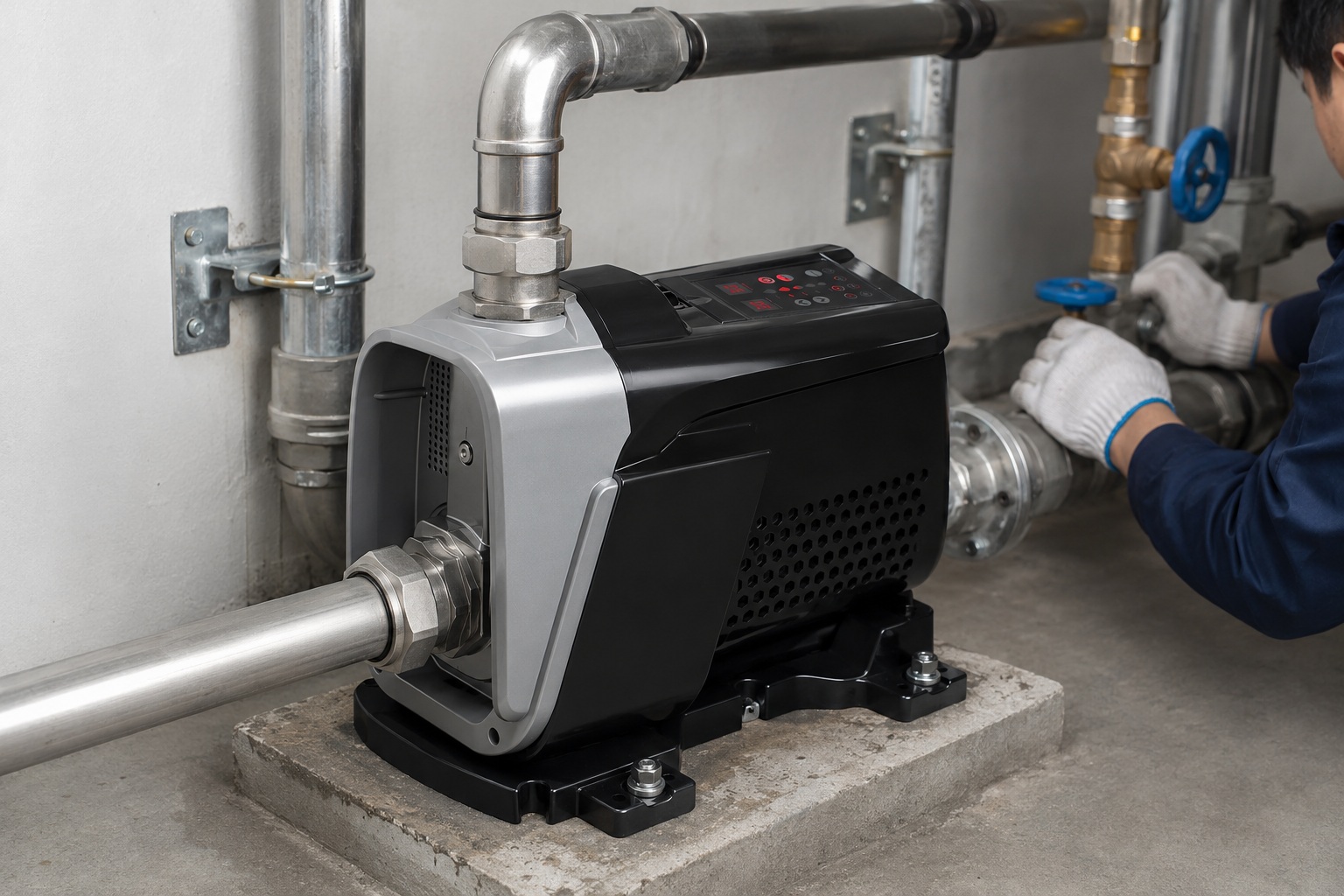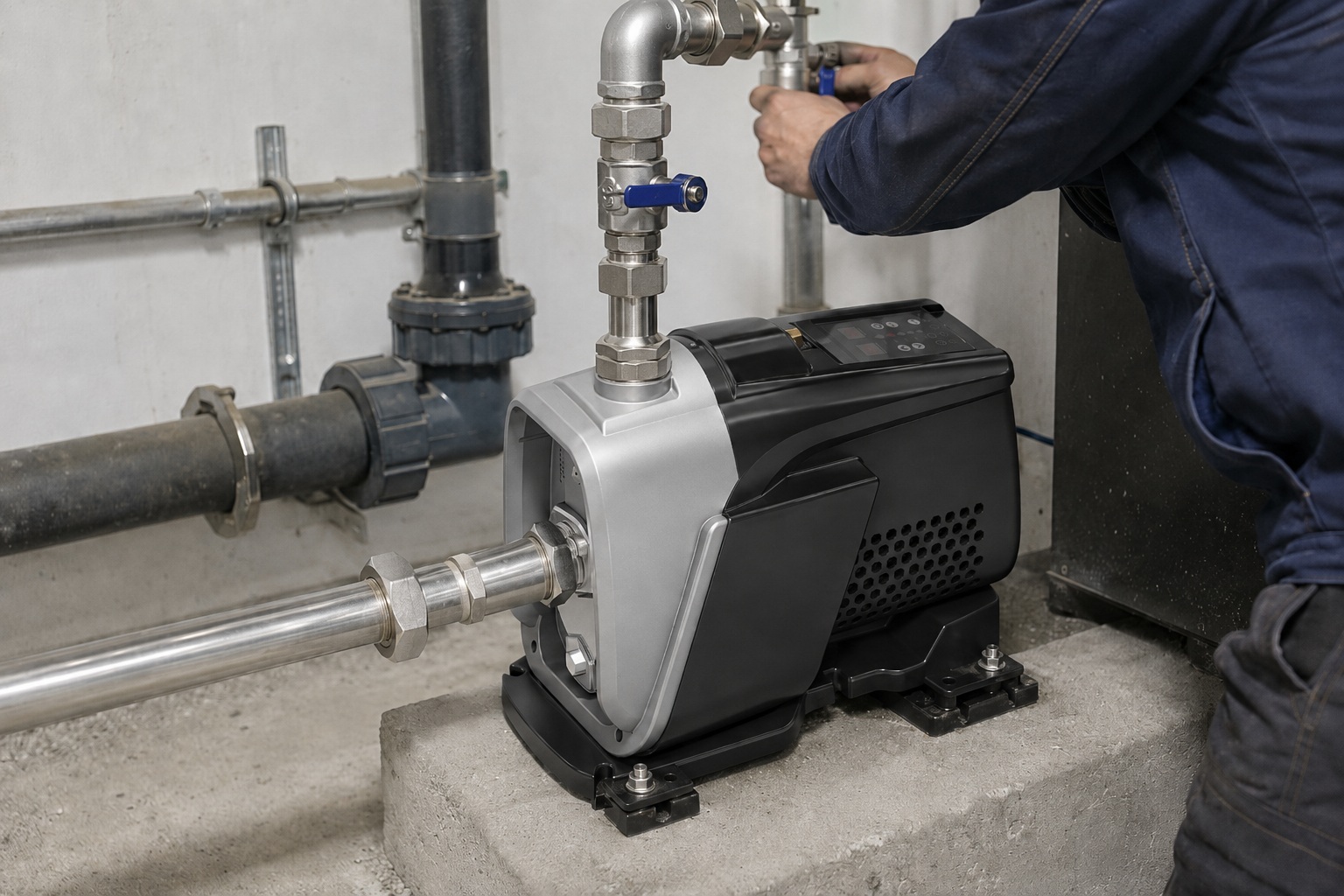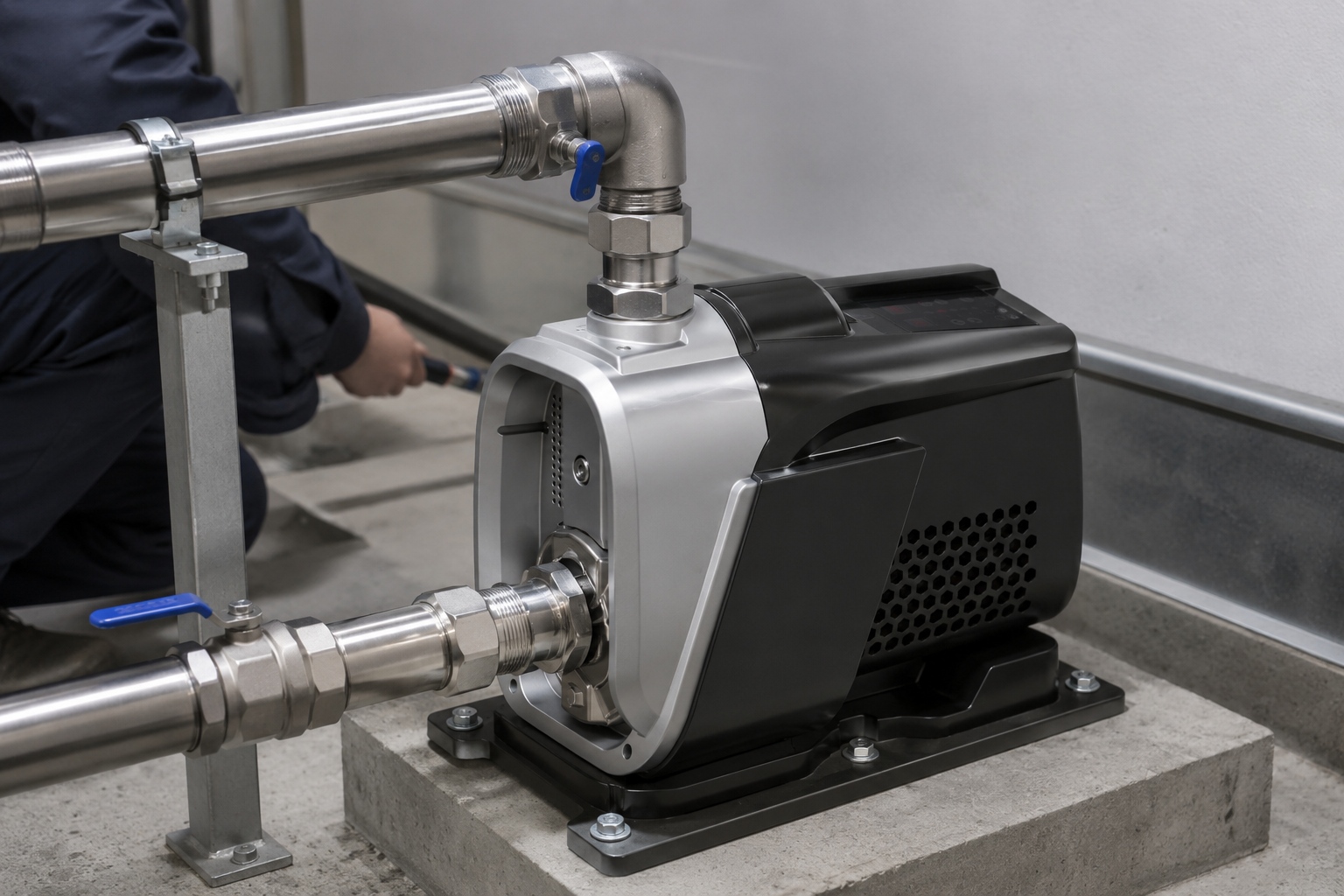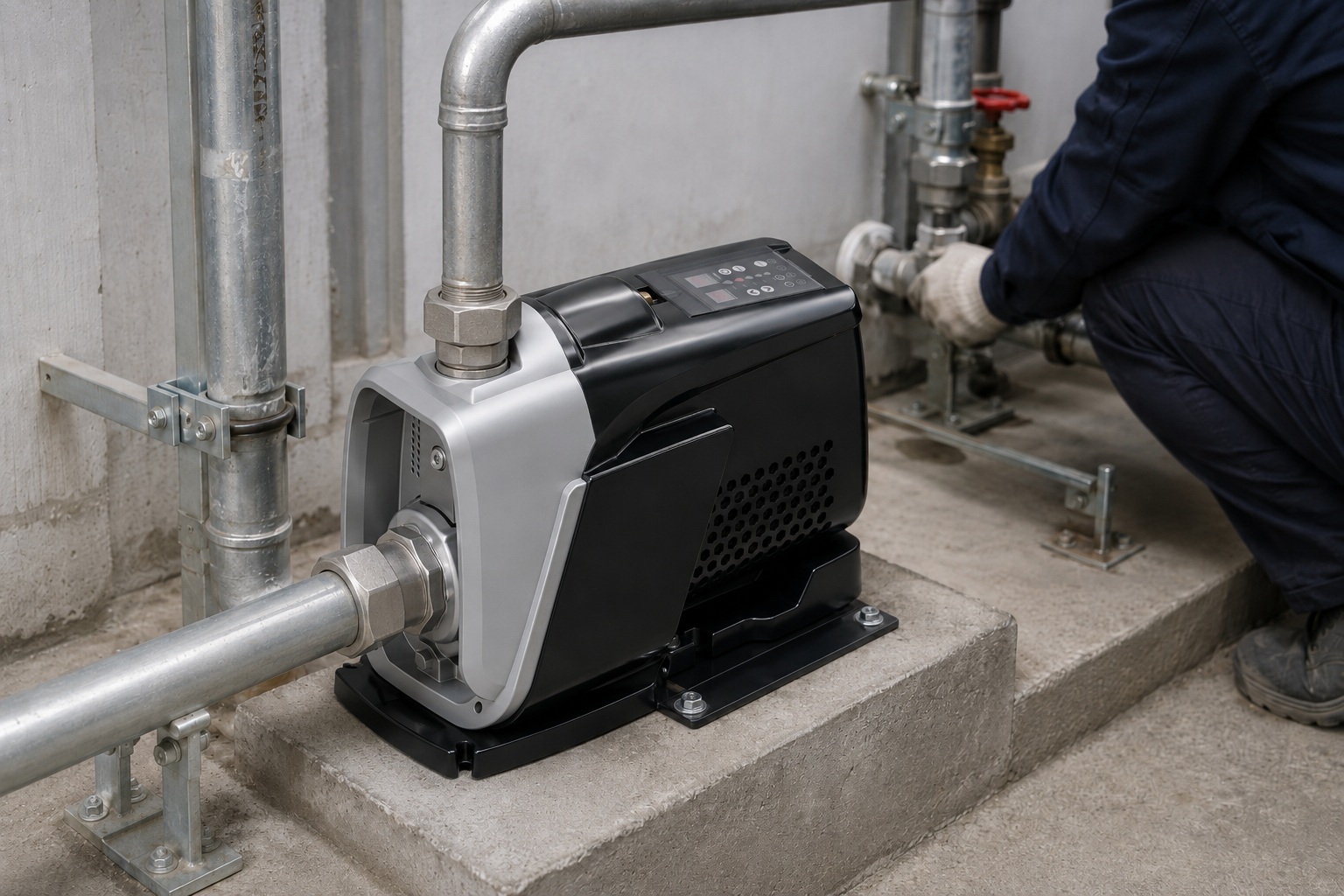
Struggling to select the right pump for your project?
The choice between horizontal and vertical multistage pumps can be confusing, impacting both space and performance.
The primary difference lies in their orientation and footprint. Vertical pumps are ideal for space-constrained applications, offering higher pressure capabilities. Horizontal pumps are suited for low-headroom areas, are often easier to service, and handle lower Net Positive Suction Head (NPSH) requirements better.
Making the right choice goes beyond just space.
It impacts maintenance, efficiency, and the overall reliability of your water system.
Let's explore the critical details that will guide your decision.
This ensures you select the perfect pump for your application's demands.
What Are Multistage Pumps and Why Use Them?
Is a single-stage pump failing to deliver the pressure you need?
Multistage pumps solve this by using multiple impellers to boost pressure sequentially, achieving higher heads efficiently.
A multistage pump contains two or more impellers within a single casing. Water passes through each impeller in sequence, with each stage adding more pressure. This design allows them to generate much higher pressures than single-stage pumps, making them ideal for high-head applications.
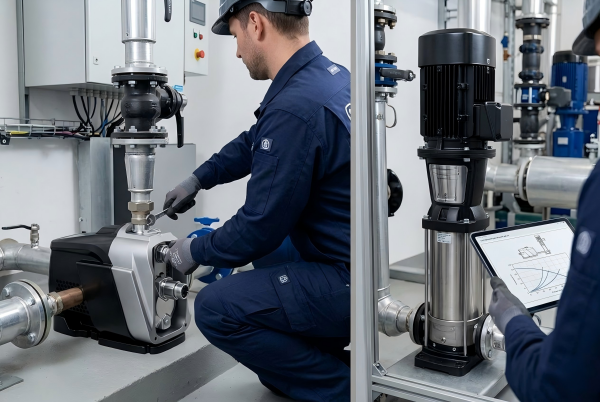
At its core, any pump works by using a spinning component called an impeller.
The impeller's rotating blades add velocity to the water.
This velocity is then converted into pressure within the pump's housing.
A standard single-stage pump has one impeller and can only increase pressure by a certain amount.
When an application demands more pressure than a single impeller can provide, a multistage pump is the solution.
The Power of Series Connection
Think of multistage pumps as having several pumps connected one after another, or in "series."
The process is simple yet powerful:
- Water enters the first chamber at a low pressure.
- The first impeller spins, boosting the water's pressure.
- This pressurized water then flows directly into the second chamber.
- The second impeller takes this already-pressurized water and adds even more pressure.
- This process continues through all the stages in the pump.
The final result is outlet water at a significantly higher pressure than the inlet water.
This makes them essential for overcoming the pressure losses from gravity in tall buildings or from friction in long pipelines.
Where Multistage Pumps Excel
Because of their ability to generate high pressure, multistage pumps are critical in many settings.
They solve pressure challenges across various sectors.
- Residential and Commercial Buildings: They are perfect for ensuring strong, consistent water pressure on the upper floors of high-rise hotels, apartment complexes, and office towers.
- Industrial Systems: Manufacturing plants rely on them for boiler feed applications, reverse osmosis systems, and high-pressure cleaning processes where constant, high pressure is non-negotiable.
- Irrigation: Large-scale agricultural operations, golf courses, and farms use these pumps to push water across vast areas and varied elevations, ensuring every part of the system receives adequate flow.
- Municipal Water Supply: Water treatment and distribution networks use large multistage pumps to move water from reservoirs to homes and businesses across a city.
In any scenario where you need to move water against significant resistance, a multistage pump is often the most efficient and reliable choice.
The Horizontal Multistage Pump: Design and Applications
Limited by overhead space but have plenty of floor area?
A horizontal multistage pump might be your answer, offering robust performance with easier access for maintenance.
Horizontal multistage pumps feature a shaft oriented horizontally. They are typically easier to install and maintain due to the accessibility of the pump and motor. These pumps are excellent for low-headroom installations and general industrial pressure boosting, boiler feed, and reverse osmosis applications.
The horizontal multistage pump is a classic workhorse in the industrial and commercial world.
Its design prioritizes stability and serviceability, making it a favorite for many engineers and maintenance teams.
The entire pump set, including the pump and motor, is mounted on a single baseplate, creating a long, low-profile unit.
Key Design Features
Understanding the construction of a horizontal pump helps clarify its best uses.
These pumps are often of a segmented, ring-section design.
Each stage is a self-contained module, and these modules are bolted together.
This design makes them versatile but also contributes to their length.
- Shaft Orientation: The shaft runs parallel to the ground, which makes coupling alignment and bearing inspection more straightforward.
- Accessibility: All major components, such as bearings, seals, and the coupling, are easily accessible without needing ladders or lifting equipment. This significantly simplifies routine maintenance activities.
- Suction and Discharge: Nozzles are typically located on the top or side of the pump, which can sometimes require more complex piping arrangements compared to their vertical counterparts.
Ideal Use Cases
Horizontal pumps are deployed in a wide range of applications where headroom is restricted, but floor space is not a major concern.
Their robust nature makes them suitable for continuous-duty operations.
- Boiler Feed Water: In power plants and industrial facilities, these pumps are used to feed water into boilers at high pressure and temperature. Their stable design is well-suited for these critical tasks.
- Reverse Osmosis (RO) Systems: Desalination and water purification plants require very high pressures to force water through membranes, a task for which horizontal multistage pumps are perfectly designed.
- General Pressure Boosting: They are widely used in industrial plants and municipal water systems to increase pressure within a distribution network.
Advantages and Disadvantages
Every pump design involves trade-offs.
A clear understanding of these helps in making the right choice.
| Aspect | Advantages | Disadvantages |
|---|---|---|
| Maintenance | Easier to access pump internals, bearings, and seals. Simplifies alignment. | May require complete disassembly for major repairs. |
| Installation | Lower center of gravity provides a stable installation. No special foundation needed. | Requires a significantly larger floor footprint. |
| NPSH | Often has better Net Positive Suction Head Required (NPSHr) characteristics. | Not ideal for applications with very limited suction head. |
| Piping | Can accommodate more flexible piping layouts. | Suction and discharge nozzle placement can complicate layouts. |
The Vertical Multistage Pump: When Space is a Premium
Running out of floor space for critical equipment?
Vertical multistage pumps offer a compact, high-pressure solution that fits into tight mechanical rooms without compromising on power.
Vertical multistage pumps have a vertically oriented shaft, resulting in a very small footprint. They are the go-to choice for pressure boosting in high-rise buildings and industrial applications where floor space is limited. Their inline design also simplifies piping layouts.
The vertical multistage pump is a marvel of modern engineering, designed to deliver high performance in a small package.
Its "in-line" design means the suction and discharge ports are on the same horizontal plane, which dramatically simplifies the piping layout.
This makes it an ideal choice for retrofitting into existing systems or for new installations where space is the most valuable commodity.
Core Construction Elements
The vertical pump's design is focused on maximizing pressure output while minimizing its footprint.
The motor is mounted directly on top of the pump, and the impellers are stacked vertically inside the pump casing.
- Small Footprint: This is the most significant advantage. It allows multiple pumps to be installed in a very small area, which is perfect for packaged booster systems.
- Simplified Piping: The in-line ports allow the pump to be installed directly into a straight run of pipe, much like a valve. This reduces the number of elbows and fittings needed, saving both space and installation costs.
- Motor Mounting: The standard motor is mounted on a stool, making motor replacement relatively simple. However, accessing the pump's mechanical seal often requires removing the motor first.
Primary Applications
The unique benefits of vertical pumps make them the preferred choice in many modern applications.
They are especially dominant in the building services and water treatment sectors.
- Commercial Building Pressure Boosting: This is their most common application. They are used in hotels, hospitals, and office towers to ensure that upper floors receive the same strong water pressure as the lower floors.
- Water Treatment Facilities: Vertical pumps are used for filtration systems, RO systems, and for distributing treated water. Their stainless-steel construction makes them suitable for handling purified water.
- High-Pressure Washing Systems: Industrial cleaning systems that require very high pressure often use vertical multistage pumps for their ability to generate high head in a compact form factor.
Advantages and Disadvantages
While they solve the problem of space brilliantly, vertical pumps have their own set of operational considerations.
| Aspect | Advantages | Disadvantages |
|---|---|---|
| Installation | Extremely small footprint saves valuable floor space. Simplified, in-line piping saves costs. | Requires significant vertical headroom for installation and motor removal. |
| Maintenance | Motor can often be replaced without disturbing the piping. | Mechanical seal replacement typically requires removing the heavy motor first. |
| Performance | Can often achieve higher pressures than horizontal pumps of a similar size. | Can be more sensitive to low NPSH conditions, leading to cavitation risk. |
| Operation | Generally self-priming is not a feature. Must be installed with a flooded suction. | The high center of gravity may require more robust mounting. |
Key Decision Factors: A Head-to-Head Comparison
Afraid of making a costly mistake by choosing the wrong pump?
This direct comparison breaks down the critical factors to ensure you make an informed, confident decision.
Your decision should balance four key factors: available space (footprint vs. headroom), required pressure (head), Net Positive Suction Head (NPSH), and long-term maintenance considerations. Each pump type excels in different scenarios, making a careful analysis of your system essential.
Choosing the right pump is a balancing act.
There is no single "best" pump; there is only the best pump for your specific application.
By systematically evaluating your system's requirements against the strengths of each pump type, you can arrive at the optimal solution.
Let's break down the decision into four key areas.
Spatial Constraints: Footprint vs. Headroom
This is often the first and most decisive factor.
- Horizontal Pumps: Require a large amount of floor space but very little overhead clearance. They are perfect for installation in basements or under mezzanines with low ceilings.
- Vertical Pumps: Need very little floor space but require significant vertical headroom. This is especially important to consider for maintenance, as you need enough clearance above the pump to lift the motor off for service.
Hydraulic Performance: Pressure and Flow
Both pumps can cover a wide range of duties, but they have their sweet spots.
- Pressure (Head): Vertical multistage pumps are often associated with generating higher pressures due to their design, which allows for many stages to be stacked efficiently.
- Flow Rate: Horizontal pumps, particularly the between-bearings types, can often handle higher flow rates.
- NPSH: Net Positive Suction Head is the pressure required at the pump inlet to prevent cavitation. Horizontal pumps often have better NPSH characteristics, making them more suitable for applications where the water source is below the pump or has a low suction pressure.
Maintenance and Serviceability
Consider the long-term cost and ease of ownership.
- Horizontal Pumps: Generally considered easier to service. Components like bearings and mechanical seals can be accessed without moving the motor. This can lead to faster and less costly repairs.
- Vertical Pumps: While robust, major service on the "wet end" of the pump, such as a seal replacement, usually requires the removal of the motor. This can be a more involved and time-consuming task, requiring lifting equipment for larger motors.
Direct Comparison Table
This table provides a quick reference for the key differences.
| Feature | Horizontal Multistage Pump | Vertical Multistage Pump |
|---|---|---|
| Footprint | Large | Small |
| Headroom | Low | High |
| Maintenance | Easier access to components | Can require motor removal for seal service |
| Piping | More complex layout | Simplified in-line layout |
| Typical Pressure | Moderate to High | High to Very High |
| NPSH Handling | Generally better | Can be more sensitive |
Modern Enhancements Driving Pump Efficiency and Reliability
Worried about high energy bills and pump failures?
Modern technologies like VFDs and advanced protection systems tackle these issues, making today's pumps smarter and more durable.
Both horizontal and vertical multistage pumps now benefit from Variable Frequency Drives (VFDs) for unparalleled energy efficiency and constant pressure control. Paired with intelligent protection systems and premium materials, these pumps offer superior reliability and a longer service life, regardless of their orientation.
The choice between pump orientations is just one part of the equation.
Modern advancements in motor control and system protection have revolutionized pump performance, efficiency, and longevity.
These features are available for both horizontal and vertical models, and they are crucial for maximizing the return on your investment.
The VFD and Smart Motor Revolution
The single biggest advancement in recent years is the integration of Variable Frequency Drives (VFDs).
A VFD controller intelligently adjusts the pump's motor speed to precisely match the system's water demand in real-time.
- Massive Energy Savings: A pump running at 80% speed consumes only about 50% of the energy. A VFD ensures the pump only works as hard as it needs to, which can cut electricity consumption by 50% or more compared to a fixed-speed pump.
- Constant Pressure Supply: For building applications, a VFD maintains a perfectly stable water pressure, regardless of how many taps are open. This eliminates the annoying pressure fluctuations common with older systems.
- Soft Start and Soft Stop: VFDs gradually ramp the motor up and down. This eliminates the powerful electrical inrush current on startup and prevents "water hammer" — a damaging hydraulic shockwave — when the pump stops. This drastically reduces mechanical and electrical stress, extending the life of the pump and the entire plumbing system.
The Importance of Materials and Intelligent Protection
A pump is only as reliable as its weakest component.
High-quality materials and built-in safeguards are essential for a long service life.
- Premium Materials: Leading manufacturers use AISI 304 or 316 stainless steel for impellers, chambers, and pump casings. This provides excellent resistance to corrosion and abrasion, ensuring a long and efficient operational life.
- Advanced Protection Systems: Modern smart pumps come with a suite of built-in protections that act as a 24/7 watchdog for the system.
Key protections include:
- Dry-Run Protection: Shuts the pump down if it detects a lack of water, preventing catastrophic damage.
- Overheating Protection: Monitors both motor and electronics temperature to prevent burnout.
- Voltage Protection: Guards against damage from an unstable power grid.
- Antifreeze Protection: In cold climates, it will periodically run the pump for a few seconds to prevent the water inside from freezing and cracking the casing.
- Leak Detection: Monitors for small, continuous flows that could indicate a leak in the plumbing system, saving water and preventing property damage.
Conclusion
Choosing between horizontal and vertical pumps depends on your specific needs for space, pressure, and maintenance.
Both types benefit immensely from modern VFD and protection technologies for optimal performance.
Frequently Asked Questions
Q: What is the main advantage of a vertical multistage pump?
Its primary advantage is its small footprint. This makes it ideal for installations in tight mechanical rooms where floor space is a premium.
Q: When would you use a horizontal multistage pump?
You would use a horizontal pump in applications with low overhead clearance or when easier access for routine maintenance is a top priority.
Q: Are vertical pumps more efficient than horizontal pumps?
Pump efficiency is determined by hydraulic design, not orientation. Both types can be highly efficient, so you should compare the specific efficiency curves of the models you are considering.
Q: Which pump is better for high pressure?
Both can generate high pressure, but vertical pumps are often designed to stack more stages, allowing them to reach very high heads in a compact design.
Q: Is a multistage pump a centrifugal pump?
Yes, a multistage pump is a type of centrifugal pump. It simply uses multiple impellers in series to achieve higher pressure than a single-stage centrifugal pump.
Q: How does a multistage pump increase pressure?
It increases pressure sequentially. Water flows from the outlet of one impeller directly into the inlet of the next, with each stage adding more energy and pressure.
Q: What is NPSH in a pump?
NPSH stands for Net Positive Suction Head. It is the minimum pressure required at the pump's inlet to prevent the liquid from boiling, which causes damaging cavitation.
Q: Can a booster pump save energy?
Yes, especially models with a Variable Frequency Drive (VFD). A VFD matches pump speed to demand, significantly reducing energy consumption compared to fixed-speed pumps.