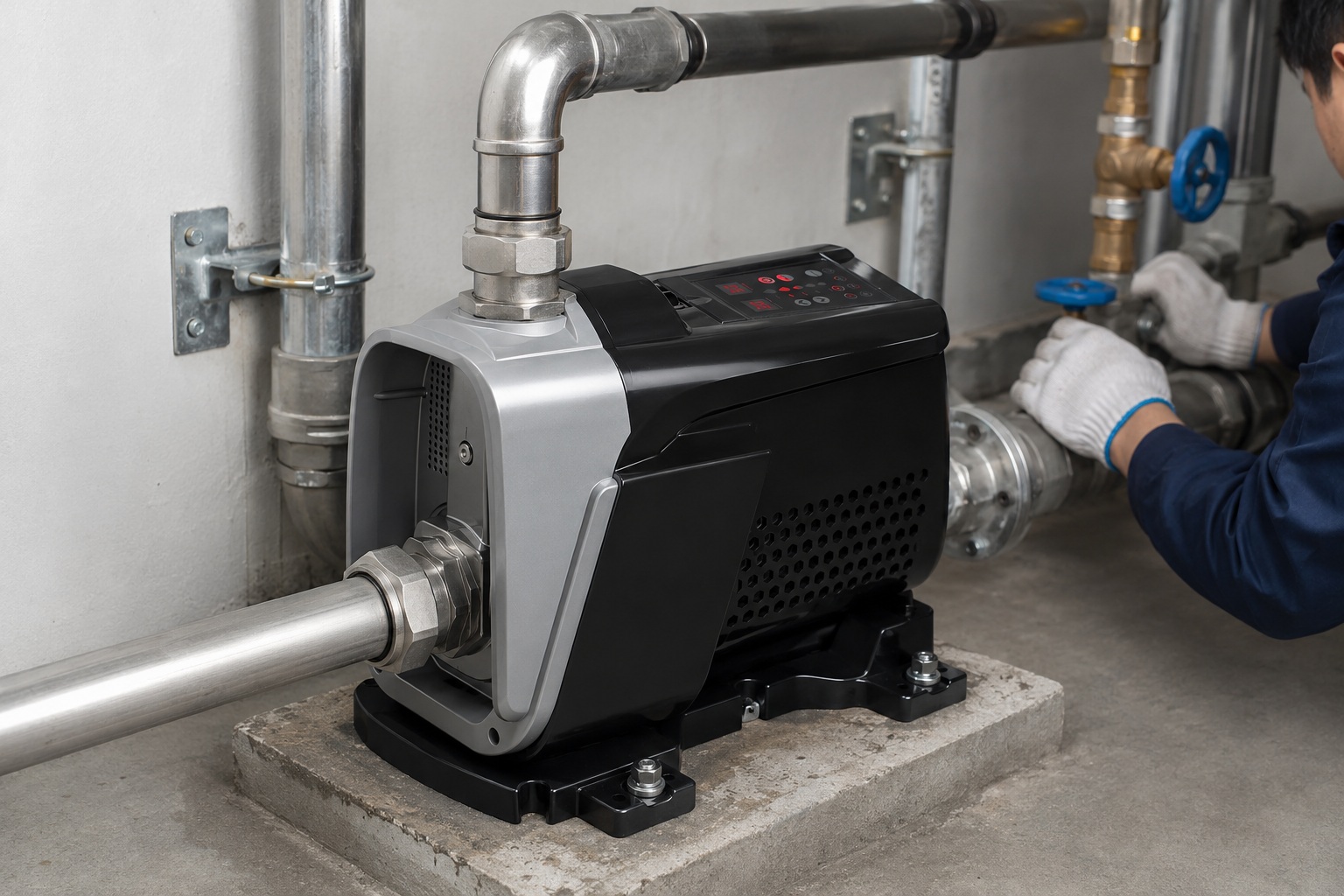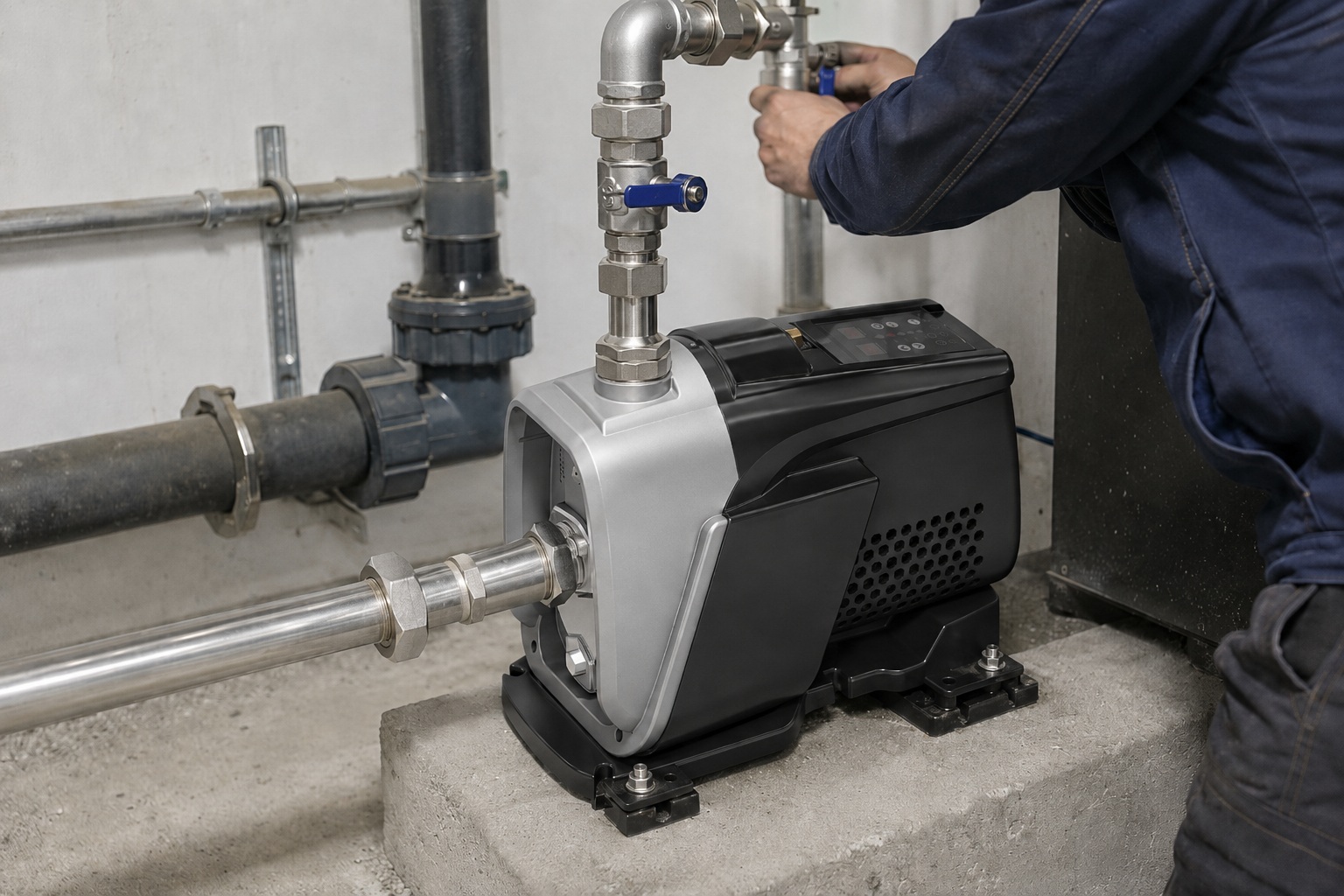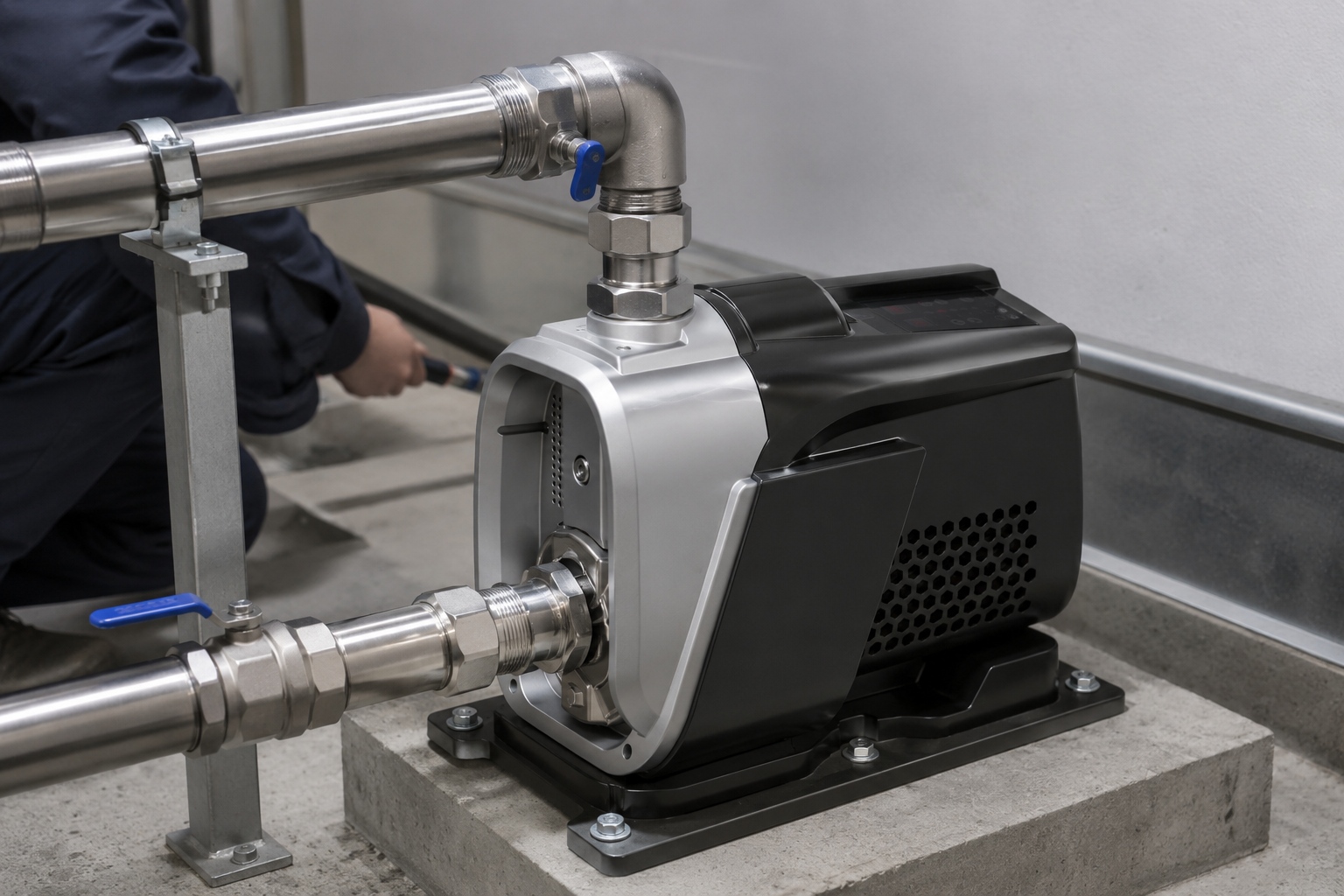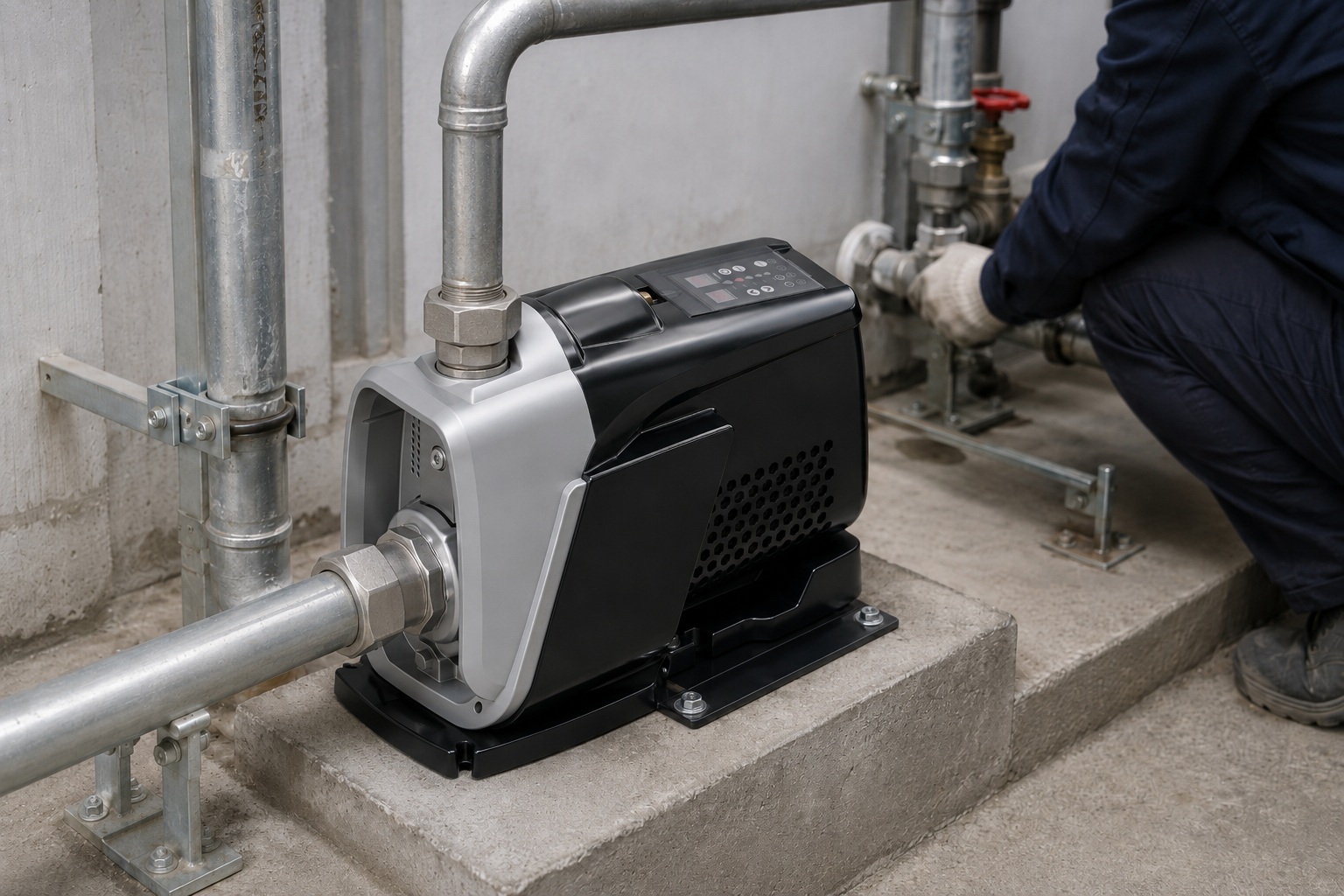
Struggling to achieve high water pressure for your application?
A standard pump often can't deliver the force you need for demanding tasks, leading to inefficiency and poor performance.
A multistage pump is a powerful device that uses two or more impellers within a single casing.
Each impeller, or "stage," adds pressure to the fluid, progressively boosting it to levels that single-stage pumps cannot reach.
This design makes them ideal for high-pressure applications.
This clever series design is the key to their power, but what does it mean for your specific needs?
Understanding the mechanics reveals why these pumps are the go-to solution for industries requiring consistent, high-pressure fluid transfer.
Let's explore the components and principles that make this technology so effective.
How Does a Multistage Pump Work?
Confused about how pressure builds up inside a pump?
It seems complex, but the process is a simple, powerful sequence that multiplies force stage by stage.
A multistage pump operates by guiding fluid through a sequence of impellers.
The fluid enters the first stage at low pressure, is accelerated by the first impeller, and then directed to the second stage.
This process repeats, with each stage adding more pressure.
The brilliance of the multistage design lies in its compounding effect.
Each impeller and diffuser combination acts as a separate pump.
The fluid enters the first chamber through the suction inlet.
The first impeller spins, driven by a motor, and flings the fluid outwards using centrifugal force.
This action increases the fluid's velocity.
The fluid then passes through a diffuser, which is a stationary component with curved vanes.
The diffuser's job is to slow the fluid down.
As the fluid decelerates, its kinetic energy (velocity) is converted into potential energy (pressure).
This is the first pressure boost.
From this first diffuser, the now-pressurized fluid is channeled directly into the eye of the second impeller.
The second impeller repeats the process, adding even more velocity to the already pressurized fluid.
The subsequent diffuser converts this new velocity into another pressure increase.
This sequence continues through all the stages in the pump.
A pump with five stages, for example, will boost the pressure five separate times before the fluid exits through the discharge outlet.
This methodical, step-by-step amplification allows multistage pumps to achieve final discharge pressures that can be over 10 times higher than a comparable single-stage pump.
The Two Main Configurations
Multistage pumps are not all built the same.
Their internal layout affects performance, maintenance, and suitability for different tasks.
Vertical Multistage Pumps
Vertical pumps are designed with a vertical shaft, stacking the impellers on top of each other.
This configuration gives them a much smaller footprint, making them perfect for installations where floor space is limited.
They are commonly used in boiler feed applications, pressure-boosting systems for high-rise buildings, and industrial cleaning systems.
Horizontal Multistage Pumps
Horizontal pumps, as the name suggests, have a shaft oriented horizontally.
The impellers are arranged side-by-side along this shaft.
This design is often preferred for its ease of maintenance, as the internal components can be accessed more readily.
They are workhorses in applications like reverse osmosis, mine dewatering, and large-scale irrigation systems where durability and serviceability are top priorities.
| Feature | Vertical Multistage Pump | Horizontal Multistage Pump |
|---|---|---|
| Footprint | Small, compact | Large, requires more floor space |
| Common Use | Building water supply, boiler feed | Irrigation, reverse osmosis, mining |
| Maintenance | Can be more complex to disassemble | Generally easier to access and service |
| Pressure | High pressure, moderate flow | High pressure, often higher flow rates |
What Are the Key Advantages of Using a Multistage Pump?
Is a single-stage pump failing to meet your pressure requirements?
Investing in a more powerful pump can seem costly, but the long-term benefits in efficiency and performance are significant.
The primary advantage of a multistage pump is its ability to generate extremely high pressures efficiently.
It also offers a wide operational range, improved reliability due to balanced hydraulic forces, and lower energy consumption per unit of pressure compared to other pump types.
The benefits of a multistage pump extend far beyond just high pressure.
Their design provides a unique combination of efficiency, versatility, and durability that makes them a superior choice for many demanding scenarios.
By operating each impeller at a lower speed to achieve a specific pressure point, these pumps experience less wear and tear compared to a single-stage pump running at maximum RPM to do the same job.
This translates directly into a longer operational life and reduced maintenance costs, with some models seeing a 25-40% reduction in service intervals.
Superior Energy Efficiency
One of the most compelling reasons to choose a multistage pump is its energy efficiency.
Because the work is distributed across multiple stages, each impeller can be designed to operate at its Best Efficiency Point (BEP).
This ensures the pump converts more electrical energy into hydraulic power with minimal waste.
In large-scale industrial or municipal applications, switching to a multistage system can result in energy savings of up to 30%, leading to a substantial reduction in operational expenditures over the pump's lifetime.
This efficiency also means less heat generation, further contributing to the pump's longevity.
Quiet and Smooth Operation
The hydraulic forces within a multistage pump are better balanced.
In a single-stage pump, high pressure creates significant axial thrust on the shaft and bearings.
In a multistage design, impellers can be arranged back-to-back or in opposing pairs, which helps to naturally cancel out these axial forces.
The result is a pump that runs with significantly less vibration and noise.
This makes them an excellent choice for environments where noise reduction is important, such as residential buildings or hospitals.
Reduced vibration also means less stress on bearings, seals, and couplings, which again leads to greater reliability.
Wide Range of Performance
Multistage pumps offer incredible flexibility.
By simply adding or removing stages, manufacturers can create a pump that delivers a specific pressure and flow rate to precisely match an application's requirements.
This modularity is a significant advantage.
It allows for a customized solution without the need for a completely new design.
This adaptability ensures you are not "over-pumping" and wasting energy or "under-pumping" and failing to meet performance needs.
It gives you a tailored solution that is both effective and economical.
Where Are Multistage Pumps Commonly Used?
Finding the right pump for a high-pressure job can be a challenge.
Using the wrong type can lead to system failure, but the wide range of applications for multistage pumps can be confusing.
Multistage pumps are essential in applications requiring high-pressure fluid delivery.
They are commonly found in boiler feed systems, reverse osmosis water purification, pressure boosting for tall buildings, large-scale irrigation, and industrial high-pressure cleaning systems.
The versatility of multistage pumps means they are critical components in a vast array of industries.
Any process that involves moving a fluid against significant resistance is a potential candidate for this technology.
Their ability to provide reliable, high pressure makes them indispensable for ensuring systems operate correctly and efficiently.
From providing clean drinking water to powering industrial machinery, their impact is felt across domestic, commercial, and industrial sectors.
Let's look at some of the most prominent real-world applications where these pumps excel.
Key Application Areas
These pumps are the unsung heroes behind many modern conveniences and industrial processes.
Pressure Boosting Systems
High-rise buildings, including hotels, office towers, and residential complexes, require consistent water pressure on all floors.
A municipal water supply alone cannot push water to the top floors.
Vertical multistage pumps are installed to boost the incoming water pressure, ensuring every tap and fixture has adequate flow.
These systems account for an estimated 60% of pump installations in new commercial skyscrapers.
Boiler Feedwater
Power plants and industrial facilities use boilers to generate steam.
These boilers operate under extremely high pressure.
Multistage pumps are used to force feedwater into the boiler against this pressure.
Their reliability is critical, as any failure in the feedwater supply can lead to a catastrophic boiler event.
Reverse Osmosis (RO)
Desalination and water purification plants use reverse osmosis to produce clean water.
This process requires forcing water through a semi-permeable membrane at very high pressures to separate out salt and other impurities.
Horizontal multistage pumps are the standard choice for this application, providing the steady, intense pressure needed for efficient RO operation.
These systems can require pressures exceeding 70 bar (1,000 PSI).
Other Important Uses
- Irrigation: Pumping water over long distances and up steep hills for agriculture requires high pressure to overcome friction loss and elevation changes.
- Snowmaking: Ski resorts use powerful multistage pumps to force water and compressed air through snow cannons at high pressure.
- Mine Dewatering: Pumping water out of deep underground mines requires pumps that can overcome immense head pressure.
- High-Pressure Cleaning: Industrial cleaning applications, from vehicle washes to machinery sanitation, rely on multistage pumps to generate powerful water jets.
Conclusion
A multistage pump is an efficient, reliable solution for any application requiring high-pressure fluid transfer.
Its design offers superior performance, durability, and versatility compared to single-stage alternatives.
FAQs
What is the main difference between a single-stage and a multistage pump?
A single-stage pump has one impeller and is for lower-pressure, high-flow uses.
A multistage pump has multiple impellers to build very high pressure sequentially.
Are multistage pumps more efficient?
Yes, for high-pressure applications.
By distributing the workload over several stages, they can operate closer to their Best Efficiency Point, saving significant energy.
Can a multistage pump handle solids?
Generally, no.
Most multistage pumps have tight clearances between impellers and diffusers, making them suitable only for clean liquids without abrasive solids.
What is head in a multistage pump?
Head is the total height the pump can lift a fluid.
In a multistage pump, the total head is the sum of the head generated by each individual stage.
Why choose a vertical vs. a horizontal multistage pump?
Choose a vertical pump for a small footprint, like in building services.
Choose a horizontal pump for easier maintenance and higher flow, common in industrial settings.
How do you control the pressure of a multistage pump?
Pressure is typically controlled using a variable frequency drive (VFD).
A VFD adjusts the motor's speed, which directly regulates the pump's output pressure and flow.
What maintenance do multistage pumps require?
Regular maintenance includes checking seals for leaks, monitoring bearing lubrication and temperature, and ensuring the motor is operating correctly.
Periodic inspections of impeller wear are also recommended.
Are multistage pumps self-priming?
Most centrifugal multistage pumps are not self-priming.
They must be primed before operation, meaning the casing needs to be filled with liquid to start pumping.