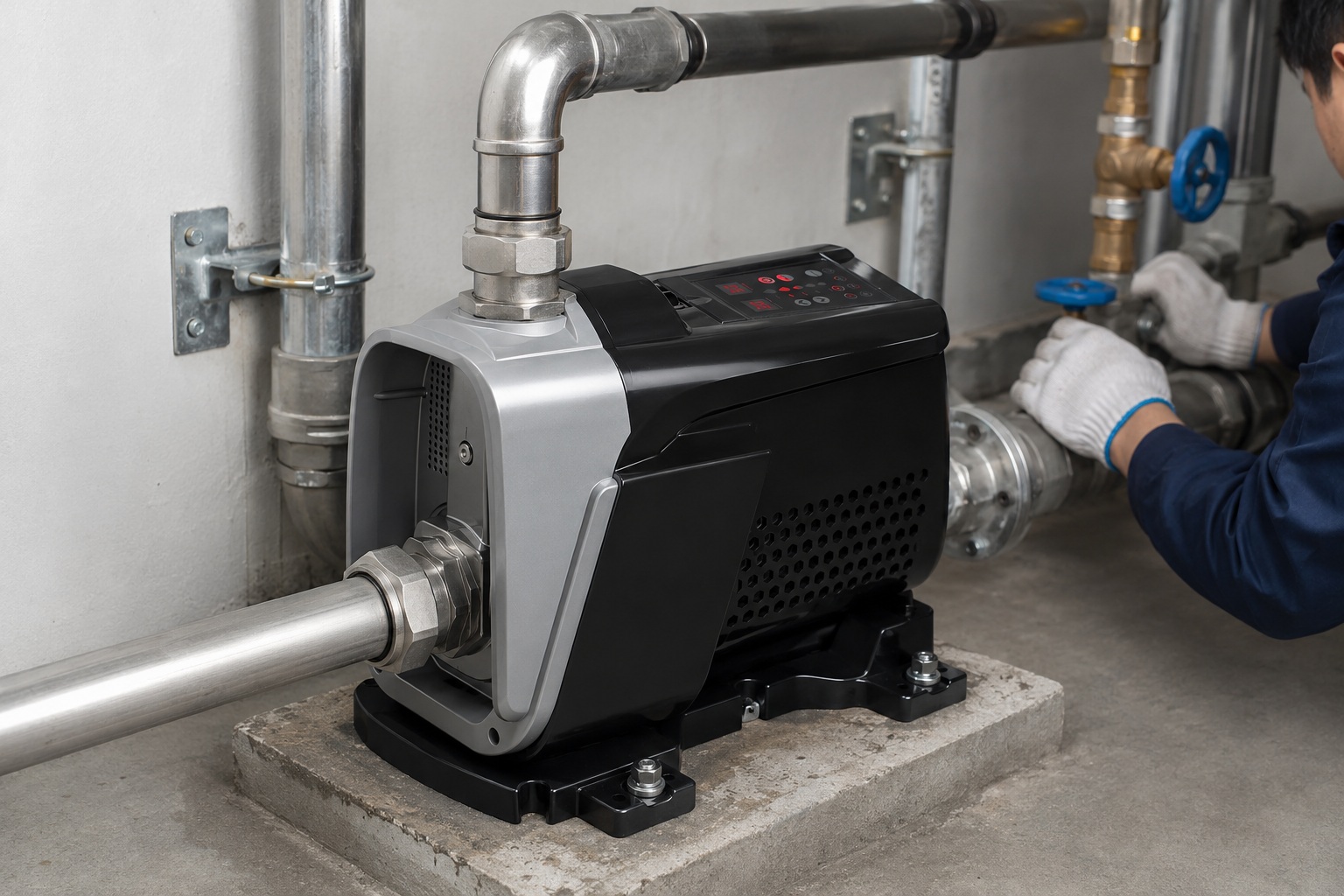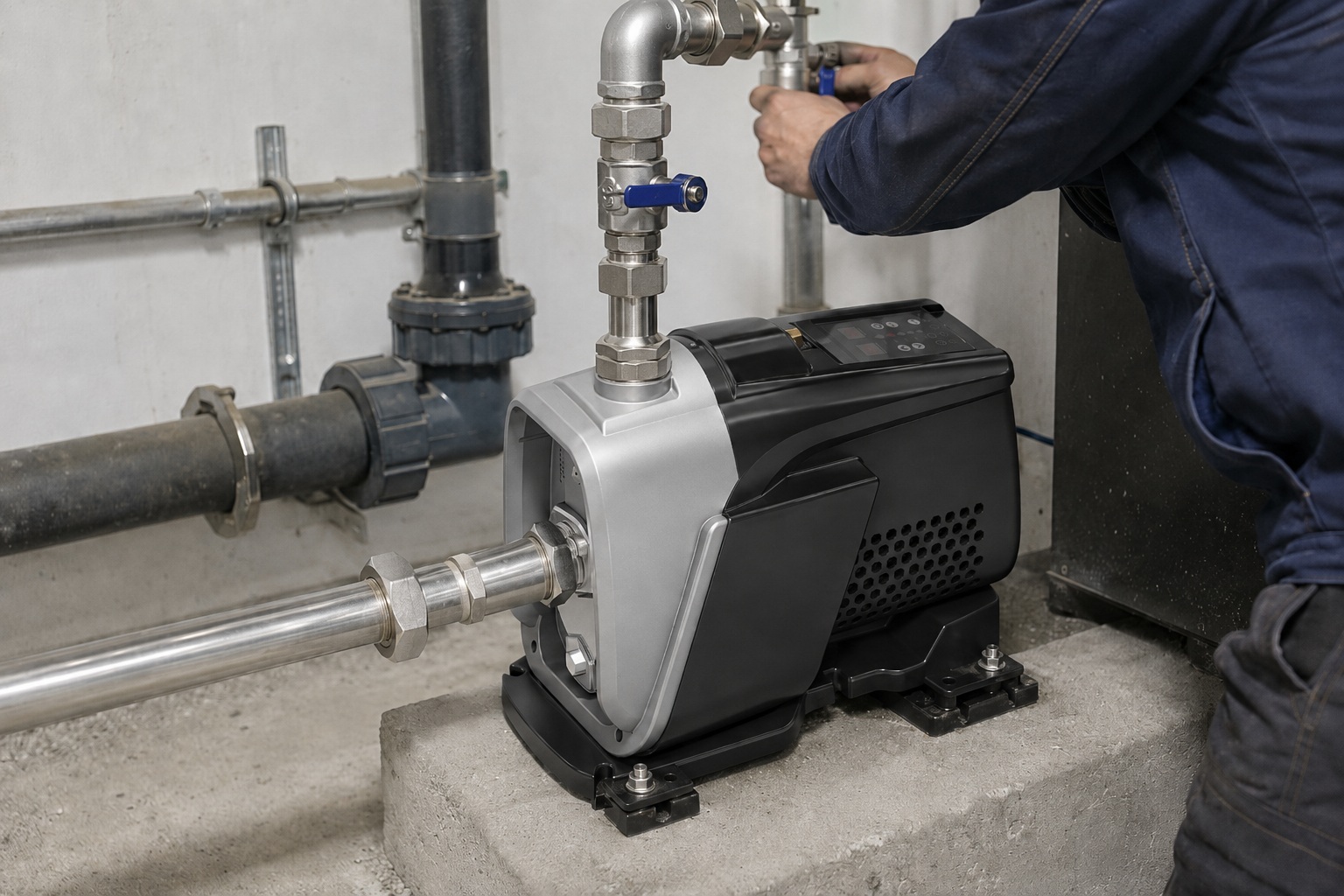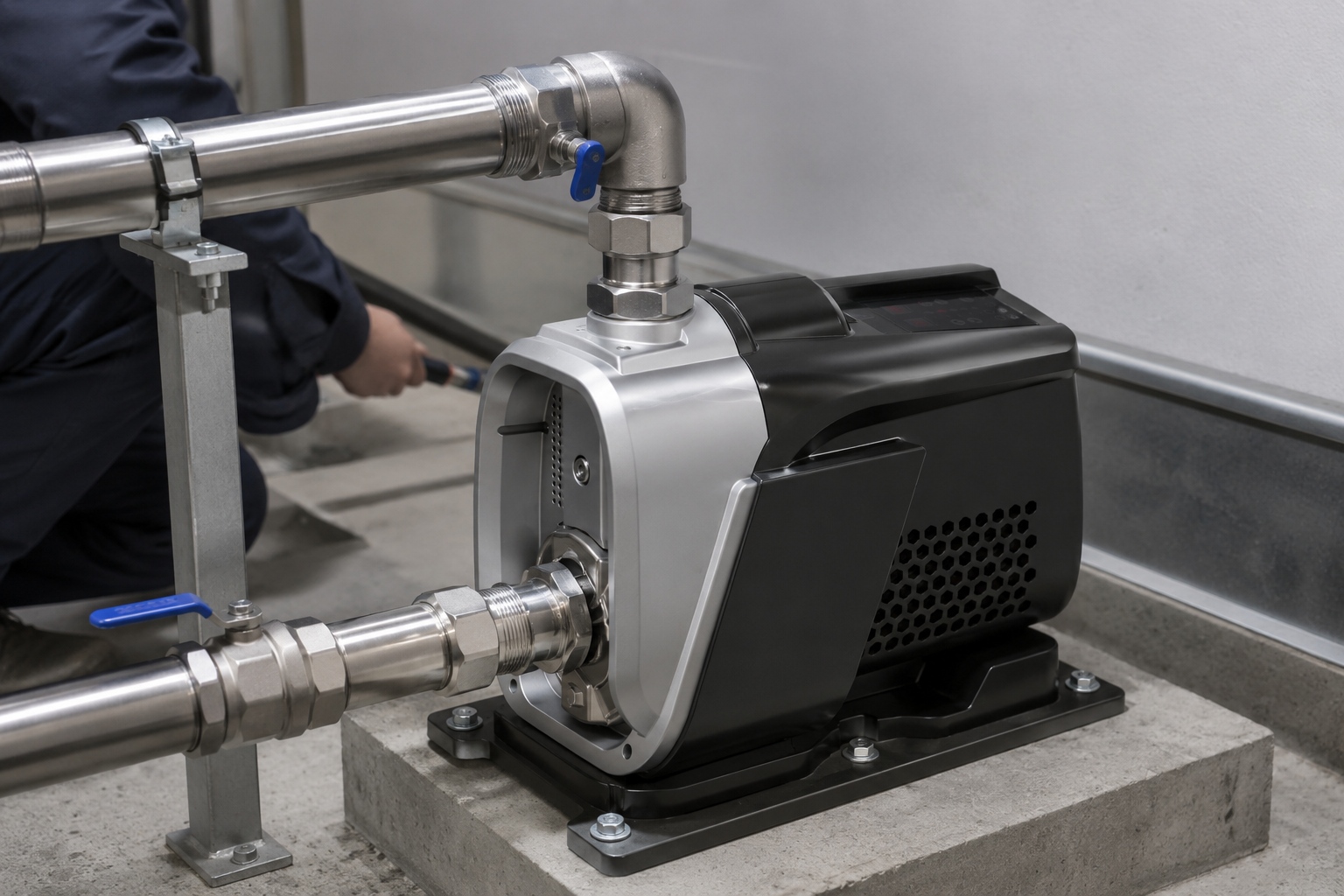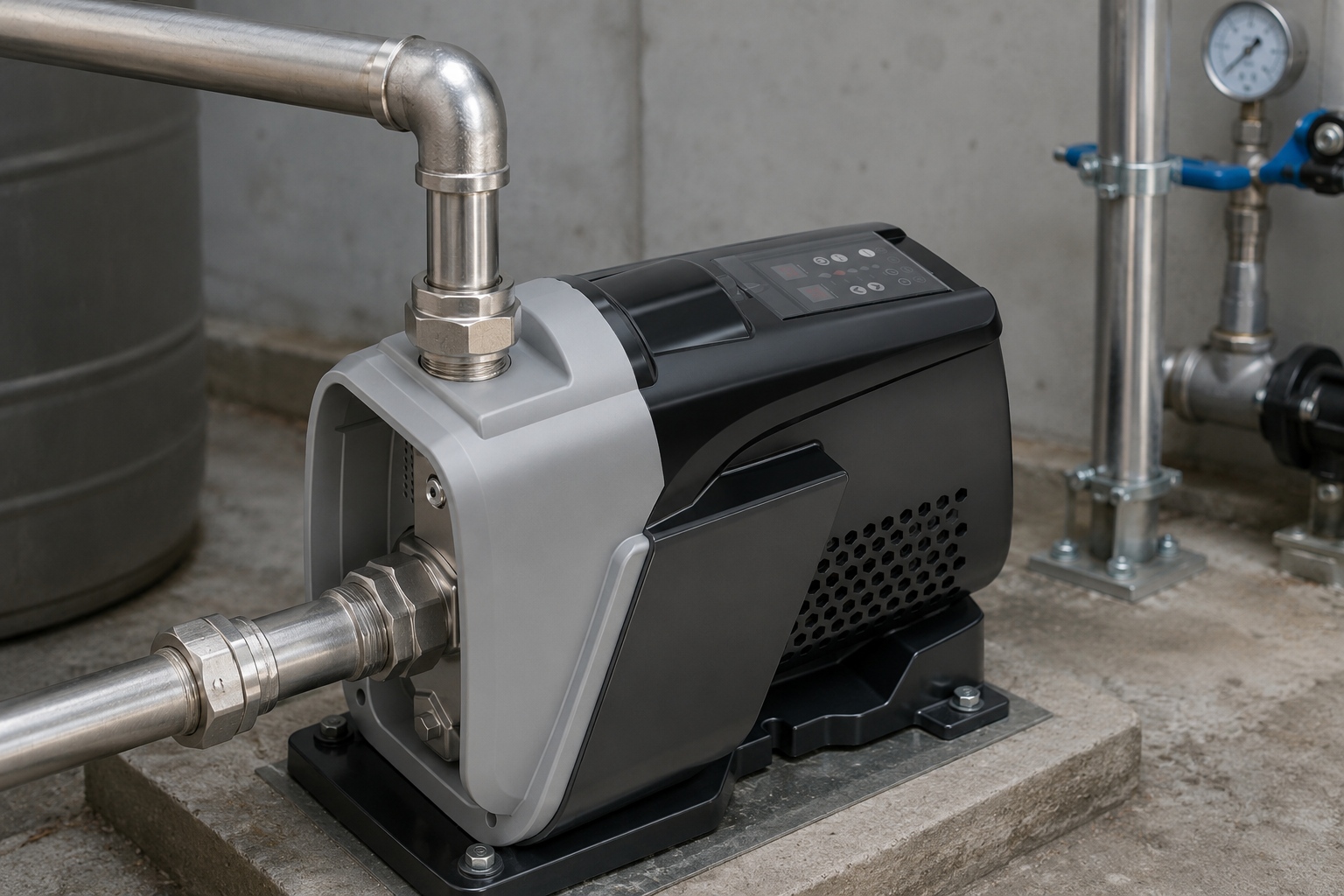
Choosing the right pump can feel overwhelming.
A poor choice wastes energy and leads to costly failures.
This guide clarifies the key differences, ensuring you select the perfect pump.
The main difference is the number of impellers. A standard centrifugal pump has one impeller to generate pressure. A multistage pump uses two or more impellers in series to achieve progressively higher pressures, or head, with the same flow rate.
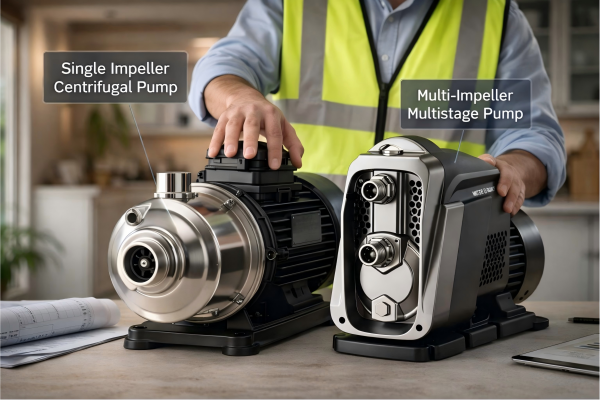
Understanding this core difference is the first step.
But how does design impact performance, efficiency, and your specific application?
Let’s explore each pump type in detail.
This will give you the confidence to make the best choice for your project or inventory.
We will break down the mechanics, compare their strengths, and show you exactly where each pump excels.
Understanding the Basics: What is a Centrifugal Pump?
Is the complexity of single-impeller systems causing confusion?
This design can seem too simple for high-demand tasks.
Let’s demystify how this powerful, fundamental pump technology works for you.
A centrifugal pump is a mechanical device designed to move fluid by converting rotational kinetic energy into the hydrodynamic energy of the fluid flow. It uses a single spinning component, called an impeller, to accelerate the liquid and build pressure.
A centrifugal pump is the most common type of pump used worldwide.
Its operation is based on a simple yet effective principle.
Fluid enters the pump near the rotating axis of the impeller.
The impeller’s spinning vanes then catch the fluid.
It accelerates the fluid radially outward into a diffuser or volute chamber.
This process of acceleration converts the fluid’s velocity into pressure energy.
This is how the pump moves the liquid through the piping system.
The simplicity of this design is its greatest strength.
Fewer moving parts mean greater reliability and easier maintenance.
This translates to lower operational costs over the pump’s lifespan.
They are incredibly versatile and handle a wide range of fluids.
This includes water, thin oils, and chemicals.
However, a single impeller has limitations on the pressure it can generate.
The maximum pressure, or head, is directly related to the impeller’s diameter and rotational speed.
Achieving very high pressures would require an impractically large or fast-spinning impeller, which would decrease efficiency and increase wear by over 35%.
Key Components and a Simple Design
The core of a centrifugal pump consists of a few essential parts.
The impeller is the rotating heart of the pump that imparts velocity to the fluid.
The casing (or volute) is a specially shaped chamber.
It collects the fluid from the impeller and slows it down.
This converts the fluid’s velocity into higher pressure.
The shaft connects the impeller to a motor, providing the necessary rotational power.
Seals and bearings are critical for preventing leaks and supporting the rotating shaft.
This straightforward construction makes them highly reliable.
Performance Characteristics
Centrifugal pumps are known for their specific performance curve.
They deliver high flow rates but at relatively low to moderate pressures.
There is a direct trade-off between flow and head.
As the flow rate increases, the pressure (head) the pump can generate decreases.
Their efficiency peaks within a specific range on this curve.
Operating the pump outside this Best Efficiency Point (BEP) can lead to problems.
These issues include vibration, cavitation, and premature wear.
This can reduce the pump’s service life by up to 50%.
Below is a table outlining the typical operating ranges for standard single-stage centrifugal pumps.
| Feature | Typical Range | Notes |
|---|---|---|
| Flow Rate | 5 to 20,000 GPM (Gallons Per Minute) | Highly scalable depending on design |
| Total Head | 10 to 500 feet | Limited by single impeller design |
| Efficiency | 40% to 85% | Highly dependent on operating at BEP |
| Fluid Viscosity | Low to Medium (< 500 cP) | Performance drops with thicker fluids |
Understanding these characteristics is vital for correct application.
They are best suited for high-volume, low-pressure transfer duties.
This is common in irrigation, water supply, and general industrial circulation.
Advancing Pressure: What is a Multistage Pump?
Are you struggling with applications that demand very high pressure?
A single-stage pump simply can’t meet these requirements efficiently.
Here is how a multistage pump solves this high-pressure challenge.
A multistage pump contains two or more impellers within a single casing. The fluid flows sequentially from one impeller to the next. Each stage adds pressure to the fluid, resulting in a final discharge pressure much higher than a single-stage pump can achieve.
Think of a multistage pump as several individual pumps connected in a series.
All these "pumps" are built onto a single shaft within one housing.
This design is specifically engineered for high-pressure applications.
Water enters the first chamber at suction pressure.
The first impeller accelerates the water and directs it to the second chamber.
The pressure increases with this first step.
The second impeller takes this already-pressurized water.
It adds more energy, increasing the pressure even further.
This process repeats through each stage of the pump.
The final discharge pressure is the sum of the pressures added by each individual stage.
For instance, a four-stage pump can generate roughly four times the pressure of a comparable single-stage pump while maintaining the same flow rate.
This design principle offers incredible efficiency for high-head scenarios.
It allows the pump to use smaller diameter impellers.
These operate at optimal efficiency levels for each stage.
This avoids the hydraulic and mechanical challenges of a single, massive impeller.
Types of Multistage Pumps
Multistage pumps come in several configurations.
Each is tailored to specific installation and application needs.
-
Horizontal Multistage Pumps: In this design, the shaft is oriented horizontally. They are common in boiler feed, reverse osmosis, and industrial high-pressure cleaning systems. They often have a segmented casing design, making maintenance on individual stages easier.
-
Vertical Multistage Pumps: These pumps have a vertical shaft orientation. This design has a much smaller footprint, which is a major advantage in space-constrained installations. They are widely used in pressure boosting systems for commercial buildings, water treatment plants, and irrigation systems where floor space is at a premium.
How Each Stage Builds Pressure
The magic of a multistage pump lies in its sequential pressure boosting.
Each stage acts as a separate pressure booster.
Let’s break down the process step-by-step.
- Suction Inlet: Fluid enters the first stage at initial system pressure.
- First Stage Impeller: The first impeller imparts energy, increasing the fluid’s pressure by a set amount.
- Diffuser/Crossover: The fluid is guided efficiently from the outlet of the first impeller to the inlet (or eye) of the second.
- Second Stage Impeller: The second impeller takes the now-pressurized fluid and adds the same amount of pressure again.
- Subsequent Stages: This process is repeated through all remaining stages, with each one compounding the pressure.
- Final Discharge: The fluid exits the last stage at a significantly higher pressure.
This method is far more energy-efficient for generating high pressure than using a single-stage pump.
A multistage pump can achieve efficiencies of over 75% in high-head applications.
A single-stage pump would struggle to reach 40% efficiency under the same conditions.
Head-to-Head: Centrifugal vs. Multistage Pump Comparison
Are you lost in the technical details of pump specifications?
Comparing datasheets can be confusing and lead to the wrong purchase.
This direct comparison simplifies the key differences for you.
The primary difference is that centrifugal pumps are ideal for high flow and low pressure, using one impeller. Multistage pumps excel at high pressure and moderate flow, using multiple impellers to build pressure sequentially. This defines their applications, cost, and complexity.
Choosing between these two pump types comes down to your application’s needs.
One is a versatile workhorse, while the other is a high-pressure specialist.
Understanding their core differences in design, performance, and cost is essential.
This knowledge empowers you to select the most efficient and reliable solution.
A poor choice can result in over-specification, which wastes capital.
Or it can result in under-specification, which leads to system failure.
Let’s break down the comparison into manageable categories.
This will provide a clear picture of which pump fits where.
Design and Construction
The most apparent difference is in their physical construction.
A single-stage centrifugal pump has a very simple architecture.
It features one impeller housed within a volute casing.
This results in a compact, robust, and cost-effective design with fewer components.
A multistage pump is inherently more complex.
It incorporates multiple impellers and diffusers arranged along a common shaft.
This "stack" of stages is contained within a more intricate casing.
This complexity increases manufacturing costs and the number of wear parts.
However, it is precisely this design that enables its high-pressure capabilities.
Performance and Application
Performance is the most critical differentiator.
It dictates where each pump should be used.
The table below provides a clear performance comparison.
| Performance Metric | Single-Stage Centrifugal Pump | Multistage Pump |
|---|---|---|
| Primary Function | High Volume Fluid Transfer | High-Pressure Delivery |
| Max Pressure (Head) | Low to Moderate | Very High |
| Flow Rate | Very High | Low to Moderate |
| Best Efficiency | High-flow, low-head systems | High-head, moderate-flow systems |
| Typical Use Cases | Drainage, irrigation, water circulation | Boiler feed, reverse osmosis, pressure boosting |
Centrifugal pumps are the go-to choice for moving large volumes of liquid with low resistance.
Think of emptying a reservoir or circulating water in an HVAC system.
Multistage pumps are required when you need to overcome significant resistance.
This includes pushing water to the top of a skyscraper or forcing it through fine membranes in a desalination plant.
Cost, Maintenance, and Efficiency
Financial and operational factors also play a huge role in the decision.
- Initial Cost: Single-stage pumps have a significantly lower purchase price due to their simpler design and fewer components. Manufacturing requires less precision and fewer materials.
- Maintenance: With fewer moving parts, single-stage pumps are easier and cheaper to maintain. Seals and bearings are more accessible. Multistage pumps require more specialized labor for disassembly and reassembly, and they have more internal components that can fail. A full rebuild of a multistage pump can cost 40-60% of a new unit.
- Energy Efficiency: This is where the comparison becomes nuanced. For a specific high-pressure duty point, a multistage pump will be far more energy-efficient than a single-stage pump trying to do the same job. A multistage pump might operate at 75% efficiency, while a single-stage pump struggles at 45%, consuming nearly 70% more power for the same output. Choosing the right pump type for the application is key to minimizing long-term energy costs.
Choosing Your Solution: When to Use Each Pump
Is pump selection for your project causing analysis paralysis?
Matching a pump to your system’s needs is critical for efficiency.
Let’s provide clear guidelines for making the right decision.
Choose a single-stage centrifugal pump for high-volume applications where you don’t need to overcome high pressure, such as general water transfer or drainage. Opt for a multistage pump when the primary requirement is generating high pressures for tasks like pressure boosting or boiler feed.
The final choice always depends on the specific demands of the hydraulic system.
You must consider four key factors.
These are flow rate, required pressure (head), fluid properties, and budget.
Answering these questions will guide you to the optimal pump.
It ensures your system operates reliably and efficiently for years to come.
Let’s look at the ideal scenarios for each pump type.
Ideal Scenarios for Centrifugal Pumps
Single-stage centrifugal pumps are the industry’s versatile solution.
Their robust and simple design makes them perfect for a wide range of tasks.
They truly excel in applications defined by high flow and low head.
- Water Supply and Transfer: Moving large amounts of water from a source like a lake or reservoir to a treatment plant or distribution system.
- Irrigation: Supplying water to large agricultural fields where volume is more important than high pressure. A single pump can efficiently cover dozens of acres.
- HVAC Systems: Circulating water for heating and cooling in commercial and industrial buildings.
- Drainage and Dewatering: Quickly removing unwanted water from construction sites, mines, or flooded areas.
- General Industrial Processing: Moving low-viscosity fluids around a plant for various processing, washing, or cooling tasks.
If your system’s total dynamic head is below approximately 150 meters (490 feet), a single-stage pump is almost always the more cost-effective and reliable choice.
Ideal Scenarios for Multistage Pumps
Multistage pumps are specialists.
They are engineered to perform where single-stage pumps cannot.
Their domain is any application that demands high and very high pressures.
- Pressure Boosting: Increasing water pressure in municipal water grids or for high-rise buildings to ensure adequate pressure on the top floors. A 50-story building can require a pressure boost of over 20 bar (290 PSI).
- Boiler Feed Water: Pumping feed water into a high-pressure steam boiler. These applications require extremely high pressures to overcome the internal steam pressure of the boiler.
- Reverse Osmosis (RO) and Desalination: Forcing water through semi-permeable membranes requires immense pressure, often exceeding 70 bar (1,000 PSI). Multistage pumps are essential for this process.
- High-Pressure Cleaning: Supplying water for industrial cleaning systems, vehicle washes, or dust suppression systems that use fine misting nozzles.
- Mine Dewatering: Pumping water out of very deep mines requires a pump that can overcome the massive head pressure created by the depth.
If your application demands high pressure with a moderate flow rate, the multistage pump is the correct and most energy-efficient solution.
Using a single-stage pump here would lead to extreme energy waste and rapid component failure.
Conclusion
In short, centrifugal pumps are for high-volume, low-pressure tasks.
Multistage pumps are specialists for high-pressure applications.
Choosing correctly ensures efficiency and long-term reliability for your system.
Frequently Asked Questions
Can a centrifugal pump be multistage?
Yes, a multistage pump is a type of centrifugal pump. It uses the same centrifugal force principle but employs multiple impellers in series to build higher pressures.
What is the main disadvantage of a multistage pump?
The main disadvantage is their complexity and higher initial cost. They have more components, which can lead to more expensive and difficult maintenance and repairs compared to single-stage pumps.
How do I know how many stages I need in a multistage pump?
The number of stages is determined by the total head pressure required. Each stage adds a certain amount of pressure, so you divide the total required head by the head-per-stage of the pump design.
Are multistage pumps more efficient?
Multistage pumps are more efficient only in high-pressure applications. For low-pressure, high-flow tasks, a single-stage centrifugal pump is significantly more efficient and cost-effective.
Can you run a multistage pump dry?
No, you should never run a multistage pump dry. The internal components rely on the pumped fluid for lubrication and cooling. Running it dry will cause rapid overheating and catastrophic failure.
What is the difference between vertical and horizontal multistage pumps?
The primary difference is the orientation of the shaft. Vertical pumps have a smaller footprint, ideal for tight spaces. Horizontal pumps are often easier to service and can be better for certain piping layouts.
Can a single-stage pump be used for high pressure?
A single-stage pump can be designed for higher pressures by using a larger diameter impeller and a higher speed motor. However, it becomes very inefficient and mechanically stressed compared to a multistage pump for the same duty.
What is the purpose of a diffuser in a multistage pump?
The diffuser is a stationary component that surrounds the impeller. Its purpose is to efficiently slow down the high-velocity fluid leaving the impeller, converting that velocity into pressure before guiding it to the next stage.