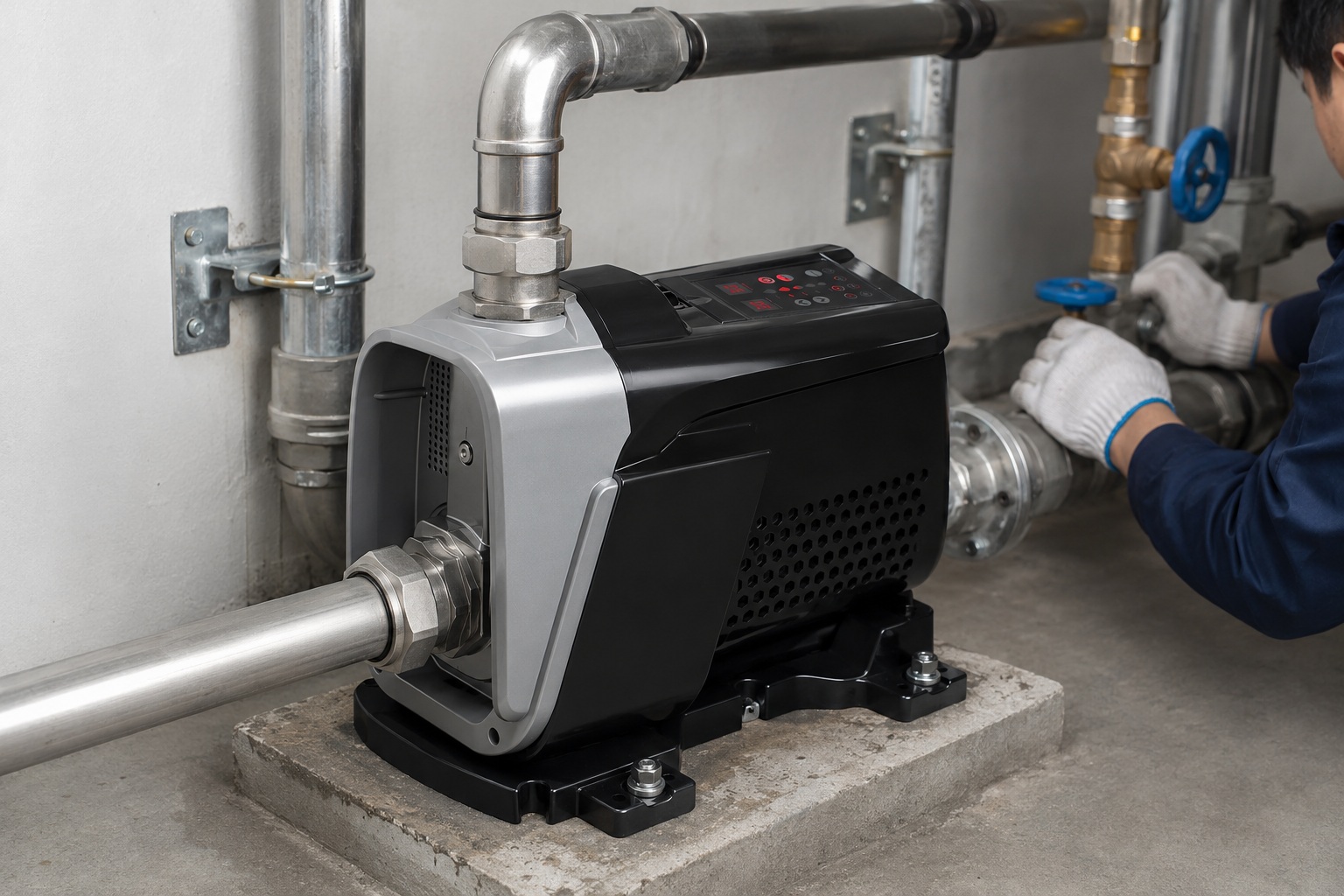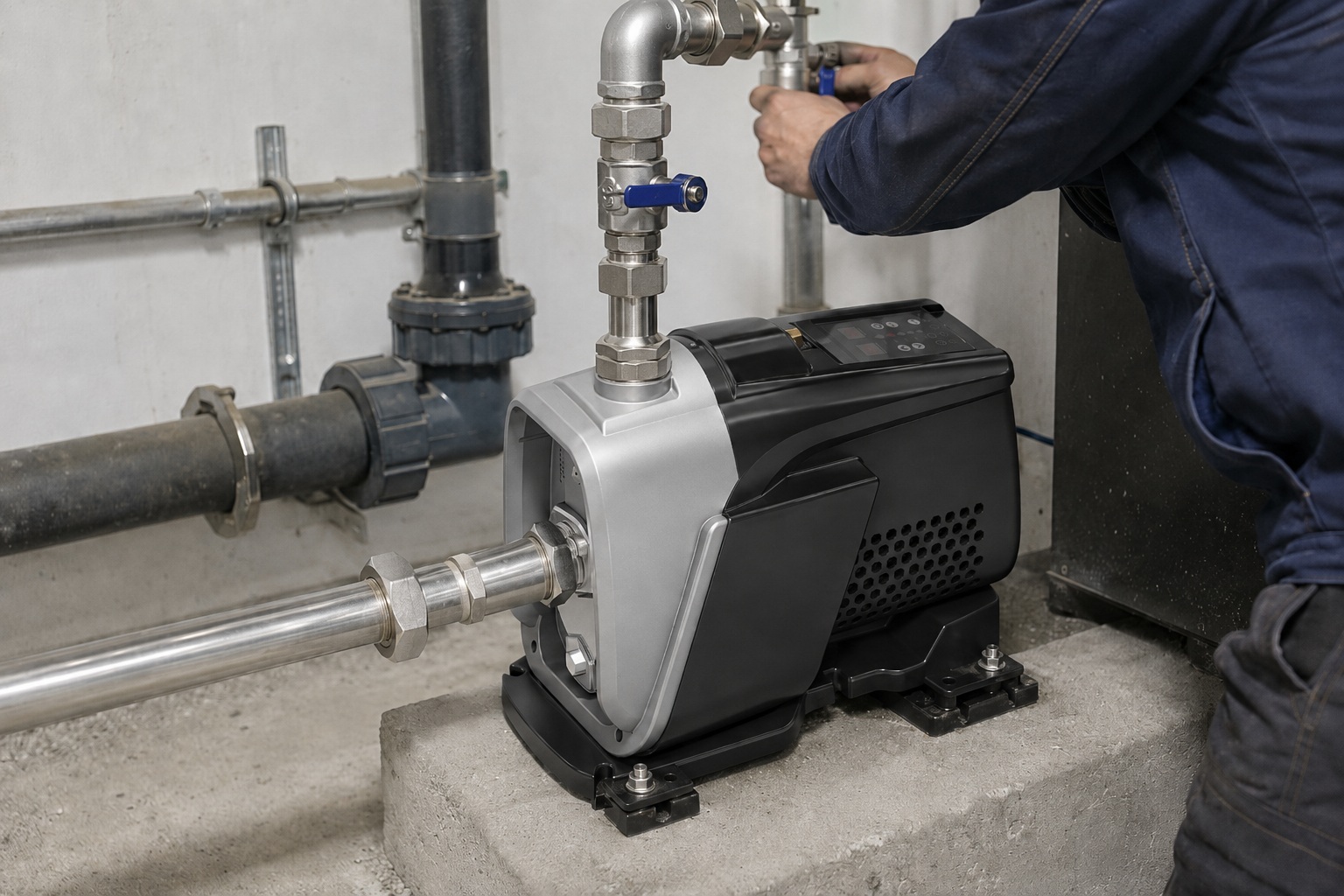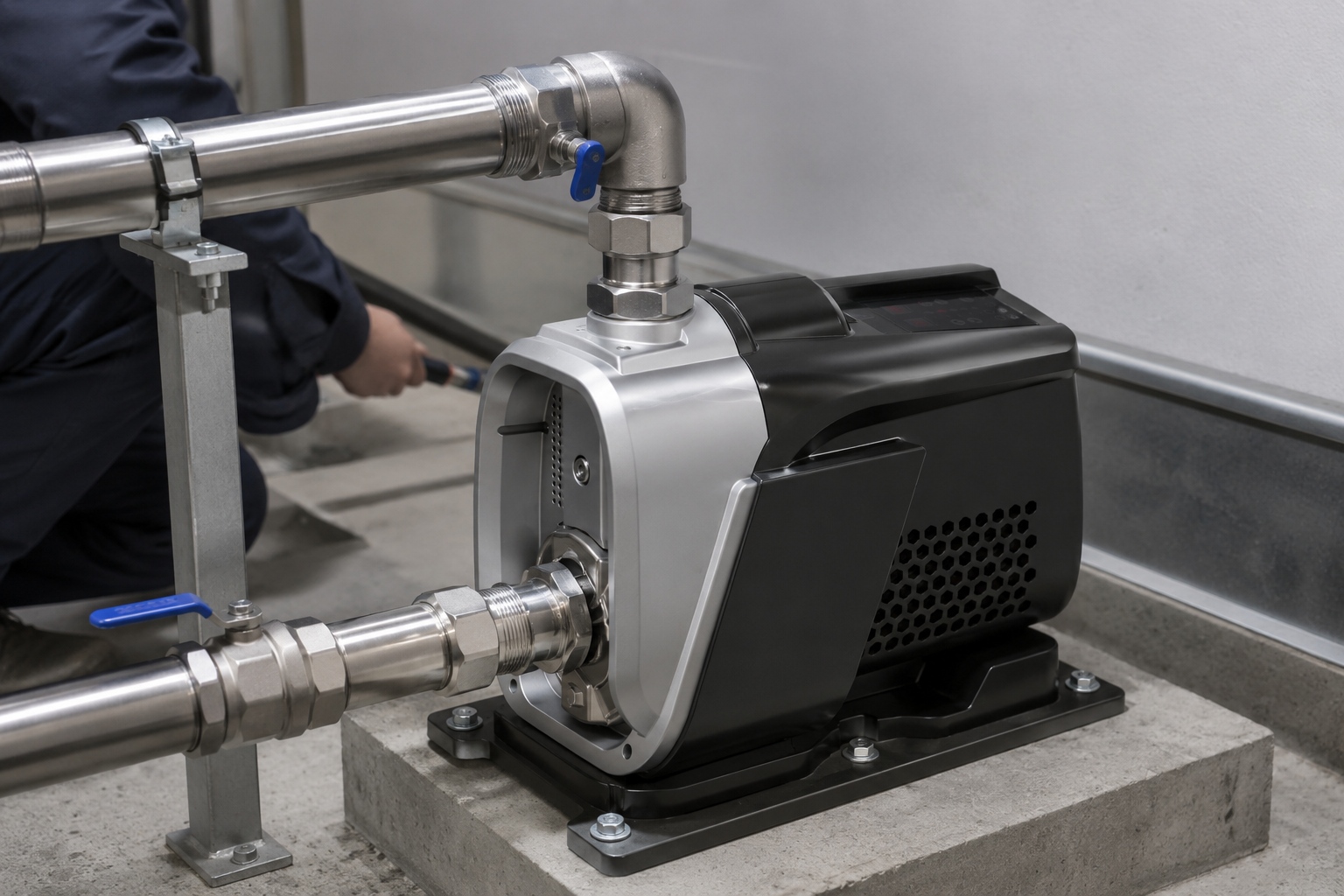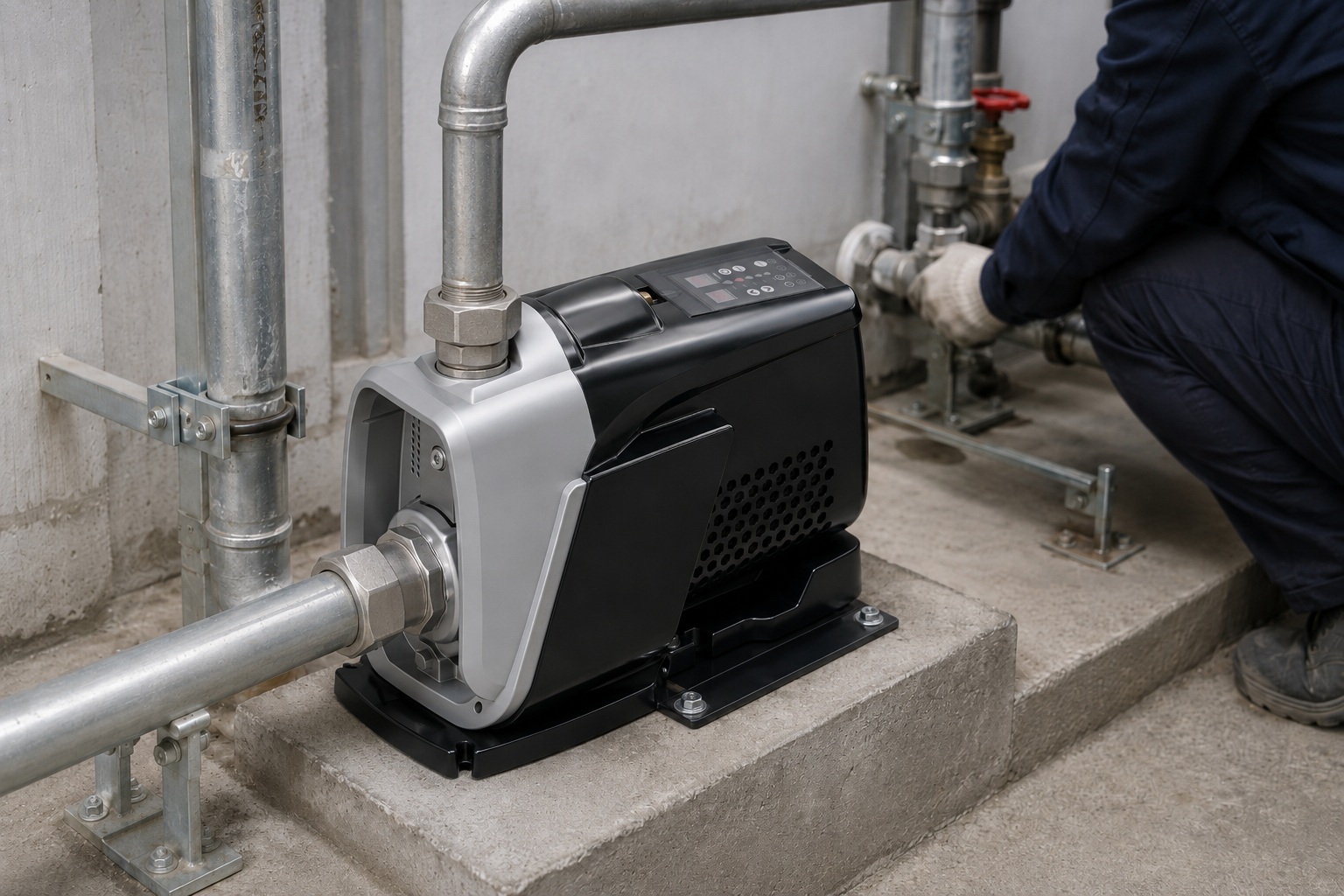
Struggling with low water pressure for your high-rise building or irrigation system?
This inefficiency can lead to operational failure and costly downtime, impacting your entire project.
Multi-stage pumps offer the perfect solution.
A 3-stage pump works by using three impellers housed in a single casing, arranged in series.
Each impeller, or stage, adds pressure to the water, progressively boosting it to achieve significantly higher heads than a single-stage pump.
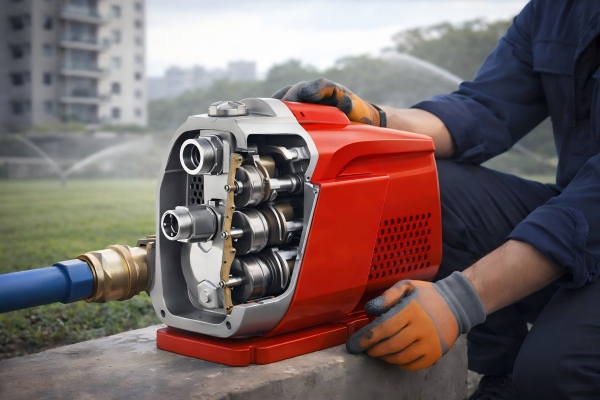
This multi-stage design is the key to its power and efficiency.
But how does each stage contribute to this impressive pressure boost?
Understanding the mechanics reveals why this technology is essential for demanding applications.
Let's explore the step-by-step process that makes these pumps so effective.
What is a Multi-Stage Pump?
Dealing with applications that require immense pressure?
A single-stage pump often can't deliver the required head, forcing you to compromise on performance.
A multi-stage pump is your answer.
A multi-stage pump is a centrifugal pump containing two or more impellers.
These impellers can be mounted on the same shaft or different shafts, working in series to build progressively higher pressure for the fluid being pumped.
A multi-stage pump is essentially a series of individual pumps connected within a single unit.
This design allows it to achieve pressures that are far beyond the capability of a standard pump with just one impeller.
The core principle is simple but powerful: what one pump stage starts, the next one enhances.
This sequential pressure-building process is what makes these pumps indispensable in high-pressure scenarios.
The number of stages can be tailored to the specific pressure requirements, with some industrial pumps having over 50 stages.
For many commercial and residential applications, a 3-stage configuration provides an ideal balance of performance, efficiency, and cost.
The Core Principle: Pressure Stacking
The magic behind a multi-stage pump lies in a concept called "pressure stacking".
Imagine lifting a heavy object.
It's much easier with two or three people lifting together than just one.
A multi-stage pump applies the same idea to fluid pressure.
Each stage gives the water an initial pressure boost.
The water then flows into the next stage, which takes that already-pressurized water and boosts it even further.
This process repeats for each stage in the pump.
- Stage 1: Water enters the first impeller and receives an initial pressure increase.
- Stage 2: The water, now at a higher pressure, enters the second impeller for another boost.
- Stage 3: The process repeats, with the final stage delivering the water at the maximum required pressure.
Key Components and Their Functions
To fully appreciate how a 3-stage pump works, it's crucial to understand its components.
While it shares parts with single-stage pumps, the arrangement is more complex.
| Component | Function | Importance in a 3-Stage Design |
|---|---|---|
| Impellers | Rotating component that imparts velocity to the water. | Each of the three impellers adds a "stage" of pressure. Their design is critical for efficiency. |
| Diffusers/Volutes | Stationary component that converts velocity into pressure. | A diffuser surrounds each impeller, efficiently guiding water to the next stage and maximizing pressure gain. |
| Shaft | Connects the impellers to the motor, transmitting torque. | A single, robust shaft ensures all three impellers rotate in perfect synchronization. |
| Casing | The outer housing of the pump. | Contains the high pressure generated by the stages and directs the flow from inlet to outlet. |
| Inter-stage Crossover | Channels that guide fluid from the exit of one stage to the inlet of the next. | These must be designed to minimize pressure loss, maintaining over 85% of the pressure gain between stages. |
This coordinated action of multiple components allows the 3-stage pump to operate smoothly and efficiently.
Each part is engineered to handle the cumulative pressure, ensuring reliability and a long service life even under demanding conditions.
A Deep Dive into the Three Stages of Operation
Need to understand exactly how pressure builds inside the pump?
Vague explanations don't help you make informed purchasing decisions for your clients' critical systems.
Let's trace the water's journey.
In a 3-stage pump, water enters the first stage at low pressure.
It's then accelerated by the first impeller and passed to the second stage, where pressure is added again.
This repeats in the third stage, compounding pressure until it exits.
The journey of water through a 3-stage pump is a masterclass in hydraulic engineering.
Each stage is a complete pumping unit on its own, but their power is multiplied when they work together.
The transition between stages is just as important as the impellers themselves.
Specially designed channels, known as diffusers or crossovers, manage the flow, converting the high-velocity water from the impeller's exit into high-pressure energy before delivering it to the inlet of the next impeller.
This conversion is vital for the pump's overall efficiency, often reaching over 90% effectiveness in high-end designs.
Let's break down this process stage by stage to see how the pressure systematically increases.
Stage 1: The Initial Pressure Boost
The process begins at the pump's suction inlet.
Water enters the first chamber at relatively low pressure.
As the motor spins the shaft, the first impeller rotates at high speed.
The impeller's vanes catch the water, accelerating it outward due to centrifugal force.
This rapid acceleration significantly increases the water's velocity.
The water then flows into the diffuser surrounding the impeller.
The diffuser's carefully shaped channels slow the water down.
According to Bernoulli's principle, as the fluid's velocity decreases, its pressure must increase.
This first stage might increase the pressure by 30-40% of the total final output pressure.
It does the initial work, preparing the water for the next level of intensification.
Stage 2: Compounding the Pressure
After exiting the first stage, the now-pressurized water is seamlessly guided into the eye of the second impeller.
It enters this stage not at atmospheric pressure, but at the elevated pressure generated by stage one.
The second impeller performs the same action as the first.
It grabs the incoming water and flings it outward, adding more velocity and energy.
This newly energized water then enters the second stage's diffuser, where its velocity is once again converted into an even higher pressure.
The pressure gain in this stage is added directly on top of the pressure from the first stage.
If stage one brought the pressure to 50 PSI, stage two might add another 50 PSI, bringing the total to 100 PSI.
This compounding effect is the fundamental advantage of the multi-stage design.
Stage 3: Achieving a High-Pressure Outlet
The final stage operates on the same principle but works with water that is already at a high pressure.
The water flows from the second stage's diffuser into the third and final impeller.
This impeller provides the last injection of kinetic energy.
The water is accelerated one last time before entering the final diffuser.
Here, the final conversion of velocity to pressure occurs.
The water is now at its maximum pressure, having been boosted sequentially by all three stages.
From here, it is directed into the discharge volute and out of the pump outlet, ready for use in a high-pressure application.
This three-step process allows the pump to achieve a total head (pressure) that is roughly three times that of a comparable single-stage pump operating at the same speed.
Why Choose a 3-Stage Pump?
Are your current pumps failing to meet high-pressure demands?
Using the wrong pump leads to inefficiency, high energy costs, and potential system failure.
A 3-stage pump offers superior performance and reliability.
A 3-stage pump is chosen for its ability to generate high pressure efficiently.
It delivers a smoother, more stable flow than single-stage pumps at high heads, consumes less energy per unit of pressure, and has a longer operational lifespan.
The decision to use a 3-stage pump over a single-stage alternative is driven by the specific demands of the application.
While a single-stage pump is perfect for low-pressure, high-flow tasks, it becomes inefficient and strained when forced to generate high pressure.
A 3-stage pump, however, is built for this exact purpose.
Each stage operates within its optimal efficiency range, contributing a fraction of the total pressure required.
This distribution of work reduces the strain on individual components, leading to a host of benefits that are critical for industrial and commercial systems.
The advantages go beyond just pressure, encompassing efficiency, durability, and operational stability.
Efficiency and Energy Savings
One of the most significant advantages is a higher operational efficiency when generating high pressure.
A single-stage pump trying to create high pressure has to spin an impeller at extreme speeds, which often pushes it outside its Best Efficiency Point (BEP).
This results in wasted energy, with some studies showing efficiency drops of up to 25% when operated far from their BEP.
A 3-stage pump avoids this.
Each impeller can be designed to operate at or near its BEP while contributing to the overall pressure.
This leads to significant energy savings over the pump's lifetime.
For a continuously operating pump, a 10% improvement in efficiency can translate into thousands of dollars in saved electricity costs annually.
Durability and Reduced Wear
Distributing the workload across three stages reduces the stress on each individual component.
In a single-stage pump, the impeller and bearings are subjected to immense hydraulic forces when generating high pressure.
This leads to faster wear and a shorter lifespan.
In a 3-stage pump, the pressure increase is gradual.
This results in lower radial and axial thrusts on each impeller.
The reduced load means less wear on bearings, seals, and the impellers themselves.
Consequently, multi-stage pumps typically have a longer Mean Time Between Failures (MTBF) and require less frequent maintenance, which is a crucial advantage for minimizing downtime in critical systems.
Performance Comparison: 3-Stage vs. Single-Stage
The clearest way to see the advantage is to compare performance curves.
| Feature | Single-Stage Pump | 3-Stage Pump | Advantage |
|---|---|---|---|
| Max Head (Pressure) | Limited. Performance drops sharply at high heads. | High. Can generate roughly 3x the pressure for the same flow. | 3-Stage |
| Flow Rate Stability | Can fluctuate at pressures near its limit. | Very stable, smooth flow even at high pressure. | 3-Stage |
| Efficiency at High Pressure | Low. Operates far from its Best Efficiency Point. | High. Each stage operates close to its BEP. | 3--Stage |
| Energy Consumption | High for high-pressure tasks. | Lower for the same high-pressure output. | 3-Stage |
| Typical Applications | General water transfer, circulation, low-pressure boosting. | Boiler feed, reverse osmosis, high-rise buildings, irrigation. | Application-Specific |
While a 3-stage pump has a higher initial cost, its long-term benefits in energy savings, reliability, and performance make it the superior economic choice for any application demanding consistent high pressure.
Common Applications for 3-Stage Pumps
Wondering where this high-pressure technology is actually used?
Knowing the applications helps you identify market opportunities and advise your clients effectively.
These pumps are critical in many industries.
3-stage pumps are commonly used in applications requiring high pressure, such as feeding boilers, reverse osmosis water purification systems, high-rise building water supply, long-distance irrigation, and industrial cleaning systems where high-pressure jets are needed.
The versatility and power of 3-stage pumps make them indispensable across a wide range of sectors.
Anywhere that a fluid needs to be moved against significant resistance, a multi-stage pump is likely the best solution.
Their ability to provide a steady, high-pressure output without excessive vibration or energy waste makes them a reliable choice for mission-critical systems.
From ensuring residents on the 50th floor have good water pressure to creating the force needed to purify water at a molecular level, these pumps are the unseen workhorses of modern infrastructure and industry.
Let's examine some of their most important roles in more detail.
Boiler Feed Water Systems
In power plants and industrial facilities, boilers generate steam by heating water under immense pressure.
To get water into a high-pressure boiler, the feed pump must overcome the boiler's internal pressure.
This requires a very high discharge head.
3-stage pumps are ideal for this task.
They provide the consistent, high-pressure flow needed to keep the boiler supplied with water, ensuring stable steam production.
The reliability of these pumps is paramount, as a failure in the boiler feed system can shut down an entire plant.
Around 70% of industrial boiler systems rely on multi-stage pumps for this critical function.
Reverse Osmosis (RO) and Water Treatment
Reverse osmosis is a water purification process that uses a semipermeable membrane to remove ions, molecules, and larger particles from drinking water.
To force water through this membrane against its natural osmotic gradient, extremely high pressure is required.
3-stage pumps provide the perfect solution.
They deliver the constant, high pressure needed to make the RO process efficient, producing purified water for everything from municipal water supplies to desalination plants.
The stable pressure they provide helps protect the delicate RO membranes from damage caused by pressure fluctuations.
Boosting Water Pressure in High-Rise Buildings
In tall buildings, the municipal water pressure is often insufficient to supply water to the upper floors.
Booster pump systems are installed to solve this problem.
3-stage pumps are a popular choice for these systems.
They can take the incoming city water pressure and boost it to a level that ensures every apartment and office, even those hundreds of feet up, has strong and reliable water pressure for taps, showers, and fire suppression systems.
Their relatively quiet and smooth operation is also a key benefit for residential and commercial buildings.
Other Key Industrial Uses
The applications for 3-stage pumps don't stop there.
They are essential in many other fields:
- Irrigation: For large-scale agriculture, these pumps can push water over long distances and up steep hills to power sprinkler and drip systems.
- Snowmaking: Ski resorts use powerful multi-stage pumps to force water and compressed air through snow cannons, requiring substantial pressure.
- Industrial Cleaning: High-pressure cleaning systems use the force generated by these pumps to strip paint, clean machinery, and wash large vehicles.
- Mine Dewatering: In deep mines, multi-stage pumps are used to lift water from great depths to the surface, keeping the mining operations dry and safe.
Conclusion
A 3-stage pump generates high pressure by passing water through three consecutive impellers.
This efficient, reliable method is ideal for boiler feed, reverse osmosis, and high-rise building water supply.
FAQs
What is the difference between a 3 stage and 4 stage water pump?
A 4-stage pump has one additional impeller and diffuser.
This extra stage allows it to generate even higher pressures than a 3-stage pump, but for slightly lower flow rates.
How do you prime a 3 stage pump?
To prime a 3-stage pump, you must fill the pump casing and suction line completely with water.
This removes all air, which is essential for the pump to create suction and operate.
What are the disadvantages of a multistage pump?
Multistage pumps are more complex and have a higher initial cost than single-stage pumps.
They are also more sensitive to suspended solids, which can cause damage to the tight tolerances between stages.
Can a multistage pump be used for domestic purposes?
Yes, smaller multistage pumps are excellent for domestic use.
They are often used as booster pumps for homes with low water pressure or for garden irrigation systems requiring high pressure.
How many stages can a multistage pump have?
Multistage pumps can have many stages, sometimes over 50.
The number of stages is determined by the final pressure required, with each stage adding to the total head.
What is head in a multistage pump?
Head is the height to which a pump can raise a column of water.
In a multistage pump, the total head is the sum of the heads generated by each individual stage.
Are multistage pumps self-priming?
Most standard multistage centrifugal pumps are not self-priming.
They must be primed before operation by filling the casing with liquid to ensure all air is purged from the system.
Do multistage pumps have a higher flow rate?
No, adding stages increases the pressure (head) but does not increase the flow rate.
The flow rate is determined by the size and design of the first impeller.