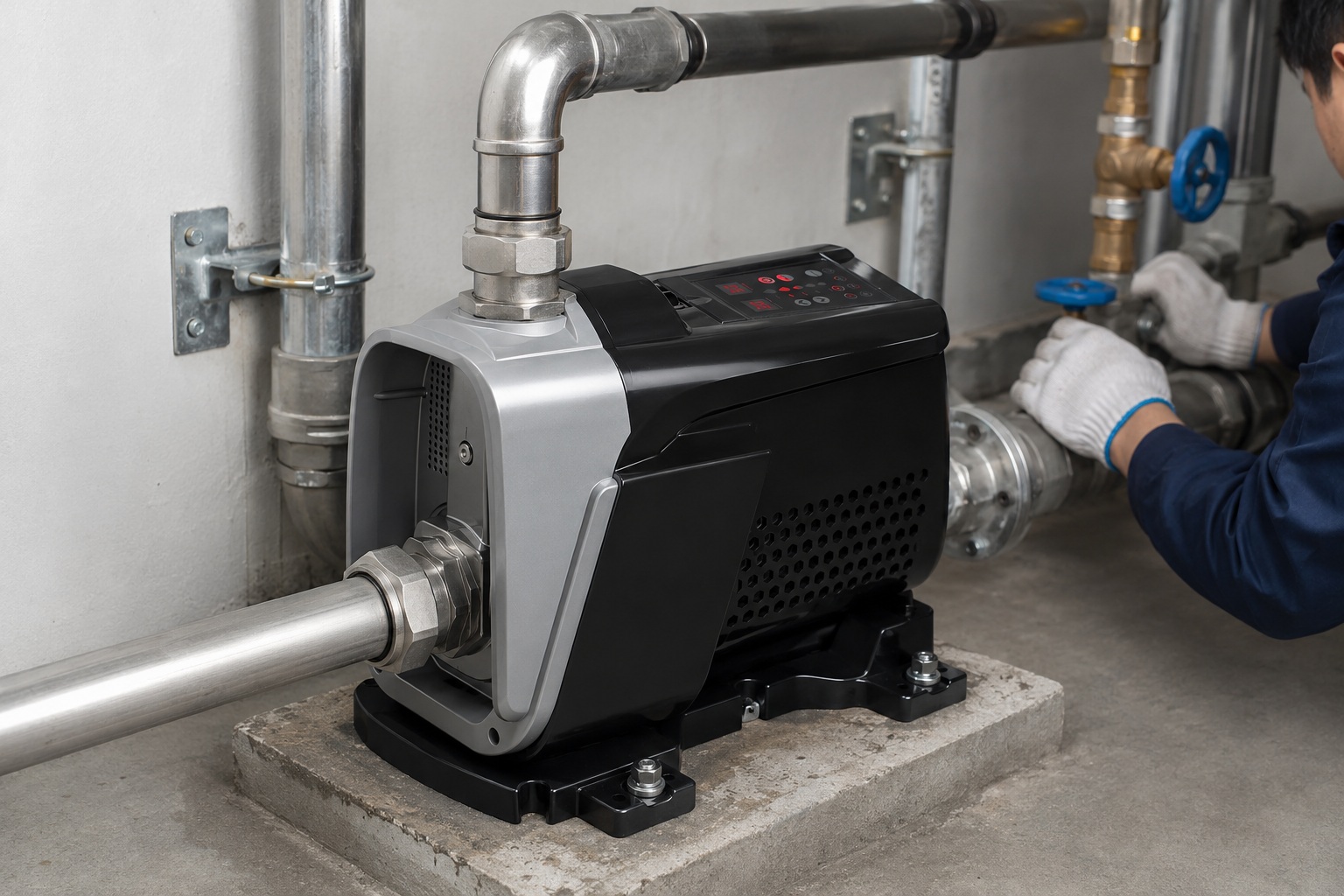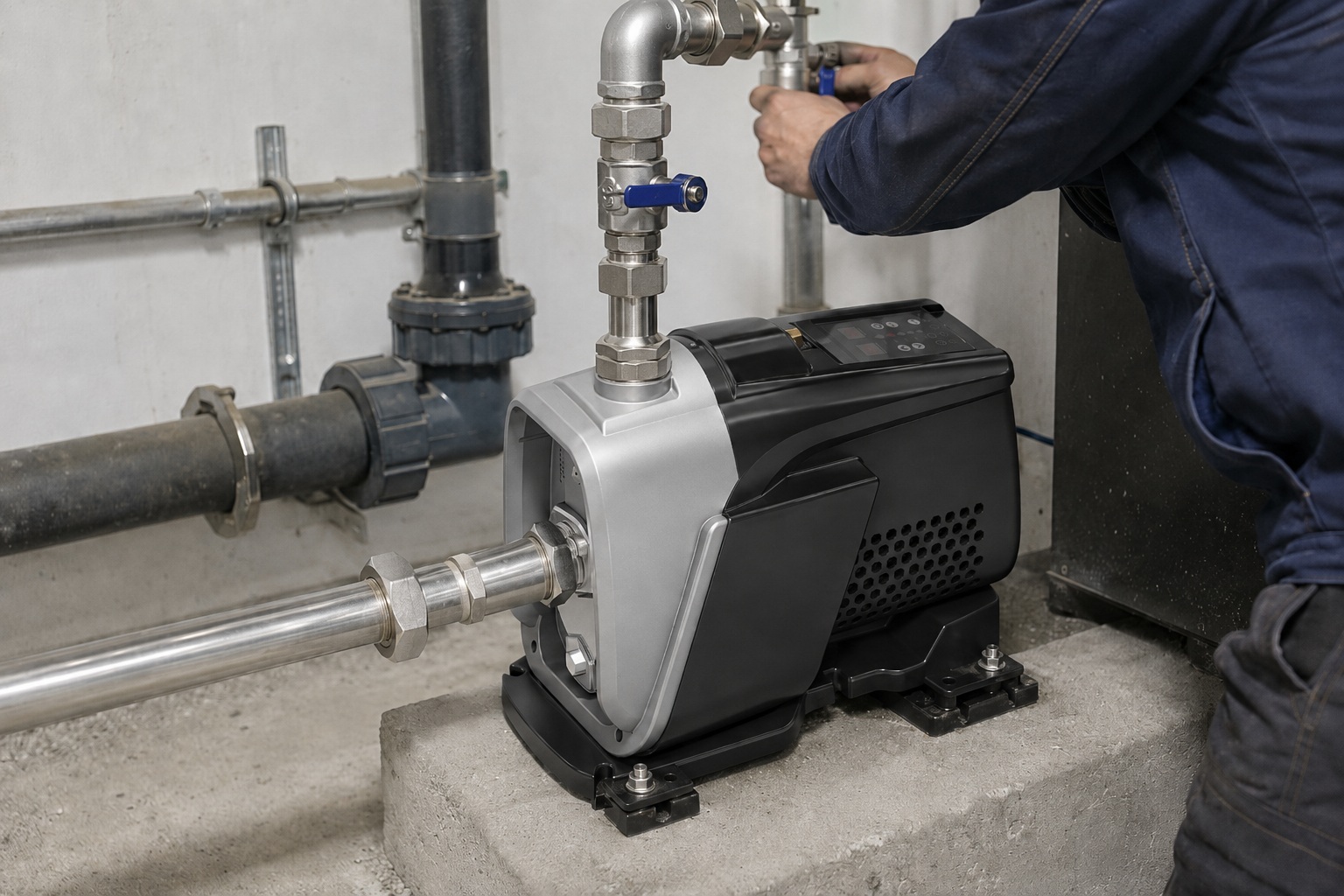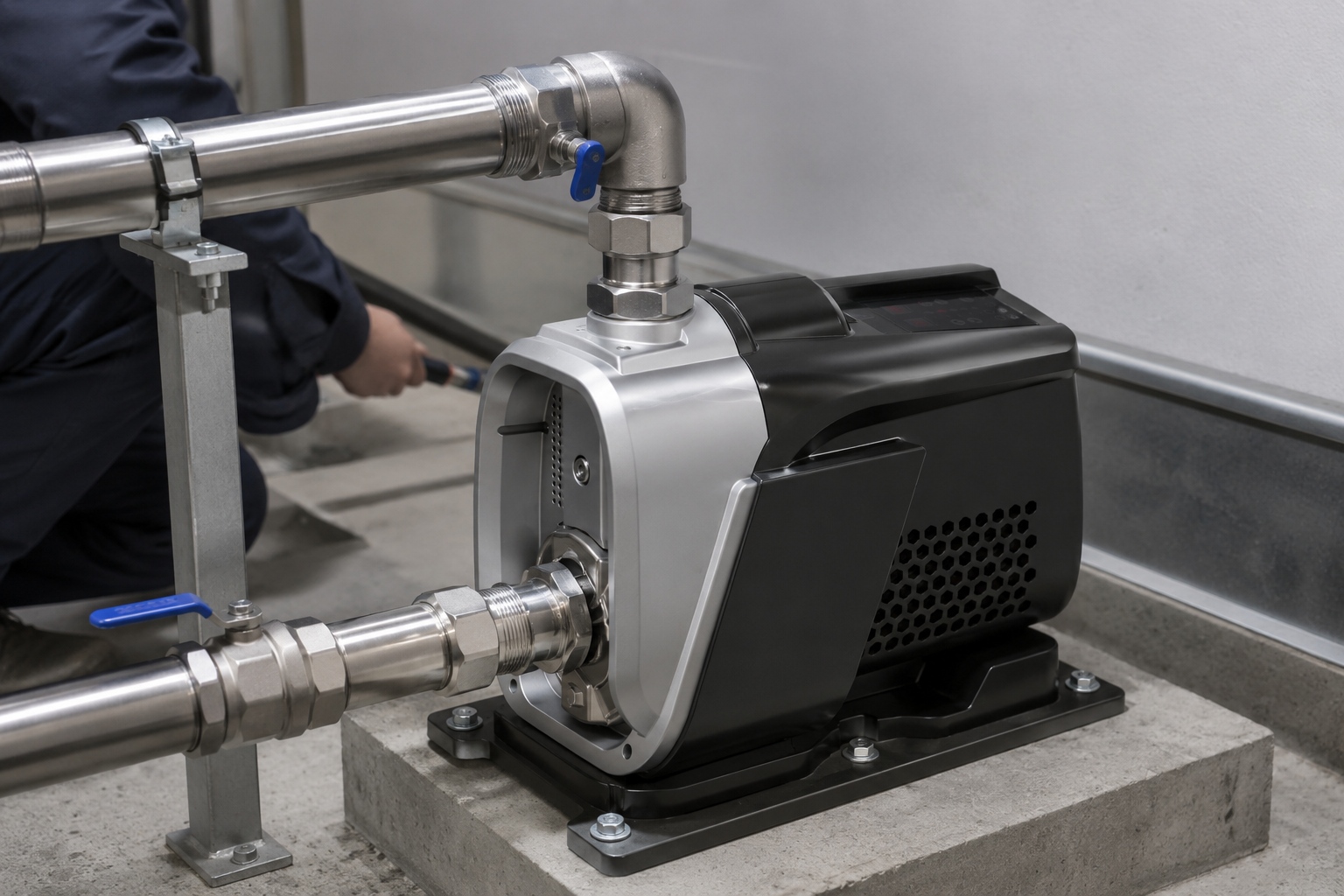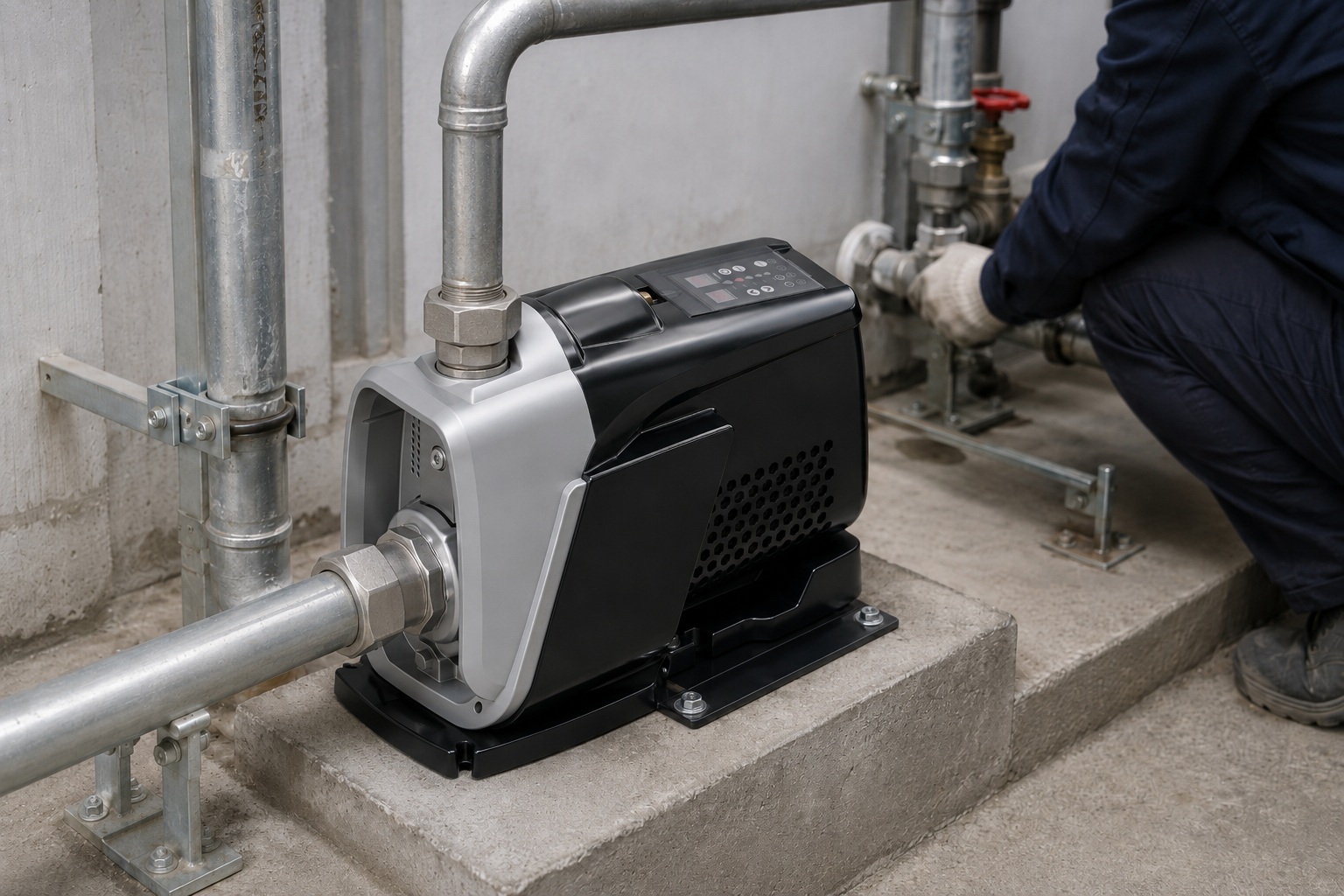
Struggling to find pumps that meet your customers' high-volume demands?
This search can be frustrating.
We will clarify which pumps deliver maximum flow.
The highest flow rates are typically achieved by axial flow pumps and large-scale, double-suction split-case centrifugal pumps.
These designs excel at moving massive volumes of water at low to medium pressure, making them the top choice for flood control, municipal water supply, and large-scale industrial processes.
Understanding the top performers for high flow is just the beginning.
The best pump for your inventory depends on the specific applications your customers have.
Different pump types are engineered for different balances of flow and pressure.
Let's dive deeper into the categories that lead the industry in flow rate.
This detailed knowledge will empower you to select the most effective and profitable products for your market.
Understanding Centrifugal Pumps and Flow Rate
Are your clients dealing with inefficient water transfer for large-scale projects?
The wrong pump slows down operations and increases costs.
Centrifugal pumps provide a powerful and reliable solution for high-volume applications.
Large, double-suction split-case centrifugal pumps generally offer the highest flow rates in this category.
Their design splits the casing, allowing easy access for maintenance and a double-suction impeller that handles massive volumes with greater efficiency and stability, boasting flow rates over 40,000 m³/h.
Centrifugal pumps are the backbone of the fluid transfer industry.
Their performance in high-flow scenarios is a direct result of their design principles.
The key to their operation is the impeller.
It imparts velocity to the water, which is then converted into pressure and flow.
The Role of the Impeller
The impeller's design is the single most critical factor for determining a centrifugal pump's flow rate.
Larger diameter impellers can move more water with each rotation.
Wider impeller vanes create a larger channel for water to pass through.
The number and curve of the vanes are also optimized for specific flow characteristics.
An impeller designed for high flow will typically have fewer, more open vanes to minimize obstruction and maximize volume.
This often comes at the expense of the maximum pressure (head) the pump can generate.
About 70% of a pump's flow characteristic is determined by its impeller geometry.
Single-Suction vs. Double-Suction Designs
For truly high-flow applications, the double-suction design is superior.
A single-suction pump draws water in from one side of the impeller.
This can create a significant axial thrust on the pump shaft, especially at high flow rates, which can increase wear on bearings.
A double-suction pump draws water into both sides of the impeller simultaneously.
This design innovation has two major benefits.
First, it effectively doubles the intake area, allowing for much higher flow rates compared to a single-suction pump of a similar size.
Second, the hydraulic forces on each side of the impeller cancel each other out, resulting in a balanced axial load.
This balancing act significantly reduces stress on bearings and seals, leading to a much longer operational life and improved reliability, a crucial factor for infrastructure pumps that run 24/7.
Comparing High-Flow Centrifugal Designs
| Feature | End-Suction Pump | Double-Suction Split-Case Pump |
|---|---|---|
| Typical Max Flow Rate | Up to 4,500 m³/h | 40,000+ m³/h |
| Impeller Design | Single suction, overhung | Double suction, between-bearings |
| Axial Thrust | High, requires robust thrust bearings | Inherently balanced, minimal thrust |
| Maintenance | Requires removal of motor/piping | Top casing removes for full access |
| Ideal Applications | General service, smaller industrial | Municipal water, power plants, large-scale irrigation |
| Efficiency at High Flow | Good (Up to 85%) | Excellent (Up to 92%) |
The Impact of Variable Speed Drives (VSDs)
Modern high-flow systems increasingly pair centrifugal pumps with Variable Speed Drives (VSDs).
A VSD allows the operator to control the pump's motor speed precisely.
According to pump affinity laws, the flow rate is directly proportional to the pump's speed.
Slowing the pump down by 10% reduces the flow rate by 10%.
This control is invaluable.
It allows a single pump system to meet fluctuating demands efficiently.
Instead of running at 100% capacity and using a bypass valve, the pump speed is simply reduced.
This can lead to energy savings of up to 50% or more in variable-demand applications.
For a distributor, offering pump packages with integrated VSD technology provides a significant competitive advantage, appealing to clients focused on long-term operating costs.
Axial Flow Pumps: The Kings of High Volume
Do your clients need to move truly massive amounts of water at low elevations?
Using the wrong pump for flood control or drainage is costly and ineffective.
Axial flow pumps are engineered to be the undisputed champions of high-volume, low-head transfer.
Axial flow pumps deliver the highest volumetric flow rates of any common pump type, some exceeding 300,000 m³/h.
Their propeller-like impeller moves fluid straight along the pump's axis, creating immense velocity at very low pressure, making them essential for flood control and water circulation.
When the goal is simply to move the largest possible quantity of water over a minimal vertical distance, axial flow pumps are in a class of their own.
Their operating principle is more like a boat propeller than a traditional centrifugal pump.
They do not "throw" water outwards to create pressure.
Instead, they push it directly forward.
The Science Behind Axial Flow Operation
The core of an axial flow pump is its impeller, which closely resembles a propeller.
As the impeller rotates, its angled blades (or vanes) create a pressure differential.
The leading edge of the blade has a lower pressure, and the trailing edge has a higher pressure.
This difference generates lift, pushing the water column axially along the shaft, similar to how an airplane wing generates lift in the air.
The result is extremely high velocity and, consequently, a very high flow rate.
However, because the energy is almost entirely converted into velocity rather than pressure, these pumps generate very little head (pressure).
Typically, they operate efficiently at heads below 5 meters.
The specific speed of axial flow pumps is the highest among all dynamic pumps, typically ranging from 8,000 to 16,000 (U.S. units), confirming their high-flow, low-head nature.
Key Application Areas for Unmatched Flow
The unique characteristics of axial flow pumps make them indispensable in specific, critical sectors.
-
Flood Control and Stormwater Management: This is their primary application. Cities in low-lying coastal areas rely on massive axial flow pumps to quickly move stormwater out of drainage canals and into the sea to prevent urban flooding.
-
Large-Scale Land Drainage and Irrigation: In agriculture, these pumps are used to dewater large, saturated fields or to lift huge volumes of water from rivers or canals for flood irrigation. Their efficiency in moving water just a few meters vertically is unmatched.
-
Wastewater Treatment Plants: Used for internal circulation and transfer of large flows between treatment stages where minimal pressure is needed.
-
Power Plant Cooling Water Circulation: Nuclear and thermal power plants require a constant, massive flow of water through their condensers. Axial flow pumps are often the preferred choice for this critical task.
Comparing High-Volume Pump Titans
| Parameter | Axial Flow Pump | Double-Suction Centrifugal Pump |
|---|---|---|
| Flow Direction | Parallel to the pump shaft (Axial) | Perpendicular to the shaft (Radial) |
| Primary Advantage | Highest possible flow rate | Good balance of flow and pressure |
| Best Head Range | Very Low (0.5m - 5m) | Medium to High (10m - 150m+) |
| Typical Max Flow | 300,000+ m³/h | ~40,000 m³/h |
| Power Consumption at Shut-Off | Maximum (Can overload motor) | Minimum |
| Specific Speed (US Units) | 8,000 - 16,000 | 1,500 - 4,000 |
Installation and Material Considerations
Axial flow pumps are typically installed in a vertical orientation, submerged in a sump or concrete channel.
This "wet pit" installation simplifies the design, as there are no complex suction pipes, and the pump is always primed.
The construction materials are critical due to the demanding environments they operate in.
For flood control applications involving brackish or saltwater, duplex stainless steel or nickel-aluminum bronze impellers are often specified to resist corrosion and abrasion.
The pump column and discharge head might be constructed from cast iron with specialized coatings.
For a distributor, understanding these material requirements is key to providing a durable and reliable solution that builds long-term customer trust.
Providing a pump that lasts 20+ years in a harsh environment is a powerful selling point.
Submersible Pumps for High-Flow Applications
Are your customers sacrificing space and dealing with noise from surface-mounted pumps?
Traditional pumps can be loud, inefficient, and require priming.
High-flow submersible pumps solve these problems by working silently and efficiently underwater, delivering powerful performance without the hassle.
While not reaching the absolute peaks of axial pumps, large submersible turbine and mixed-flow pumps offer impressive high-flow capabilities, often up to 15,000 m³/h.
Their key advantage is a sealed, integrated motor and pump unit designed for underwater operation, eliminating noise and priming issues.
Submersible pumps are not just for small residential wells.
Their technology has been scaled up significantly to serve demanding municipal and industrial high-flow applications.
The fundamental advantage is their position: submerged directly in the fluid.
This eliminates suction lift limitations and the need for priming, which are common issues with surface pumps.
It also provides excellent cooling for the motor, allowing for a more compact and efficient design.
About 85% of deep well applications globally now utilize submersible pumps due to their reliability and efficiency.
Submersible Turbine Pumps
When high flow is needed from deep sources like aquifers or reservoirs, the submersible turbine pump is the go-to solution.
These are multi-stage pumps.
They consist of a series of stacked impellers and diffusers (bowls).
Each stage adds a small amount of pressure (head) to the water.
While a single stage might not produce much pressure, stacking many stages can generate very high heads, capable of lifting water from hundreds of meters deep.
For high flow, these pumps are designed with wider-diameter bowls and high-flow mixed-flow impellers.
Mixed-flow impellers combine aspects of both radial (centrifugal) and axial flow, offering a good balance.
They discharge water both radially and axially, making them more efficient than a pure centrifugal design for high-flow, medium-head applications like municipal water supply from wells.
Submersible Propeller (Mixed-Flow) Pumps
For applications that require higher flows than a typical submersible turbine but at lower heads, the submersible propeller pump is ideal.
These are essentially submersible versions of axial flow or mixed-flow pumps.
They feature a compact motor directly coupled to a propeller-style impeller within a short housing.
They are perfect for installation in sumps, wet wells, and channels for applications such as:
- Wastewater Lift Stations: Moving large volumes of sewage to the treatment plant.
- Stormwater Drainage: Clearing water from underpasses and low-lying areas.
- Aquaculture: Circulating large amounts of water in fish farms.
- Theme Parks and Fountains: Powering large water features.
Their plug-and-play nature and compact footprint make them far easier and faster to install than traditional vertical column pumps, reducing initial project costs by up to 30%.
Advantages of Submersible High-Flow Designs
| Advantage | Description | Impact for End-User |
|---|---|---|
| No Priming Required | The pump is already submerged in the fluid. | Instant startup, eliminates complex priming systems and risk of airlock. |
| Zero Suction Lift Issues | Operates with positive pressure on the inlet. | Prevents cavitation, increases pump longevity, and allows for deeper settings. |
| Superior Motor Cooling | The surrounding fluid constantly cools the motor. | Allows for a more powerful motor in a smaller frame; increases motor life by up to 25%. |
| Quiet Operation | The pump and motor are underwater, which dampens noise. | Critical for installations in residential or noise-sensitive commercial areas. |
| Reduced Footprint | No need for a large, dry pumphouse on the surface. | Saves valuable real estate; lower civil construction costs. |
Selecting the Right Submersible
Choosing the correct high-flow submersible requires a clear understanding of the application's duty point—the required flow rate and total dynamic head.
For deep well applications with high head requirements, a multi-stage submersible turbine is the only choice.
For raw water intake, stormwater, or transfer applications with low to medium head, a submersible mixed-flow or propeller pump offers superior efficiency and a simpler installation.
As a distributor, stocking a range of these pumps and having the technical expertise to guide customers to the right selection based on their pump curves is essential for capturing this growing market segment.
Conclusion
The pump with the highest flow rate is an axial flow model.
However, the best choice depends entirely on your specific balance of flow, pressure, and application needs for your market.
FAQs
What is the difference between flow and pressure in a pump?
Flow rate is the volume of liquid a pump can move in a given time. Pressure (or head) is the force that pushes the liquid through the system.
Which pump is used for high flow and low head?
Axial flow pumps are the best choice for high flow and low head. They act like propellers to move massive fluid volumes over short vertical distances.
Which pump is suitable for high pressure?
Multi-stage centrifugal pumps and positive displacement pumps are suitable for high pressure. They are designed to build significant force, often at the expense of flow rate.
What is a pump curve?
A pump curve is a graph that shows a pump's performance. It illustrates the relationship between flow rate and the pressure (head) the pump can generate.
How do I choose a water pump?
To choose a pump, you must know your required flow rate and total dynamic head. Then, you can use a pump curve to find an efficient model for your needs.
What are the 2 main types of pumps?
The two main types are dynamic pumps (like centrifugal and axial flow) and positive displacement pumps. Dynamic pumps use an impeller to add velocity, while PD pumps trap and move fixed volumes.
Can a centrifugal pump run without water?
No, a centrifugal pump should never be run without water. This is called running dry and it will quickly destroy the pump's mechanical seal and cause overheating.
How do you increase the flow rate of a pump?
You can increase the flow rate by increasing the pump's speed using a VSD. Alternatively, you can use a larger diameter impeller or switch to a larger pump model.