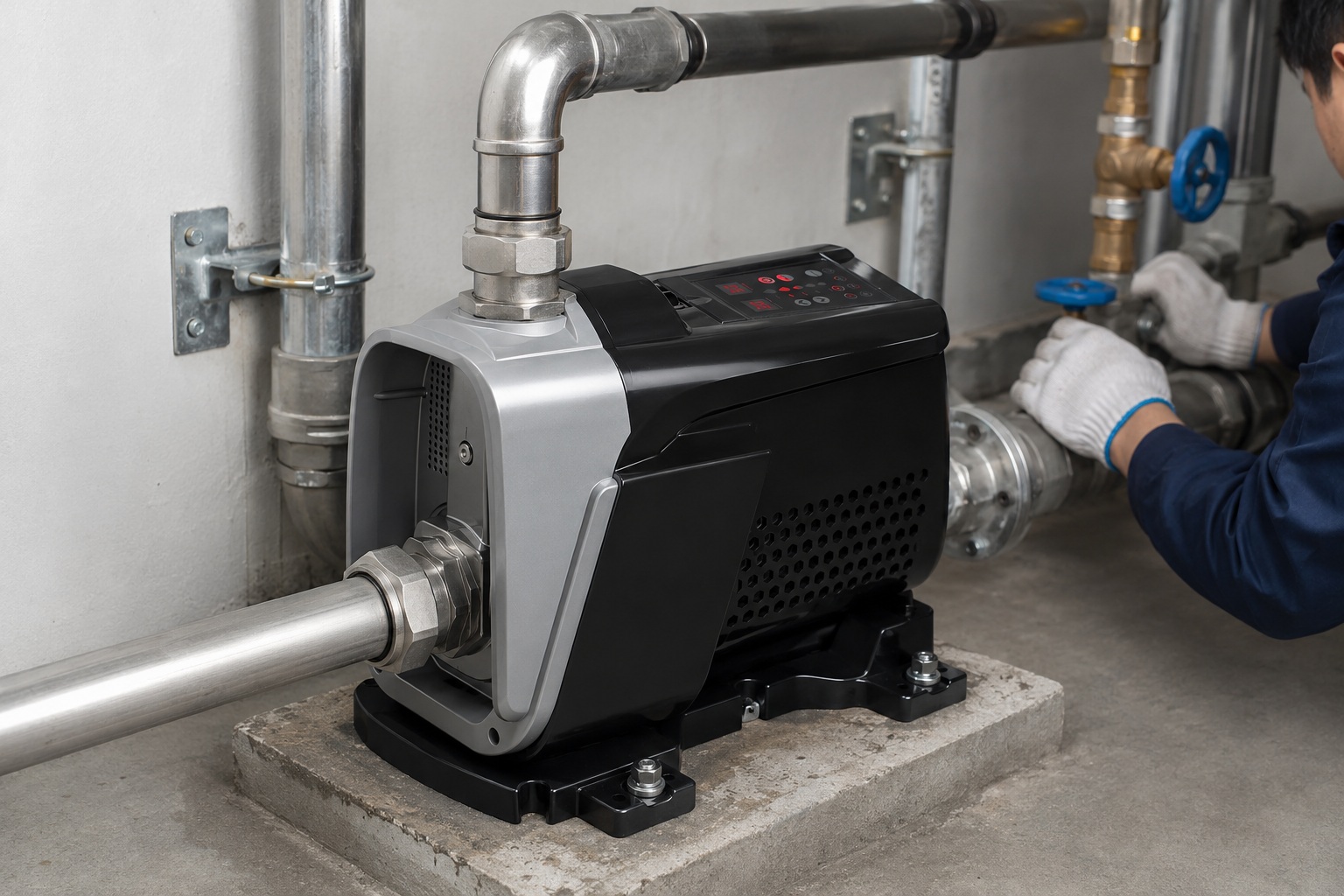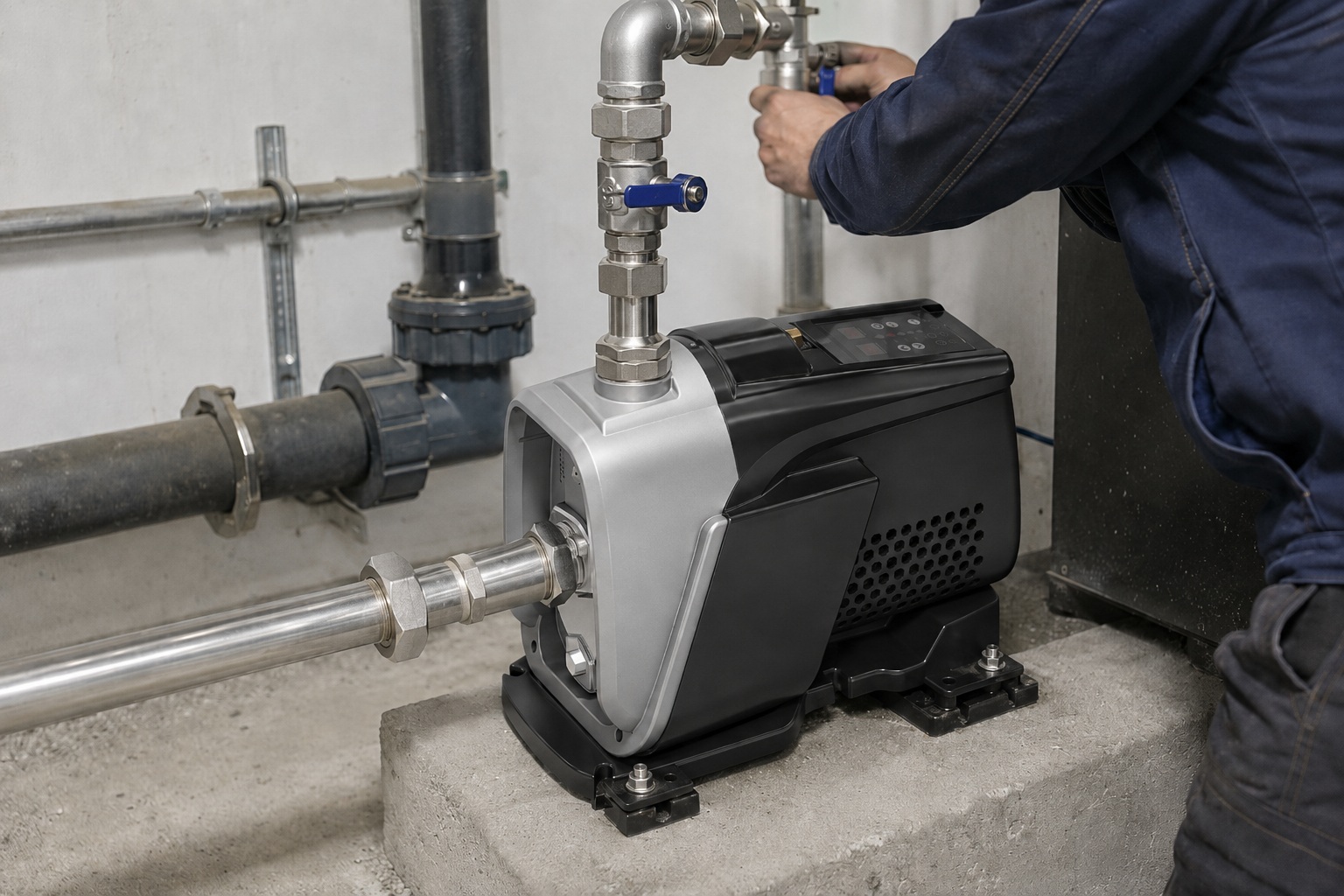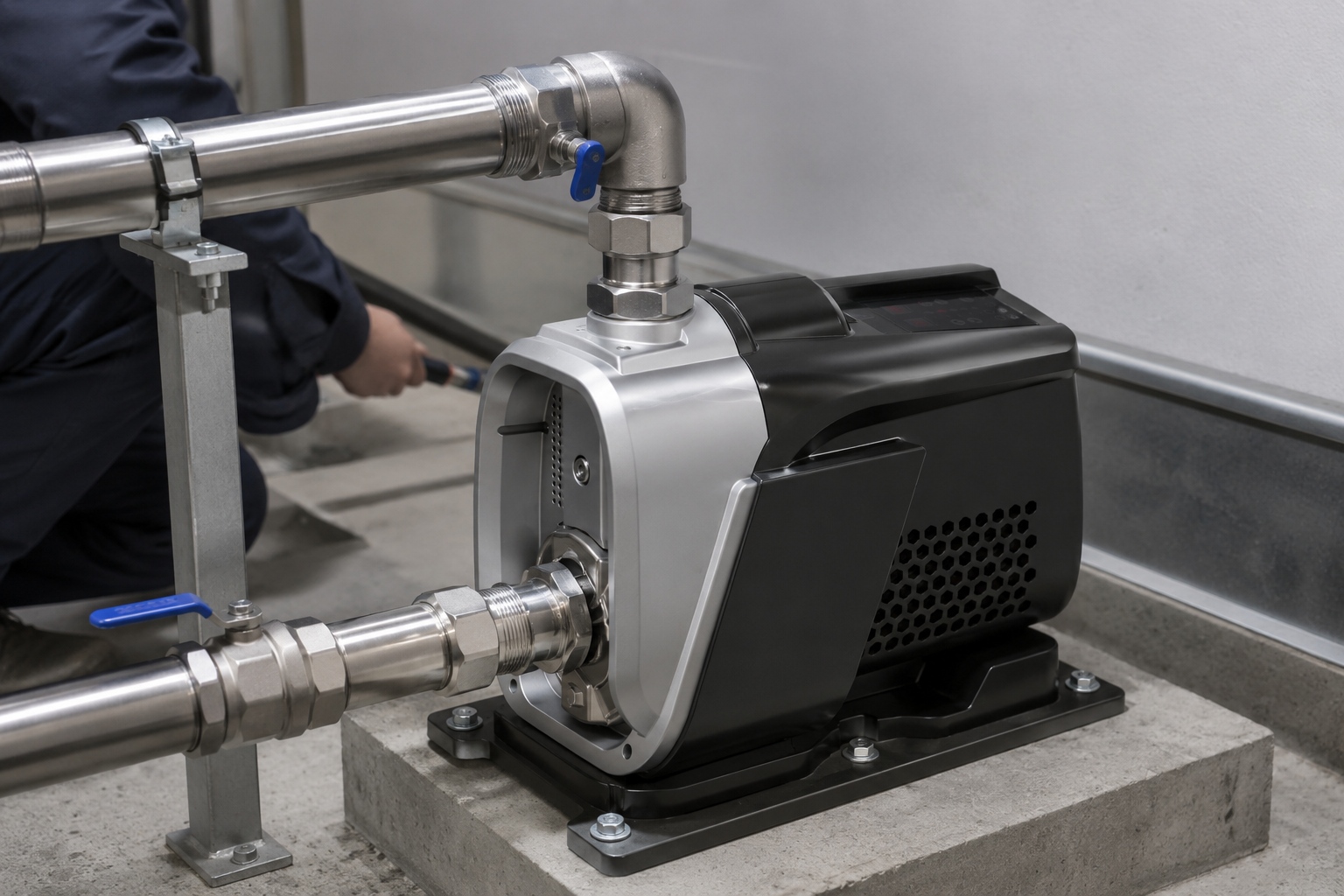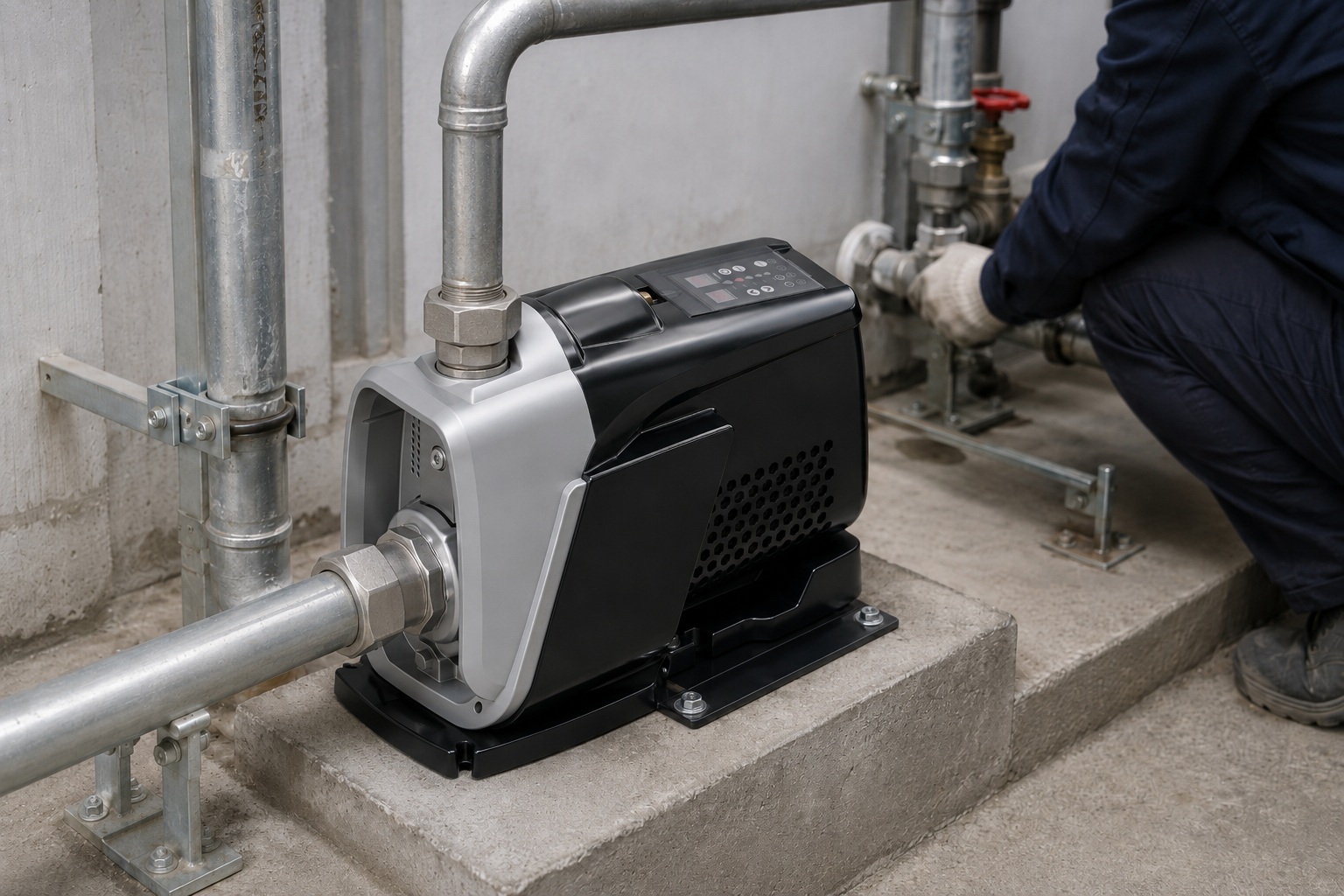
Struggling to select the right pump?
Choosing incorrectly can lead to poor performance and unhappy clients.
Let's clarify which pump technology best suits your application needs.
The main difference is their mechanism and ideal use. A jet pump uses a venturi nozzle to create suction, making it excellent for pulling water from shallow wells. A multistage pump uses multiple impellers in series to build high pressure, perfect for boosting water over long distances or to high elevations.
Understanding these core differences is crucial for any distributor.
It ensures you recommend the most efficient and reliable solution for your customers' specific scenarios.
Moving beyond the basic definition reveals key distinctions in performance, application, and long-term value.
This knowledge helps you stock the right inventory and guide your clients effectively.
Let's dive into the mechanics that set these two powerful pumps apart.
Operating Principle: Suction vs. Staging
**
Are your customers confused by how these pumps generate pressure?
This fundamental difference impacts installation depth and overall system efficiency.
Understanding the mechanics is the first step to making an expert recommendation.
A jet pump is a type of centrifugal pump that uses an ejector, or venturi, to augment its suction lift. It recirculates a portion of the discharged water to create a vacuum, allowing it to pull water from depths up to 25 feet. A multistage pump, however, adds pressure incrementally using a series of impellers.
The distinction in operating principle is not just academic.
It directly dictates the pump's suitability for different water sources.
A failure to grasp this can lead to misapplication, pump cavitation, and premature failure, reflecting poorly on the products you supply.
For your B2B clients, providing clear guidance on the "how" is as important as the "what".
It builds trust and positions you as a knowledgeable partner, not just a supplier.
Let's break down these mechanics further to see how they translate into real-world performance advantages and limitations.
The Jet Pump's Ejector System
The heart of a jet pump is its ejector assembly.
This consists of a nozzle and a venturi tube.
A portion of the high-pressure water from the impeller is diverted back down to this assembly.
As this water is forced through the narrow nozzle at high velocity, it creates a region of low pressure according to the Bernoulli principle.
This pressure drop is what creates the powerful suction that draws water from the well up into the system.
This ingenious design allows it to overcome the limitations of a standard centrifugal pump's suction lift, which is typically limited to around 15-20 feet in practical applications.
- Shallow Well Jet Pumps: These have the ejector assembly located directly on the pump body at the surface. They are simpler and used for suction lifts up to approximately 25 feet (7.6 meters).
- Deep Well Jet Pumps: For wells deeper than 25 feet, a two-pipe system is used. The ejector is submerged down in the well. One pipe carries drive water down to the ejector, and the second, larger pipe carries both the drive water and the newly drawn well water back to the surface.
The Multistage Pump's Series of Impellers
A multistage pump operates on a much more direct principle.
It is essentially several individual pump stages connected in a series within a single housing.
Water enters the first chamber and is pressurized by the first impeller.
Instead of being discharged, this now-pressurized water is directed into the inlet of the second chamber and its impeller.
The second impeller adds more pressure to the already pressurized water.
This process repeats through each stage.
Each impeller and its corresponding diffuser constitutes a single "stage".
The total pressure, or head, generated by the pump is the sum of the pressure added by each individual stage.
A four-stage pump, for instance, can theoretically generate four times the pressure of a single-stage pump with an identical impeller.
This design makes them exceptionally efficient at creating high-pressure output, with pressure gains of 40-60 PSI per stage being common.
| Feature | Jet Pump | Multistage Pump |
|---|---|---|
| Mechanism | Ejector Nozzle & Venturi | Multiple Impellers in Series |
| Primary Function | Create Suction Lift | Build High Pressure |
| Fluid Path | Recirculates Water | Linear Flow Through Stages |
| Key Component | Ejector Assembly | Impeller & Diffuser Sets |
This fundamental difference in mechanics is the root of all other performance variations between the two pump types.
It affects their efficiency curves, their flow versus pressure characteristics, and their suitability for specific tasks.
Performance Metrics: Pressure vs. Flow Rate
**
Do you find it difficult to explain performance trade-offs to clients?
Matching a pump's performance curve to the system's needs is critical.
Choosing between high suction, high pressure, or high flow can make or break a project.
A jet pump is designed for moderate flow and moderate pressure but excels in suction lift, making it ideal for well applications. A multistage pump delivers significantly higher pressure at a given flow rate but has standard suction capabilities. Its strength is boosting, not lifting from a deep source.
For a distributor, communicating these performance nuances is key to managing customer expectations.
A client who needs to move water to the top of a multi-story building requires the high head of a multistage pump.
Conversely, a client drawing from a rural well needs the reliable suction of a jet pump.
Explaining this in terms of performance curves and specific metrics like Total Dynamic Head (TDH) and Gallons Per Minute (GPM) solidifies your technical expertise.
Let's explore the typical performance envelopes for each pump.
Dissecting the Performance Curve
Every pump has a performance curve that charts its flow rate (GPM or L/min) against the head (pressure in feet or meters) it can generate.
Understanding this curve is non-negotiable for proper pump selection.
Jet Pump Performance Characteristics
A jet pump's curve typically shows a strong performance in the lower suction lift range.
It provides a reliable, moderate flow over a range of pressures suitable for residential homes, cabins, or small-scale irrigation.
However, a key characteristic is its sensitivity to suction depth.
As the suction lift increases (i.e., the water level in the well drops), both the available flow rate and the discharge pressure decrease significantly.
A shallow well jet pump might deliver 12 GPM at 40 PSI with a 10-foot suction lift, but this could drop to 8 GPM at the same pressure with a 20-foot lift.
Efficiency for jet pumps, due to the energy used for water recirculation, typically ranges from 20% to 40%.
They are a trade-off: you sacrifice some energy efficiency to gain suction capability.
Multistage Pump Performance Characteristics
The performance curve for a multistage pump looks quite different.
It is characterized by its ability to reach very high pressures.
The curve will often be steeper than that of a single-stage pump, indicating that it can maintain strong pressure even as the flow rate increases.
For example, a vertical multistage pump might provide a consistent 50 GPM across a pressure range from 80 PSI to 150 PSI, depending on the number of stages.
Their primary strength is in adding head to an already pressurized line (boosting) or lifting water to great heights after it has been drawn from a source.
Modern multistage pumps are highly efficient, often achieving efficiencies between 60% and 80%.
This is because there is no energy "lost" to a recirculation process; nearly all the motor's energy is converted directly into pressure.
| Performance Metric | Jet Pump | Multistage Pump |
|---|---|---|
| Primary Strength | Suction Lift (up to 25 ft) | High Head/Pressure Output |
| Typical Pressure Range | 30 - 60 PSI | 60 - 250+ PSI |
| Typical Flow Range | 5 - 25 GPM | 10 - 100+ GPM (application dependent) |
| Efficiency | Lower (20-40%) | Higher (60-80%) |
| Sensitivity | Highly sensitive to suction depth | Highly sensitive to available inlet pressure (NPSHa) |
For your client "Andrew" in Australia, this means a jet pump is the go-to for a farmhouse well.
However, for a new commercial building's water distribution system in Sydney, a multistage booster pump is the only logical choice.
Best Applications: Where Each Pump Shines
**Do your clients install the wrong pump for the job?
This leads to inefficiency, costly callbacks, and damaged reputation.
Clearly defining the ideal scenario for each pump prevents these mistakes.
Jet pumps are the definitive choice for shallow well water extraction for homes, cottages, or small farms where the water level is less than 25 feet below the pump. Multistage pumps excel in pressure boosting applications, such as large-scale irrigation, multi-story buildings, reverse osmosis systems, and industrial boiler feed.
Guiding a purchasing decision is about more than just comparing spec sheets.
It is about understanding the environment and the objective.
By clearly mapping pump types to specific applications, you provide immense value to your distributors.
You're not just selling a product; you're selling a reliable and efficient solution that makes their project successful.
This is how long-term B2B relationships are built.
Let's detail the prime use cases for each pump to give you a clear framework for your sales consultations.
Ideal Scenarios for Jet Pumps
The core value of a jet pump is its ability to create a vacuum.
This makes it the champion of applications involving suction lift from a shallow source.
- Residential Well Water: This is the most common application. For homes outside municipal water systems, a jet pump reliably draws water from a well to supply the entire house.
- Lake or Pond Water Pumping: They are perfect for pulling water from a lake or stream to be used for garden or lawn irrigation.
- Temporary Dewatering: On small construction sites, a portable jet pump can be used to draw water out of excavated areas.
It is crucial to note that jet pumps are generally not suitable for pumping abrasive fluids or slurries.
The tight tolerances in the nozzle and venturi can quickly erode or clog, leading to a dramatic loss of performance.
Ideal Scenarios for Multistage Pumps
The value of a multistage pump is its ability to build immense pressure efficiently.
Any application that requires high head is a potential fit.
- Pressure Boosting Systems: In large buildings, ranches, or housing developments, municipal water pressure is often insufficient. A multistage pump system with a pressure tank and controller is installed to ensure strong, consistent pressure at every tap, even on the top floors.
- Reverse Osmosis (RO) and Filtration: High-pressure RO systems, common in water treatment and desalination, rely on multistage pumps to overcome the osmotic pressure of membranes. This requires pressures often exceeding 150-250 PSI.
- Industrial Boiler Feed: Boilers operate under high pressure, and the feedwater pump must be able to inject water into the boiler drum. Multistage pumps are the industry standard for this demanding, high-temperature application.
- Large-Scale Irrigation: Pushing water through miles of piping and numerous sprinkler heads on a commercial farm requires the high pressure that multistage pumps provide.
| Application Category | Best Fit: Jet Pump | Best Fit: Multistage Pump |
|---|---|---|
| Water Source | Wells (<25ft), Lakes, Ponds | Municipal Lines, Cisterns, Break Tanks |
| Residential | Primary home well water supply | Whole-home pressure boosting |
| Commercial | Small-scale nursery irrigation | Multi-story building water supply, HVAC systems |
| Industrial | - | Boiler feed, high-pressure cleaning, filtration |
| Agricultural | Small farm/garden irrigation | Large-scale field irrigation, pivot systems |
By using this framework, you can quickly qualify your customers' needs and point them to the correct product line, saving time and preventing costly errors.
Cost and Maintenance Considerations
**Does the initial price tag cloud your client's judgment?
Long-term operational costs and maintenance can far outweigh the initial purchase price.
A total cost of ownership analysis leads to a smarter investment.
Jet pumps generally have a lower upfront purchase price and simpler maintenance, often manageable by the end-user. Multistage pumps have a higher initial cost due to their complex design but offer superior energy efficiency, which can lead to significant long-term savings in high-usage applications. Maintenance is also more specialized.
For a savvy business owner like Andrew, the conversation must go beyond the invoice price.
It's about the lifetime value of the asset.
Presenting a clear picture of installation complexity, energy consumption, and typical maintenance requirements allows your client to make a well-rounded business decision.
They are not just buying a pump; they are investing in their operational infrastructure.
Let's break down the total cost of ownership for both systems.
Initial Investment (CAPEX)
Unquestionably, jet pumps are the more budget-friendly option at the outset.
Their design is simpler, with fewer precision-engineered components compared to a multistage pump.
- Jet Pump: A typical 1/2 HP to 1 HP shallow well jet pump can be 30-50% cheaper than a multistage pump with a similar horsepower rating.
- Multistage Pump: These pumps contain multiple impellers, diffusers, and a more robust casing, all of which increase manufacturing complexity and cost. A vertical multistage pump can represent a significant capital investment, especially for industrial models.
Operational Costs (OPEX)
This is where the multistage pump begins to show its true value.
Operational cost is dominated by energy consumption.
- Jet Pump: With efficiencies often below 40%, a significant portion of the electricity consumed is converted into heat and noise rather than water movement. Over a 10-year lifespan, the electricity cost can be 3 to 5 times the initial purchase price.
- Multistage Pump: Efficiencies of 60-80% or higher mean much less wasted energy. In a continuous or high-cycle application, the energy savings can pay back the initial price premium in as little as 12-24 months. For a large irrigation project, this can translate to thousands of dollars saved annually.
Maintenance and Reliability
Maintenance needs also differ significantly.
- Jet Pump Maintenance: The most common failure point is the ejector nozzle clogging with sand or debris. This can often be cleared by the user. Other common tasks include replacing the mechanical seal or pressure switch, which are relatively straightforward. Their simplicity lends itself to field serviceability.
- Multistage Pump Maintenance: Due to the close tolerances between impellers and diffusers, these pumps are less tolerant of abrasive materials. Maintenance often requires a full disassembly by a trained technician to replace seals or a damaged impeller stack. While they are built for durability, repairs are more complex and costly.
Total Cost of Ownership (TCO) Comparison
| Cost Factor | Jet Pump | Multistage Pump |
|---|---|---|
| Initial Purchase Price | Low | High |
| Installation | Simpler, often DIY-friendly | More complex, often requires professional |
| Energy Efficiency | Low (20-40%) | High (60-80%) |
| Lifetime Energy Cost | High | Low |
| Routine Maintenance | Simple (nozzle cleaning) | More involved (seal replacement) |
| Major Repairs | Less expensive, simpler parts | Expensive, requires technician |
| Best for TCO | Intermittent, low-usage applications | Continuous, high-usage applications |
For your B2B clients, framing the discussion around TCO demonstrates a sophisticated understanding of their business needs.
It shifts the conversation from "which is cheaper?" to "which is the better investment?".
Conclusion
The choice between a jet pump and a multistage pump hinges on the application.
Jet pumps offer suction for wells; multistage pumps deliver pressure for boosting.
Understanding this saves money.
FAQs
What is the main disadvantage of a jet pump?
The main disadvantage is their lower energy efficiency, typically 20-40%, due to the water recirculation needed to create suction.
Can a multistage pump be used for a well?
Yes, but typically only when paired with a submersible pump or when the water level is very high (less than 15 feet). They lack strong suction lift.
Which pump is quieter, jet or multistage?
Multistage pumps are generally much quieter than jet pumps because of their smoother operation and more balanced design.
At what depth does a jet pump become ineffective?
Jet pumps are generally limited to a maximum suction lift of about 25 feet (7.6 meters). Beyond this, a submersible pump is required.
Are multistage pumps self-priming?
Most vertical and horizontal multistage pumps are not self-priming and require a flooded suction, meaning the water source must be above the pump's inlet.
Why would I choose a vertical multistage pump?
Vertical multistage pumps are chosen for their small footprint, making them ideal for installations where floor space is limited, like in mechanical rooms.
Do VSDs work well with multistage pumps?
Yes, multistage pumps are an excellent match for Variable Speed Drives (VSDs) to maintain constant pressure in boosting systems, greatly improving energy efficiency.