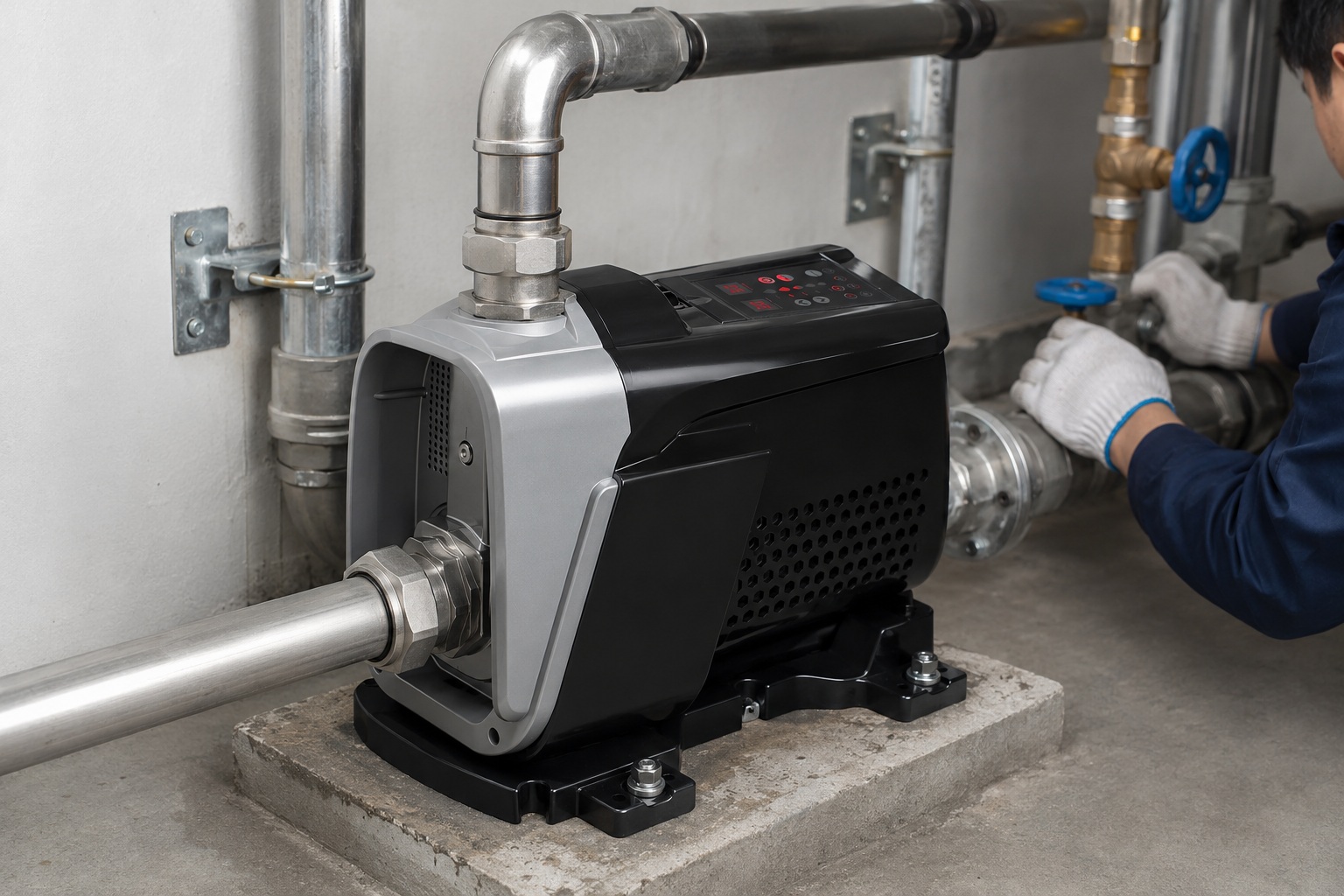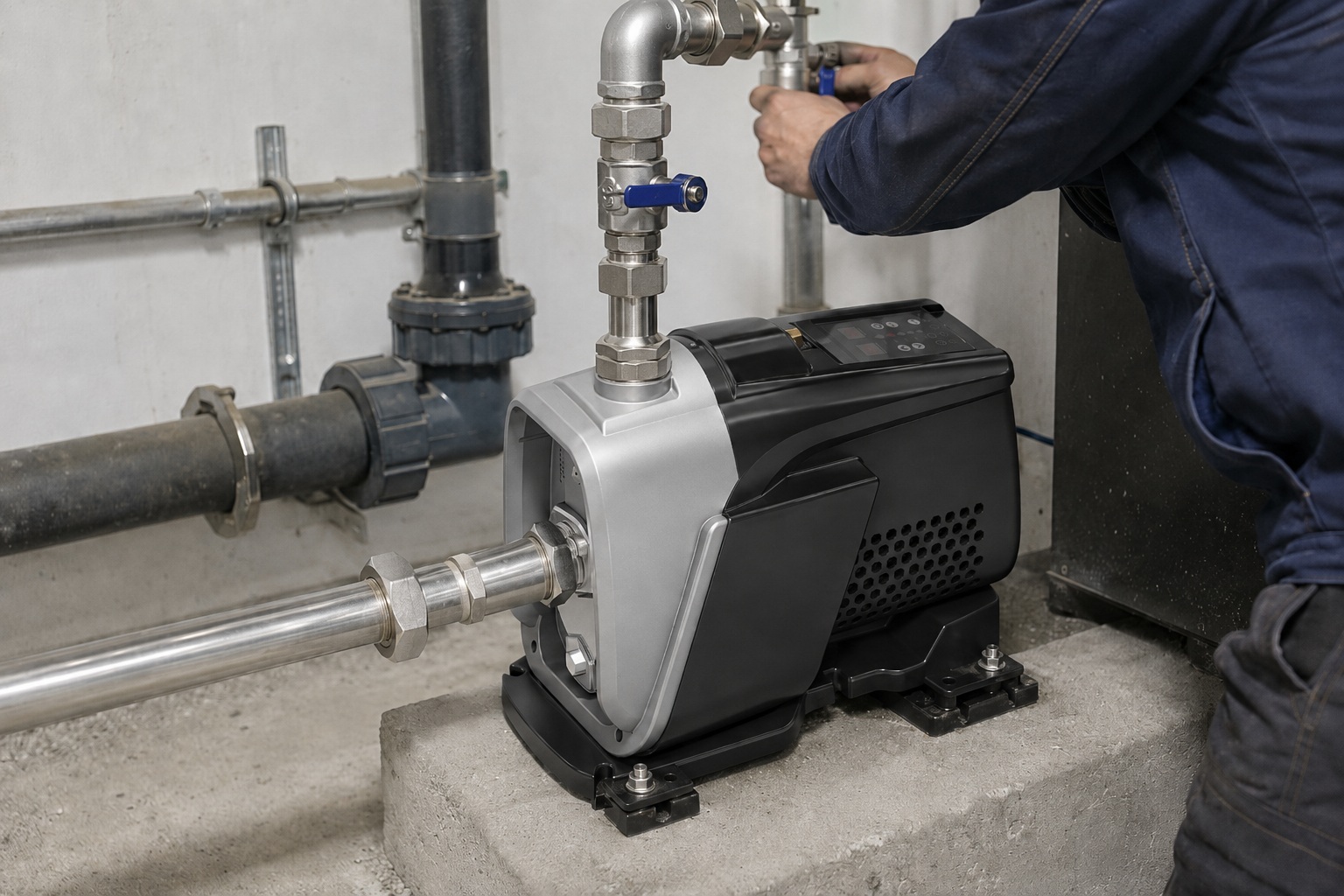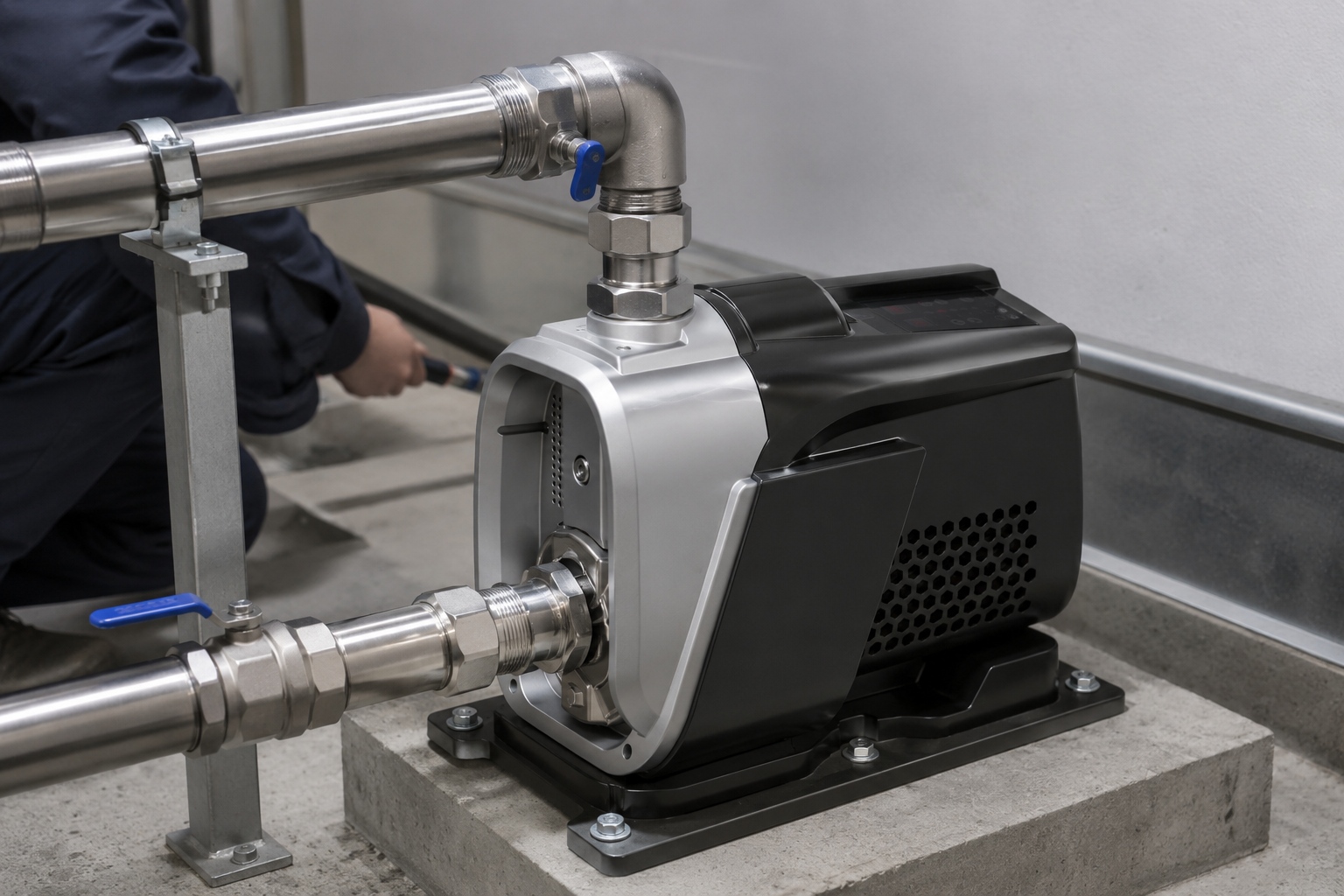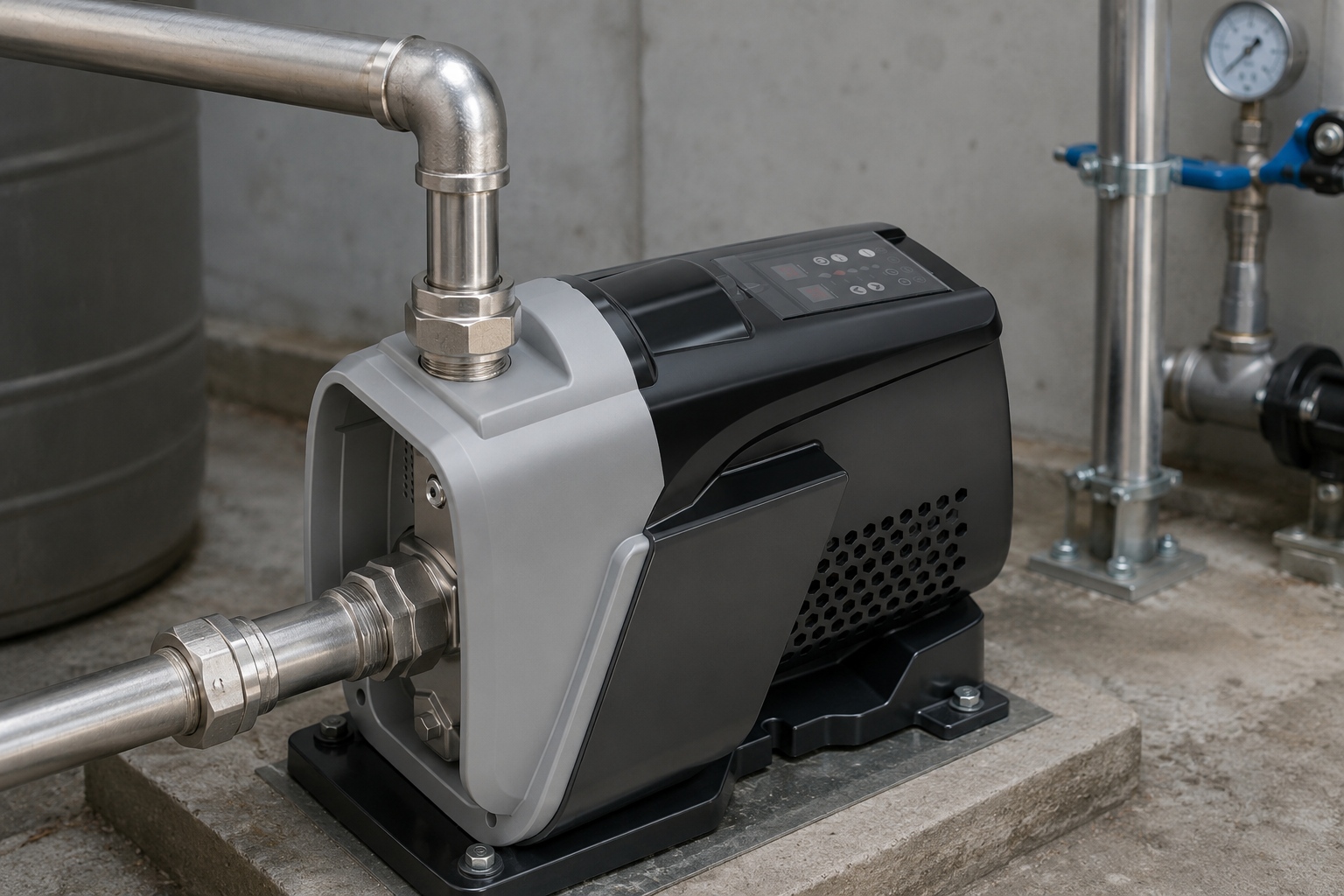
Struggling with inconsistent water pressure in demanding applications?
Single-stage pumps often fail to deliver the high pressure needed.
A multistage pump provides a powerful and reliable solution.
A 5 stage pump is a type of centrifugal pump that uses five impellers housed within a single casing. Each stage, consisting of an impeller and a diffuser, progressively increases the pressure of the fluid. This design generates significantly higher pressures than a single-stage pump can achieve.
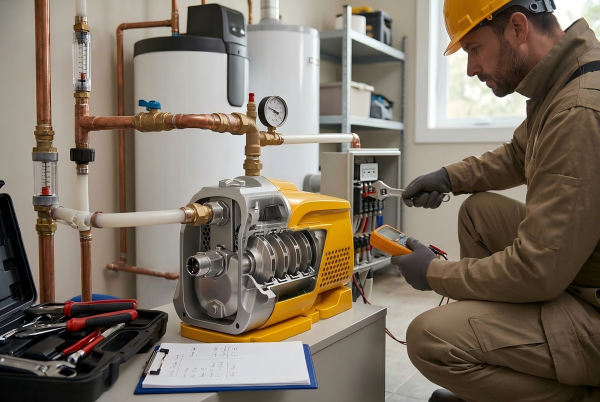
Understanding what a 5 stage pump is marks the first step.
Now, let’s explore the intricate mechanics and powerful capabilities that make this technology essential for high-pressure fluid transfer systems worldwide.
By delving into its components, applications, and operational advantages, you can see how this pump meets the rigorous demands of modern industry and advanced irrigation.
This knowledge is crucial for making informed decisions for your business.
Understanding the Multistage Design Philosophy
Facing challenges with achieving high pressure efficiently?
Your pumping systems might be consuming too much energy.
The multistage design philosophy offers a smarter, more effective approach to pressure generation.
The multistage design philosophy is centered on achieving high heads by adding impellers in a series on a single shaft. Instead of one large impeller, multiple smaller impellers work sequentially, with each stage boosting the pressure from the previous one, ensuring efficiency and control.
The multistage design isn’t just about adding more parts; it’s a strategic approach to fluid dynamics.
This method allows for the generation of extremely high pressures without the need for excessive pump speeds or oversized single impellers, which are often inefficient and prone to wear.
By breaking down the pressurization process into several manageable steps, or stages, the pump can operate at its best efficiency point (BEP) across a wider range of conditions.
This sequential pressure boosting is what sets multistage pumps apart, making them a cornerstone of high-pressure applications.
The Principle of Sequential Pressurization
At its core, the pump operates on a simple yet effective principle.
Fluid enters the first stage at the pump’s suction inlet.
The first spinning impeller imparts velocity to the fluid and directs it into a stationary diffuser.
The diffuser’s job is to convert this velocity into pressure.
This partially pressurized fluid is then guided into the eye of the second impeller.
This process repeats through all five stages.
Each impeller-diffuser set acts as a small pump, adding its pressure contribution to the total.
The cumulative effect across the five stages results in a final discharge pressure that can be 5 to 6 times higher than the suction pressure, or even more, depending on the specific design.
Horizontal vs. Vertical Configurations
Manufacturers design multistage pumps in both horizontal and vertical orientations to fit different spatial and application requirements.
The choice between them often comes down to footprint, NPSH (Net Positive Suction Head) requirements, and ease of maintenance.
| Feature | Horizontal Multistage Pump | Vertical Multistage Pump |
|---|---|---|
| Footprint | Larger, requires more floor space. | Smaller, ideal for compact installations. |
| NPSH | Typically requires higher available NPSH. | Often has better NPSH characteristics. |
| Maintenance | Generally easier access to motor and bearings. | Can be more complex to disassemble. |
| Common Use | Boiler feed water, reverse osmosis, general industry. | Booster services, irrigation, fire-fighting systems. |
| Cost | Often a lower initial cost for similar performance. | May have a higher initial cost but saves space. |
Vertical multistage pumps are particularly popular in building services and irrigation systems where space is at a premium.
Horizontal pumps, with their robust "between-bearing" designs, are often favored for heavy-duty industrial processes where reliability and serviceability are paramount.
Over 70% of new high-pressure booster systems in commercial construction now utilize vertical multistage pumps due to their space-saving benefits.
The Core Components and Their Functions
Unsure about the parts that make a multistage pump so effective?
Misunderstanding components can lead to incorrect maintenance.
Knowing the function of each part is key to ensuring long-term pump reliability.
The core components of a 5 stage pump include the impellers, diffusers, shaft, casing, and mechanical seals. Each impeller adds energy to the fluid, while the diffusers convert this energy into pressure. The shaft transmits power, and the casing contains the pressure safely.
A 5 stage pump is a symphony of precisely engineered components working in unison.
While the impellers and diffusers are the heart of the pressurization process, the supporting parts are equally critical for performance and longevity.
The shaft must be perfectly straight and balanced to handle high rotational speeds without vibration.
The bearings support the shaft, managing both radial and axial loads generated by the pumping action.
Mechanical seals are vital for preventing leaks where the shaft exits the casing, a critical function under high pressure.
Finally, the outer casing, or barrel, must be engineered to safely contain the immense pressures generated internally, often exceeding 25 bar (360 PSI) in standard models and much higher in specialized units.
A failure in any of these components can lead to a catastrophic drop in performance or complete system failure.
The Impeller and Diffuser: A Dynamic Duo
The relationship between the impeller and the diffuser is the fundamental mechanism of a multistage pump.
-
Impeller: This is the rotating component driven by the motor.
-
It has vanes that catch the incoming fluid and accelerate it radially outward.
-
The design of the impeller (closed, semi-open, or open) is crucial and selected based on the fluid’s properties, such as viscosity and solids content.
-
For a 5 stage pump handling clean water, closed impellers are almost universally used due to their high efficiency, typically reaching over 85% in optimized designs.
-
Diffuser: This is the stationary component that surrounds the impeller.
-
It consists of a set of fixed vanes that form expanding channels.
-
As the high-velocity fluid leaves the impeller, it enters these channels, slows down, and its kinetic energy is efficiently converted into pressure energy.
-
The diffuser also serves to guide the fluid smoothly into the next stage.
This precise interplay, repeated five times, allows the pump to achieve high heads with minimal energy loss from turbulence.
The Shaft and Bearings: Providing Stability
The pump shaft is the backbone of the assembly.
It transmits the torque from the motor to the impellers, causing them to rotate.
The shaft must be strong enough to handle the torque and rigid enough to prevent excessive deflection under hydraulic loads.
Materials like 420 or 316 stainless steel are common choices for their strength and corrosion resistance.
To support the rotating shaft, bearings are placed at strategic points.
They serve two primary functions: managing radial loads (forces perpendicular to the shaft) and axial loads (forces parallel to the shaft, also known as thrust).
In a multistage pump, significant axial thrust is generated by the impellers pushing the fluid.
To counteract this, pumps often incorporate a balance drum, balance disc, or opposing impellers to hydraulically balance a majority of the thrust, which can reduce the axial load on the bearings by up to 95%.
The remaining thrust is handled by a robust thrust bearing, ensuring smooth operation and extending the pump’s service life.
Seals and Casing: Ensuring Containment
Containing high-pressure fluid is a critical safety and operational function.
Mechanical Seals: These are essential for preventing leakage along the rotating shaft.
A typical mechanical seal consists of two ultra-flat lapped faces, one stationary and one rotating, pressed together by a spring.
A thin film of the pumped fluid acts as a lubricant between the faces.
For high-pressure applications, balanced seals or even double seals with a barrier fluid are used to ensure reliability and prevent catastrophic failure.
They offer a significant improvement over traditional gland packing, reducing leakage by over 99%.
Casing: The casing is the pump’s pressure vessel.
In a 5 stage pump, this often takes the form of a sectional ring casing (where each stage is its own section bolted together) or a barrel casing (where the entire stage stack is housed within a single outer barrel).
Barrel casings are preferred for very high pressures as the design minimizes external leak paths and provides superior strength.
Materials range from cast iron for lower pressures to cast steel or stainless steel for more demanding applications.
The casing must pass rigorous hydrostatic pressure tests, typically at 1.5 times the maximum allowable working pressure, to ensure its integrity.
Key Advantages of a 5 Stage Pump
Are single-stage pumps falling short of your pressure requirements?
Operating inefficient pumps leads to high energy bills and poor performance.
A 5 stage pump offers superior efficiency and pressure, providing a clear operational advantage.
The key advantages of a 5 stage pump include its ability to generate high pressure efficiently, a stable performance curve, and a modular design. This results in reduced energy consumption, reliable operation, and easier adaptation to specific system requirements compared to single-stage alternatives.
The decision to specify a 5 stage pump over other technologies is driven by a clear set of performance benefits.
While a single-stage pump is excellent for high flow and low head applications, it becomes inefficient and mechanically stressed when forced to generate high pressure.
A 5 stage pump, by its very nature, is designed for this exact duty.
The division of work across five stages allows each stage to operate closer to its Best Efficiency Point (BEP), which can lead to a system-wide energy saving of 15-30% compared to a single-stage pump struggling to meet the same pressure requirement.
Furthermore, this staged approach results in a more stable, less steep performance curve, meaning that fluctuations in system demand have a smaller impact on the discharge pressure, ensuring consistent performance.
High-Pressure Capability and Efficiency
The most significant advantage is the ability to generate high heads or pressures.
A typical single-stage pump might struggle to produce more than 10-12 bar (150-175 PSI) efficiently.
In contrast, a standard 5 stage pump can easily achieve pressures of 25-40 bar (360-580 PSI), and specialized designs can go much higher.
This capability is essential for applications like:
- Reverse Osmosis (RO) systems, which require high pressures to overcome osmotic pressure.
- Boiler feed, where the pump must overcome the high pressure inside the steam boiler.
- High-rise building water supply, where pressure is needed to lift water many stories.
This high pressure is achieved with remarkable efficiency.
Because each impeller only needs to contribute a fraction of the total pressure, it can be designed to operate at its peak efficiency.
The cumulative effect is a pump that delivers high pressure with lower energy consumption than a large single-stage pump or a positive displacement pump for the same duty point.
Stable Performance and Reduced Pulsation
Compared to positive displacement pumps, which also excel at high pressure, centrifugal multistage pumps offer a significant advantage: smooth, pulsation-free flow.
A piston or diaphragm pump inherently produces a pulsating flow that can create vibration and noise in the pipework.
This often requires the addition of pulsation dampeners.
A 5 stage pump, being a rotodynamic machine, delivers a continuous, non-pulsating output.
This leads to:
- Quieter Operation: Reduced hydraulic noise and mechanical vibration.
- Longer System Life: Less stress and fatigue on pipes, valves, and fittings.
- Simpler System Design: No need for expensive pulsation dampeners.
The performance curve of a multistage pump is also more stable.
The head decreases gradually as flow increases, providing predictable and controllable performance across a wide operational range.
This stability is crucial in complex systems where demand can vary.
Modular Design and Versatility
The inherent design of multistage pumps lends itself to modularity.
Manufacturers can often use the same pump head and motor to create pumps with different numbers of stages.
A 3 stage, 4 stage, and 5 stage pump might share many common components.
This offers several advantages for distributors and end-users:
| Advantage | Benefit for B2B Customers |
|---|---|
| Parts Interchangeability | Reduces the inventory of spare parts required. A single set of seals or bearings might fit multiple pump models. |
| Flexible Performance | The number of stages can be selected to precisely match the head requirements of a specific application, avoiding oversizing. |
| Simplified Servicing | Technicians familiar with one model can easily service others in the same family, reducing training costs and repair times. |
| Customization | It is easier to offer customized solutions, such as using different materials for certain stages to handle corrosive fluids at intermediate points. |
This modularity makes the 5 stage pump an incredibly versatile tool.
It can be tailored for a vast array of applications, from agricultural irrigation to sophisticated industrial processes, simply by adjusting the number of stages and selecting appropriate materials, making it a valuable and flexible product line for any distributor.
Choosing the Right 5 Stage Pump
Selecting the wrong pump leads to system failure and costly replacements.
A pump that doesn’t match your system’s needs wastes energy.
Choosing the right 5 stage pump requires a careful analysis of your application’s specific hydraulic demands.
To choose the right 5 stage pump, you must determine the required flow rate (in GPM or m³/h) and total dynamic head (in feet or meters). Then, select a pump where this duty point falls within the preferred operating region of its performance curve.
Specifying a 5 stage pump is more than just picking a model from a catalog.
It’s a technical process that ensures the pump will perform efficiently, reliably, and for a long time in its intended application.
An undersized pump won’t deliver the required pressure or flow, leading to process failure.
An oversized pump is an even more common and insidious problem.
It will operate far from its BEP, leading to high energy costs, increased vibration, and hydraulic issues like cavitation, which can destroy an impeller in a matter of hours.
A properly selected pump operates within its Preferred Operating Region (POR), which is typically 70-120% of the flow rate at the BEP.
Operating within this window ensures high efficiency (often over 75%), low vibration, and maximum Mean Time Between Failures (MTBF).
Calculating Total Dynamic Head (TDH)
The most critical step in pump selection is accurately calculating the Total Dynamic Head (TDH).
This is the total equivalent pressure the pump must produce to move the fluid from the source to the destination.
TDH is the sum of three main components:
-
Static Head: This is the vertical distance the fluid needs to be lifted.
- Static Suction Lift: The vertical distance from the fluid source’s surface to the pump’s centerline (if the source is below the pump).
- Static Discharge Head: The vertical distance from the pump’s centerline to the final discharge point.
-
Pressure Head: This accounts for any pressure in the source tank or the destination tank.
- For example, if you are pumping into a pressurized vessel like a boiler, you must add the pressure of that vessel (converted to head) to the TDH.
-
Friction Head: This is the pressure loss due to friction as the fluid moves through pipes, valves, elbows, and other fittings.
- This is a complex calculation that depends on the flow rate, pipe diameter, pipe material, and the number and type of fittings.
- Engineers use formulas like the Darcy-Weisbach or Hazen-Williams equations, or friction loss tables, to estimate this value.
- Failing to accurately account for friction loss is a leading cause of pump undersizing, with estimates suggesting it accounts for over 40% of selection errors.
Reading a Pump Performance Curve
Once you have your duty point (e.g., 50 GPM at 300 feet of TDH), you can use it to select a pump from a manufacturer’s performance curve.
This graph is the most important tool for pump selection.
Key Elements on a Pump Curve:
- X-Axis (Flow Rate): Shows the volume of fluid the pump can move, typically in GPM, m³/h, or L/s.
- Y-Axis (Head): Shows the pressure the pump can generate, typically in feet, meters, or PSI.
- Head-Capacity Curve: The main curve showing the inverse relationship between head and flow. As flow increases, the achievable head decreases.
- Efficiency Curves: Concentric lines or "islands" that show the pump’s efficiency (as a percentage) at different operating points. The center of these islands is the Best Efficiency Point (BEP).
- Power Curve (BHP): Shows the brake horsepower required by the pump at a given flow rate. This is used to select the correct motor size.
- NPSHr Curve: Shows the Net Positive Suction Head required by the pump to avoid cavitation. The available NPSH (NPSHa) of your system must be greater than the NPSHr.
To select a pump, you find your required flow on the x-axis and your TDH on the y-axis.
The point where they intersect is your duty point.
The goal is to find a pump where this duty point lies on or very near to the pump’s BEP curve.
Considerations for Fluid Properties and Materials
The standard pump curve is based on pumping clean, cold water.
If your application involves a different fluid, you must make adjustments.
- Viscosity: If the fluid is more viscous than water (e.g., oil, glycol), it will increase friction losses and require more power.
- Performance curves must be corrected for viscosity. A fluid with a viscosity of 200 cSt might reduce pump efficiency by 20-30% and require a significant increase in motor power.
- Temperature: High temperatures can affect a fluid’s viscosity and vapor pressure, which impacts NPSH calculations.
- It also affects material selection, as component clearances must account for thermal expansion.
- Corrosiveness/Abrasiveness: The fluid’s chemical composition dictates the required materials of construction.
| Fluid Type | Recommended Materials |
|---|---|
| Clean Water | Cast Iron, Bronze, 304 Stainless Steel |
| Seawater/Brackish Water | 316 Stainless Steel, Duplex Stainless Steel, Bronze |
| Acids/Chemicals | 316L SS, Duplex, Super Duplex, Alloy 20, Titanium |
| Abrasive Slurries | Hardened Iron, CD4MCu, Rubber-lined components |
Selecting the wrong materials can lead to rapid corrosion or erosion, causing premature pump failure and potential safety hazards.
Always consult material compatibility charts or a pump specialist when handling non-water fluids.
Conclusion
A 5 stage pump is a highly efficient solution for generating high pressure.
Its modular design and stable performance make it a versatile choice for many demanding industrial applications.
FAQs
-
What is the difference between a 4 stage and 5 stage pump?
A 5 stage pump has one additional impeller and diffuser stage.
This allows it to generate roughly 20-25% more pressure than a 4 stage pump of the same series. -
Can you run a multistage pump dry?
No, running a multistage pump dry is extremely damaging.
The pumped fluid is needed for lubrication and cooling, and dry running can cause catastrophic failure within minutes. -
What is the maximum pressure of a multistage pump?
Standard models often reach 40 bar (580 PSI).
However, specialized high-pressure designs, such as those for boiler feed, can exceed 250 bar (3625 PSI) or more. -
Are multistage pumps self-priming?
Most centrifugal multistage pumps are not self-priming.
They require the pump casing and suction line to be filled with fluid before startup to operate correctly. -
How do you control the speed of a multistage pump?
The speed is controlled using a Variable Frequency Drive (VFD).
A VFD adjusts the motor’s speed, allowing for precise control of the pump’s flow and pressure output. -
Why is my multistage pump noisy?
Noise can be caused by several issues.
Common culprits include cavitation, bearing wear, misalignment between the pump and motor, or operating far from the Best Efficiency Point. -
What is the efficiency of a multistage pump?
The efficiency varies by design and size.
Well-designed multistage pumps can achieve peak energy efficiencies of 75% to 85% or even higher for larger, optimized models. -
How long does a multistage pump last?
With proper selection, installation, and maintenance, a high-quality multistage pump can have a service life of 15 to 20 years or more in industrial applications.